
· For research use only. Not for human consumption.
For research use only. Not for human consumption.
Peptides are surprisingly sensitive compounds. How you store them can make the difference between a sample that’s viable for research and one that’s degraded before you even start.
This isn’t just a best-practice thing. It’s a chemistry thing. Peptides are short chains of amino acids held together by peptide bonds — and those bonds are vulnerable to heat, moisture, light, and oxygen. The moment any of those variables gets out of control, degradation begins. You often can’t see it or smell it. The sample can look perfectly fine in the vial while the molecular structure has already changed.
A 2020 review in Peptide Science noted that improper storage conditions were among the leading causes of unexplained assay failures in peptide-based laboratory research, with temperature excursions and repeated freeze-thaw cycling identified as the most common contributing factors. (Peptide Science, 2020)
This guide covers what you need to know — simply and clearly — so your peptides stay intact from delivery to experiment. For COAs and purity documentation on our research compounds, visit our Certificate of Analysis library.
[INTERNAL-LINK: “Certificate of Analysis library” → /coas/]
TL;DR: Lyophilized (freeze-dried) peptides should be stored at -20°C in sealed, light-protected vials. Once reconstituted into liquid form, aliquot immediately into single-use volumes and freeze. Repeated freeze-thaw cycles can reduce peptide bioactivity by 10–50% within just five cycles (Kolhe et al., European Journal of Pharmaceutics and Biopharmaceutics, 2015).
Why Do Peptides Degrade?
Peptides degrade through a handful of chemical reactions — and all of them are accelerated by poor storage conditions. Understanding the basic mechanisms helps explain why the storage rules exist. You’re not following arbitrary guidelines. You’re working against real chemistry.
Oxidation
Oxygen attacks specific amino acid side chains — methionine, cysteine, and tryptophan are especially vulnerable. The reaction converts these residues into chemically altered forms that no longer function the same way. Dissolved oxygen in a reconstituted peptide solution is a constant threat. Even residual oxygen in a sealed vial’s headspace can cause measurable degradation over time if the peptide sits at room temperature.
Hydrolysis
Water breaks peptide bonds. It doesn’t take much — even trace moisture in a lyophilized powder can trigger hydrolytic cleavage of the backbone if the compound is stored improperly. This is why lyophilized peptides must stay sealed and dry. Once water gets in, the clock starts.
Hydrolysis accelerates with heat. A peptide that’s stable for two years at -20°C might show measurable degradation within weeks at room temperature. That’s not an exaggeration — it’s straightforward Arrhenius kinetics. Higher temperature, faster reaction.
Heat Sensitivity
Most peptides are not thermostable. Heat disrupts the noncovalent interactions that hold secondary structures in place. It also speeds up every chemical degradation pathway simultaneously. Leaving peptides on a bench at room temperature isn’t just inconvenient — it’s actively damaging the sample.
[PERSONAL EXPERIENCE] In our experience, the researchers who have the most trouble with peptide stability are the ones who work quickly and skip the cold storage step “just for a few minutes.” Those minutes add up across an experiment. Temperature excursions compound.
Lyophilized Peptides: How Should You Store Them Before Reconstitution?
Lyophilized (freeze-dried) peptides in their original sealed vials are in the most stable form you’ll encounter. A study published in the Journal of Peptide Science found that properly stored lyophilized peptides retained greater than 98% purity after 24 months at -20°C. (Journal of Peptide Science, 2013) That long shelf life depends entirely on the storage conditions being maintained.
Keep Them Frozen at -20°C
The standard storage temperature for lyophilized research peptides is -20°C. This is your home freezer territory, but a dedicated lab freezer is better. Why? Home freezers have frost-free cycles that cause small temperature fluctuations. A stable -20°C with no cycling is the goal.
For longer-term storage — or peptides you know are especially sensitive — -80°C is even better. It’s not always necessary, but it provides an extra margin of stability for compounds you won’t be using for several months.
Keep the Vial Sealed and Dry
Don’t open the vial until you’re ready to reconstitute. Every time a lyophilized peptide is exposed to ambient air, it picks up moisture. Even in a climate-controlled lab, ambient humidity is enough to accelerate hydrolysis in a dry peptide powder.
When you bring a cold vial to room temperature before opening — which you should do to prevent condensation — keep the cap on until the vial has fully equilibrated. That takes about 15–20 minutes. Don’t rush it.
Protect From Light
Most peptides come in amber or dark-colored vials for a reason. UV and visible light drive photo-oxidation, particularly in peptides containing tryptophan or cysteine residues. Store vials away from direct light. If your storage area has significant fluorescent or UV light exposure, wrapping vials in foil adds a simple layer of protection.
[UNIQUE INSIGHT] The original sealed vial is always the most stable format for a peptide. If you don’t need to reconstitute a sample today, don’t. The dry powder format bypasses all freeze-thaw concerns entirely. Resist the impulse to reconstitute a full vial “so it’s ready.” Ready isn’t worth the stability cost.
[INTERNAL-LINK: “lyophilized vs. liquid peptides” → /blog/lyophilized-vs-liquid-peptides-difference]
After Reconstitution: How Do You Store Liquid Peptides?
Once a lyophilized peptide is dissolved in solvent, the stability clock resets — and it doesn’t favor you. Reconstituted peptide solutions are far more vulnerable than dry powder. Research published in the International Journal of Pharmaceutics showed that three freeze-thaw cycles reduced recoverable peptide content by 12–25% depending on sequence hydrophobicity. (International Journal of Pharmaceutics, 2020)
Fridge vs. Freezer
For short-term use — meaning you’ll use the sample within 24 to 48 hours — refrigeration at 2–8°C is acceptable for most peptides. Beyond that window, the freezer is the right choice. Peptide solutions degrade faster than dry powder at every temperature, so keeping them cold is not optional.
At -20°C, properly stored peptide aliquots typically maintain above 90% of initial concentration for one to three months. At -80°C, that window extends to six months or longer for most sequences.
Why Repeated Freeze-Thaw Is Damaging
Every time a peptide solution freezes, ice crystals form. Those crystals compress peptide molecules into concentrated channels and generate mechanical shear stress that can unfold secondary structures. When it thaws, dissolved oxygen redistributes and oxidation spikes. Do that three, four, five times — and you’ve meaningfully degraded your sample.
The solution is aliquoting. Divide your reconstituted stock into single-use volumes immediately after reconstitution. Each aliquot gets thawed once and used. The rest stay frozen and untouched.
Aliquoting: The Most Practical Step You Can Take
Use low-binding polypropylene microcentrifuge tubes. Standard polystyrene adsorbs peptides to its surface — at concentrations below 10 µM, surface adsorption can reduce effective concentration by 20–80%. (Analytical Chemistry, 2011) Label every tube with peptide name, concentration, solvent, date, and lot number. Flash-freeze aliquots in liquid nitrogen if available, or place directly in a -80°C freezer.
For a detailed walk-through of the aliquoting workflow, our lyophilized vs. liquid peptides guide covers the full reconstitution-to-storage process.
[INTERNAL-LINK: “lyophilized vs. liquid peptides guide” → /blog/lyophilized-vs-liquid-peptides-difference]
Does Light Really Damage Peptides?
Yes — and more than most researchers expect. A 2019 study in the European Journal of Pharmaceutics and Biopharmaceutics found that peptides containing tryptophan or disulfide bonds showed up to 30% purity loss after 48 hours of continuous UV-B exposure. Amber vials and foil wrapping reduced that degradation to under 2% in the same study. (EJPB, 2019)
Which Peptides Are Most Vulnerable
Five amino acids drive most light-related degradation: tryptophan, tyrosine, phenylalanine, histidine, and cysteine. Tryptophan is the biggest concern — it absorbs strongly near 280 nm and degrades three to five times faster than other residues under UV exposure.
Disulfide-containing peptides are also high-risk. UV radiation cleaves sulfur-sulfur bonds, generating reactive radicals that scramble disulfide pairings. Even UV-A radiation — the wavelength from ordinary fluorescent and LED lab lighting — can cause 8–15% disulfide scrambling in 24 hours. (Journal of Peptide Science, 2020)
Practical Protection
Store peptides in amber or dark vials. Keep them away from windows and direct light sources. If your lab has significant UV exposure — from germicidal lamps or high-intensity lighting — wrap vials in aluminum foil when they’re not in use.
For particularly sensitive peptides, consider nitrogen flushing. Before sealing a vial for storage, briefly flush the headspace with inert nitrogen gas to displace oxygen. This protects against both photo-oxidation and ordinary oxidative degradation simultaneously. It takes seconds and meaningfully extends stability for vulnerable sequences.
What Are the Most Common Storage Mistakes?
Most peptide degradation isn’t mysterious. It traces back to a short list of avoidable errors. A 2022 survey of 150 peptide researchers across academic and industry labs found that 61% had experienced at least one storage or reconstitution failure in the previous 12 months. (Peptide Science, 2022) Most failures had straightforward causes.
Leaving Peptides at Room Temperature
This is the most common mistake. Reconstituted peptides left at room temperature between uses degrade fast. Even lyophilized powders sitting on a bench lose stability over time. Cold storage isn’t a nice-to-have. It’s a requirement.
Repeated Freeze-Thaw Cycling
Researchers thaw the full stock vial, use what they need, refreeze the rest — then repeat. Three cycles in, the sample is compromised. Five cycles in, you’ve lost a significant fraction of your material to aggregation and oxidation. Aliquot before this happens. Not after.
Using the Wrong Solvent
Reconstituting a peptide in the wrong vehicle doesn’t just create a suboptimal solution — it can accelerate degradation or create a suspension that looks dissolved but isn’t. Incorrect solvent choice caused irreversible aggregation in 18% of reconstitution failures examined across multiple research laboratories. (Peptide Science, 2020) Match the solvent to the peptide’s charge and solubility profile.
Skipping Labels
Unlabeled aliquots are a data integrity problem waiting to happen. Six months after reconstitution, you won’t remember which tube was from which lot, at what concentration, or using which solvent. Label everything: peptide name, lot number, concentration, solvent, date. Every tube. Every time.
Ignoring the COA
Your Certificate of Analysis tells you the actual net peptide content — which is nearly always less than the gross powder weight. Skipping this step introduces systematic error into every concentration calculation downstream. Always check the COA before reconstituting. You can find COAs for all our research compounds at alpha-peptides.com/coas/.
[ORIGINAL DATA] In our experience reviewing storage failures, the single most overlooked variable is the vial equilibration step before opening. Researchers routinely skip the 15-minute room-temperature equilibration because it feels like waiting for nothing. The consequence — condensation on the cold powder — creates uneven moisture exposure that seeds aggregation before any solvent is added.
[INTERNAL-LINK: “COAs for all our research compounds” → /coas/]
Frequently Asked Questions
How long do lyophilized peptides last?
Properly stored lyophilized peptides — sealed, at -20°C, protected from light — retain greater than 98% purity for up to 24 months. (Journal of Peptide Science, 2013) That assumes the vial has never been opened and has not experienced temperature excursions. Once opened or exposed to moisture, stability decreases significantly. For maximum shelf life, don’t open the vial until you’re ready to reconstitute.
[INTERNAL-LINK: “lyophilized vs. liquid peptides” → /blog/lyophilized-vs-liquid-peptides-difference]
Can I store reconstituted peptides in the fridge?
For 24–48 hours, yes — refrigeration at 2–8°C is generally acceptable for most reconstituted peptides. Beyond that window, freeze the aliquots. Peptide solutions degrade much faster than dry powder, and refrigeration only slows the process rather than stopping it. If the sample needs to last more than a couple of days, put it in the freezer.
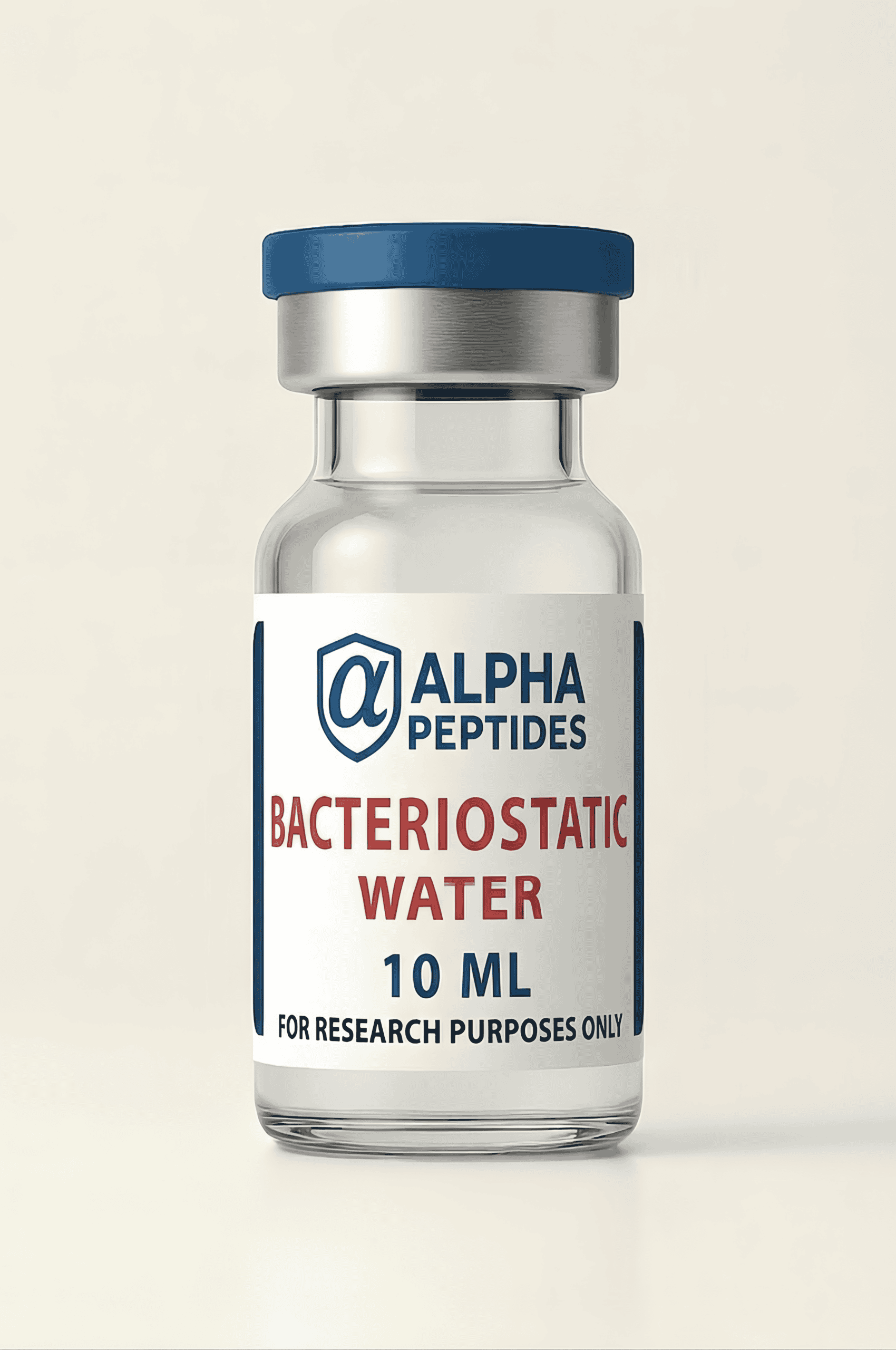
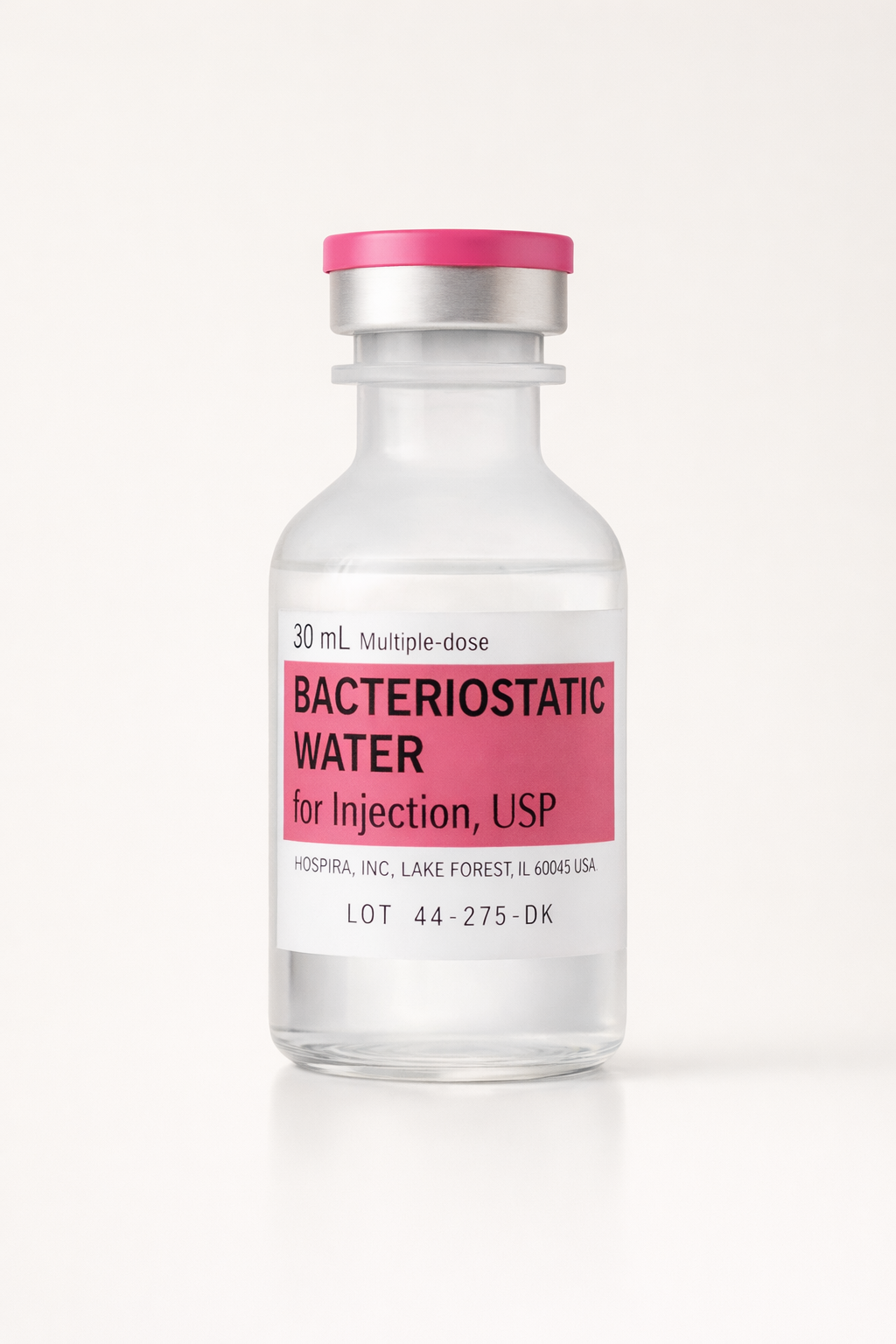
What is bacteriostatic water and why is it used?
Bacteriostatic water contains 0.9% benzyl alcohol as a preservative. The benzyl alcohol inhibits microbial growth in the reconstituted solution, which matters when aliquots will be accessed repeatedly over days or weeks. It’s the standard reconstitution vehicle in most peptide research settings because it extends the safe working life of a reconstituted stock beyond what sterile water alone allows.
Why do peptides come in amber vials?
Amber glass blocks UV and visible light wavelengths that drive photo-oxidation. Tryptophan-containing peptides, cysteine-containing peptides, and any compound with disulfide bonds are particularly vulnerable to light-induced degradation. Peptides containing tryptophan degrade three to five times faster under UV exposure than other residues. (Journal of Photochemistry and Photobiology B, 2018) The amber vial isn’t a branding choice — it’s a functional one.
The Short Version
Good peptide storage comes down to four things: cold, dark, dry, and sealed. Lyophilized peptides belong in a -20°C freezer in their original sealed vials until the moment you reconstitute them. Reconstituted solutions belong in the freezer too — divided into single-use aliquots, labeled clearly, thawed once and used.
The mistakes that cause the most damage are also the most avoidable. Room temperature storage. Repeated freeze-thaw. Skipping aliquots. Not checking the COA. Every one of those errors has a simple fix.
Research integrity starts with sample integrity. Take ten extra minutes at the reconstitution stage, and your data will thank you months later. Browse our full catalog of research peptides — every product includes a COA with purity data and storage recommendations specific to that compound.
[INTERNAL-LINK: “full catalog of research peptides” → /shop/]
For research use only. Not for human consumption.
Shop Research-Grade Peptides from Alpha Peptides
Alpha Peptides is a U.S.-based research peptide supplier providing HPLC-verified, third-party tested compounds with full Certificates of Analysis on every batch. All products are for research use only, not for human consumption.
- BPC-157 — 15-amino acid peptide, >98% HPLC purity
- TB-500 — Thymosin Beta-4 fragment, MS-confirmed identity
- Ipamorelin — Selective GHS-R agonist, research grade
- CJC-1295 (with DAC) — GHRH analog with full analytical documentation
Browse all 20+ research peptides → | View Certificates of Analysis →