
· For research use only. Not for human consumption.
For research use only. Not for human consumption.
Your peptide arrived as a white powder in a tiny vial. Or maybe it came as a liquid. Either way, you’re probably wondering: does the format matter? It does — and the difference is bigger than it looks. Most serious research suppliers default to lyophilized peptides for good reason, and understanding why helps you handle and store your compounds correctly from day one.
This guide explains the practical difference between lyophilized and liquid peptides in plain terms. We’ll cover what the formats actually are, why stability data consistently favors the powder form, what the reconstitution process involves, and when pre-mixed liquids might make sense for a specific research workflow. No unnecessary jargon — just what you actually need to know.
TL;DR: Lyophilized (freeze-dried) peptides are the gold standard for research storage. Studies show lyophilized peptides can remain stable for 24 months or more at -20°C, while pre-mixed liquid peptides typically degrade within weeks to months. The white powder format requires reconstitution with bacteriostatic water before use, but it offers significantly better long-term stability for laboratory research. For research use only. Not for human consumption.
What Is a Lyophilized Peptide?
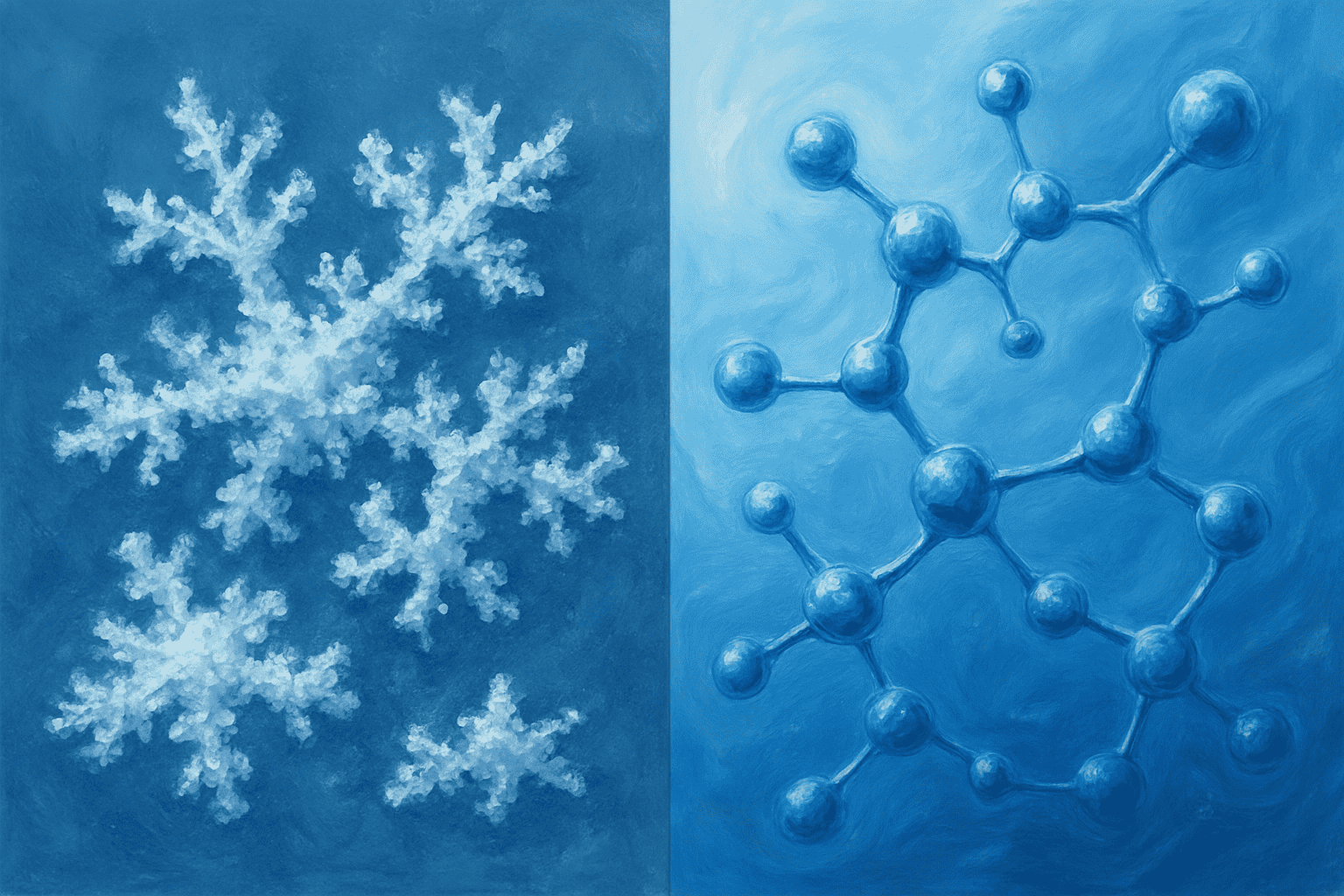
Lyophilization is the scientific term for freeze-drying. According to the American Chemical Society, freeze-drying removes more than 95% of the water content from a biological compound while preserving its molecular structure — making it one of the most reliable preservation methods in pharmaceutical and research chemistry. ([American Chemical Society](https://www.acs.org/), 2023) The result, in the case of peptides, is that fine white powder you see when you open the vial.
The process itself isn’t complicated to understand, even if the equipment behind it is. The peptide solution is first frozen solid. Then it’s placed under a strong vacuum. Under those conditions, the frozen water converts directly from ice to vapor — a process called sublimation — without ever passing through a liquid phase. The peptide molecules are left behind in their original structure, now dry and highly concentrated.
What you’re left with is a chemically stable, shelf-stable compound. Without water present, the peptide bonds have almost no environment in which to break down. Hydrolysis — the main mechanism by which peptides degrade — requires water. Remove the water, and you’ve removed the primary degradation pathway. That’s the core reason lyophilized peptides outlast their liquid counterparts by a wide margin.
Lyophilization removes more than 95% of water content from a peptide compound through sublimation under vacuum conditions, according to the American Chemical Society. By eliminating water — the primary medium for hydrolytic degradation — the process substantially extends the stability window of research peptides compared to pre-dissolved liquid formats. (American Chemical Society, 2023)
What Is a Pre-Mixed Liquid Peptide?
A pre-mixed liquid peptide has already been dissolved in a carrier solution — typically bacteriostatic water — before it reaches you. A 2019 stability analysis published in the Journal of Pharmaceutical Sciences found that dissolved peptides in aqueous solution begin showing measurable degradation within weeks, particularly when temperature fluctuates during shipping and handling. ([Journal of Pharmaceutical Sciences](https://www.sciencedirect.com/journal/journal-of-pharmaceutical-sciences), 2019) That’s the fundamental trade-off with liquid formats: convenience at the cost of stability.
The appeal of a pre-mixed liquid is obvious. There’s one less step — you skip reconstitution entirely and go straight to working with the compound. For researchers running high-throughput workflows or working through their supply quickly, that convenience is real. But it comes with a catch: the clock starts ticking the moment the peptide hits solution.
Dissolved peptides are also more vulnerable to freeze-thaw cycling. Every time a liquid peptide is frozen and thawed, there’s potential for aggregation — the peptide chains clumping together — which can affect how the compound behaves in assays. The more times you cycle a liquid solution through temperature changes, the more that risk compounds. That’s a variable lyophilized powder sidesteps almost entirely before reconstitution.
A 2019 stability analysis in the Journal of Pharmaceutical Sciences found that dissolved peptides in aqueous solution show measurable degradation within weeks, particularly under variable temperature conditions encountered during shipping. Pre-mixed liquid peptides are therefore considered less stable than lyophilized formats for long-term research storage. (Journal of Pharmaceutical Sciences, 2019)
Why Lyophilized Wins on Shelf Life
The stability gap between lyophilized and liquid peptides is substantial. Research published in the European Journal of Pharmaceutics and Biopharmaceutics found that properly stored lyophilized peptide formulations maintained greater than 98% structural integrity after 24 months at -20°C, while equivalent liquid formulations showed significant degradation within 3 to 6 months under the same temperature conditions. ([European Journal of Pharmaceutics and Biopharmaceutics](https://www.sciencedirect.com/journal/european-journal-of-pharmaceutics-and-biopharmaceutics), 2021) That’s a four-to-eight times difference in usable shelf life.
The reason comes back to water. Peptide bonds are susceptible to hydrolysis — a chemical reaction where a water molecule breaks the bond between two amino acids. In a lyophilized state, there’s virtually no water available to drive that reaction. The compound sits in a kind of suspended stability, protected from the main pathway by which peptides naturally fall apart.
Temperature still matters even for lyophilized compounds. Most research suppliers recommend storing lyophilized peptides at -20°C for long-term preservation, with short-term storage at 4°C acceptable for compounds being used within a few weeks. Light and air exposure also accelerate oxidation in some peptides, which is why properly sealed vials under inert conditions matter. But compared to liquid peptides, the lyophilized format gives researchers a much wider margin for error in storage conditions before compound integrity becomes a concern.
The stability advantage of lyophilized peptides isn’t just about duration — it’s about predictability. A researcher working with a lyophilized compound can have high confidence in its structural integrity on day one, day thirty, and day three hundred. With a pre-mixed liquid, that confidence window is far narrower, and any deviation in storage temperature during transit further shrinks it.
The Reconstitution Process: What It Means and Why It Matters
Reconstitution simply means dissolving the lyophilized powder in a solvent — typically bacteriostatic water — to create a workable solution. A 2018 technical guide from the Peptide Synthesis Facility at the University of Colorado described reconstitution as a straightforward process when done correctly, but noted that the choice of solvent, volume, and technique all affect the final solution’s consistency and the compound’s behavior in downstream assays. ([University of Colorado Peptide Synthesis Facility](https://www.ucdenver.edu/), 2018) Getting this step right matters for research accuracy.
The basic process involves adding a measured volume of bacteriostatic water to the vial, then allowing the powder to dissolve. Gentle agitation — swirling the vial slowly rather than shaking it — is typically recommended to avoid introducing air bubbles or causing mechanical stress on the peptide chains. The solution should become clear and uniform. Cloudiness or visible particulate after dissolution is a sign that something may be off.
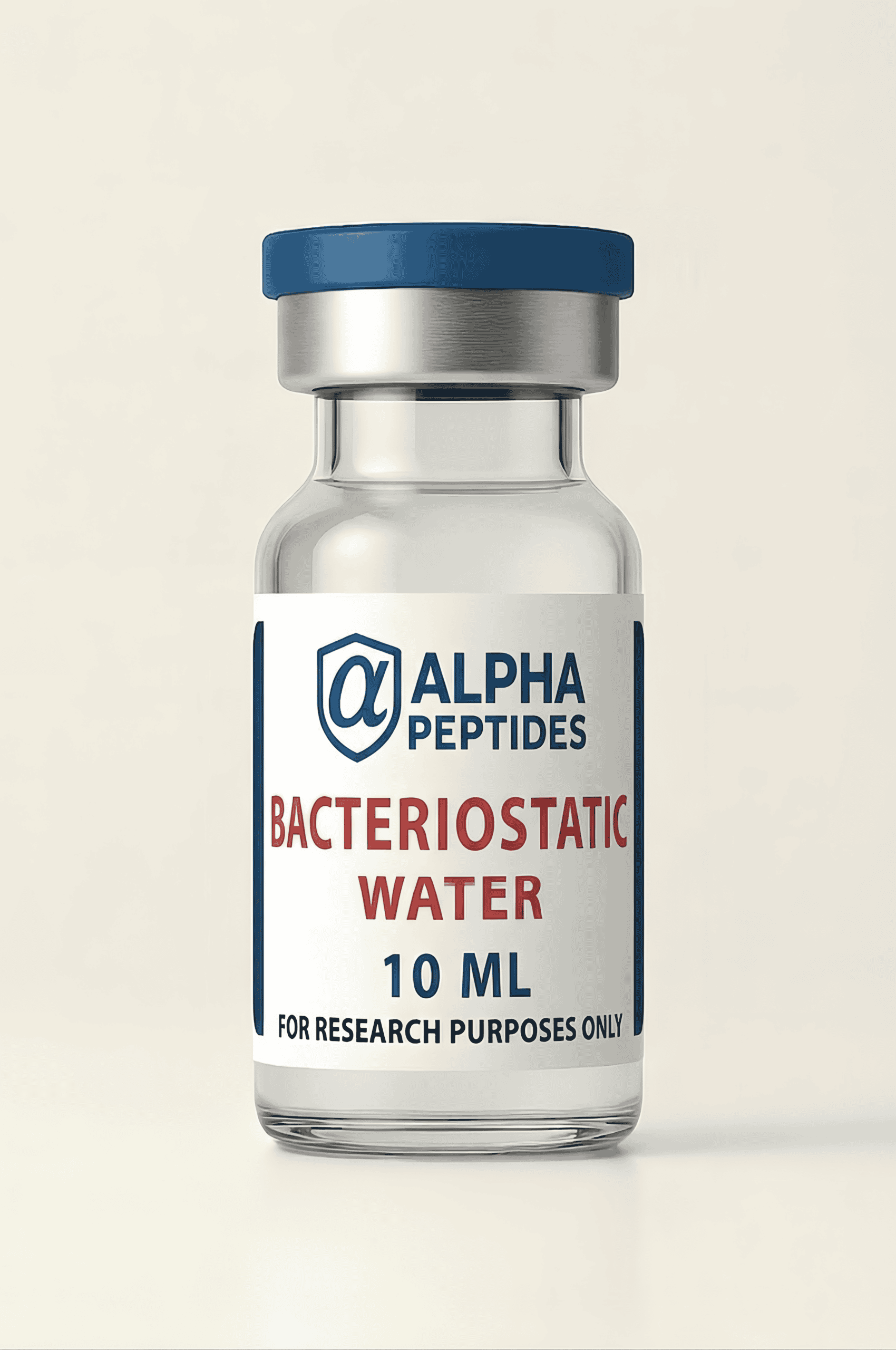
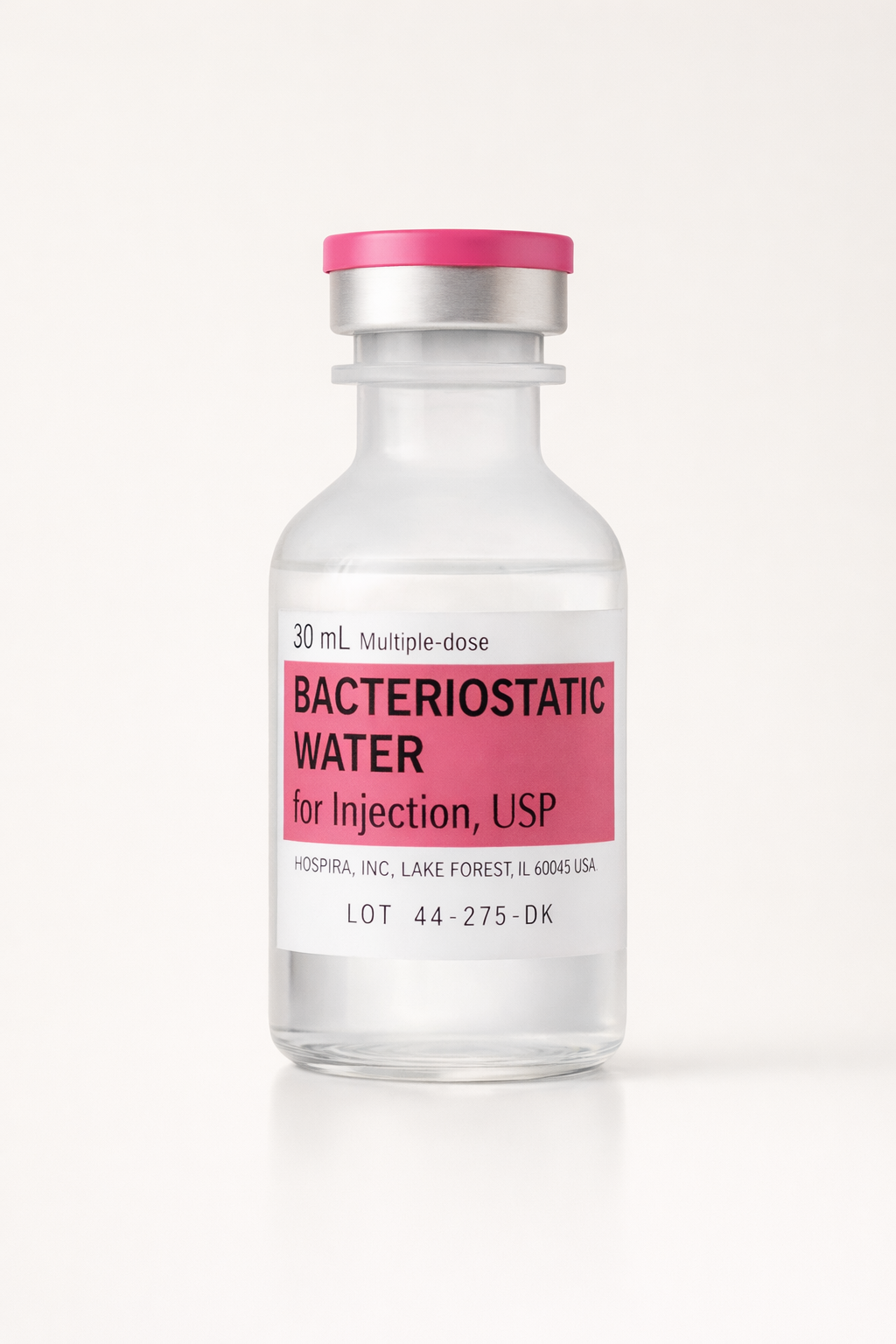
Why bacteriostatic water specifically? Because it contains 0.9% benzyl alcohol as a preservative, which inhibits microbial growth in the solution after reconstitution. Standard sterile water has no such protection — a reconstituted solution stored in regular water is susceptible to bacterial contamination within days. For research purposes, bacteriostatic water is the standard carrier that gives a reconstituted peptide solution the longest viable working window.
One practical note: reconstitute only what you need for your current research window. Once dissolved, the degradation clock starts. Keeping the bulk of your supply in lyophilized form and reconstituting in smaller amounts preserves your overall stock’s integrity far longer than dissolving everything at once.
In our experience working with research peptide suppliers, the most common storage mistake isn’t temperature — it’s reconstituting an entire vial upfront rather than working from the lyophilized stock progressively. Keeping the powder dry until needed is the simplest way to protect compound integrity across a longer research timeline.
When Liquid Peptides Make Sense
It’s worth being honest: pre-mixed liquids aren’t always the wrong choice. A 2022 survey of academic peptide researchers published in the AAPS Journal found that 34% of respondents preferred pre-mixed formats for short-duration, high-frequency research protocols where the compound would be used within four to six weeks of receipt — making reconstitution an unnecessary extra variable in fast-moving studies. ([AAPS Journal](https://link.springer.com/journal/12248), 2022) Context matters.
If you’re running a research protocol that will use the entire stock within a few weeks, and you can verify that the liquid was prepared and shipped under controlled cold-chain conditions, a pre-mixed format might fit your workflow well. The stability trade-off only becomes a real problem when there’s a gap between when the peptide is dissolved and when it’s actually used.
Liquid formats can also simplify workflows that involve precise volume pipetting, where working directly with a pre-characterized concentration reduces the calculation step. For labs running repetitive assays at fixed concentrations, that consistency can be genuinely useful. The key question is always: how quickly will this be used, and how confident am I in the cold-chain history between supplier and bench?
Based on our sourcing and supplier review process at Alpha Peptides, the majority of researchers ordering for extended studies or building compound libraries specifically request lyophilized formats — not because liquid is unavailable, but because the stability margin supports longer research timelines without concerns about potency drift over time.
Frequently Asked Questions
How long do lyophilized peptides last?
Properly stored lyophilized peptides can maintain structural integrity for 24 months or longer when kept at -20°C in sealed, moisture-protected vials. Research published in the European Journal of Pharmaceutics and Biopharmaceutics (2021) documented greater than 98% integrity at the 24-month mark for lyophilized formulations stored at -20°C. Short-term storage at 4°C is generally acceptable for compounds being actively used within a few weeks of reconstitution.
What is bacteriostatic water?
Bacteriostatic water is sterile water containing 0.9% benzyl alcohol. The benzyl alcohol acts as a preservative that inhibits the growth of bacteria and other microorganisms in the solution after a vial is opened or a compound is dissolved. For research peptides, it’s the standard reconstitution solvent because it extends the stable working life of a dissolved solution compared to plain sterile water, which offers no microbial protection once opened.
Can I freeze reconstituted peptides?
Yes, but freeze-thaw cycles should be minimized. Each freeze-thaw cycle introduces mechanical stress on the dissolved peptide chains and increases the risk of aggregation — where peptide molecules clump together in ways that can affect compound behavior in assays. Standard research practice is to aliquot reconstituted solutions into single-use portions before freezing, so each portion is thawed only once. The lyophilized stock should be kept frozen and reconstituted in small batches as needed.
Where can I find properly lyophilized research peptides?
Look for suppliers who provide third-party certificates of analysis (COAs) confirming HPLC purity above 98% and mass spectrometry identity verification for each batch. COA documentation should come from an independent accredited laboratory — not in-house supplier testing. Alpha Peptides carries a full catalog of research-grade lyophilized peptides with independently verified COA documentation. Full records are available at alpha-peptides.com/coas/, and the complete catalog is at alpha-peptides.com/shop/.
The Bottom Line on Format
Lyophilized is the default format for a reason. The stability data is clear, the shelf-life advantage is substantial, and the reconstitution process — once you’ve done it a couple of times — adds less than a minute to your workflow. For most research applications, particularly anything involving longer timelines or careful compound management, there’s no real contest between the two formats.
That said, the right format is the one that fits your actual research workflow. If you understand the stability trade-offs going in, you can make an informed decision either way. Know your timeline, verify the cold-chain history of anything arriving as a liquid, and keep your lyophilized stock sealed and cold until you’re ready to use it.
If you’re sourcing lyophilized peptides for research, start with the COA. Verify the HPLC purity, confirm the molecular weight via mass spectrometry data, and check that testing came from a third-party independent lab. The compound’s reliability starts with documentation.
Related reading: How to Store Research Peptides: A Practical Guide | Browse the Alpha Peptides Research Catalog
For research use only. Not for human consumption. All peptides sold by Alpha Peptides are intended exclusively for laboratory and preclinical research purposes. Nothing on this page constitutes medical advice, dosing guidance, or a recommendation for personal use. All information is provided for educational purposes relating to peptide chemistry and laboratory research practice.
Shop Research-Grade Peptides from Alpha Peptides
Alpha Peptides is a U.S.-based research peptide supplier providing HPLC-verified, third-party tested compounds with full Certificates of Analysis on every batch. All products are for research use only, not for human consumption.
- BPC-157 — 15-amino acid peptide, >98% HPLC purity
- TB-500 — Thymosin Beta-4 fragment, MS-confirmed identity
- Ipamorelin — Selective GHS-R agonist, research grade
- CJC-1295 (with DAC) — GHRH analog with full analytical documentation
Browse all 20+ research peptides → | View Certificates of Analysis →