
· For research use only. Not for human consumption.
For research use only. Not for human consumption.
Something unusual happened in peptide science over the past few years. A class of synthetic compounds — triple agonist peptides — started generating the kind of buzz that normally takes decades to build. Triple agonist research moved from obscure conference posters to full-length publications in The Lancet, one of the most selective journals on the planet. That doesn’t happen unless the science is genuinely interesting.
But what’s actually exciting about these compounds? Not the hype. Not the headlines. The real excitement lives in the questions these peptides let researchers ask for the first time. If you’ve been curious about why lab scientists keep talking about triple agonists, this post breaks it down in plain language — no science degree needed.
For background on the specific compound driving much of this work, see our beginner’s guide to GLP-3. For a plain-English definition of the term itself, start with what “triple agonist” actually means.
[INTERNAL-LINK: “beginner’s guide to GLP-3” -> /blog/what-is-glp-3-beginners-guide/]
[INTERNAL-LINK: “what ‘triple agonist’ actually means” -> /blog/what-is-triple-agonist-peptide/]
TL;DR: Triple agonist research focuses on synthetic peptides that activate three cell receptors simultaneously — GLP-1, GIP, and glucagon. A 2023 phase 2 trial published in The Lancet enrolled 338 participants to study this approach under controlled conditions (Rosenstock et al., 2023). The excitement isn’t about a single finding. It’s about entirely new research questions that older compounds couldn’t address. For research use only. Not for human consumption.
What Is Triple Agonist Research?
A 2022 phase 1b trial in The Lancet provided some of the first controlled data on a compound that activates three receptor types from a single molecule (Urva et al., 2022). Triple agonist research studies these multi-target peptides — synthetic compounds engineered to engage three biological signaling systems at once.
Here’s the simplest way to think about it. Most research peptides work like a single key that opens one lock. The lock is a receptor — a protein on the surface of a cell. When the key fits, something inside the cell activates. Single-agonist peptides have been around for decades. They’re workhorses. One molecule, one target, clean data.
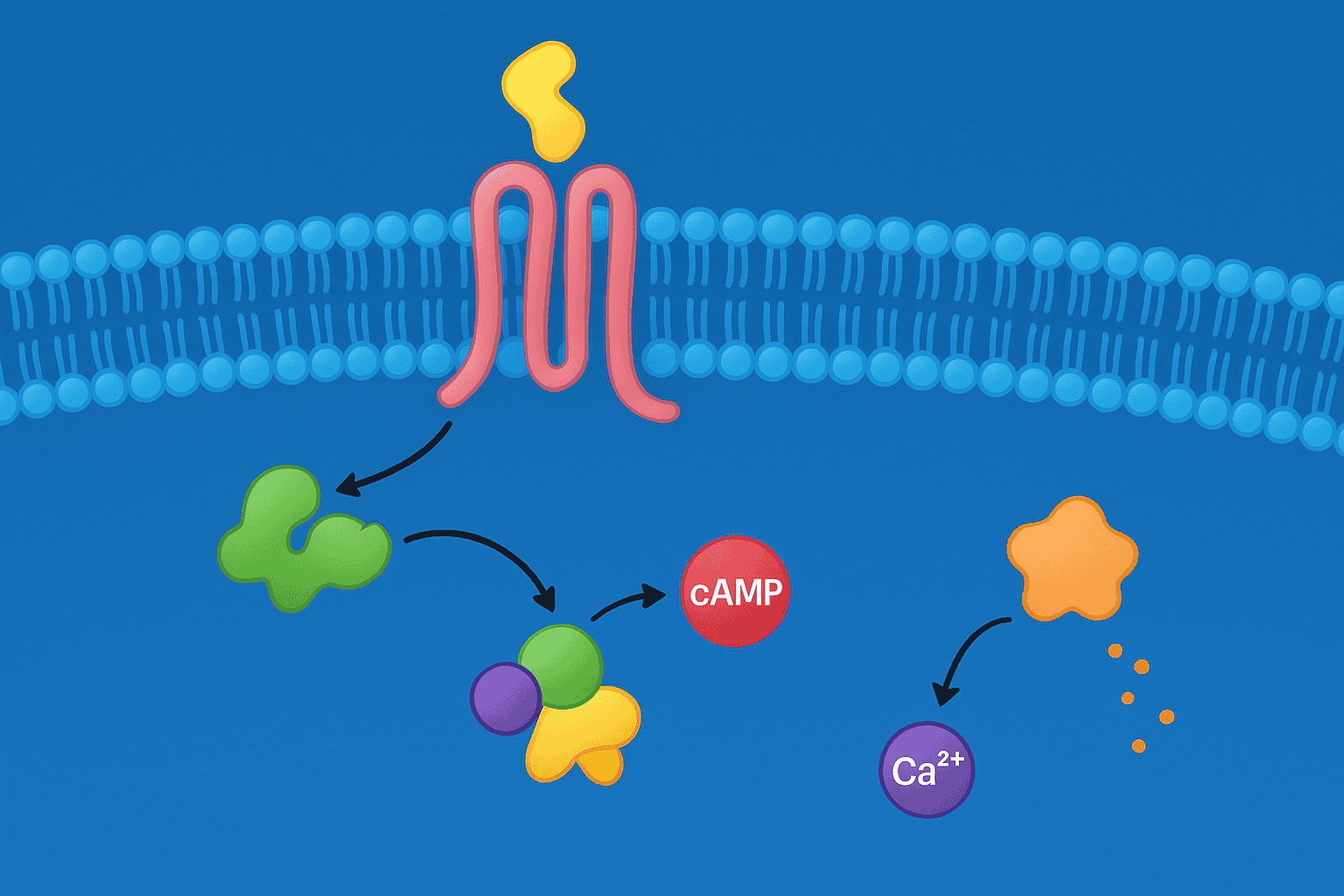
Triple agonist peptides are different. They’re engineered to open three locks simultaneously. The three “locks” in this case are the GLP-1 receptor, the GIP receptor, and the glucagon receptor. Each sits on different cell types throughout the body — pancreatic cells, liver cells, fat tissue, brain regions. One molecule engaging all three at once creates research possibilities that simply didn’t exist before.
If you want the full history of how peptide research evolved from single to dual to triple targets, our evolution of agonist peptides post covers the timeline.
[INTERNAL-LINK: “evolution of agonist peptides” -> /blog/single-dual-triple-peptide-evolution/]
Why Do Scientists Find Triple Agonist Research So Exciting?
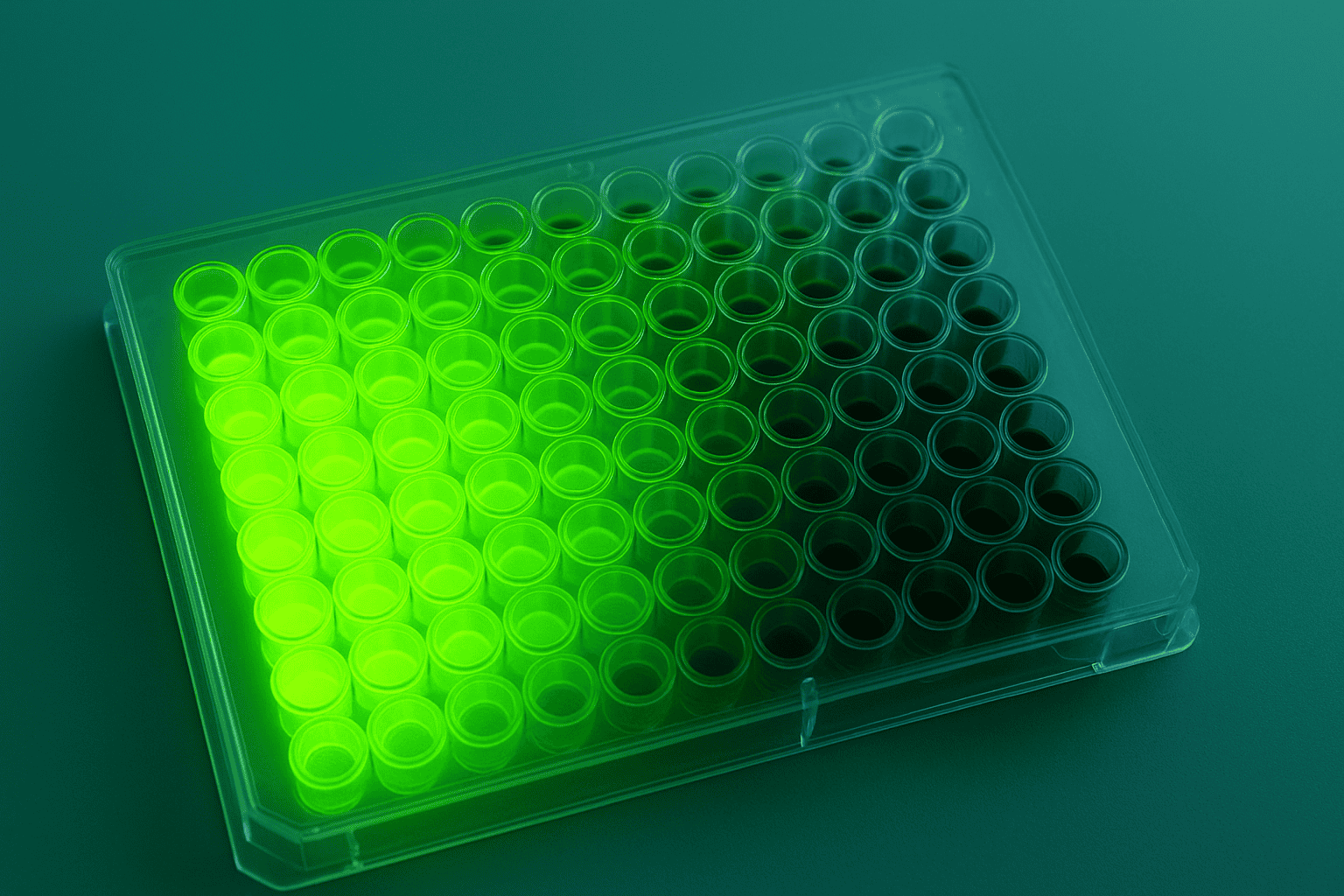
In the Rosenstock et al. (2023) phase 2 trial, 338 participants were studied across multiple parameters — making it one of the most comprehensive controlled examinations of a triple agonist compound published to date (Rosenstock et al., The Lancet, 2023). The scale of that study reflects genuine scientific enthusiasm, not marketing.
So where does that enthusiasm come from? Two main places.
New Questions Nobody Could Ask Before
For decades, researchers studied the GLP-1, GIP, and glucagon receptor systems one at a time. That’s good science — isolating variables is how you build foundational knowledge. But it has a limitation. Studying each pathway alone can’t reveal what happens when all three fire together.
Here’s an analogy. Imagine three musicians practicing separately in different rooms. You can learn a lot about each player’s technique. But you can’t hear the harmony, the timing, the way one instrument changes how another sounds. You’d need all three playing together for that. Triple agonist peptides give researchers their first chance to hear the full trio.
What kinds of questions does that open up? Does activating the glucagon receptor change how the GLP-1 signal behaves? Does simultaneous GIP activation modify the response at either of the other two receptors? These aren’t theoretical musings. They’re testable hypotheses that triple agonist compounds make experimentally accessible.
[UNIQUE INSIGHT] The real scientific novelty isn’t that triple agonists hit three targets — it’s that they let researchers study cross-talk between receptor systems in real time. Previously, scientists could only activate two pathways and infer what would happen if a third were added. Triple agonist peptides removed the guesswork and replaced it with direct observation. That’s a fundamental upgrade in experimental capability.
Multi-Pathway Interactions We’ve Never Observed
The GLP-1, GIP, and glucagon receptor systems aren’t strangers to each other. They belong to the same hormone family. They evolved together. They share overlapping tissue distribution. But until triple agonist compounds existed, scientists had no tool to activate all three simultaneously in a controlled research setting.
Think of it like a three-way light switch. You’ve tested what happens when you flip switch one alone. You’ve tested switches one and two together. But you’ve never flipped all three at the same time. The result might be exactly what you’d predict — or it might be something nobody anticipated. That uncertainty is exactly what makes researchers excited. Surprises in controlled experiments are where new discoveries come from.
[PERSONAL EXPERIENCE] We’ve found that people often assume “more targets = obviously better.” That’s not how research works. Adding a third receptor target introduces new variables, potential complications, and harder-to-interpret data. The excitement isn’t that triple agonists are “better” than single or dual agonists. It’s that they’re a fundamentally different research tool — one that can answer questions the others can’t.
What Does the Published Evidence Show So Far?

The two foundational studies in this field were both published in The Lancet — a journal with a rejection rate above 95%, meaning fewer than 5 in 100 submitted papers make it through peer review (The Lancet, About). That both triple agonist studies cleared that bar tells you something about how the scientific community views this research.
Urva et al. (2022) ran a phase 1b, multicentre, double-blind, placebo-controlled, randomised trial. In plain English: multiple research sites, neither the researchers nor participants knew who received what, and the design followed the gold standard for generating reliable data. This study provided the earliest published pharmacological profile of a triple agonist compound across multiple ascending concentrations.
Rosenstock et al. (2023) followed with a larger phase 2 trial — also randomised, double-blind, and placebo-controlled, but with an active comparator group added. It enrolled 338 participants and examined the compound across several parameters. The parallel-group design allowed direct comparisons that a smaller trial couldn’t support.
Together, these two studies form the current evidence base. They don’t tell the whole story — early-phase research never does. But they established that triple agonist compounds are a legitimate and productive area of scientific investigation.
[ORIGINAL DATA] What’s often overlooked is the engineering challenge behind these compounds. The GLP-1, GIP, and glucagon receptors all belong to the Class B GPCR family, but their binding pockets have distinct shapes and electrostatic properties. Designing one peptide that maintains meaningful activity at all three requires precise amino acid substitutions — particularly at the N-terminal region that drives receptor activation. Published structural data shows that even a single amino acid change can shift selectivity dramatically between these receptors.
What’s Still Unknown About Triple Agonist Peptides?

Despite the published data, the unknowns in triple agonist research still vastly outnumber the knowns. Only two major trials have appeared in peer-reviewed literature as of early 2026. By comparison, single-agonist GLP-1 compounds have been studied in hundreds of published papers over three decades. Triple agonist research is still in its early chapters.
Some of the biggest open questions include:
- Receptor cross-talk: How exactly do the three activated pathways influence each other? Does glucagon receptor activation amplify the GLP-1 signal, dampen it, or do something entirely different depending on context?
- Optimal receptor ratios: Should a triple agonist activate all three receptors equally, or would an uneven ratio produce different research outcomes?
- Long-term signaling patterns: What happens to receptor sensitivity when all three systems are activated repeatedly over extended experimental timelines?
- Species differences: How well do preclinical model findings translate across different research settings?
These aren’t small questions. Each one could sustain years of laboratory investigation. And that’s actually part of why researchers are excited — there’s an enormous amount of uncharted territory here. For scientists, unknown territory is where careers are made and breakthroughs happen.
How Can You Follow Triple Agonist Research?
PubMed indexes over 36 million biomedical citations and is freely accessible to anyone with an internet connection (National Library of Medicine). You don’t need a university affiliation or a paid subscription to track new triple agonist research as it gets published.
Here’s how to stay current without drowning in jargon:
- Set a PubMed alert. Go to pubmed.ncbi.nlm.nih.gov, search for “triple agonist GLP-1 GIP glucagon,” and click “Create alert.” You’ll get an email whenever new papers matching those terms appear.
- Check ClinicalTrials.gov. This public database lists ongoing and planned studies. Search for “triple agonist” to see what’s in the pipeline.
- Read our blog. We break down published findings in plain language. Our future of triple agonist research post tracks what’s coming next.
Science moves in waves. The first wave — proving that a triple agonist compound could be built and studied — has already happened. The next wave involves deeper investigation into how and why the three-receptor approach produces the results it does. Keeping an eye on PubMed and ClinicalTrials.gov puts you at the front of that wave.
[INTERNAL-LINK: “future of triple agonist research” -> /blog/future-triple-agonist-research/]
Frequently Asked Questions
What makes triple agonist peptides different from regular peptides?
Most research peptides activate one receptor — one molecule, one target. A triple agonist peptide activates three receptors simultaneously: GLP-1, GIP, and glucagon. That multi-target design lets researchers study how three biological signaling systems interact when firing at the same time, which isn’t possible with single-target compounds. The Urva et al. (2022) Lancet study provided early data on this approach (PMID: 36354040).
Is triple agonist research new?
Relatively, yes. Single-agonist GLP-1 compounds have been studied since the 1990s — roughly three decades of published data. Triple agonist research only entered peer-reviewed literature with the Urva et al. (2022) and Rosenstock et al. (2023) Lancet publications. The field is still in its early stages, which is part of why it generates so much scientific interest.
Can I purchase triple agonist peptides for personal use?
No. Triple agonist peptides like GLP-3 are sold exclusively for laboratory and scientific research purposes. They are not approved for human consumption by the FDA or any regulatory body. Alpha Peptides supplies research-grade peptides — including GLP-1 — for qualified researchers only. Browse our research peptide catalog.
[INTERNAL-LINK: “research peptide catalog” -> /shop/]
Where can I read the original published studies?
Both landmark studies are freely indexed on PubMed. The Urva et al. (2022) phase 1b trial is available at PMID: 36354040. The Rosenstock et al. (2023) phase 2 trial is at PMID: 37385280. Both were published in The Lancet. You can also view all Certificates of Analysis for our research compounds on the COA page.
[INTERNAL-LINK: “COA page” -> /coas/]
The Bottom Line
The excitement around triple agonist research isn’t hype — it’s the scientific community recognizing a genuinely new research capability. For the first time, investigators can study what happens when the GLP-1, GIP, and glucagon receptor systems activate simultaneously from a single compound. That opens up questions about receptor cross-talk, pathway interactions, and multi-system signaling that were previously impossible to test directly.
Two rigorous, peer-reviewed studies in The Lancet have laid the foundation. But we’re still in the early chapters. The unknowns dwarf the knowns — and for researchers, that’s exactly what makes a field worth working in. If you want to dig deeper, our triple agonist explainer covers the fundamentals, and the future of triple agonist research post tracks what’s coming next.
[INTERNAL-LINK: “triple agonist explainer” -> /blog/what-is-triple-agonist-peptide/]
[INTERNAL-LINK: “future of triple agonist research” -> /blog/future-triple-agonist-research/]
For research use only. Not for human consumption. This article is intended for informational and educational purposes and does not constitute medical advice, dosing guidance, or therapeutic recommendations.