
· For research use only. Not for human consumption.
For research use only. Not for human consumption.
If you’re exploring research peptides, you’ve likely come across the name TB-500. But what is TB-500, really? Is it the same thing as Thymosin Beta-4? And why are so many laboratories interested in studying it? This guide answers all of those questions — no biochemistry background needed.
TB-500 is a synthetic version of a naturally occurring peptide called Thymosin Beta-4. This protein exists in almost every cell in your body. It was first described in the mid-1960s and has since accumulated a significant body of research. One key review documented Thymosin Beta-4’s presence in virtually all mammalian cell types (Goldstein et al., Annals of the New York Academy of Sciences, 2005). This is particularly relevant for what is tb-500 research.
Let’s break down what TB-500 is, where it comes from, and why it keeps showing up in preclinical research. If you’re already familiar with it and want to see how it compares to BPC-157, check our side-by-side comparison.
[INTERNAL-LINK: “side-by-side comparison” → BPC-157 vs TB-500 comparison post]
TL;DR: TB-500 is a synthetic peptide based on Thymosin Beta-4, a protein found in nearly every mammalian cell (Goldstein et al., 2005). Researchers study it for its interactions with actin — the structural scaffolding inside cells — making it one of the most distinctive peptides in preclinical research.
What Is TB-500 and How Is It Related to Thymosin Beta-4?
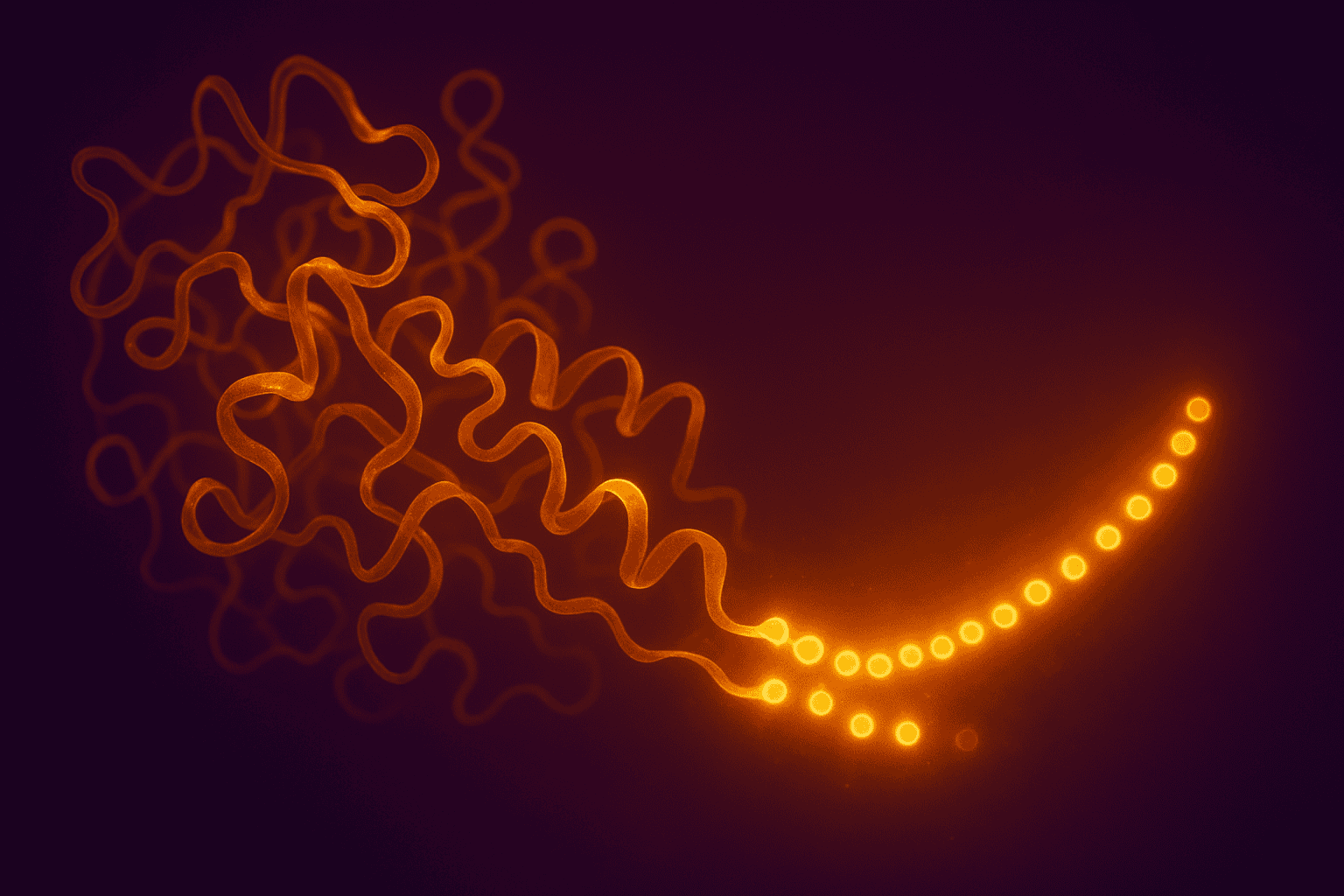
To understand what TB-500 is, you first need to know about its parent protein, Thymosin Beta-4. This is a 43-amino-acid protein found in nearly every type of mammalian cell (Goldstein et al., 2005). It was originally isolated from the thymus gland — hence the name “thymosin” — but scientists quickly discovered it exists throughout the body, not just in the thymus.
Here’s a helpful analogy. Imagine Thymosin Beta-4 is a full book — 43 pages long. TB-500 is like photocopying the most interesting chapter. It contains the active region of the larger protein, the part researchers are most keen to study. Specifically, TB-500 corresponds to the sequence of Thymosin Beta-4 that interacts with actin.
What’s actin? It’s the protein that forms the internal skeleton of your cells. Every cell has a scaffolding system that gives it shape, helps it move, and allows it to divide. Actin is a critical part of that scaffolding. And Thymosin Beta-4 — and by extension TB-500 — binds directly to actin.
[IMAGE: Simple diagram showing a cell with internal actin scaffolding structure highlighted — search terms: cell actin cytoskeleton simple diagram illustration]
The Discovery of Thymosin Beta-4
The thymosin family of peptides was first identified by Allan Goldstein at the Albert Einstein College of Medicine in the 1960s. Researchers initially thought these peptides were only produced by the thymus gland, which plays a role in the immune system. That turned out to be wrong — Thymosin Beta-4 is produced everywhere.
By the early 2000s, research had expanded dramatically. Philp and colleagues published important work characterizing Thymosin Beta-4’s interactions with actin and cell structure (Philp et al., FASEB Journal, 2004). This paper helped establish the foundation for much of the subsequent TB-500 research.
Why Do Researchers Study TB-500?
The primary reason researchers study TB-500 is its relationship with actin. Actin isn’t just any protein — it’s one of the most abundant proteins in the body. It forms the structural framework that cells need to maintain their shape, move, and divide. When you picture a cell, you might imagine a blob. In reality, cells have a sophisticated internal skeleton, and actin is a major component. This is particularly relevant for what is tb-500 research.
TB-500 binds to a specific form of actin called G-actin (globular actin). Think of G-actin as individual bricks. When those bricks get assembled into a wall, they become F-actin (filamentous actin). By interacting with the individual bricks, TB-500 influences how the wall gets built.
[UNIQUE INSIGHT] What makes TB-500 genuinely unusual in the research peptide landscape is how fundamental its target is. Actin isn’t a niche pathway — it’s basic cellular architecture. That’s why TB-500 research spans so many different tissue types and biological contexts.
This actin-binding property has made TB-500 the subject of preclinical investigations involving cell migration — how cells move from one place to another. Cell migration is a fundamental process in biology, and any molecule that influences it naturally attracts scientific attention.
TB-500, a synthetic fragment of Thymosin Beta-4, binds directly to G-actin — the monomeric form of the most abundant structural protein in mammalian cells. Research by Philp et al. (FASEB Journal, 2004) characterized this interaction and its relationship to cell migration in preclinical models.
What Makes TB-500 Unique Among Research Peptides?

Several features make TB-500 stand out. First, its target is fundamental. While many research peptides interact with specialized receptors or signaling pathways, TB-500 interacts with actin — part of the basic machinery every cell needs to function. That’s like studying a component of the engine rather than the paint color.
Second, Thymosin Beta-4 is remarkably widespread. It’s been found in blood, wound fluid, saliva, and tears. The fact that the body produces this protein in so many different locations tells researchers it likely plays an important role — though exactly what that role is remains an active area of investigation.
Third, TB-500’s molecular properties make it interesting from a structural biology perspective. It’s small enough to study in detail with modern analytical techniques, but large enough to have meaningful biological interactions. This “Goldilocks zone” makes it a practical research tool.
How Is TB-500 Produced for Research?
Like most research peptides, TB-500 is manufactured through solid-phase peptide synthesis. The process builds the amino acid chain one residue at a time on a solid support. After synthesis, the peptide is purified using HPLC and verified by mass spectrometry.
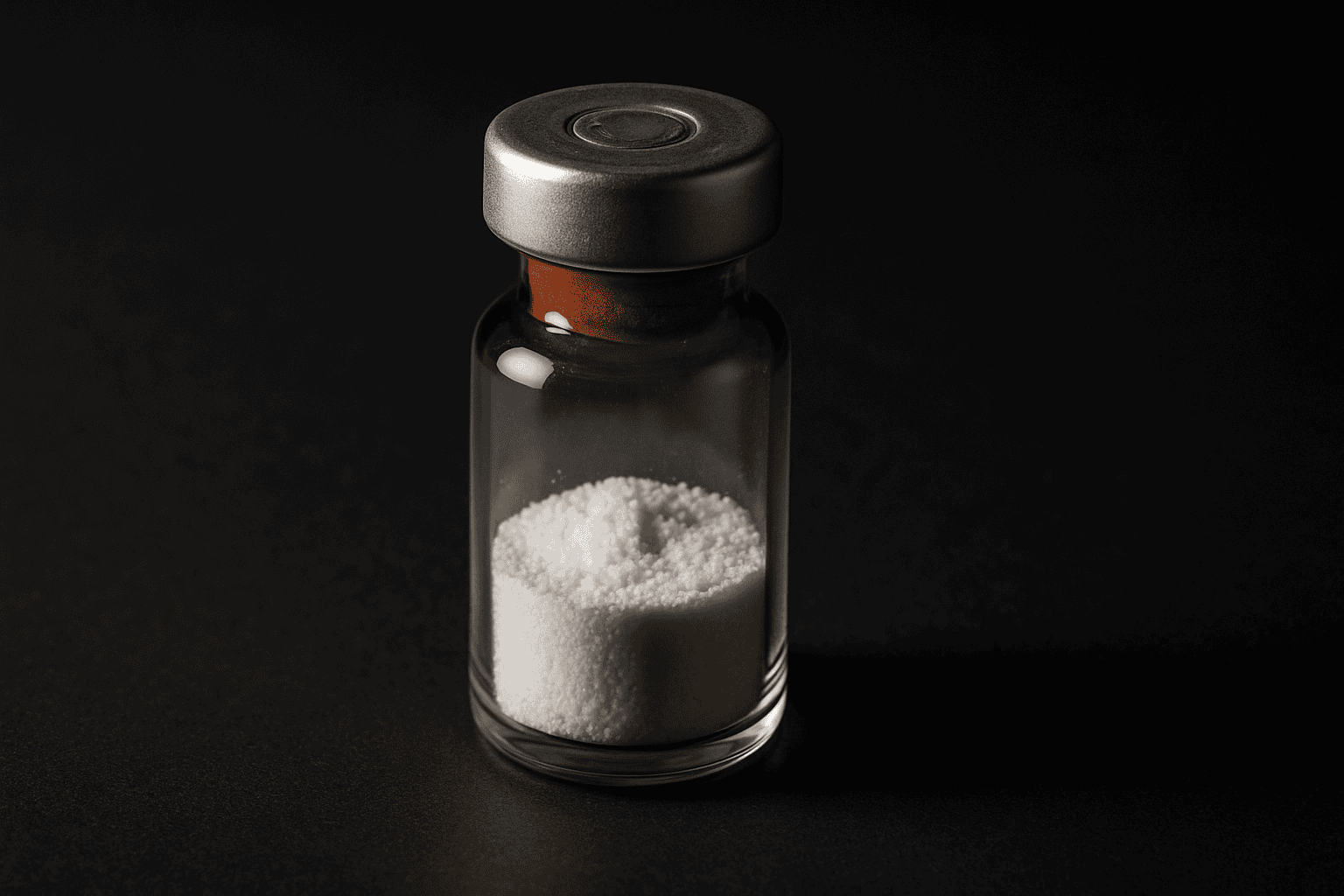
The final product is a white lyophilized (freeze-dried) powder. Lyophilization removes all water, which dramatically improves shelf life and stability. Reconstitution with bacteriostatic water is needed before laboratory use. Alpha Peptides provides batch-specific Certificates of Analysis for all TB-500 orders.
[INTERNAL-LINK: “Certificates of Analysis” → /coas/]
How Should Beginners Approach TB-500 Research?
If you’re new to TB-500, start by reading the foundational literature. The Goldstein (2005) and Philp (2004) papers cited above provide excellent background. Understanding actin biology — even at a basic level — will help you make sense of the preclinical findings.
Quality matters as much with TB-500 as with any research peptide. Always request a COA showing HPLC purity above 98% and mass spectrometry confirmation. Store lyophilized TB-500 at -20 degrees Celsius for long-term stability.
And remember: all published TB-500 research involves preclinical models. Animal studies and cell culture experiments provide valuable data, but they don’t translate directly to other contexts. Interpreting results carefully and conservatively is good scientific practice.
Frequently Asked Questions About TB-500

Is TB-500 the same as Thymosin Beta-4?
Not exactly. Thymosin Beta-4 is the full 43-amino-acid protein found naturally in cells. TB-500 is a synthetic peptide that corresponds to the active region of Thymosin Beta-4 — specifically the portion that interacts with actin. Think of TB-500 as the most important chapter from the full Thymosin Beta-4 book.
What does TB-500 bind to?
TB-500 binds to G-actin, the monomeric (individual brick) form of actin. Actin is one of the most abundant structural proteins in mammalian cells, forming the internal scaffolding that gives cells their shape. This interaction was characterized by Philp et al. (2004) in the FASEB Journal.
Where is Thymosin Beta-4 found in the body?
Thymosin Beta-4 has been identified in nearly every mammalian cell type, according to Goldstein et al. (2005). It’s also been detected in blood plasma, wound fluid, saliva, and tears. Its widespread presence suggests it plays a fundamental role in basic cell biology.
For research use only. Not for human consumption. TB-500 is an experimental compound with no FDA-approved therapeutic applications. All information on this page is provided for educational purposes relating to laboratory and preclinical research.