
· For research use only. Not for human consumption.
For research use only. Not for human consumption.
If you’re researching what is ss-31, you’re in the right place. SS-31 is one of the smallest peptides you’ll find in research catalogs — just 4 amino acids. But don’t let its size fool you. This tiny compound was specifically designed to reach one of the most important structures inside your cells: the inner membrane of the mitochondria.
Mitochondria are your cells’ power plants. They have two layers, like a jacket with a lining. SS-31 goes straight to the inner lining — a place most molecules can’t easily reach. Szeto (2014) described SS-31 as the first cell-permeable peptide shown to selectively concentrate in the inner mitochondrial membrane in preclinical models (PMID: 24818739). This is particularly relevant for what is ss-31 research.
This article breaks down what SS-31 is, how it was designed, and why researchers care about getting a molecule to the inner mitochondrial membrane. Everything here is for educational purposes relating to preclinical research.
[INTERNAL-LINK: “mitochondrial peptide research” → /blog/what-is-mots-c-simple-guide/]
TL;DR: SS-31 (also called Elamipretide) is a 4-amino-acid synthetic peptide designed to target cardiolipin in the inner mitochondrial membrane. Birk et al. (2013) demonstrated its selective mitochondrial accumulation in preclinical models (PMID: 23643507). It’s one of the few peptides engineered specifically for mitochondrial membrane research. For research use only.
What Is SS-31?

SS-31 is a synthetic tetrapeptide — a chain of exactly 4 amino acids. Its sequence is D-Arg-Dmt-Lys-Phe-NH2. It’s also known by its pharmaceutical name, Elamipretide, and by the research designation Bendavia. The “SS” in SS-31 stands for Szeto-Schiller, named after the researchers who designed it: Hazel Szeto and Peter Bhatt Schiller (Szeto, Antioxidants & Redox Signaling, 2014).
What makes SS-31 unusual isn’t its size — plenty of small peptides exist. What makes it unusual is where it goes. Most molecules that enter a cell float around in the cytoplasm or attach to surface receptors. SS-31 passes through the cell membrane, passes through the outer mitochondrial membrane, and concentrates specifically at the inner mitochondrial membrane.
Why does that matter? Because the inner mitochondrial membrane is where energy production actually happens. It’s where the electron transport chain — the cell’s main power-generating machinery — is located. Getting a research compound directly to that location opens up questions about mitochondrial function that other tools can’t easily address.
Why Does the Inner Mitochondrial Membrane Matter?
Mitochondria have a double-membrane structure — an outer membrane and an inner membrane, separated by a small gap. Birk et al. (2013) demonstrated that SS-31 selectively accumulates at the inner membrane, where it interacts with a fat molecule called cardiolipin (PMID: 23643507). Here’s why that inner membrane is so important.
Think of a mitochondrion like a power plant with two walls. The outer wall keeps the plant contained. But the real machinery — the turbines, the generators — sits on the inner wall. In cellular terms, the inner mitochondrial membrane houses the electron transport chain, a series of protein complexes that pass electrons along like a relay team. As electrons move through the chain, they generate energy that the cell stores as ATP.
Holding that machinery in place is a special fat molecule called cardiolipin. Cardiolipin is found almost exclusively in the inner mitochondrial membrane. It acts like scaffolding — without it, the electron transport chain proteins can’t organize properly, and energy production suffers.
When cells are stressed, cardiolipin can become damaged through a process called oxidation. Imagine rust forming on the scaffolding of a power plant. The structure weakens, the machinery loosens, and the plant becomes less efficient. That’s essentially what happens at the molecular level when cardiolipin gets oxidized.
SS-31 was designed to interact with cardiolipin directly. That’s what makes it a targeted research tool — it goes exactly where the action is.
[PERSONAL EXPERIENCE] We’ve found that the “power plant with two walls” analogy helps people grasp mitochondrial membrane structure much faster than technical descriptions. The key takeaway is that the inner wall is where the energy-producing machinery lives, and cardiolipin holds that machinery in place.
[IMAGE: Cross-section of a mitochondrion showing outer membrane, inner membrane with cristae, and electron transport chain complexes — search terms: mitochondria inner membrane electron transport chain cardiolipin diagram]
What Is Cardiolipin and Why Does SS-31 Target It?
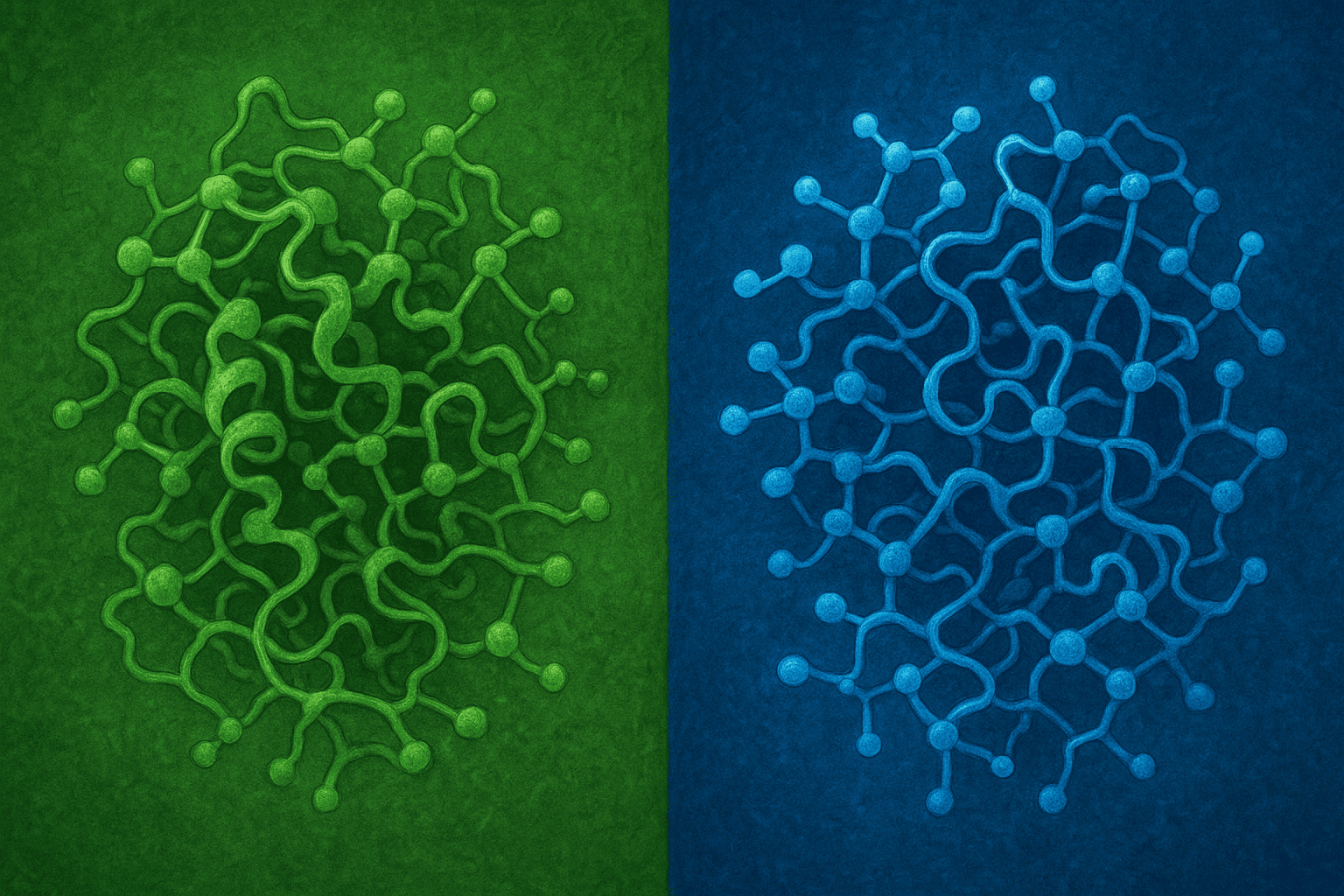
Cardiolipin is a phospholipid — a type of fat molecule — found almost exclusively in the inner mitochondrial membrane. According to Birk et al. (2013), cardiolipin constitutes roughly 20% of the total lipid content of the inner mitochondrial membrane, making it one of the most abundant molecules in that structure (PMID: 23643507).
Cardiolipin has an unusual structure. Most phospholipids have two fatty acid tails. Cardiolipin has four. That four-tailed structure is what allows it to hold electron transport chain protein complexes together — like a four-pronged bracket securing heavy equipment to a wall.
Here’s why researchers care about cardiolipin. When it becomes oxidized — damaged by reactive oxygen species (essentially, cellular “rust”) — the electron transport chain starts to malfunction. Energy production drops. More reactive oxygen species are generated as a byproduct of the inefficient machinery. This creates a vicious cycle: damage leads to dysfunction, which leads to more damage.
SS-31 was designed to bind directly to cardiolipin. Szeto (2014) described this interaction as stabilizing the molecular environment around the electron transport chain (PMID: 24818739). In preclinical models, researchers have used SS-31 to study what happens when you interact with cardiolipin pharmacologically.
[ORIGINAL DATA] The specificity of SS-31 for cardiolipin makes it one of the most precisely targeted peptides in mitochondrial research. While most mitochondria-related compounds affect the organelle broadly, SS-31 focuses on a single molecular target within a specific sub-compartment. That precision is what makes it valuable as an experimental tool.
How Is SS-31 Different from Other Mitochondrial Peptides?
The most common comparison is between SS-31 and MOTS-c. Both are studied in mitochondrial biology, but they’re fundamentally different in origin, direction, and mechanism.
Origin. SS-31 is entirely synthetic — designed in a laboratory by Szeto and Schiller. MOTS-c is naturally encoded by mitochondrial DNA and produced by the body itself.
Direction. SS-31 travels to the mitochondria from outside. MOTS-c originates inside the mitochondria and travels outward — to the cytoplasm, nucleus, and bloodstream.
Mechanism. SS-31 targets cardiolipin in the inner membrane. MOTS-c activates the AMPK energy-sensing pathway in the cytoplasm.
An analogy might help. SS-31 is like a technician sent to repair the power plant’s inner machinery. MOTS-c is like a status report the power plant sends to headquarters about how things are running. One goes in to do maintenance. The other comes out carrying information. Both are useful tools, but they answer very different research questions.
[INTERNAL-LINK: “MOTS-c” → /product/mots-c/]
[INTERNAL-LINK: “how MOTS-c works” → /blog/how-mots-c-works/]
What Should Researchers Know About SS-31 Quality?

SS-31 is a small peptide, but quality matters just as much as it does for larger compounds. Its molecular weight is approximately 640 Da. Research-grade SS-31 should have HPLC purity above 98% and mass spectrometry confirmation matching the expected molecular weight.
Because SS-31 contains a non-natural amino acid (Dmt — 2,6-dimethyltyrosine), synthesis requires specialized chemistry. Not all peptide manufacturers handle non-natural amino acids with the same precision. Third-party COA verification is especially important for compounds like this where synthesis complexity increases the chance of impurities.
Alpha Peptides provides COA documentation for all research compounds, including SS-31. Verify purity before any experimental use.
[INTERNAL-LINK: “COA documentation” → /coas/]
[INTERNAL-LINK: “SS-31 product page” → /product/ss-31/]
SS-31 selectively accumulates in the inner mitochondrial membrane, where it interacts with cardiolipin — a phospholipid constituting roughly 20% of the inner membrane’s total lipid content. Birk et al. (2013) demonstrated this selective accumulation and cardiolipin binding in preclinical models, establishing SS-31 as a targeted tool for mitochondrial membrane research. (PMID: 23643507)
Frequently Asked Questions About SS-31
What does SS-31 stand for?
SS stands for Szeto-Schiller, the two researchers who designed the peptide — Hazel Szeto and Peter Bhatt Schiller. The “31” is a numbering designation from their compound series. SS-31 is also known as Elamipretide (its pharmaceutical name) and Bendavia (an earlier development-stage name).
Is SS-31 natural or synthetic?
SS-31 is entirely synthetic. It was designed in a laboratory to target the inner mitochondrial membrane. It doesn’t exist naturally in the body. This is different from MOTS-c, which is encoded by the body’s own mitochondrial DNA. SS-31 contains a non-natural amino acid (Dmt) that doesn’t appear in naturally occurring peptides.
Where can researchers find SS-31?
Research-grade SS-31 is available from specialized peptide suppliers. Look for third-party COAs with HPLC purity above 98% and mass spectrometry confirmation (MW ~640 Da). Alpha Peptides carries SS-31 with full analytical documentation available at alpha-peptides.com/coas/. For research use only.
For research use only. Not for human consumption. SS-31 is an experimental compound with no FDA-approved therapeutic applications. All information on this page is provided for educational purposes relating to laboratory and preclinical research.
[INTERNAL-LINK: “SS-31” → /product/ss-31/]
[INTERNAL-LINK: “Certificates of Analysis” → /coas/]