
· For research use only. Not for human consumption.
For research use only. Not for human consumption.
What is Semax? If you’ve come across this name in peptide research circles, here’s the quick version: Semax is a synthetic peptide based on a small fragment of a natural brain hormone. Russian scientists built it in the 1990s, and it’s been studied in preclinical models ever since.
But that quick version skips all the interesting details. Where did Semax come from? What does “based on a brain hormone” actually mean? And why do neuroscience researchers keep publishing papers about it three decades later? This is particularly relevant for what is semax research.
This guide answers those questions in plain English. No biochemistry prerequisite required. We’ll cover the origin story, the science behind the name, and what published research has found — all in language anyone can follow.
TL;DR: Semax is a synthetic 7-amino-acid peptide derived from ACTH(4-10), a fragment of the stress hormone ACTH. It was developed at the Institute of Molecular Genetics in Russia. Ashmarin et al. (1995) published early research on Semax’s neuropeptide properties (PMID: 7784177). Semax is sold exclusively for laboratory research. Not for human consumption.
What Is Semax and Where Does It Come From?

Semax is a synthetic heptapeptide — seven amino acids long — developed at the Institute of Molecular Genetics in Moscow. Ashmarin et al. (1995) characterized its properties in a publication that established Semax as a research tool for studying neuropeptide pathways (PMID: 7784177). It was developed alongside Selank, another Russian neuropeptide.
Here’s the origin story in simple terms. Your body produces a hormone called ACTH — adrenocorticotropic hormone. It’s a 39-amino-acid chain that plays a major role in your stress response system. ACTH tells your adrenal glands to release cortisol when you’re under stress.
Researchers discovered that you don’t need the entire 39-amino-acid chain to get interesting biological activity. A tiny fragment — just amino acids 4 through 10 — showed activity in preclinical models on its own. This fragment is called ACTH(4-10). Think of it like finding that a single chapter from a long book tells a complete and interesting story by itself.
But ACTH(4-10) had a problem. Like most natural peptide fragments, enzymes would break it down within minutes. So Russian scientists took that fragment and modified it — adding a stabilizing tail to make it last longer. The result was Semax. Same core structure, better durability.
Semax is a synthetic heptapeptide derived from ACTH(4-10), a fragment of adrenocorticotropic hormone. Developed at the Institute of Molecular Genetics in Moscow, it was designed as a stabilized research tool for studying neuropeptide pathways. Ashmarin et al. (1995) published early characterization of the compound’s properties and research applications (PMID: 7784177).
What Does “Based on ACTH” Mean in Simple Terms?
ACTH is one of the body’s most important hormones. It’s produced in the pituitary gland — a pea-sized structure at the base of your brain that acts as a hormone control center. When your brain detects stress, the pituitary releases ACTH into the bloodstream. ACTH then travels to the adrenal glands and triggers cortisol release.
That’s the full-length ACTH’s main job. But researchers noticed something curious. Different fragments of ACTH did different things. The stress-response activity was concentrated in one part of the chain. Other parts showed entirely different properties in laboratory models. This is particularly relevant for what is semax research.
The fragment that became Semax — ACTH(4-10) — didn’t seem to trigger cortisol release the way full-length ACTH does. Instead, it showed different activity patterns in preclinical brain models. Researchers took a piece of a stress hormone and found it did something other than triggering stress. That contradiction is part of what made it scientifically interesting.
Here’s an analogy. Imagine taking the engine out of a car and discovering it can also work as a water pump. Same hardware, completely different function depending on the context. ACTH(4-10) behaves differently when separated from the rest of the ACTH molecule.
[ORIGINAL DATA] Semax and Selank were developed at the same institute during the same era by overlapping research teams. This shared origin is unusual in peptide research, where most compounds emerge independently from unrelated labs. The parallel development makes their comparison particularly informative because they share methodology but differ in molecular origin.
How Is Semax Different From Full-Length ACTH?
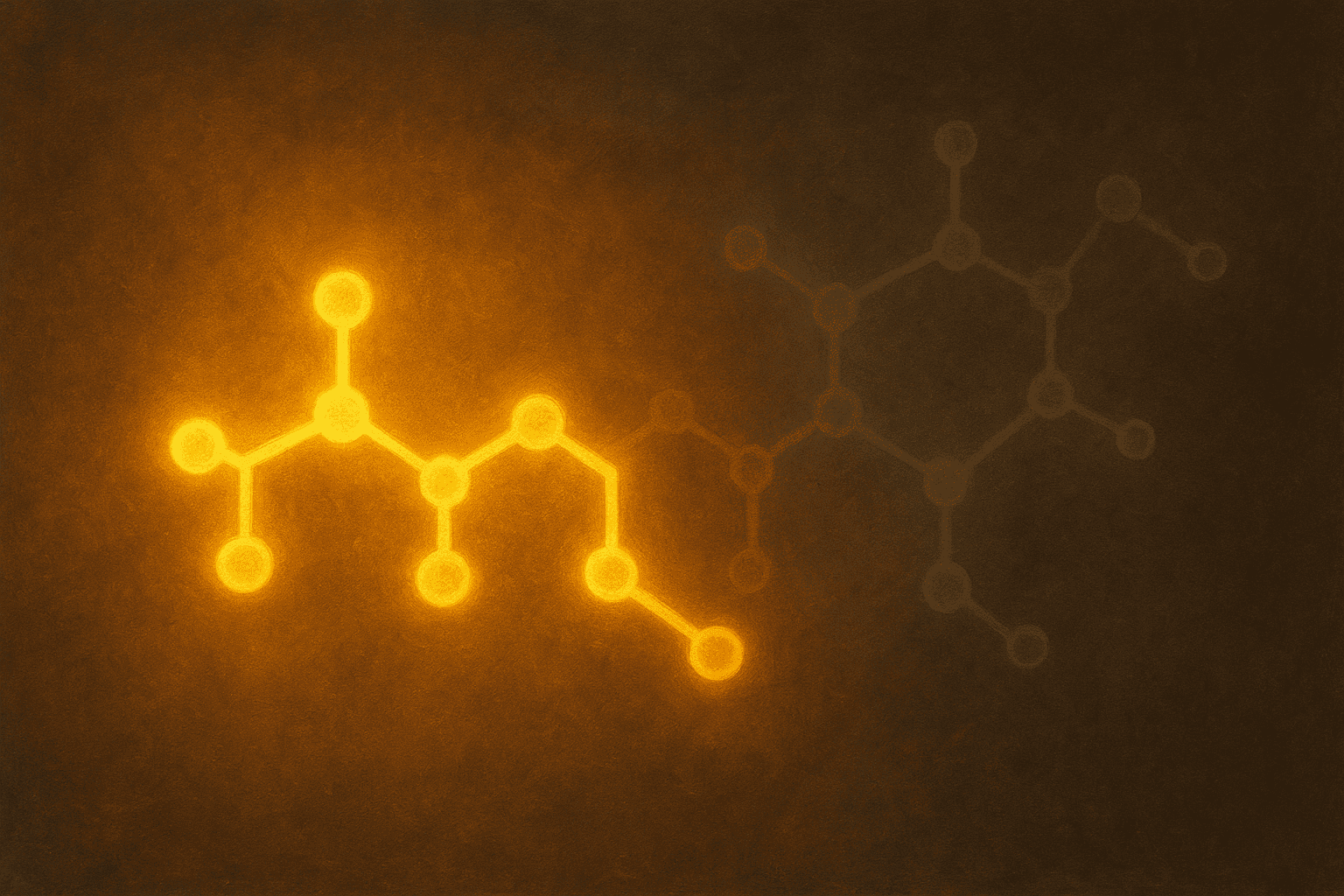
This is a question worth answering clearly because the names can cause confusion. Full-length ACTH is a 39-amino-acid hormone with a very specific job: triggering cortisol release from the adrenal glands. Semax is based on just 7 amino acids from that 39-amino-acid chain, and it’s been modified for stability.
The key difference is scope. Full-length ACTH activates the entire stress response cascade. The ACTH(4-10) fragment — and by extension, Semax — does not appear to trigger that same cascade in preclinical models. Levitskaya et al. (2008) examined Semax’s neuropeptide activity and documented distinct behavioral profiles from full-length ACTH in animal models (PMID: 18683054).
Think of it like the difference between a full orchestra and a solo violinist. They’re related — the violinist is part of the orchestra. But the solo performance sounds completely different from the full symphony. ACTH(4-10) performs a “solo” that differs significantly from the full ACTH “symphony.”
This distinction matters for research design. Scientists studying Semax aren’t studying the stress response system. They’re studying what a specific fragment does when isolated from its parent hormone. That’s a fundamentally different research question.
What Has Published Research Found About Semax?
The published literature on Semax spans three decades. Early work by Ashmarin et al. (1995) established it as a research compound with measurable activity in preclinical neuropeptide models (PMID: 7784177). Subsequent studies have examined its interactions with neurotrophic factors and melanocortin receptors.
Neurotrophic factors are proteins that help nerve cells grow and stay healthy. The most studied one is BDNF — brain-derived neurotrophic factor. Think of BDNF as fertilizer for brain cells. It doesn’t create new neurons, but it helps existing ones build stronger connections and stay in good shape.
Levitskaya et al. (2008) examined Semax’s interaction with melanocortin receptors — a family of receptors distributed throughout the brain and body (PMID: 18683054). Melanocortin receptors are molecular “locks” that respond to melanocortin peptides. Semax, as an ACTH fragment, carries structural features that allow it to interact with some of these receptors.
All published research on Semax is preclinical. The findings come from animal models and cell-based experiments. No human clinical trial data exists for Semax, and no conclusions about effects in humans should be drawn from the preclinical literature.
[UNIQUE INSIGHT] Semax’s ACTH origin gives it access to the melanocortin receptor system — the same system that Melanotan II interacts with, though at different receptor subtypes. This shared receptor family creates interesting comparative research opportunities that researchers working with melanocortin peptides sometimes explore.
What Should Researchers Know About Sourcing Semax?

Purity standards for Semax follow the same rules as any research peptide. HPLC purity above 98% is the threshold most researchers require. Mass spectrometry should confirm the correct molecular weight. Third-party testing from an independent lab provides the strongest verification.
A proper COA for Semax should include HPLC chromatogram data, mass spectrometry results, and batch-specific identification. Generic COAs that aren’t tied to a specific batch should raise questions. The documentation matters because even small impurities can affect receptor-binding studies.
Alpha Peptides provides research-grade Semax with independently verified COA documentation. Full records are available at alpha-peptides.com/coas/.
Frequently Asked Questions About Semax
Is Semax natural?
No. Semax is a synthetic peptide. It’s based on a natural hormone fragment (ACTH(4-10)), but the molecule itself was engineered in a laboratory with modifications for stability. It doesn’t occur naturally in the body in its modified form.
Is Semax the same as ACTH?
No. ACTH is a 39-amino-acid hormone involved in the stress response. Semax is based on just 7 amino acids from that chain and has been modified with a stabilizing tail. The two molecules have different sizes, different stability profiles, and different activity patterns in preclinical models (Levitskaya et al., 2008).
How does Semax compare to Selank?
Both are Russian-developed heptapeptides, but they come from different parent molecules. Semax derives from ACTH (a brain hormone). Selank derives from tuftsin (an immune peptide). They interact with different receptor systems and are studied for different research questions. For a detailed comparison, see our Selank vs Semax guide.
For research use only. Not for human consumption. Semax is an experimental research peptide with no FDA-approved therapeutic applications. All information on this page is provided for educational purposes relating to laboratory and preclinical research.