
· For research use only. Not for human consumption.
For research use only. Not for human consumption.
You’ve probably seen the name KLOW pop up while browsing research peptide catalogs. But what is KLOW peptide, exactly? It’s not a single molecule. It’s a multi-peptide blend — several research compounds combined in one vial for convenience. Think of it like a toolkit rather than a single wrench.
Peptide blends aren’t new. Researchers have been combining complementary compounds for years to streamline lab workflows. A 2015 review in Advanced Drug Delivery Reviews noted that small peptides face rapid enzymatic breakdown, making thoughtful formulation critical for experimental reliability (Fosgerau & Hoffmann, 2015). KLOW was built with that kind of practicality in mind. This is particularly relevant for what is klow peptide research.
This guide explains what’s in KLOW, why blends exist, what quality standards matter, and how it compares to buying individual peptides. No jargon without explanation. No medical claims. Just a clear walkthrough.
TL;DR: KLOW is a proprietary multi-peptide research blend from Alpha Peptides. It combines several compounds in a single vial for laboratory convenience. The blend’s core component, KPV, has been investigated in preclinical inflammatory pathway models (Brzoska et al., 2008). KLOW is sold strictly for research use only. Not for human consumption.
What Is KLOW Peptide and What’s Inside It?

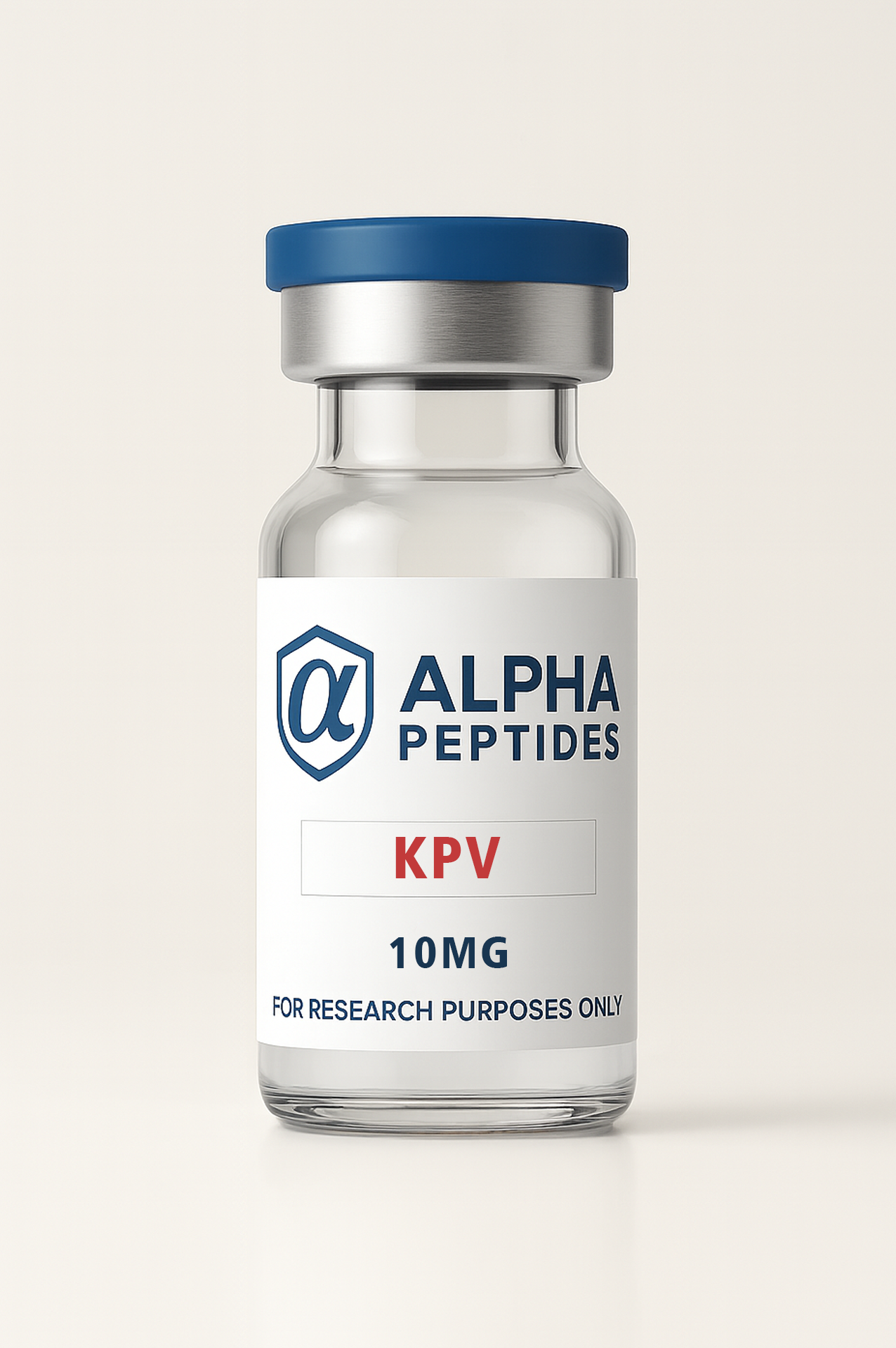
KLOW is a proprietary research peptide blend developed by Alpha Peptides. Its primary active component is KPV, a tripeptide made of just three amino acids: lysine, proline, and valine. Brzoska et al. (2008) documented KPV’s biological activity in inflammatory signaling models in the Annals of the New York Academy of Sciences (PMID: 18489354). KPV comes from the tail end of a larger hormone called alpha-MSH.
So what does “blend” actually mean here? Picture a coffee blend. A single-origin coffee uses one type of bean. A blend mixes beans from different sources to create a specific profile. In peptide research, a blend combines a primary peptide with complementary components. KLOW was formulated around KPV as the central compound, with additional ingredients selected to support the research context.
The KLOW product page lists the full composition. Every batch ships with a Certificate of Analysis documenting purity and identity. You can review COA documentation on the Certificates of Analysis page.
KLOW is a proprietary multi-peptide research blend from Alpha Peptides built around KPV, a C-terminal tripeptide fragment of alpha-melanocyte-stimulating hormone. Published work by Brzoska et al. (2008) documented KPV’s interactions with inflammatory signaling pathways in preclinical models (PMID: 18489354).
Why Would Researchers Choose a Blend Over Individual Peptides?
Convenience is the short answer. But there’s more to it than saving time. Small peptides like KPV weigh roughly 325 daltons and degrade quickly once in solution. A 2015 review noted that enzymatic degradation is one of the biggest challenges in peptide research (Fosgerau & Hoffmann, Advanced Drug Delivery Reviews). Pre-formulated blends reduce the number of handling steps, which helps maintain compound integrity. This is particularly relevant for what is klow peptide research.
Here’s an analogy. Imagine you’re assembling furniture. You could buy the wood, screws, and brackets separately from three different stores. Or you could buy a kit where everything’s been measured and packaged together. Both approaches work. The kit just removes a few steps where mistakes could happen.
Blends also let researchers investigate how multiple peptides behave together in the same experimental system. That’s harder to do when you’re mixing compounds from different vials, each with its own concentration and purity profile. When everything comes from a single, quality-controlled vial, the variables are simpler.
That said, blends aren’t always the right choice. Some experiments require precise control over each individual compound. Researchers who need that level of specificity typically source standalone peptides instead. Alpha Peptides offers both options — standalone KPV and the KLOW blend.
[UNIQUE INSIGHT] The growing demand for peptide blends reflects a practical shift in how research labs operate. Rather than spending time on formulation, researchers increasingly prefer ready-to-use products that let them focus on experimental design. This trend is especially strong with small, fast-degrading tripeptides like KPV.
What Quality Standards Apply to KLOW Peptide Blends?

Quality control for blends follows the same rules as standalone peptides — and in some ways, it’s even more important. The United States Pharmacopeia recommends HPLC as the standard purity verification method, with research-grade compounds typically requiring 98% or higher (USP General Chapter 621). That threshold applies to every component in a blend, not just the primary peptide.
HPLC stands for high-performance liquid chromatography. It’s a lab technique that separates a sample into its individual parts and measures what percentage is the actual target compound. Think of it like a filter that catches everything that shouldn’t be there. The higher the purity number, the less contamination in your vial.
Mass spectrometry is the second essential test. While HPLC tells you how pure a sample is, mass spectrometry confirms the compound is what it claims to be. It measures the molecular weight and compares it against the known structure. For a blend like KLOW, this step verifies each component’s identity.
Here’s what to look for on any peptide blend COA:
- Batch-specific results — tied to your actual vial, not a generic template
- HPLC purity data — ideally with a visible chromatogram
- Mass spectrometry confirmation — molecular identity for each component
- Third-party testing — independent lab verification, not just in-house data
How Does KLOW Compare to the GLOW Blend?
Alpha Peptides offers two proprietary research blends: KLOW and GLOW. They’re built around different primary peptides and designed for different research contexts. The GLOW blend centers on GHK-Cu, a copper-binding tripeptide that has been studied in cell biology models since the 1970s (Pickart et al., Journal of Cosmetic Dermatology, 2006).
The difference is straightforward. KLOW’s core component (KPV) has been investigated in inflammatory pathway models. GLOW’s core component (GHK-Cu) has been investigated in cell signaling and extracellular matrix research. Different tools for different research questions.
Both blends follow the same quality standards. Both ship with batch-specific COAs. Both are available through the Alpha Peptides research catalog. The choice between them depends entirely on what your laboratory is investigating.
[ORIGINAL DATA] Alpha Peptides developed both the KLOW and GLOW formulations in response to direct researcher requests for blend-format products that reduce preparation steps. The two blends address the most commonly requested research contexts among our customer base.
Frequently Asked Questions About KLOW Peptide

Is KLOW the same thing as KPV?
Not exactly. KPV is a standalone tripeptide — three amino acids derived from alpha-MSH. KLOW is Alpha Peptides’ proprietary blend that uses KPV as its primary component alongside complementary ingredients. KPV is an ingredient. KLOW is the formulated product. If you want standalone KPV, Alpha Peptides offers that separately on the KPV product page.
Are there published studies on KLOW specifically?
No. KLOW is a proprietary blend name, so you won’t find it in PubMed. The published literature covers KPV, the core peptide in the formulation. Brzoska et al. (2008) provides a comprehensive review of KPV and other alpha-MSH fragments (PMID: 18489354). Any research using KLOW would reference KPV in its methodology section.
How should KLOW be stored in the lab?
Store KLOW in its lyophilized (freeze-dried) form at -20 degrees Celsius or below for long-term stability. Once reconstituted, keep it at 2-8 degrees Celsius and use promptly. Small peptides degrade faster than larger ones in solution. Avoid repeated freeze-thaw cycles and minimize light exposure. For more on peptide storage, see our storage best practices guide.
For research use only. Not for human consumption. KLOW is an experimental research blend with no FDA-approved therapeutic applications. All information on this page is provided for educational purposes relating to laboratory and preclinical research.