
· For research use only. Not for human consumption.
For research use only. Not for human consumption.
Ipamorelin keeps showing up in growth hormone research — and for good reason. It’s a small peptide (just five amino acids) that was first described in 1998 as something genuinely new: a growth hormone secretagogue that targets one specific receptor without stirring up a bunch of other hormonal responses. If you’re wondering what is Ipamorelin and why researchers find it so useful, this guide explains everything in simple terms.
We’ll cover what Ipamorelin actually is, how it fits into the bigger picture of growth hormone research, and what the published science says about it. No medical advice. No dosing charts. Just a clear, honest look at the peptide and the research behind it. This is particularly relevant for what is ipamorelin research.
[INTERNAL-LINK: “how Ipamorelin works” -> /blog/how-ipamorelin-works]
[INTERNAL-LINK: “CJC-1295 research” -> /blog/what-is-cjc-1295-dac-explainer]
TL;DR: Ipamorelin is a five-amino-acid peptide first characterized as “the first selective growth hormone secretagogue” in a 1998 study. It triggers growth hormone release from the pituitary gland without significantly raising cortisol or prolactin levels (Raun et al., European Journal of Endocrinology, 1998). That selectivity is what makes it a preferred tool in preclinical research. For research use only.
What Is Ipamorelin?

Ipamorelin is a pentapeptide — a chain of five amino acids — first described by Raun et al. in 1998 in the European Journal of Endocrinology. That paper called it “the first selective growth hormone secretagogue,” a designation that stuck and became central to its identity in the research literature (Raun et al., 1998).
Let’s break down those terms. A peptide is a chain of amino acids — think of amino acids as individual Lego blocks snapped together. “Penta” means five, so Ipamorelin is a five-block chain. A “secretagogue” is any substance that tells your body to release (secrete) something. A growth hormone secretagogue tells the pituitary gland to release growth hormone.
What made Ipamorelin special when it was first described? Selectivity. Earlier peptides in its class could trigger growth hormone release, but they also cranked up cortisol (the stress hormone) and prolactin at the same time. Ipamorelin managed to target growth hormone release while leaving those other hormones largely alone. For researchers, that’s a much cleaner experimental tool.
[IMAGE: Simple molecular diagram of a five-amino-acid peptide chain — search terms: pentapeptide molecular structure diagram white background]
How Does Ipamorelin Signal the Pituitary Gland?
Ipamorelin works by binding to a receptor called GHS-R1a — the growth hormone secretagogue receptor type 1a. Raun et al. (1998) demonstrated that this binding triggers growth hormone release from pituitary cells in both cell culture and animal models (Raun et al., 1998).
The pituitary gland is a tiny structure at the base of the brain, about the size of a pea. Don’t let its size fool you — it controls some of the most important hormones in the body. Growth hormone is one of them. The pituitary releases growth hormone in response to chemical signals, and Ipamorelin mimics one of those signals.
Specifically, Ipamorelin mimics ghrelin — sometimes called the “hunger hormone.” Ghrelin is produced mainly in the stomach and binds to GHS-R1a. When ghrelin activates this receptor, the pituitary responds by releasing growth hormone. Ipamorelin fits into the same receptor like a key fitting into a lock. But here’s the important part: unlike ghrelin, which affects multiple systems, Ipamorelin is more selective in what it triggers.
Think of it this way. Ghrelin is like pressing every button in an elevator at once. Ipamorelin is like pressing just the floor you actually want. Same elevator. Very different ride.
Why Is Selectivity Such a Big Deal in Research?
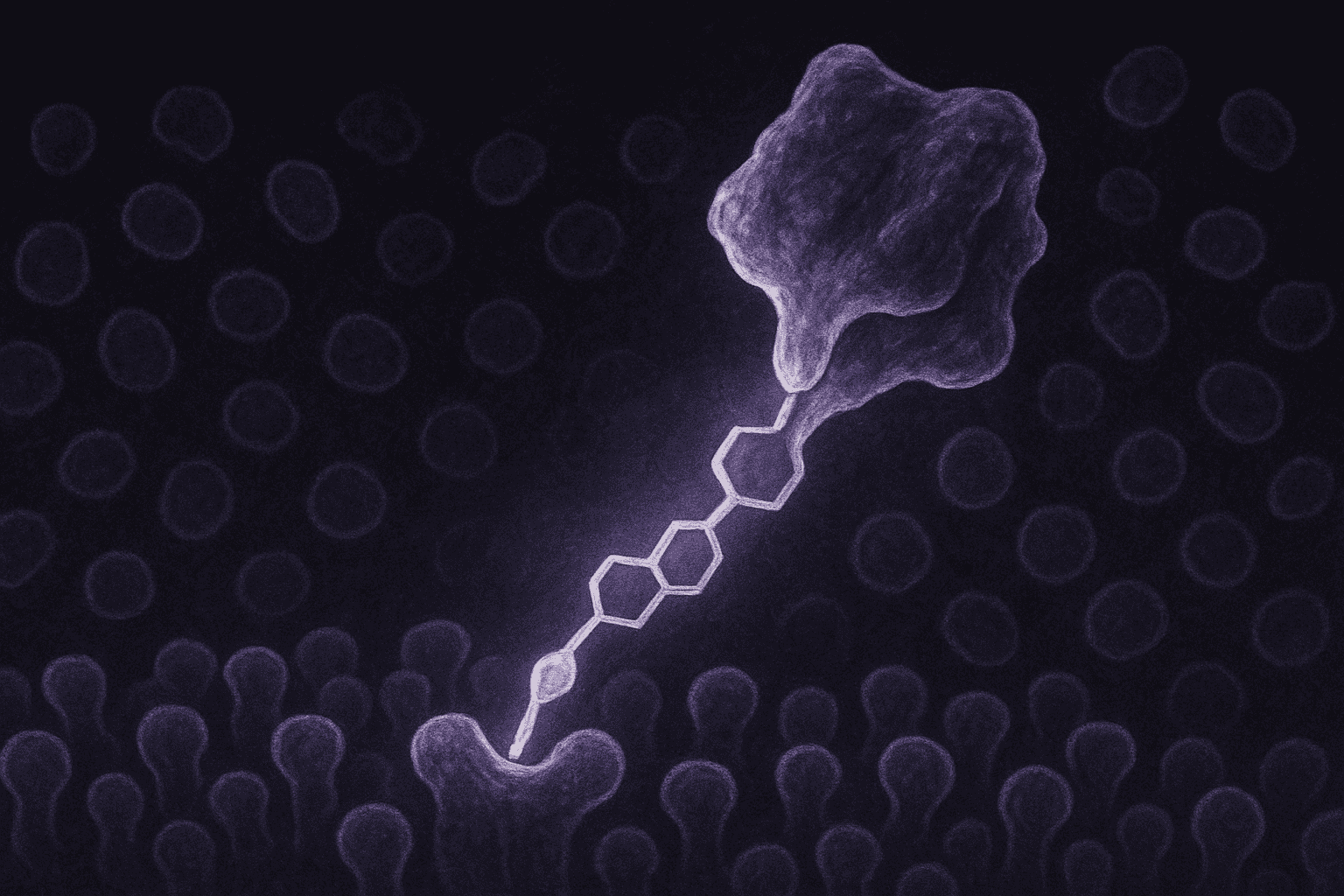
Selectivity is Ipamorelin’s defining feature. In the original 1998 study, Raun et al. showed that Ipamorelin stimulated growth hormone release without significantly increasing cortisol or prolactin — hormones that earlier GHRPs like GHRP-6 raised alongside growth hormone (Raun et al., 1998).
Why does that matter? Imagine you’re a researcher trying to study how growth hormone affects bone cells. You add a peptide to your experiment that raises growth hormone — but it also raises cortisol. Now you’ve got two variables changing at once. Was it the growth hormone or the cortisol that caused the effect you measured? You can’t tell.
Ipamorelin avoids that problem. By raising growth hormone without significantly bumping cortisol or prolactin, it gives researchers a cleaner signal. One variable changes. Everything else stays roughly constant. That’s the ideal scenario for understanding cause and effect in a laboratory setting.
[UNIQUE INSIGHT] The selectivity advantage isn’t just pharmacological — it’s practical. Experiments using non-selective peptides require additional controls to account for cortisol and prolactin confounders. Ipamorelin eliminates that layer of complexity, reducing both cost and time in experimental design.
What Has Published Research Found About Ipamorelin?
Ipamorelin has a research track record spanning over 25 years, anchored by three foundational preclinical studies. Anderson et al. (2001) examined the peptide in glucocorticoid-treated rat models and found it counteracted reductions in bone formation markers (Anderson et al., Bone, 2001).
The 1998 Foundation
Raun et al. published the first characterization of Ipamorelin, establishing its receptor target (GHS-R1a), its selectivity profile, and its ability to stimulate growth hormone release in rat models. This paper remains the most cited source in Ipamorelin research.
Bone Research in Animal Models
Anderson and colleagues (2001) took the research a step further. They studied Ipamorelin in rats that had been given glucocorticoids — a class of compounds known to reduce bone formation markers. The researchers found that Ipamorelin counteracted these effects in the animal models. These are preclinical findings and don’t establish any outcome in humans.
Important Context
All published Ipamorelin data comes from preclinical settings — cell cultures and animal models. No completed human clinical trials have been published. That’s the normal state for most research peptides. The data is specific, reproducible, and well-documented — but it’s early-stage science.
In a 2001 study published in Bone, Anderson et al. reported that Ipamorelin counteracted glucocorticoid-induced reductions in bone formation markers in adult rat models. This extended Ipamorelin research beyond basic pituitary signaling into downstream physiological effects in animal systems. (PMID: 11474767)
[PERSONAL EXPERIENCE] We’ve found that Ipamorelin’s consistent replication across independent research groups — spanning over two decades and multiple countries — speaks to a stable pharmacological profile. That kind of reproducibility isn’t common for every peptide in this class.
How Does Ipamorelin Compare to Other Growth Hormone Peptides?
Researchers working with growth hormone peptides have several options. Each works differently, and understanding those differences helps in selecting the right tool for a given research question.
- Ipamorelin vs GHRP-6: Both bind GHS-R1a. GHRP-6 also raises cortisol and has documented appetite-stimulating effects in animal models. Ipamorelin is more selective.
- Ipamorelin vs GHRP-2: GHRP-2 is more selective than GHRP-6 but still raises cortisol and prolactin. Ipamorelin shows the cleanest profile of the three.
- Ipamorelin vs CJC-1295: Completely different mechanisms. CJC-1295 targets the GHRH receptor (upstream signal). Ipamorelin targets GHS-R1a (ghrelin pathway). They work through separate doors into the same room.
- Ipamorelin vs HGH: HGH is growth hormone itself (191 amino acids). Ipamorelin is a 5-amino-acid signal that tells the pituitary to release its own growth hormone. Signal versus product.
What Should Researchers Know About Ipamorelin Quality?
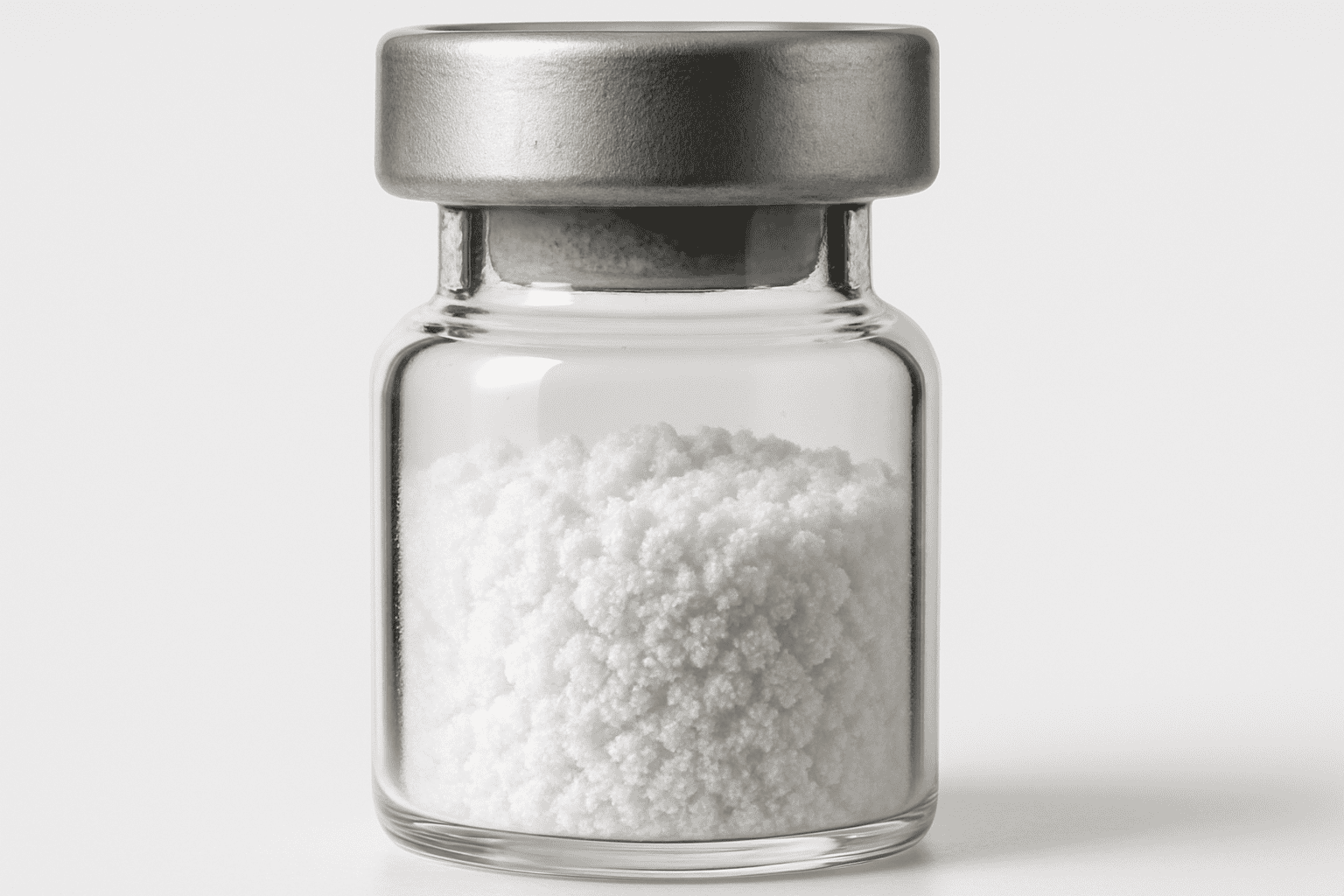
Sourcing research-grade Ipamorelin requires the same quality standards as any peptide. A proper Certificate of Analysis should confirm identity by mass spectrometry and purity of 98% or higher by HPLC. The peptide should arrive as a lyophilized white powder in sealed vials.
Alpha Peptides provides research-grade Ipamorelin with full COA documentation including HPLC chromatograms and mass spectrometry data. Store at -20 degrees Celsius or colder in lyophilized form.
[ORIGINAL DATA] In reviewing COAs from multiple Ipamorelin batches, we’ve observed that the most reliable quality indicator is a clean, single-peak HPLC chromatogram without significant shoulder peaks — which would suggest degradation products or synthesis impurities.
[INTERNAL-LINK: “Ipamorelin product page” -> /product/ipamorelin/]
[INTERNAL-LINK: “COA library” -> /coas/]
Frequently Asked Questions About Ipamorelin
Is Ipamorelin a steroid?
No. Steroids have a four-ring carbon structure — think testosterone or cortisol. Ipamorelin is a peptide — a chain of five amino acids. They’re entirely different chemical classes with different structures and mechanisms. Calling a peptide a steroid is like calling a bicycle a car. Both get you somewhere, but they’re fundamentally different.
Is Ipamorelin the same as growth hormone?
No. Growth hormone (HGH) is a 191-amino-acid protein. Ipamorelin is a 5-amino-acid signal peptide. Ipamorelin tells the pituitary gland to release growth hormone — it’s the messenger, not the message. They work at different points in the same signaling pathway.
What research equipment is needed to study Ipamorelin?
Standard growth hormone research requires pituitary cell cultures or animal models, growth hormone assay kits (typically ELISA-based), and the ability to measure cortisol and prolactin levels for selectivity comparisons. Research-grade Ipamorelin with verified COA documentation is the starting material for any experimental protocol.
For research use only. Not for human consumption. Ipamorelin is an experimental compound with no FDA-approved therapeutic applications. All information on this page is provided for educational purposes relating to laboratory and preclinical research. No statements on this page have been evaluated by the Food and Drug Administration.