
· For research use only. Not for human consumption.
For research use only. Not for human consumption.
If you are researching growth hormone releasing hormone analogs, you have probably noticed that Tesamorelin is not the only one out there. Other names like Sermorelin and CJC-1295 appear in the same scientific papers and product listings. A Tesamorelin GHRH comparison with these other analogs helps clarify what makes each one unique and why scientists have developed multiple versions of the same basic molecule.
All GHRH analogs share a common purpose: they mimic the natural signal that tells the pituitary gland to release growth hormone. But each one has different modifications, different stability profiles, and different areas of research focus. Understanding these differences is useful whether you are reading published studies or evaluating compounds for your laboratory. Check out our full catalog to see which GHRH analogs Alpha Peptides currently offers.
Let us compare the three most discussed GHRH analogs side by side.
TL;DR: Tesamorelin, Sermorelin, and CJC-1295 are all modified versions of natural GHRH, but each has different structural changes and stability profiles. Tesamorelin keeps all 44 amino acids with a trans-3-hexenoic acid cap. Sermorelin uses only the first 29 amino acids. CJC-1295 uses Drug Affinity Complex (DAC) technology for extended stability. Wang & Tomlinson (2009) reviewed Tesamorelin specifically (PMID: 19243281); Alba et al. (2006) characterized CJC-1295 (PMID: 16822960). For research use only. Not for human consumption.
What All GHRH Analogs Have in Common
Before we get into the differences, it helps to understand what unites these compounds. Every GHRH analog is based on the same natural molecule: Growth Hormone Releasing Hormone, a 44-amino-acid signal produced in the hypothalamus. This signal tells the pituitary gland to release growth hormone.
The problem with natural GHRH is that it breaks down extremely fast. Enzymes in the body chop it apart within minutes. That makes it difficult to use in research because there is not enough time to observe and measure its effects. So scientists created modified versions, each with different strategies to make the molecule last longer.
All GHRH analogs target the same receptor on pituitary somatotroph cells. They all aim to mimic the natural GHRH signal. The differences come down to which parts of the original molecule they keep, which parts they change, and what new components they add.
Tesamorelin GHRH Comparison: The Full-Length Approach
Tesamorelin takes the most conservative approach of the three major GHRH analogs. It keeps all 44 amino acids of natural GHRH in their original order. The only modification is the addition of trans-3-hexenoic acid at the N-terminus (the beginning of the chain). This small chemical cap protects the molecule from enzyme degradation without changing the way it interacts with the GHRH receptor.
Think of it this way: if natural GHRH is a book, Tesamorelin is the same book with a protective cover added. Every page and every word is identical. The cover just keeps the pages from getting torn.
Wang and Tomlinson (2009) described this design in their review, noting how the trans-3-hexenoic acid modification preserves the native structure while improving stability for research purposes.
Wang Y, Tomlinson B (2009) reviewed Tesamorelin as a human growth hormone releasing factor analogue, detailing its structural design and pharmacological characteristics. (PMID: 19243281)
Sermorelin: The Shortened Version
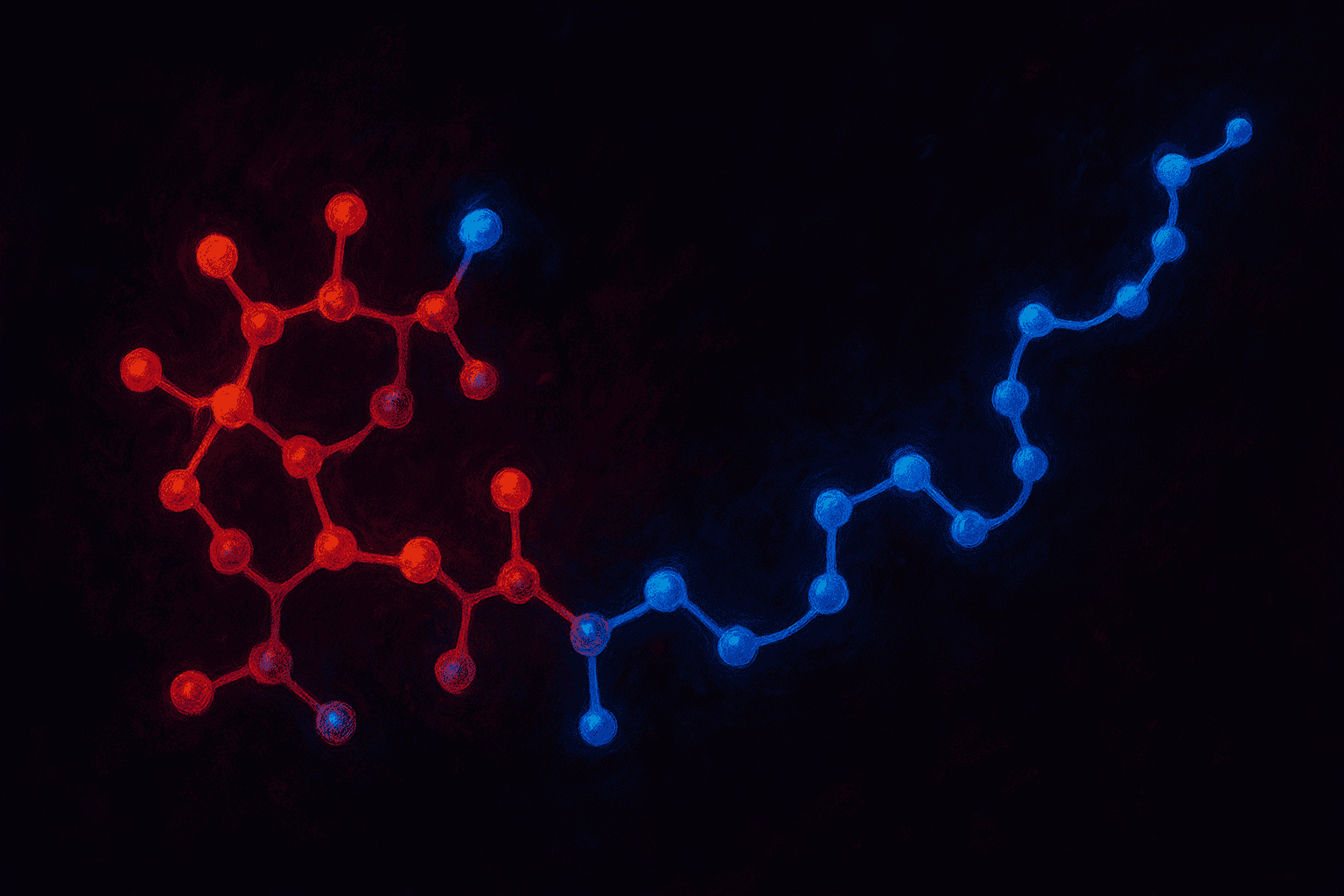
Sermorelin takes a different approach. Instead of keeping all 44 amino acids, scientists discovered that only the first 29 amino acids of GHRH are needed to activate the GHRH receptor. The remaining 15 amino acids at the tail end contribute to stability but are not strictly necessary for receptor binding.
So Sermorelin is GHRH(1-29), meaning it uses amino acids 1 through 29 of the original sequence. Using our book analogy, Sermorelin is like taking just the first seven chapters of a 12-chapter book. Those seven chapters contain the entire plot. The remaining chapters add context but are not essential to understanding the story.
The trade-off is stability. By removing the tail end, Sermorelin loses some of the natural structural support that the full chain provides. It is a shorter molecule with a correspondingly shorter working life in research settings. Scientists who use Sermorelin are typically working with experiments where a shorter-acting compound is preferable or sufficient.
CJC-1295: The Extended-Stability Design
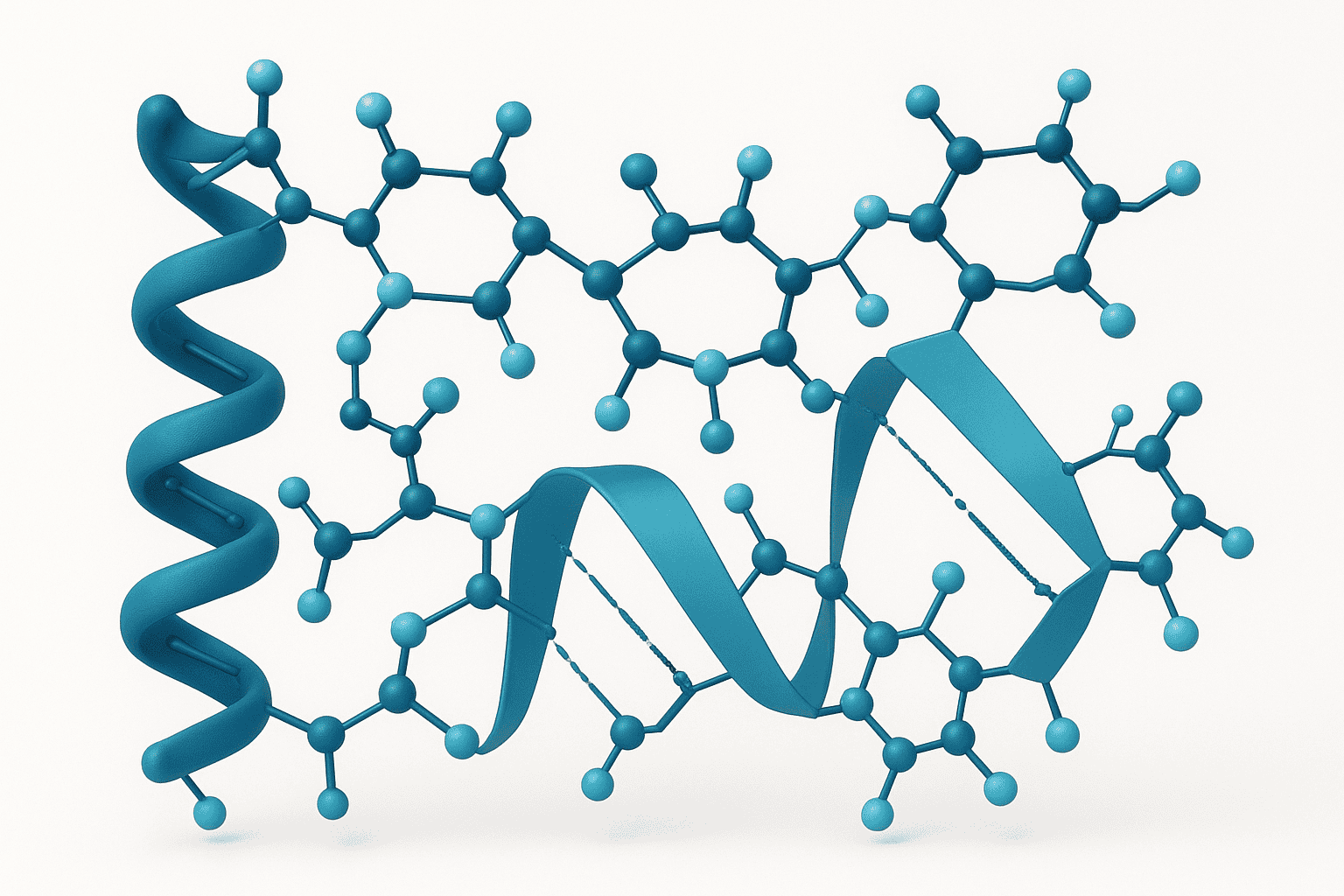
CJC-1295 goes in the opposite direction from Sermorelin. Rather than removing parts of GHRH, it adds a large modification called Drug Affinity Complex, or DAC. This technology allows the peptide to bind to a common blood protein called albumin, which dramatically extends how long it remains active in research settings.
Alba et al. (2006) published the characterizing study on CJC-1295, describing it as a long-acting GHRH analog. Their research documented the compound’s extended stability profile and its behavior in controlled settings.
Alba M et al. (2006) characterized CJC-1295 as a long-acting GHRH analog with sustained activity, describing its Drug Affinity Complex modification. (PMID: 16822960)
It is worth noting that CJC-1295 also exists in a version without DAC, sometimes referred to as Modified GRF(1-29). This version uses the first 29 amino acids of GHRH (like Sermorelin) but with amino acid substitutions at specific positions to improve stability. The version with DAC and the version without DAC are quite different in terms of their research applications.
Key Differences at a Glance
Here is how the three analogs compare across the most important research-relevant characteristics:
Length: Tesamorelin uses all 44 amino acids. Sermorelin and CJC-1295 (without DAC) use 29 amino acids. CJC-1295 with DAC uses 29 amino acids plus the DAC technology.
Modification type: Tesamorelin adds a trans-3-hexenoic acid cap. Sermorelin uses a truncated sequence. CJC-1295 without DAC substitutes specific amino acids. CJC-1295 with DAC adds albumin-binding technology.
Stability: CJC-1295 with DAC has the longest stability profile of the three. Tesamorelin is intermediate. Sermorelin has the shortest.
Receptor target: All three target the same GHRH receptor on pituitary somatotroph cells.
The choice between these analogs in a research setting depends entirely on what question the scientist is trying to answer. A short-acting compound like Sermorelin might be ideal for studying immediate, pulse-like responses. A long-acting compound like CJC-1295 with DAC might suit studies looking at sustained stimulation. Tesamorelin, with its full-length structure and moderate stability, sits in the middle.
Why Multiple Analogs Exist
It might seem redundant to have three different versions of the same natural signal. But in research, having multiple tools that do similar things in slightly different ways is extremely valuable. Each analog lets scientists ask different questions about the growth hormone axis.
For example, comparing results from a short-acting analog and a long-acting analog can reveal information about how the pituitary gland responds to brief signals versus sustained signals. Comparing a full-length analog to a truncated one can show whether those extra 15 amino acids play any role beyond stability.
Stanley et al. (2011) used this kind of comparative approach when examining how a GHRH analog affected endogenous growth hormone pulsatility, contributing to our understanding of how the axis responds to different types of stimulation.
Stanley TL et al. (2011) examined the effects of a GHRH analog on endogenous GH pulsatility, adding to the comparative literature on GHRH analog research. (PMID: 20943777)
Alpha Peptides supplies Tesamorelin and other research peptides for qualified researchers. Every product ships with a third-party Certificate of Analysis (COA) verifying purity and identity. Browse the full research catalog to see what is currently available.
Frequently Asked Questions
What is the main difference between Tesamorelin and Sermorelin?
Tesamorelin uses all 44 amino acids of natural GHRH with a trans-3-hexenoic acid cap added for stability. Sermorelin uses only the first 29 amino acids without the cap. Both target the same GHRH receptor, but they differ in length and stability.
What is CJC-1295 DAC?
CJC-1295 with DAC is a GHRH analog that uses Drug Affinity Complex technology to bind to albumin in the blood. This gives it a much longer stability profile compared to other GHRH analogs, making it useful for research requiring sustained GHRH receptor activation.
Do all GHRH analogs work the same way?
All GHRH analogs target the same receptor on pituitary somatotroph cells and mimic the natural GHRH signal. However, differences in their structure, length, and modifications give them different stability profiles and research characteristics.
Why would a researcher choose one GHRH analog over another?
The choice depends on the research question. Short-acting analogs suit studies of immediate responses. Long-acting analogs suit studies of sustained stimulation. Full-length analogs preserve the complete native structure for studies where that matters.
Are all GHRH analogs research compounds?
Yes. All GHRH analogs discussed in this post are research compounds used in laboratory settings. They are not intended for human consumption.
For research use only. Not for human consumption. This material is sold strictly for use in scientific and laboratory research. It is not intended for diagnostic or therapeutic purposes. Alpha Peptides does not endorse or encourage any off-label use.