
· For research use only. Not for human consumption.
For research use only. Not for human consumption.
The phrase Tesamorelin growth hormone comes up constantly in peptide research, but what does it actually mean? To understand the connection, you need to know how the body’s growth hormone system works. Scientists call this system the growth hormone axis, and it is one of the most studied signaling pathways in biology. Tesamorelin is a research tool that helps scientists explore how this axis operates.
In this guide, we will walk you through the entire growth hormone axis from start to finish using everyday language. No science degree required. By the end, you will understand why Tesamorelin is such a valuable compound in laboratory research and how it fits into the bigger picture of growth hormone biology. You can explore our research catalog to see the full range of peptides available for qualified researchers.
Let us start with the basics of how the body produces and regulates growth hormone.
TL;DR: The growth hormone axis is a chain of signals running from the brain (hypothalamus) to the pituitary gland to the liver. Tesamorelin is a GHRH analog that researchers use to study the first step in this chain. Stanley et al. (2011) examined how Tesamorelin affects endogenous GH pulsatility (PMID: 20943777). For research use only. Not for human consumption.
The Growth Hormone Axis: A Step-by-Step Overview
The growth hormone axis is a communication chain with four main players. Think of it like a relay race where each runner passes a baton to the next one:
Step 1 — The hypothalamus. This small region at the base of the brain acts as the starting point. It produces a signal called Growth Hormone Releasing Hormone (GHRH). When conditions are right, the hypothalamus sends this signal to the next station.
Step 2 — The pituitary gland. This pea-sized gland sits just below the hypothalamus. When it receives the GHRH signal, specialized cells called somatotrophs release growth hormone into the bloodstream.
Step 3 — The liver. Growth hormone travels through the blood and reaches the liver, among other tissues. The liver responds by producing a molecule called Insulin-like Growth Factor 1, or IGF-1.
Step 4 — Feedback. IGF-1 travels back through the bloodstream and tells the hypothalamus and pituitary to slow down production. This creates a self-regulating loop.
How Tesamorelin Growth Hormone Research Works
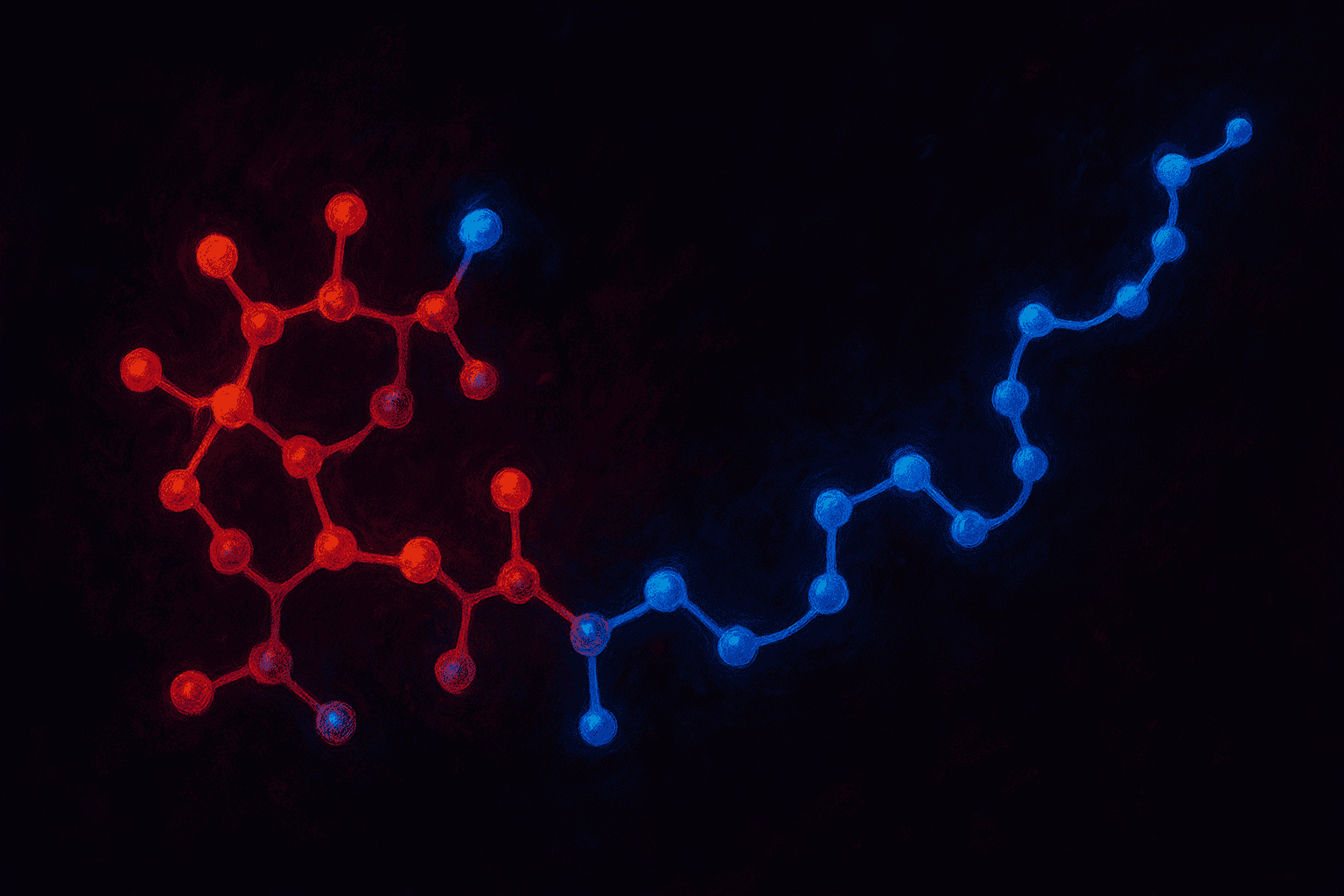
Tesamorelin is a modified copy of GHRH, the signal described in Step 1 above. Because it mimics the natural starting signal of the growth hormone axis, researchers can use it to study what happens when that first domino is pushed in a controlled laboratory environment.
The natural version of GHRH breaks down within minutes. Tesamorelin, thanks to a small chemical modification called trans-3-hexenoic acid at the beginning of its chain, is more stable. This gives researchers enough time to observe and measure what happens at each step along the axis.
Wang and Tomlinson (2009) reviewed the evidence on Tesamorelin as a GHRH analog and discussed its pharmacological profile in the context of growth hormone research.
Wang Y, Tomlinson B (2009) reviewed Tesamorelin as a human growth hormone releasing factor analogue, covering its mechanism and research applications. (PMID: 19243281)
What Growth Hormone Does in the Body
Growth hormone (often abbreviated GH) is one of the most important signaling molecules studied in biology. It is produced by the pituitary gland and affects nearly every tissue in the body. In scientific literature, growth hormone has been investigated in the context of cell growth, tissue repair, metabolic processes, and bone density, among other areas.
It is important to note that growth hormone does not work alone. It is part of a larger network of signals that includes IGF-1, insulin, thyroid hormones, and others. Scientists study these interactions to understand how the body coordinates complex processes across multiple organ systems.
The growth hormone axis is not a simple on-off switch. Growth hormone is released in pulses throughout the day, with the largest pulses typically occurring during certain periods. This pulsatile pattern is itself a subject of active research. Stanley et al. (2011) specifically examined how a GHRH analog influences these natural pulses.
Stanley TL et al. (2011) investigated the effects of a GHRH analog on endogenous GH pulsatility, providing insights into how the growth hormone axis responds to stimulation. (PMID: 20943777)
Feedback Loops: The Thermostat Analogy
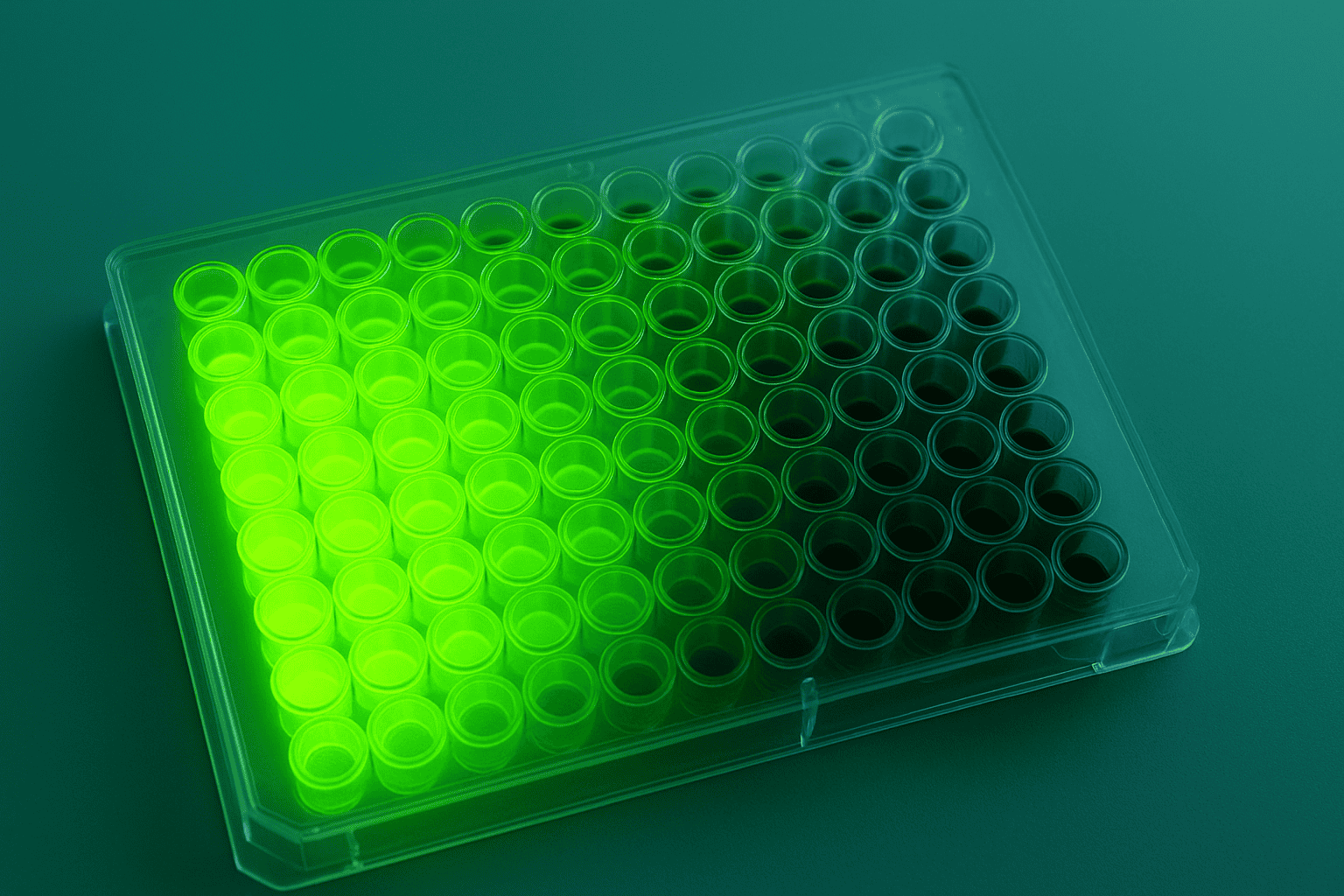
The easiest way to understand feedback loops in the growth hormone axis is to think about a thermostat in your home. Here is how the comparison works:
When your house gets cold, the thermostat detects the drop in temperature and turns on the heater. Once the room warms up to the target temperature, the thermostat senses that and shuts the heater off. The system regulates itself so the temperature stays in a comfortable range.
The growth hormone axis works the same way. When IGF-1 levels in the blood get high enough, the hypothalamus and pituitary detect this and reduce the production of GHRH and growth hormone. When IGF-1 levels drop, the system ramps back up. This is called negative feedback, and it is one of the most fundamental concepts in biology.
There is also a second brake pedal in this system: a molecule called somatostatin. The hypothalamus produces somatostatin alongside GHRH, but somatostatin does the opposite job. While GHRH says “release growth hormone,” somatostatin says “stop releasing growth hormone.” The balance between these two signals determines how much growth hormone the pituitary releases at any given moment.
Why Researchers Study the Growth Hormone Axis
The growth hormone axis is one of the most well-studied hormonal pathways in all of biology. Researchers investigate it for several reasons. First, it is a model system for understanding how the body uses chemical signals to coordinate activities across different organs. The axis involves the brain, a gland, the liver, and feedback signals that travel through the blood, making it a textbook example of endocrine communication.
Second, the axis changes over time. Published research has documented that GHRH production, growth hormone output, and IGF-1 levels all shift as organisms age. Understanding why and how these changes occur is an active area of investigation.
Third, the axis interacts with many other systems in the body, including metabolism, immune function, and tissue maintenance. These intersections make growth hormone research relevant to a wide range of scientific questions.
Falutz et al. (2010) contributed to this body of knowledge by examining Tesamorelin in a controlled research context, adding data points that help scientists understand how the axis responds under specific conditions.
Falutz J et al. (2010) examined the effects of Tesamorelin in a controlled setting, contributing to the understanding of the growth hormone axis. (PMID: 20554713)
Tesamorelin as a Research Tool for the GH Axis
What makes Tesamorelin especially useful in growth hormone research is that it targets the very first step of the axis. By mimicking the natural GHRH signal, it allows scientists to activate the pathway from the top and observe the downstream effects at each subsequent step: growth hormone release from the pituitary, IGF-1 production in the liver, and the feedback response that follows.
This is different from studying growth hormone directly, because it preserves the natural regulatory mechanisms. When researchers use Tesamorelin, the pituitary still decides how much growth hormone to release based on all the other signals it is receiving. The feedback loops remain intact. This makes Tesamorelin a more naturalistic research tool compared to approaches that bypass the axis entirely.
For scientists studying the growth hormone axis, Tesamorelin provides a way to ask a very specific question: what happens when the GHRH signal is present and stable? The published literature cited throughout this post represents some of the answers that have emerged from that line of inquiry.
Alpha Peptides provides Tesamorelin for qualified researchers investigating the growth hormone axis. All products ship with third-party Certificates of Analysis (COAs) confirming purity and identity. Visit our catalog for our complete selection.
Frequently Asked Questions
What is the growth hormone axis?
The growth hormone axis is a communication chain that starts in the hypothalamus, passes through the pituitary gland, and reaches the liver. Each step involves a different signal molecule: GHRH, growth hormone, and IGF-1. A feedback loop from IGF-1 back to the brain keeps the system in balance.
How does Tesamorelin relate to growth hormone?
Tesamorelin is a modified version of GHRH, the signal that tells the pituitary gland to release growth hormone. Researchers use it to study the first step of the growth hormone axis in laboratory settings.
What is a feedback loop?
A feedback loop is a self-regulating system. In the growth hormone axis, rising IGF-1 levels signal the brain to reduce GHRH and growth hormone production. When IGF-1 drops, the system increases production again. It works like a thermostat maintaining a set temperature.
What is somatostatin?
Somatostatin is a signal produced by the hypothalamus that tells the pituitary to stop releasing growth hormone. It works opposite to GHRH. The balance between GHRH and somatostatin determines how much growth hormone is released at any given time.
Why is the growth hormone axis important to researchers?
It is a model system for understanding how the body coordinates activities across different organs using chemical signals. It also changes over time and interacts with metabolism, immune function, and other systems, making it relevant to many areas of scientific investigation.
For research use only. Not for human consumption. This material is sold strictly for use in scientific and laboratory research. It is not intended for diagnostic or therapeutic purposes. Alpha Peptides does not endorse or encourage any off-label use.