
· For research use only. Not for human consumption.
Teduglutide research represents one of the best examples of how scientists take a natural molecule and engineer it for laboratory study. Teduglutide is a GLP-2 analog — meaning it’s a lab-made version of the naturally occurring gut hormone GLP-2, with one small but important change to its structure. That single modification transformed a short-lived natural peptide into a stable research tool that scientists can work with reliably in controlled settings.
If you’ve been reading about GLP-2 and wondering what the difference is between the natural hormone and the research-grade compound, this article explains it in everyday terms. We’ll cover what an analog is, why scientists make them, and how teduglutide research has advanced our understanding of intestinal biology.
For background on GLP-2 itself, start with our guide on GLP-2 and intestinal biology. For a comparison with its sibling peptide, see GLP-2 vs GLP-1.
[INTERNAL-LINK: “GLP-2 and intestinal biology” -> /blog/glp-2-intestinal-biology-research/]
[INTERNAL-LINK: “GLP-2 vs GLP-1” -> /blog/glp-2-vs-glp-1-different-signals/]
TL;DR: Teduglutide is a GLP-2 analog with a single amino acid substitution (glycine to alanine at position 2) that makes it resistant to DPP-4 enzyme degradation, extending its activity in research settings. Drucker DJ (2019) documented the discovery and development of teduglutide (PMID: 32219218), and Yazbeck R (2010) reviewed its investigation in gastrointestinal research models (PMID: 21154171). Sold for research use only. Not for human consumption.
What Is a Peptide Analog? The Basics
Before diving into teduglutide research specifically, it helps to understand what a peptide analog actually is. The concept is simpler than it sounds.
A peptide is a chain of amino acids — think of it like a beaded necklace where each bead is a different amino acid. Natural peptides are the necklaces your body makes on its own. An analog is a lab-made copy of that necklace with one or more beads swapped out for different ones.
Why would scientists swap beads? Because the original necklace might have a weakness. In the case of GLP-2, the natural version breaks down extremely quickly in the body. An enzyme called DPP-4 (dipeptidyl peptidase-4) chews up natural GLP-2 within minutes of its release. That’s fine for the body’s purposes — it wants quick, short bursts of GLP-2 signaling. But it’s a problem for researchers who need the compound to stay active long enough to study.
An analog solves this problem by swapping out the vulnerable bead for a sturdier one, making the peptide resistant to the enzyme that would normally destroy it.
Teduglutide Research: One Amino Acid Makes the Difference

Teduglutide is GLP-2 with exactly one change. At position 2 in the amino acid chain, the natural glycine has been replaced with alanine. That’s it. One swap. The rest of the 33-amino-acid chain is identical to natural GLP-2.
This tiny modification has a large effect. The DPP-4 enzyme recognizes and cuts natural GLP-2 at position 2 — specifically at the glycine residue. By replacing glycine with alanine, researchers created a version of GLP-2 that the enzyme can no longer efficiently cut. The result is a compound that lasts significantly longer in experimental settings.
Think of it like changing one tooth on a key. The key still fits the same lock (GLP-2 receptor), still turns the same mechanism (intestinal signaling), but it’s now made of a material that doesn’t wear down as fast. The function is preserved; the durability is improved.
This is the core principle behind teduglutide research: by extending the compound’s active window, scientists can study GLP-2 signaling in ways that weren’t possible with the short-lived natural version.
DPP-4: The Enzyme That Breaks Down GLP-2
DPP-4 deserves its own explanation because it plays such a central role in the teduglutide research story. DPP-4 (dipeptidyl peptidase-4) is an enzyme found throughout the body. Its job is to cut certain peptides at specific points, effectively deactivating them.
DPP-4 doesn’t target just GLP-2. It also breaks down GLP-1 and several other signaling peptides. It’s like a molecular paper shredder — any peptide with the right structure at its cutting site gets processed quickly. This is part of the body’s normal regulation system. Signaling peptides are meant to be temporary; DPP-4 ensures they don’t linger too long.
For researchers, though, this rapid breakdown creates a challenge. If you’re trying to study what GLP-2 does in a laboratory setting, you need the compound to remain active long enough to observe its effects. Natural GLP-2 gets degraded within minutes, which limits the types of experiments you can run.
The development of teduglutide was a direct response to this challenge. By making GLP-2 resistant to DPP-4, researchers gained a tool that maintained its activity over much longer experimental timeframes.
Drucker DJ (2019) documented the development of teduglutide, detailing how the single amino acid substitution at position 2 conferred resistance to DPP-4 degradation and enabled more extensive investigation of GLP-2 signaling in preclinical models. (PMID: 32219218)
Drucker’s Discovery Work

The story of teduglutide is closely tied to the work of Daniel Drucker, a researcher at the University of Toronto who played a foundational role in GLP-2 science. Drucker’s laboratory was among the first to systematically investigate what GLP-2 does in the intestine, and his team was instrumental in developing the analog approach that led to teduglutide.
In his 2019 review, Drucker traced the entire journey from the initial discovery of GLP-2 within the proglucagon gene to the creation and characterization of teduglutide as a research tool. The review documented how basic observations about intestinal growth in animal models led to the identification of GLP-2 as the responsible signaling molecule, and how the DPP-4 vulnerability of natural GLP-2 motivated the development of a more stable analog.
This kind of systematic, step-by-step research — identify a molecule, understand its weakness, engineer a solution, test the result — is a textbook example of how peptide analogs are developed in modern research. Teduglutide research didn’t happen overnight. It was the product of decades of careful laboratory work.
How Analogs Are Tested in Research Settings
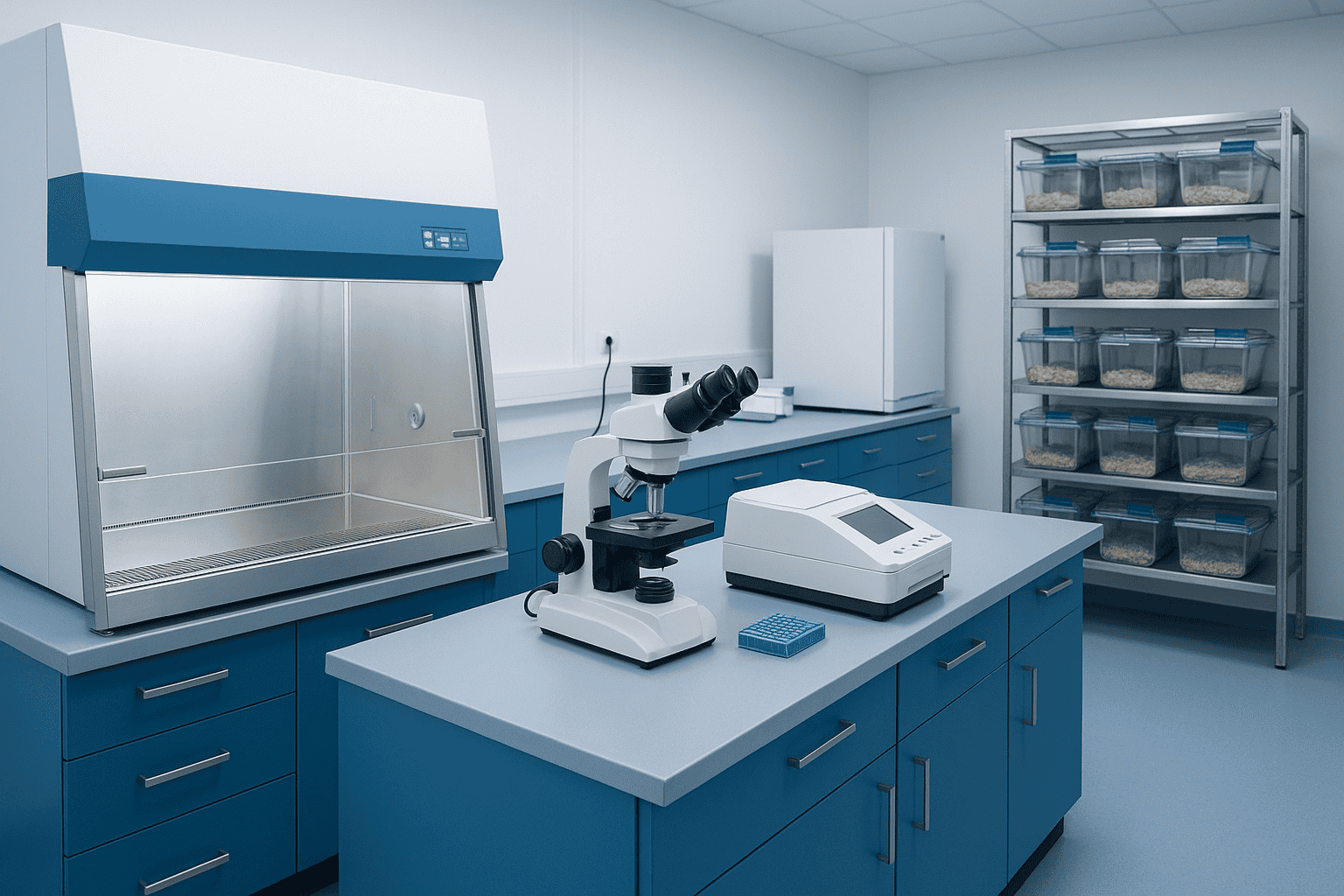
Once an analog like teduglutide is created, it goes through a series of characterization steps in the laboratory. Researchers need to confirm that the modification achieved its goal (DPP-4 resistance) without changing the compound’s ability to activate the GLP-2 receptor.
The first step is typically receptor binding studies. Scientists test whether teduglutide still binds to the GLP-2 receptor with the same affinity as natural GLP-2. If the analog fits the receptor but doesn’t activate it, or activates it differently, the modification might have changed too much.
Next come stability studies. Researchers expose the analog to DPP-4 and measure how long it takes to degrade compared to natural GLP-2. This is where the glycine-to-alanine swap proves its value — teduglutide resists degradation far longer than the natural version.
Finally, functional studies in preclinical models examine whether teduglutide produces the same intestinal effects as GLP-2 — mucosal growth, increased villus height, crypt cell proliferation — but with a longer duration of activity. The published literature, including the reviews by Drucker and Yazbeck, documents these characterization steps in detail.
Yazbeck R (2010) reviewed the preclinical investigation of teduglutide across multiple gastrointestinal research models, documenting how the analog’s extended activity enabled researchers to study GLP-2 signaling effects that were difficult to observe with the short-lived natural peptide. (PMID: 21154171)
Alpha Peptides offers research-grade GLP-2 (teduglutide analog) with independent third-party testing and a Certificate of Analysis included with every vial. For researchers investigating intestinal biology, GLP-2 receptor signaling, or analog stability, this compound provides a well-documented starting point. Browse our catalog on the research peptides shop page, or review testing results on our Certificates of Analysis page.

Frequently Asked Questions
What is teduglutide?
Teduglutide is a synthetic analog of GLP-2 with a single amino acid substitution (glycine replaced by alanine at position 2). This change makes it resistant to DPP-4 enzyme degradation, extending its activity in research settings.
Why do scientists make peptide analogs?
Natural peptides often break down too quickly to study effectively. By modifying specific amino acids, researchers can create analogs that last longer while retaining the same biological activity, making them more useful as laboratory research tools.
What is DPP-4?
DPP-4 (dipeptidyl peptidase-4) is an enzyme that breaks down several signaling peptides in the body, including natural GLP-2 and GLP-1. It cuts peptides at specific positions, deactivating them within minutes of release.
Does teduglutide work the same way as natural GLP-2?
Published teduglutide research indicates that the analog binds to the same GLP-2 receptor and has been associated with similar intestinal effects in preclinical models, but with extended duration of activity due to its resistance to DPP-4 degradation.
Is teduglutide available for research?
Alpha Peptides carries research-grade GLP-2 (teduglutide analog) for laboratory investigation purposes only. It is not sold for human consumption. A Certificate of Analysis is included with every order.
For research use only. Not for human consumption. This article is intended for informational and educational purposes. It does not constitute medical advice, and no therapeutic claims are made. Always consult published peer-reviewed literature for detailed research data.