
· For research use only. Not for human consumption.
For research use only. Not for human consumption.
If you’ve been researching TB-500 thymosin beta-4, you’ve probably noticed that these two names get used almost interchangeably. But they’re not exactly the same thing. One is a natural protein your body makes. The other is a synthetic peptide fragment derived from that protein. Understanding the difference matters for research.
This guide explains where TB-500 comes from, how it relates to the full Thymosin Beta-4 protein, and why researchers care about this specific fragment. We’ll keep it simple — no molecular biology textbook required.
For a side-by-side comparison with another popular research peptide, check out our guide on TB-500 vs BPC-157.
TL;DR: TB-500 thymosin beta-4 refers to a synthetic peptide fragment based on the active region of Thymosin Beta-4, a 43-amino-acid protein naturally found in most human cells. Thymosin Beta-4 plays a role in actin regulation — the structural protein that forms cell scaffolding. TB-500 contains the key binding region of this larger protein. Goldstein et al. (2012) reviewed its regenerative properties across preclinical research models (PMID: 22074294). For research use only. Not for human consumption.
What Is Thymosin Beta-4? The Parent Protein
Thymosin Beta-4 (usually written as Tβ4) is a protein made of 43 amino acids. Your body produces it naturally — it’s found in nearly every cell type, from blood cells to muscle cells to skin cells.
The protein was originally discovered in the thymus gland (hence “thymosin”), which is a small organ behind your breastbone that plays a role in immune system development. In the 1960s and 1970s, researcher Allan Goldstein and his team at the Albert Einstein College of Medicine isolated a family of proteins from the thymus, and Thymosin Beta-4 was one of them.
But here’s the interesting part: even though it was found in the thymus first, Thymosin Beta-4 turned out to be almost everywhere in the body. It’s not a thymus-specific protein at all. Its primary job? Managing actin — the structural protein inside cells.
Actin: The Cell’s Internal Skeleton
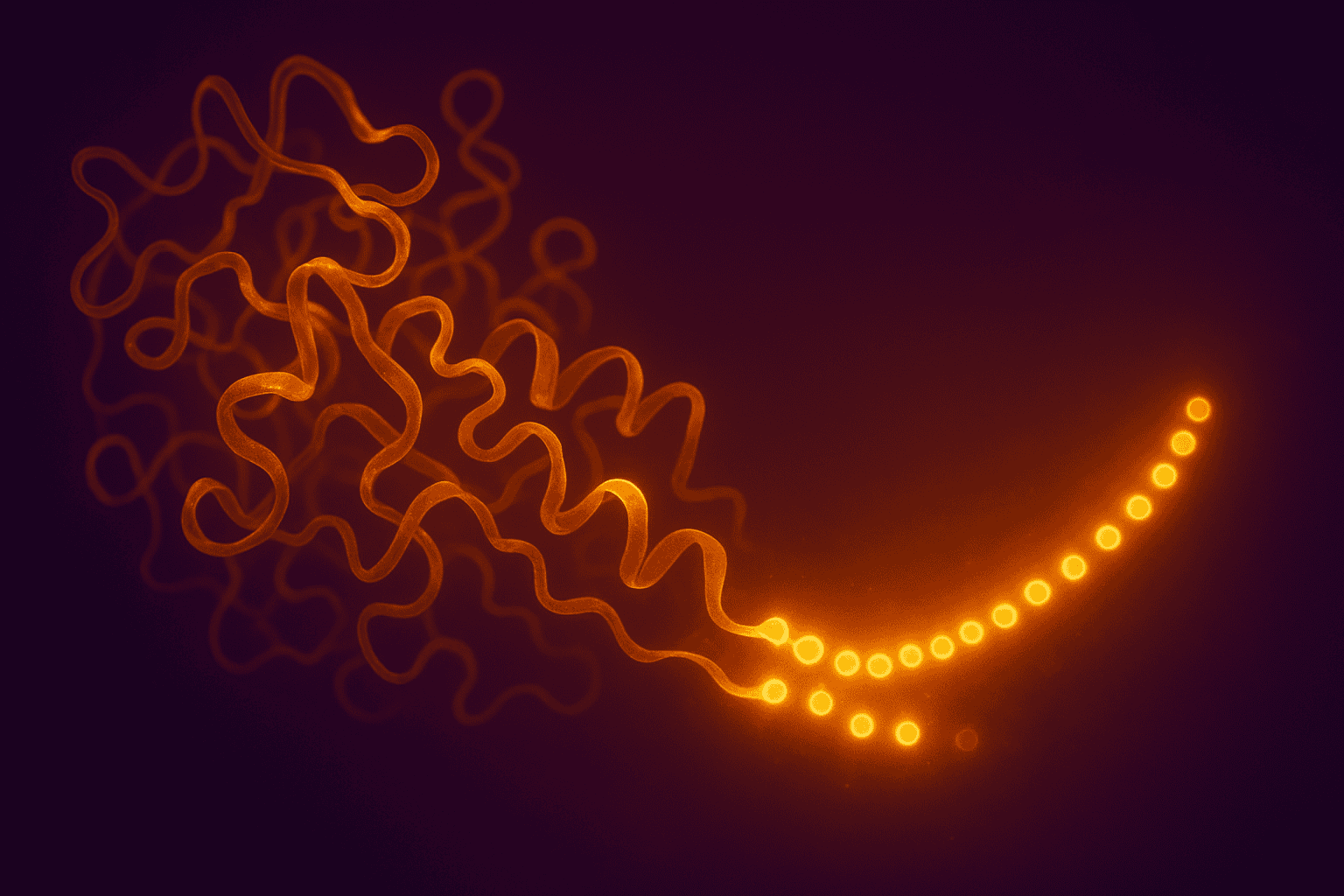
To understand what TB-500 thymosin beta-4 does, you need to understand actin. Actin is one of the most common proteins in any animal cell. It forms long filaments — like tiny ropes — that create the cell’s internal framework.
These actin filaments do three critical things:
- Shape — They give each cell its structure, like tent poles holding up a tent.
- Movement — When cells need to move (like immune cells chasing bacteria), actin filaments assemble and disassemble rapidly to push the cell forward.
- Division — When a cell divides in two, actin filaments pinch the cell membrane to split it apart.
Thymosin Beta-4 acts as an actin “buffer.” It binds to individual actin molecules (called monomers) and prevents them from assembling into filaments prematurely. Think of it as a warehouse manager — it holds inventory until it’s needed, then releases it at the right time.
Goldstein, Hannappel, Sosne, and Kleinman (2012) described Thymosin Beta-4 as a multi-functional regenerative peptide with a primary role in actin sequestration, while also reviewing its observed effects across multiple preclinical models. (PMID: 22074294)
How TB-500 Relates to the Full Protein
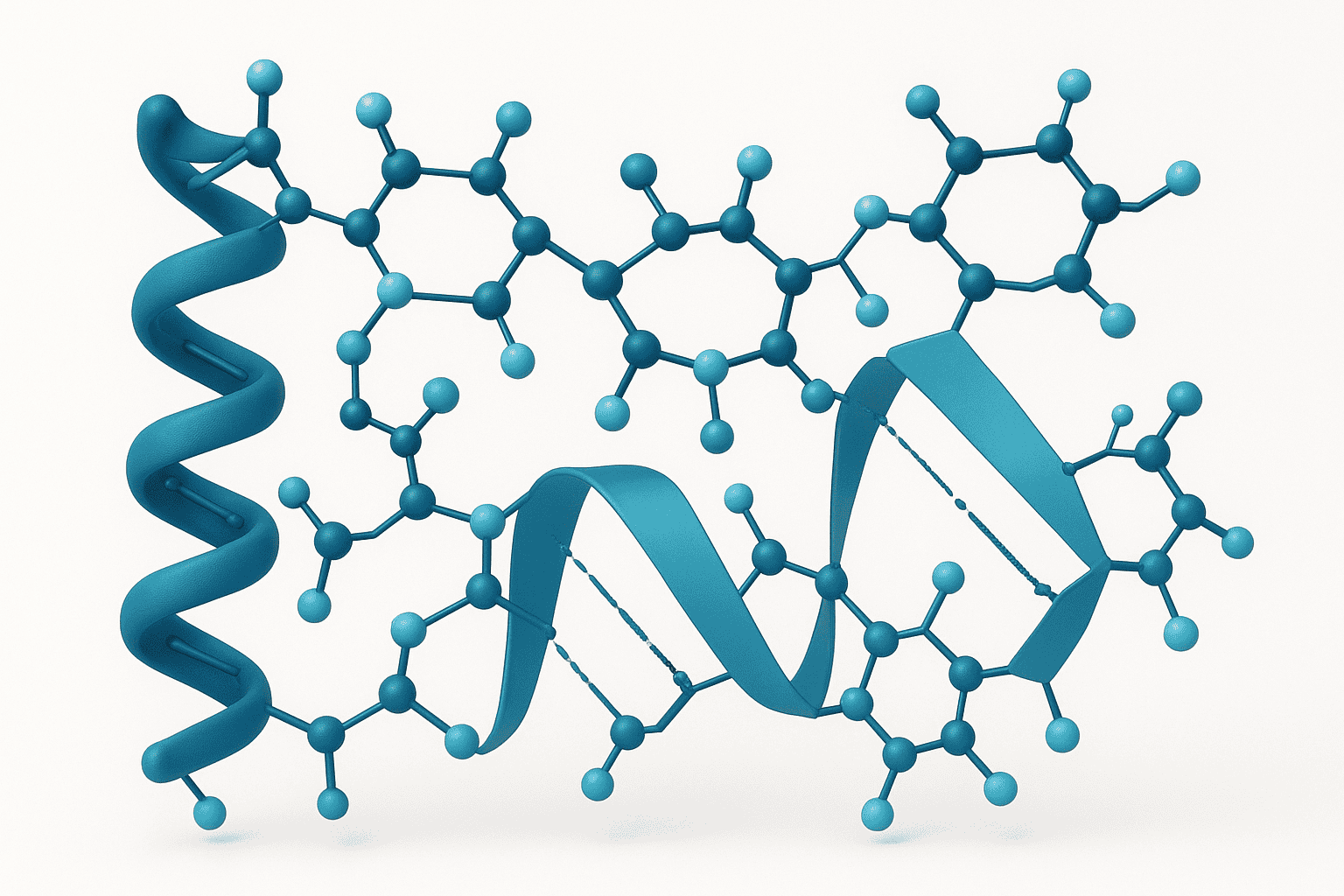
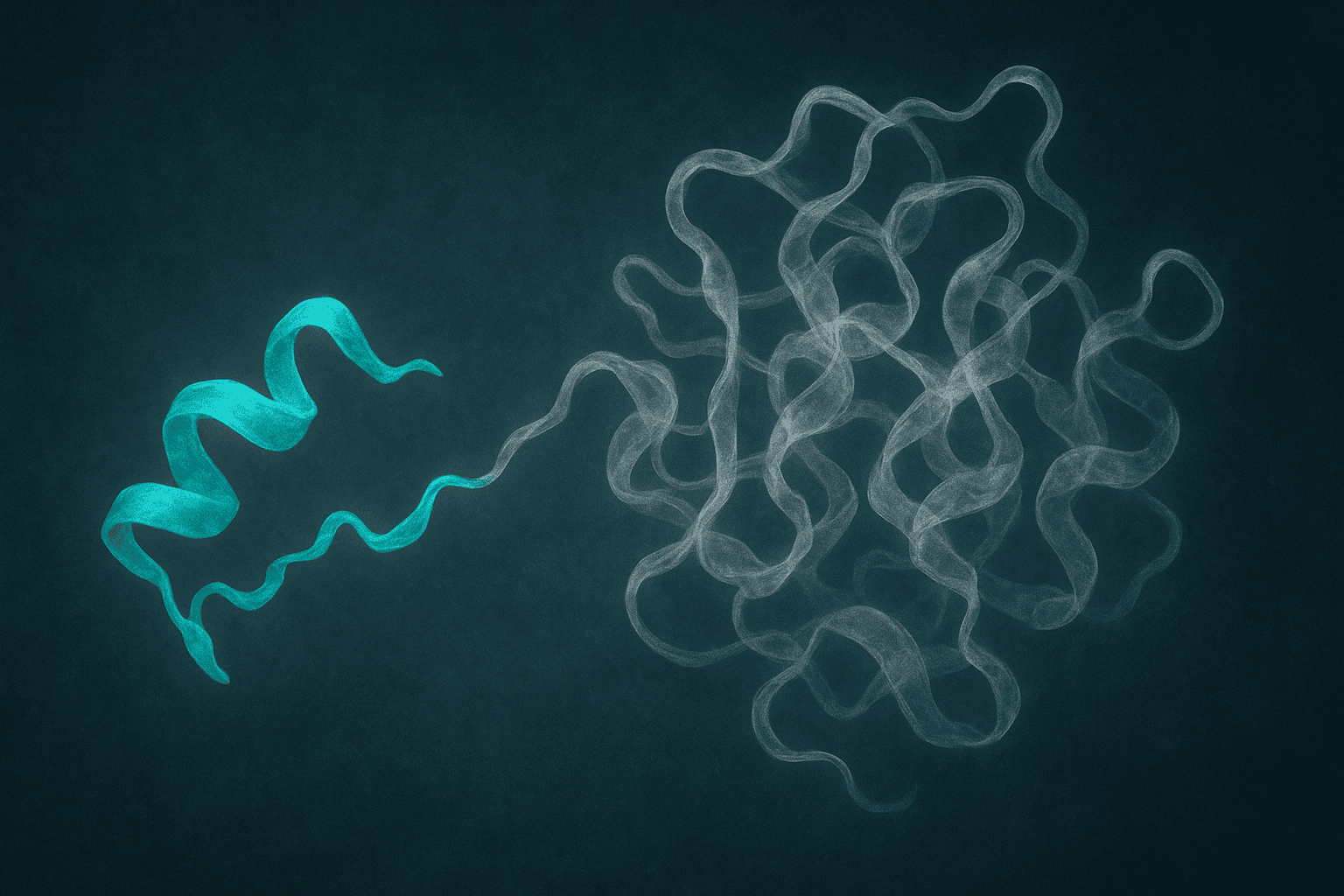
TB-500 is not the full 43-amino-acid Thymosin Beta-4 protein. It’s a synthetic peptide that contains the active region — the specific section responsible for actin binding.
Think of it like a key ring with many keys. The full Thymosin Beta-4 protein is the entire key ring. TB-500 is the one key that actually opens the lock. Researchers identified which part of the protein does the heavy lifting and synthesized just that fragment.
This approach — using a fragment instead of the full protein — has practical advantages for research. Shorter peptides are easier and cheaper to synthesize, more stable in storage, and simpler to work with in laboratory experiments. The tradeoff is that some of the full protein’s other functions may be lost when you use only a fragment.
TB-500 Thymosin Beta-4 Research: What Scientists Have Found
The preclinical research on both TB-500 and its parent protein is extensive. Studies span multiple areas of biology, all connected by the common thread of actin regulation and cell mobility.
Malinda and colleagues (1999) published one of the earlier studies examining Thymosin Beta-4’s effects in wound-related preclinical models. Treadwell and colleagues (2012) later reviewed the broader body of evidence across multiple preclinical and early clinical settings.
Malinda et al. (1999) investigated Thymosin Beta-4 in dermal research models, reporting on the peptide’s influence on keratinocyte and endothelial cell migration in preclinical settings. (PMID: 10469335)
It’s worth noting that most of this research has been conducted in animal models or cell cultures — not in human clinical trials. The translation from preclinical findings to human biology is never guaranteed, which is why TB-500 remains a research compound.
Alpha Peptides carries a research-grade BPC-157 + TB-500 combination with batch-specific Certificates of Analysis. For storage guidance, see our peptide storage guide.
Frequently Asked Questions
Is TB-500 the same as Thymosin Beta-4?
Not exactly. TB-500 thymosin beta-4 are related but distinct. Thymosin Beta-4 is the full 43-amino-acid natural protein. TB-500 is a synthetic fragment containing the active actin-binding region of that protein.
Where is Thymosin Beta-4 found in the body?
Thymosin Beta-4 is found in nearly every cell type, including blood cells, platelets, immune cells, and tissue cells. It was first isolated from the thymus gland but is widely distributed throughout the body.
Why use a fragment instead of the full protein?
Shorter peptide fragments are easier to synthesize, more stable in storage, and simpler to use in laboratory research. TB-500 contains the key functional region of Thymosin Beta-4 that researchers are most interested in studying.
Is TB-500 approved for human use?
No. TB-500 is not approved for human use by the FDA or any regulatory agency. It is sold exclusively for laboratory and scientific research purposes.
For research use only. Not for human consumption. This article is intended for informational purposes and does not constitute medical advice, dosing guidance, or therapeutic recommendations.