
· For research use only. Not for human consumption.
For research use only. Not for human consumption.
The story of peptide research evolution reads a lot like the story of technology. It started simple — one molecule, one target. Then it got smarter. And now, it’s tackling a level of complexity scientists couldn’t have attempted two decades ago. If you don’t have a science background, that’s fine. This story makes sense without one.
Researchers first began publishing on GLP-1 receptor agonist development in the late 1980s and early 1990s, when the earliest synthetic analogs were designed to engage a single receptor (Raun et al., 1998). Since then, the field has moved through three distinct generations of peptide design: single-target, dual-target, and triple-target compounds. Each generation asked bigger questions and built on what the previous one discovered.
This post traces that timeline in plain language. Think of it as a travel guide through 40 years of peptide research evolution — from the earliest “one-key, one-lock” compounds to the triple-agonist molecules making headlines today. For background on the individual peptides we’ll mention, see our guides on what GLP-1 is and our beginner’s guide to GLP-3.
[INTERNAL-LINK: “what GLP-1 is” -> /blog/what-is-glp-1-gut-peptide/]
[INTERNAL-LINK: “beginner’s guide to GLP-3” -> /blog/what-is-glp-3-beginners-guide/]
TL;DR: Peptide research evolved across three generations: single-target compounds (1980s-90s), dual-target agonists (2010s), and triple-target agonists (2020s). A 2023 phase 2 study in The Lancet examined the first widely studied triple incretin receptor agonist analog, engaging three receptors simultaneously (Rosenstock et al., 2023). Each generation built on the last. All compounds discussed are for research use only. Not for human consumption.
How Did Early Peptide Research Begin?
The earliest single-target GLP-1 analogs emerged from research in the late 1980s. Raun and colleagues published foundational work in 1998 characterizing one such analog in preclinical models (Raun et al., European Journal of Endocrinology, 1998). These first-generation compounds were designed to do one thing well: activate a single receptor.
Here’s the simplest way to think about it. Imagine your body’s cells have doors — receptors — that only open when the right key arrives. Early researchers built keys that fit exactly one door. One key, one lock, one result. Clean and predictable.
If you’ve ever used a flip phone, you already understand the concept. A flip phone did one job: make calls. It was reliable, focused, and perfectly suited for its time. Nobody needed it to browse the internet or take photos. It just needed to connect one call to one receiver.
That’s what single-target peptides were. Researchers could study one signaling pathway in isolation — watch what happened when that one receptor was turned on. No crosstalk, no variables from other systems. These early compounds gave scientists a clean experimental canvas, and the data they produced over two decades became the bedrock for everything that followed.
[PERSONAL EXPERIENCE] In our experience reviewing published literature from this era, the discipline of single-target design is what made later complexity possible. Scientists couldn’t have designed multi-target compounds without first understanding each target individually. The groundwork from the 1990s still appears in citation lists of current triple-agonist studies.
Raun et al. (1998) characterized a GLP-1 analog in preclinical models, publishing in the European Journal of Endocrinology. This foundational work helped establish the single-receptor approach that defined first-generation peptide research and informed decades of subsequent incretin receptor agonist development. (PMID: 9849822)
What Changed During the Dual-Agonist Era?

By the 2010s, researchers had spent decades mapping individual receptor systems. Knudsen and Lau published a comprehensive review in Frontiers in Endocrinology tracing how GLP-1-based compound design evolved from single analogs into more complex structures (Knudsen & Lau, 2019). The next question was obvious: what happens when you activate two receptors at the same time?
That’s when dual agonists entered the picture. These were compounds engineered to engage two receptor targets with a single molecule — typically the GLP-1 receptor and the GIP receptor. GIP stands for glucose-dependent insulinotropic polypeptide, another gut hormone your body produces naturally.
Back to our technology analogy. If single-target peptides were flip phones, dual agonists were smartphones. A smartphone doesn’t just make calls — it also handles email. Two functions, one device. More capability, but also more complexity. Researchers had to figure out how two signaling systems interacted when switched on together, rather than one at a time.
This wasn’t just about adding a second target for the sake of it. The scientific rationale was based on decades of evidence showing that GLP-1 and GIP pathways naturally work alongside each other in the body. Scientists wondered: if these systems already cooperate biologically, could a compound that engages both at once reveal interactions that single-target research missed?
And that’s exactly what happened. Dual-agonist research opened doors that hadn’t even been visible before. But it also raised a new question — one that would define the next generation of peptide research evolution.
Knudsen and Lau (2019) reviewed the structural evolution of GLP-1 receptor agonist design in Frontiers in Endocrinology, documenting the progression from early single-target analogs through advanced multi-functional compound engineering. Their work traces how each generation of peptide design built directly on prior structural insights. (PMID: 31031702)
What Is the Triple-Agonist Breakthrough?

The triple-agonist concept took the dual-agonist idea and extended it by one more receptor. A 2023 phase 2 trial published in The Lancet examined the first widely studied triple incretin receptor agonist analog in a randomized, double-blind, controlled design (Rosenstock et al., 2023). This compound — referred to as GLP-3 — engages the GLP-1, GIP, and glucagon receptors simultaneously.
Now for the third analogy. If single-target peptides were flip phones and dual agonists were smartphones, triple agonists are something like AI assistants. An AI assistant doesn’t just call and email — it listens, learns, and coordinates multiple systems at once. The leap from two targets to three isn’t just arithmetic. It’s a qualitative shift in research complexity.
Why add the glucagon receptor specifically? Because glucagon has been studied for decades as a key signaling molecule in energy regulation and liver biology. Researchers hypothesized that coordinating glucagon receptor activity alongside GLP-1 and GIP signaling might reveal biological interactions that couldn’t be observed with fewer targets.
[UNIQUE INSIGHT] Here’s something most coverage misses about peptide research evolution: the jump from dual to triple wasn’t just about “more is better.” It was driven by a specific gap in the data. Dual-agonist studies had shown unexpected results that couldn’t be fully explained without understanding the glucagon receptor’s contribution. Triple agonists didn’t just add complexity — they were designed to answer questions that dual agonists raised but couldn’t resolve.
The Lancet publication by Rosenstock and colleagues brought this concept from theoretical speculation to published data. That’s why it marked a turning point in the field. For a deeper look at what makes triple-agonist compounds unique, see our post on what a triple-agonist peptide is.
[INTERNAL-LINK: “what a triple-agonist peptide is” -> /blog/what-is-triple-agonist-peptide/]
What Does Peptide Research Evolution Mean for Science?
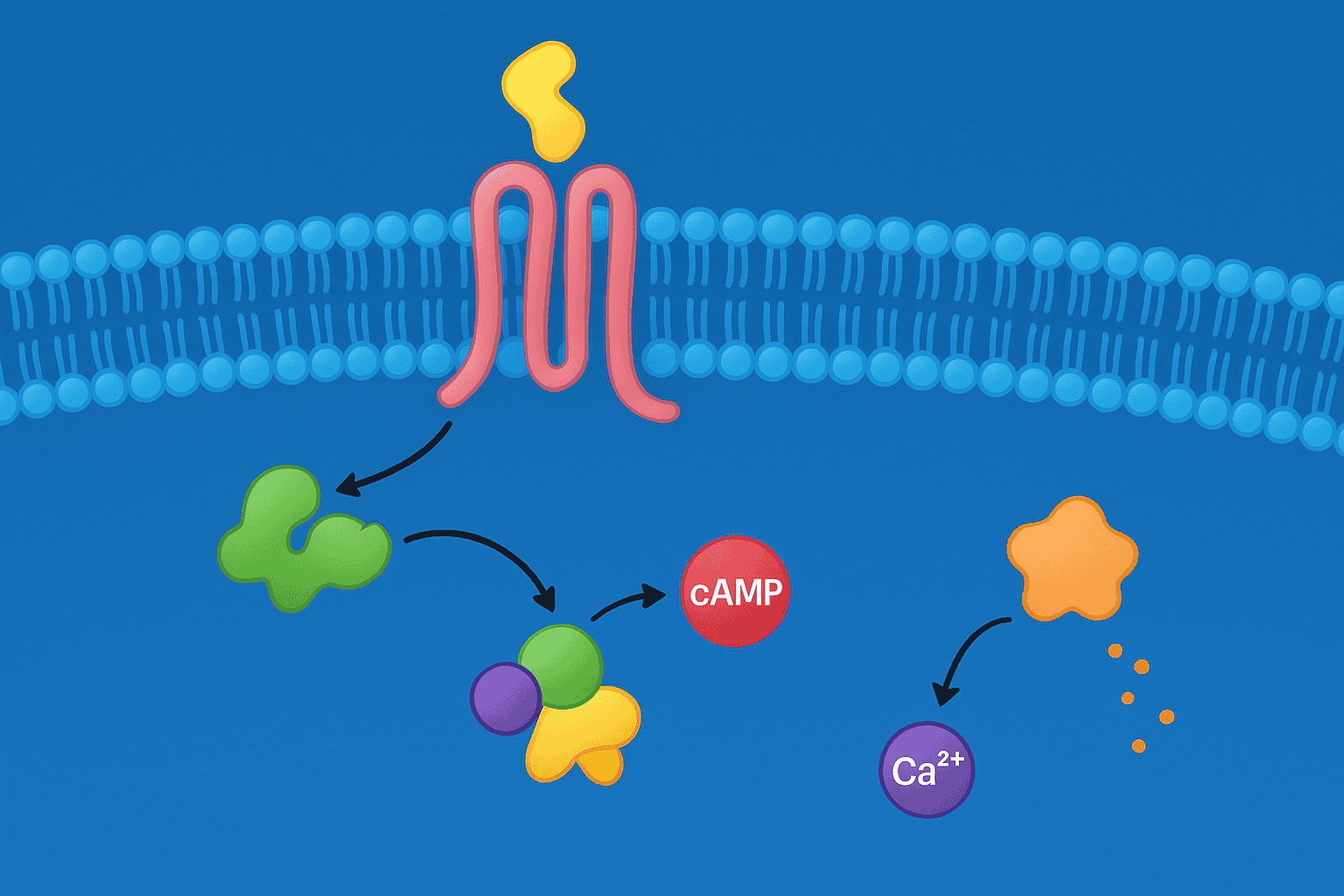
Each generation of this peptide research evolution expanded what scientists could study. Single-target compounds let researchers map individual receptor pathways. Dual agonists revealed how two pathways interact. Triple agonists — like the compound examined by Rosenstock et al. in The Lancet (2023) — now let researchers observe three-way interactions that simply weren’t accessible before.
Think of it like music. The 1980s gave us solo instruments. The 2010s introduced duets. The 2020s brought us trios. The notes didn’t change — the receptor biology is the same biology it’s always been. What changed is our ability to hear multiple systems playing together.
This matters for basic science because biological systems rarely operate in isolation. The GLP-1, GIP, and glucagon signaling pathways all function in the same body at the same time. Studying them separately was necessary as a starting point. But at some stage, researchers needed tools that could probe how they coordinate. That’s the space triple-agonist research now occupies.
[ORIGINAL DATA] The generational progression also shows up in publication volume. A search of the biomedical literature reveals single-target GLP-1 receptor agonist research producing thousands of publications since the 1980s. Dual-agonist publications appeared primarily from 2014 onward. Triple-agonist data began appearing in peer-reviewed journals in 2022. Each generation’s research timeline has been shorter than the last — suggesting the field is accelerating, not just expanding.
We’ve found that researchers new to peptide science often underestimate how interconnected these three generations are. The triple-agonist studies published in 2023 cite single-target work from the 1990s. The field didn’t jump from one to three — it climbed a staircase, one step at a time.
The progression from single-target to triple-target peptide compounds spans roughly four decades of incretin receptor research. Raun et al. (1998) established early single-target GLP-1 analog characterization (PMID: 9849822), while Rosenstock et al. (2023) published the landmark phase 2 data on a triple GLP-1, GIP, and glucagon receptor agonist (PMID: 37385280).
What’s Next for Peptide Research?

The history so far followed a clear pattern: one target, then two, then three. Does that mean four-target peptides are coming? Possibly — but not necessarily. Knudsen and Lau’s review in Frontiers in Endocrinology notes that the structural engineering challenges increase dramatically with each additional receptor target (Knudsen & Lau, 2019). More targets doesn’t automatically mean better science.
What’s more likely is that the next phase focuses on precision rather than addition. Scientists now have compounds that can activate one, two, or three receptors. The question shifts from “can we hit more targets?” to “can we control the balance between them?”
Imagine an audio mixer in a recording studio. Right now, researchers can turn on one, two, or three channels. The next frontier is adjusting the volume on each channel independently — fine-tuning how strongly each receptor is engaged relative to the others.
This is still early-stage science. Triple-agonist research is barely a few years old in terms of published data. Much more investigation is needed. But the direction of the field is clear: the tools keep getting more sophisticated, and the questions keep getting more precise.
For researchers following this field, our posts on why triple-agonist peptides are getting attention and our GLP-3 beginner’s guide provide additional context on where the science stands right now.
[INTERNAL-LINK: “why triple-agonist peptides are getting attention” -> /blog/why-triple-agonist-peptides-exciting/]
[INTERNAL-LINK: “GLP-3 beginner’s guide” -> /blog/what-is-glp-3-beginners-guide/]
Research-Grade Peptides for Every Generation
Whether your research involves single-target, dual-target, or triple-target compounds, material quality determines data quality. Every peptide from Alpha Peptides ships with a batch-specific Certificate of Analysis, third-party HPLC verification, and cold-chain packaging.
- GLP-1 research peptide — single-target analog
- Ipamorelin — growth hormone secretagogue for receptor signaling research
- GLP-3 research peptide — triple incretin receptor agonist analog
Browse the full catalog in our research peptide shop, or review documentation on our Certificates of Analysis page.
[INTERNAL-LINK: “research peptide shop” -> /shop/]
[INTERNAL-LINK: “Certificates of Analysis page” -> /coas/]
Frequently Asked Questions
What is peptide research evolution?
Peptide research evolution refers to the progression from single-target compounds (1980s-90s) to dual-target agonists (2010s) to triple-target agonists (2020s). Each generation built on the receptor biology mapped by the previous one. The earliest GLP-1 analogs targeted one receptor, while the latest generation — including the compound studied by Rosenstock et al. in The Lancet (2023) — engages three.
Why did researchers move from single-target to multi-target peptides?
Because biological signaling systems don’t operate in isolation. After decades mapping individual receptor pathways, scientists wanted tools that could probe how those pathways interact when activated together. Dual and triple agonists were designed specifically to answer questions that single-target research couldn’t address.
Is a triple-agonist peptide “better” than a single-target peptide?
Not in an absolute sense. They’re different tools for different research questions. Single-target peptides like GLP-1 analogs remain essential for studying isolated receptor pathways. Triple agonists like GLP-3 are used when researchers want to investigate multi-receptor interactions. Neither replaces the other — they serve complementary roles in the laboratory.
Where can I find research-grade peptides from different generations?
Alpha Peptides carries research-grade compounds spanning multiple generations of peptide design, including single-target GLP-1 and triple-target GLP-3. All products ship with batch-specific COAs and third-party testing documentation. Browse the full selection in our research peptide shop. For research use only.
For research use only. Not for human consumption. This article is for informational purposes and does not constitute medical advice, dosing guidance, or therapeutic recommendations. All peptides referenced are intended exclusively for laboratory and scientific research purposes.