
· For research use only. Not for human consumption.
For research use only. Not for human consumption.
Choosing between Selank and Semax for lab research depends on one fundamental question: what biological system are you investigating? Both peptides were developed at the same institution in Moscow. Both are exactly seven amino acids long. Both share the same Pro-Gly-Pro stability tail. But the Selank Semax lab research comparison reveals two very different scientific tools built from two very different biological starting points.
Selank was constructed from tuftsin, a four-amino-acid immune peptide produced by the spleen. Kozlovskaya et al. (2003) studied Selank’s effects on anxiety-related behavior in animal models, observing interactions with GABAergic pathways (PMID: 14969422). Semax was built from ACTH(4-7), a fragment of a brain hormone. Dolotov et al. (2006) documented its effects on BDNF expression in rat brain tissue (PMID: 16996037). Same lab technique, completely different parent molecules.
This guide helps you understand which compound fits which research protocol. For individual deep dives, see our Selank overview and Semax overview.
TL;DR: Selank derives from tuftsin (immune peptide) and has been studied in anxiety-related and GABAergic research. Semax derives from ACTH(4-7) (brain hormone fragment) and has been studied for BDNF and neurotrophic factor modulation. Both are Russian-developed heptapeptides sharing a Pro-Gly-Pro tail. Your research question determines which one to stock. For research use only. Not for human consumption.
Different Origins: Immune System vs Endocrine System
The single most important fact in the Selank Semax lab research comparison is where each compound started. They were not built from the same raw material. They come from entirely different biological departments.
Selank’s parent molecule is tuftsin, a tetrapeptide (Thr-Lys-Pro-Arg) produced by the spleen. Tuftsin was first identified in the 1970s for its role in activating phagocytes — immune cells that engulf and destroy foreign particles. Russian researchers at the Institute of Molecular Genetics took this immune fragment and added Pro-Gly-Pro to create a seven-amino-acid peptide that resists enzymatic breakdown.
Semax’s parent molecule is ACTH, or adrenocorticotropic hormone — a 39-amino-acid hormone released by the pituitary gland. Scientists found that a small fragment (positions 4 through 7: Met-Glu-His-Phe) had effects separate from the full hormone’s stress-response role. They attached the same Pro-Gly-Pro tail to stabilize it, creating Semax.
An analogy: imagine two different departments in a large company. Selank is like taking a memo from the security department (immune system) and laminating it so it lasts longer. Semax is like taking a memo from the executive suite (endocrine system) and laminating it the same way. Same lamination process, completely different messages inside.
Different Research Territories: GABA vs BDNF
The origin difference translates directly into what each peptide has been studied for. Selank research centers on GABAergic and serotonergic pathways. Semax research centers on neurotrophic factors and dopaminergic pathways. These are separate branches of neuroscience research.
Kozlovskaya et al. (2003) examined Selank in animal behavioral models and documented interactions with GABA-mediated signaling — the same neurotransmitter system that researchers investigate in the context of anxiety-related biology (PMID: 14969422). GABA is the brain’s primary inhibitory neurotransmitter. When GABA signaling increases, neural activity generally decreases. Selank’s interaction with this system is what places it in the anxiolytic research category.
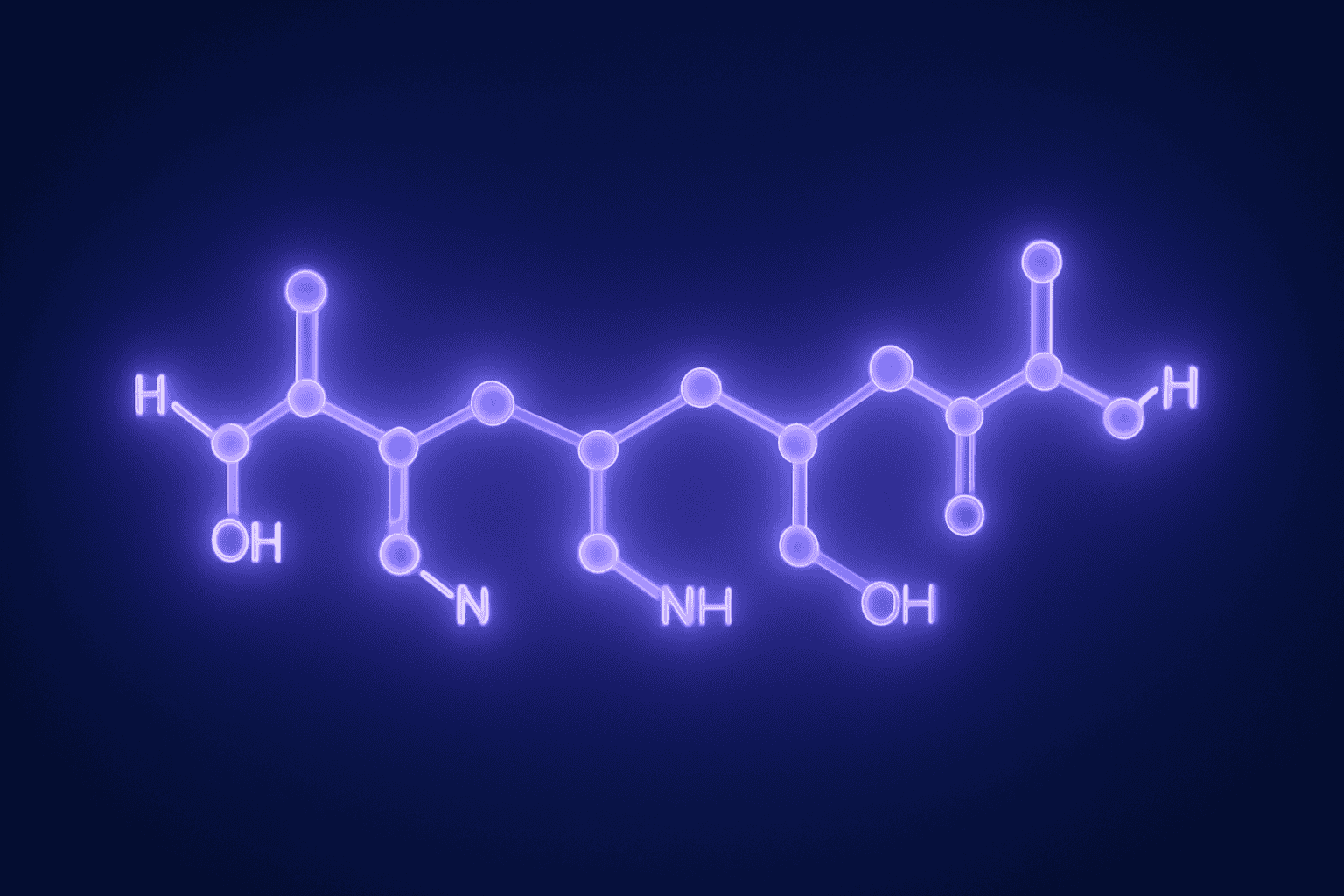
Dolotov et al. (2006) took Semax in an entirely different direction. They documented that Semax administration increased BDNF (brain-derived neurotrophic factor) mRNA expression in the rat hippocampus and frontal cortex (PMID: 16996037). BDNF is a protein involved in neuron growth and maintenance. Semax research falls squarely in the neurotrophic and neuroprotection category, not the anxiety-behavior category.
The practical implication: if your research protocol involves GABAergic signaling or anxiety-related behavioral assays, Selank is the relevant compound. If your protocol involves BDNF expression, neurotrophic factor modulation, or dopaminergic pathways, Semax is the relevant compound. They do not substitute for each other.
Kozlovskaya et al. (2003) demonstrated that Selank interacts with GABAergic pathways in animal behavioral models, producing anxiolytic-like effects without sedation. Dolotov et al. (2006) documented that Semax increased BDNF and trkB mRNA expression in the rat hippocampus and frontal cortex. These studies establish distinct neuroscience research territories for each peptide. (PMID: 14969422; PMID: 16996037)
The Shared Pro-Gly-Pro Tail: Same Packaging, Different Contents
Both Selank and Semax end with the same three amino acids: proline-glycine-proline. This is not a coincidence — it is a deliberate engineering choice by the same research institution. The Pro-Gly-Pro extension serves one purpose: protecting the peptide from being rapidly broken down by enzymes.
Without this tail, both parent fragments would degrade in biological environments within minutes. Tuftsin (Selank’s core) and ACTH(4-7) (Semax’s core) are both small enough that peptidases would chew them up almost immediately. The Pro-Gly-Pro extension acts like a protective cap, slowing down enzymatic degradation and giving the peptide more time to interact with its target systems.
This shared feature sometimes leads newcomers to think the two peptides must be closely related or interchangeable. They are not. The tail is structural packaging — it does not determine what the peptide does. What determines function is the first four amino acids, which are completely different between the two compounds:
- Selank: Thr-Lys-Pro-Arg-Pro-Gly-Pro (tuftsin core + Pro-Gly-Pro tail)
- Semax: Met-Glu-His-Phe-Pro-Gly-Pro (ACTH fragment core + Pro-Gly-Pro tail)
The front half of the chain is the functional part. The back half is the stability part. Same stability strategy, completely different active components.
When to Stock Each Compound for Selank Semax Lab Research
The decision of which peptide to stock comes down to your research focus. Here is a practical breakdown based on the published preclinical literature.

Stock Selank if your research involves:
- GABAergic signaling and GABA receptor modulation
- Anxiety-related behavioral assays in animal models
- Serotonergic pathway investigation
- Immune-neuro crossover studies (given its tuftsin origin)
Stock Semax if your research involves:
- BDNF expression and neurotrophic factor modulation
- Dopaminergic pathway research
- Neuroprotection models
- Melanocortin receptor studies (given its ACTH origin)
Stock both if: Your lab conducts comparative neuroscience research or wants to study how two different neuropeptide mechanisms behave under the same experimental conditions. Using both peptides in parallel provides useful contrasts that can strengthen experimental designs and control groups.
Alpha Peptides carries research-grade Selank with third-party HPLC purity verification and mass spectrometry identity confirmation. Visit our Selank product page for specifications and batch documentation. Browse the full research catalog for both neuropeptides, and review all testing records on our Certificates of Analysis page.
Frequently Asked Questions
Are Selank and Semax interchangeable in research protocols?
No. They interact with different receptor systems and appear in different categories of preclinical literature. Selank has been studied in GABAergic and serotonergic contexts. Semax has been studied in BDNF and dopaminergic contexts. Substituting one for the other would change the biological question being asked.
Why were both peptides developed in Russia?
Both were created at the Institute of Molecular Genetics in Moscow during the 1990s. The same institution developed both compounds using the same structural strategy (adding a Pro-Gly-Pro stability tail to a short biological fragment). Russia invested significantly in peptide-based research during this period, producing several compounds that are now studied internationally.
Which peptide has more international research behind it?
Semax has attracted slightly more international attention, partly because its BDNF-related findings generated interest from research groups outside Russia. However, both peptides have decades of published preclinical data. The gap in international publication volume has narrowed as more laboratories worldwide have begun working with both compounds.
How should these peptides be stored in a research setting?
Both Selank and Semax should be stored lyophilized (freeze-dried) at -20 degrees Celsius in sealed, desiccated containers. Once reconstituted with bacteriostatic water, store at 2-8 degrees Celsius and avoid freeze-thaw cycles. Aliquoting into single-use portions before first use minimizes degradation from repeated vial opening. For detailed guidance, see our peptide storage guide.
For research use only. Not for human consumption. This article is intended for informational purposes and does not constitute medical advice, dosing guidance, or therapeutic recommendations.