
· For research use only. Not for human consumption.
Selank nootropic research is one of the most active areas in modern peptide neuroscience, and you don’t need a science degree to understand why. The word “nootropic” simply means a substance that scientists study for its potential interactions with brain function — things like memory, learning, and attention. When researchers call something a nootropic, they’re placing it in a research category, not making a promise about what it does.
Selank is a synthetic peptide built from seven amino acids. It was developed by Russian scientists at the Institute of Molecular Genetics, based on a natural immune fragment called tuftsin. Over the past two decades, researchers have investigated Selank across multiple areas of neuroscience, and its classification as a nootropic research compound reflects that broad interest.
This article breaks down what “nootropic” actually means, why Selank nootropic studies have attracted attention, and what preclinical research has found so far. Everything is written in plain English for readers with no science background. For related reading, see our posts on the Selank-tuftsin connection and Selank and GABA research.
[INTERNAL-LINK: “Selank-tuftsin connection” -> /blog/selank-tuftsin-connection/]
[INTERNAL-LINK: “Selank and GABA research” -> /blog/selank-gaba-research-studies/]
TL;DR: “Nootropic” is a research category for substances studied in the context of brain function. Selank nootropic research includes preclinical studies on memory-related behavior in animal models. Kolik et al. (2019) found Selank connected to BDNF regulation in models of memory impairment (PMID: 31625062), while Kozlovskaya et al. (2003) documented interactions with neurotransmitter systems (PMID: 14969422). All research is preclinical. Selank is sold for research use only.
What Does “Nootropic” Actually Mean?
The word “nootropic” was coined in 1972 by a Romanian scientist named Corneliu Giurgea. He combined two Greek words: “nous” (mind) and “trepein” (to turn or bend). So a nootropic literally means something that “bends the mind” — not in a scary way, but in the sense of influencing how the brain processes information.
In research settings, the term is used to categorize substances that scientists study for their interactions with cognitive pathways. These pathways include memory formation, attention, and learning at the cellular level. When researchers place a compound in the Selank nootropic category, they’re saying it belongs to a group of substances being investigated for how they interact with these brain processes in laboratory models.
It’s important to separate the research definition from the marketing definition. In consumer products, “nootropic” has been stretched to mean almost anything labeled as “brain-boosting.” In science, it has a specific meaning tied to documented preclinical observations, not marketing claims.
Why Is Selank Nootropic Research an Active Area?

Selank nootropic research gained traction for a straightforward reason: when scientists tested it in animal models, they observed interactions with brain systems connected to memory and learning. That alone was enough to place it in the nootropic research category and justify further investigation.
The foundational work came from Seredenin et al. (1998), who documented the anxiolytic action of Selank as a tuftsin analog in preclinical behavioral models (PMID: 9583175). While that study focused on anxiety-related behavior rather than cognition directly, it established that Selank interacted with the brain in measurable ways. That opened the door for later studies to investigate cognitive dimensions.
Kozlovskaya et al. (2003) expanded the picture by studying Selank and other short tuftsin-family peptides, documenting their interactions with neurotransmitter systems that play roles in cognitive processing (PMID: 14969422). This was a significant step because it connected Selank to the specific chemical systems in the brain that handle information processing.
Seredenin et al. (1998) documented the anxiolytic action of Selank, a tuftsin analog, in preclinical behavioral models. This foundational study was among the first to demonstrate that Selank produced measurable interactions with brain systems, setting the stage for subsequent Selank nootropic research investigations. (PMID: 9583175)
What Does “Cognitive Enhancement” Mean in a Research Context?
When scientists talk about cognitive enhancement in research, they’re not talking about making someone smarter. They’re talking about measurable changes in specific brain processes — things like how quickly an animal model learns a new task, how well it remembers a previously learned behavior, or how its brain cells respond to stimuli at the chemical level.
These measurements are highly specific. Researchers might track how many times a mouse finds a hidden platform in a water maze, or measure changes in neurotransmitter levels in specific brain regions. The data is quantified, documented, and published in peer-reviewed journals. It’s science, not speculation.
In the context of Selank nootropic research, cognitive enhancement refers to these kinds of preclinical observations. For example, Kolik et al. (2019) investigated Selank in models of ethanol-induced memory impairment and found that it was connected to BDNF regulation (PMID: 31625062). BDNF (Brain-Derived Neurotrophic Factor) is a protein that supports neuron growth and connectivity. For more on this connection, see our detailed post on Selank and BDNF research.
[INTERNAL-LINK: “Selank and BDNF research” -> /blog/selank-bdnf-research-studies/]
What Has Preclinical Research Observed?
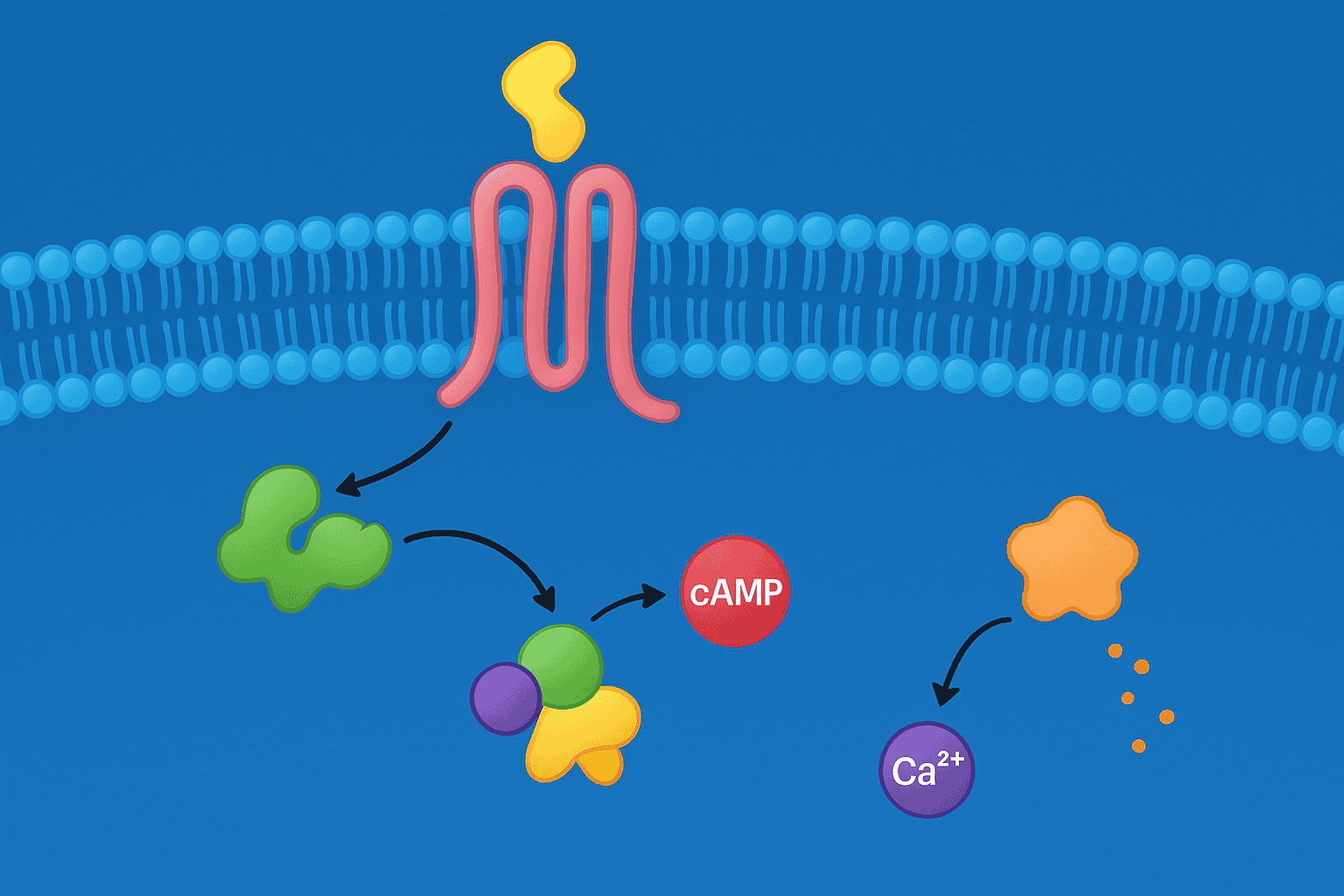
Preclinical Selank nootropic research has documented several observations in animal models. These are not claims about what Selank does in humans — they are observations from controlled laboratory experiments published in peer-reviewed literature.
The key findings include interactions with GABAergic neurotransmission (the brain’s primary calming system), connections to BDNF regulation (a protein critical for neuron maintenance), and documented effects on behavioral measures in animal models of memory impairment. Each of these findings has been published with full methodology, data, and statistical analysis.
What makes Selank interesting to researchers is that it appears to interact with multiple systems simultaneously. Most compounds studied in this category tend to interact primarily with one neurotransmitter system. Selank’s documented interactions span GABAergic, serotonergic, and neurotrophic factor pathways, making it a multifaceted subject for laboratory investigation.
Kolik et al. (2019) investigated Selank in preclinical models of ethanol-induced memory impairment and found a connection to BDNF regulation. This study provided direct evidence linking Selank to neurotrophic factor modulation, expanding its nootropic research profile beyond neurotransmitter-level interactions alone. (PMID: 31625062)
“Nootropic” as Research Category vs. Consumer Marketing

This distinction matters for anyone reading about Selank nootropic research. In the research world, calling something a nootropic means it belongs to a category of substances being studied for their interactions with cognitive pathways. It says nothing about whether the compound is safe, effective, or ready for human use.
In consumer marketing, the word has been applied to everything from caffeine pills to herbal supplements. There are no consistent standards for what makes something a “nootropic” in the commercial space. This has led to confusion, with many people assuming that the research term and the marketing term mean the same thing. They don’t.
When you see Selank described as a nootropic in published scientific literature, the authors are placing it in a research category based on preclinical data. When you see other products described as nootropics in advertisements, the authors are often using the term loosely to suggest benefits that may or may not be supported by evidence. For a broader look at how peptides fit into this research landscape, see our overview of Russian peptide research history.
[INTERNAL-LINK: “Russian peptide research history” -> /blog/russian-peptide-research-history/]
Where Can Researchers Source Selank?
Research-grade Selank requires verified purity documentation. Look for a supplier providing third-party HPLC purity data (minimum 98%), mass spectrometry confirmation of the correct molecular weight, and batch-specific Certificates of Analysis.
Alpha Peptides carries research-grade Selank with publicly available COAs. You can review documentation on our Certificates of Analysis page or browse the full research catalog.
[INTERNAL-LINK: “Certificates of Analysis page” -> /coas/]
[INTERNAL-LINK: “research catalog” -> /shop/]
Frequently Asked Questions
What does “nootropic” mean?
Nootropic comes from Greek words meaning “mind-bending.” In research, it refers to a category of substances studied for their interactions with cognitive pathways like memory, learning, and attention. It’s a research classification, not a promise about what a compound does in humans.
Is Selank nootropic research conducted in humans?
The Selank nootropic studies cited in this article are preclinical, meaning they were conducted in animal models or in vitro laboratory settings. Selank is a research compound intended for laboratory investigation only and is not approved for human use.
What is the connection between Selank and BDNF?
Kolik et al. (2019) found that Selank was connected to BDNF regulation in preclinical models (PMID: 31625062). BDNF is a protein that supports neuron growth and connectivity. This finding added a neurotrophic dimension to Selank’s research profile.
How is Selank different from other nootropic research compounds?
Selank is a seven-amino-acid synthetic peptide derived from tuftsin, a natural immune fragment. Its documented interactions span multiple brain systems (GABAergic, serotonergic, neurotrophic), which distinguishes it from compounds that typically interact with only one neurotransmitter pathway. For more on its structure, see our post on what is a heptapeptide.
[INTERNAL-LINK: “what is a heptapeptide” -> /blog/what-is-heptapeptide-seven-amino-acid/]

For research use only. Not for human consumption. All peptides referenced in this article are intended exclusively for laboratory and preclinical research purposes. Nothing on this page constitutes medical advice, dosing guidance, or a recommendation for personal use. All information is provided for educational purposes relating to peptide chemistry and laboratory research practice.