
· For research use only. Not for human consumption.
For research use only. Not for human consumption.
Selank GABA research is one of the most discussed topics in preclinical peptide neuroscience. GABA is a chemical in the brain that most people have never heard of, but it plays a massive role in how the nervous system works. When scientists study Selank, one of the first things they look at is how it interacts with the GABA system. That relationship has produced some of the most cited findings in the Selank literature.
If you’ve ever felt calm after a stressful moment, GABA probably had something to do with it. It’s the brain’s main “slow down” signal. And Selank, a seven-amino-acid synthetic peptide developed in Russia, has been examined in preclinical models for its effects on this calming system. The results have been documented in peer-reviewed studies spanning over two decades.
This guide explains GABA in plain English, walks through what Selank GABA research has found so far, and puts it all in context for people who don’t have a science degree. For background on Selank itself, see our Selank nootropic research overview. For a comparison with a related compound, check out our post on Semax and ACTH fragments.
[INTERNAL-LINK: “Selank nootropic research overview” -> /blog/selank-nootropic-research-overview/]
[INTERNAL-LINK: “Semax and ACTH fragments” -> /blog/semax-acth-fragment-explained/]
TL;DR: GABA is the brain’s primary calming neurotransmitter, and Selank has been studied for its effects on the GABAergic system in preclinical models. Seredenin et al. (1998) documented anxiolytic-like activity of Selank in animal behavioral tests (PMID: 9583175). Kozlovskaya et al. (2003) further characterized Selank within the tuftsin peptide family and its interactions with neurotransmitter systems (PMID: 14969422). All research is preclinical. Selank is sold for research use only.
What Is GABA? The Brain’s Brake Pedal
GABA stands for gamma-aminobutyric acid. That’s a mouthful, so almost everyone just says “GABA.” It’s a neurotransmitter, which is a fancy word for a chemical messenger that brain cells use to talk to each other. There are many neurotransmitters in the brain, but GABA is special because it’s the main one responsible for slowing things down.
Here’s the simplest way to think about it. Imagine your brain as a car. Some neurotransmitters are like the gas pedal — they speed things up, make neurons fire faster, and increase activity. GABA is the brake pedal. When GABA is active, it tells neurons to slow down, fire less often, and take it easy. Without enough GABA activity, the brain would be like a car with no brakes — everything would race out of control.
GABA works by attaching to specific receptors on neurons, primarily called GABA-A and GABA-B receptors. When GABA locks onto these receptors, it opens tiny channels that let charged particles flow into the neuron. This changes the electrical state of the cell and makes it harder for that neuron to fire. The result is reduced neural activity in that area. That’s the braking effect in action.
What Has Selank GABA Research Found in Preclinical Studies?
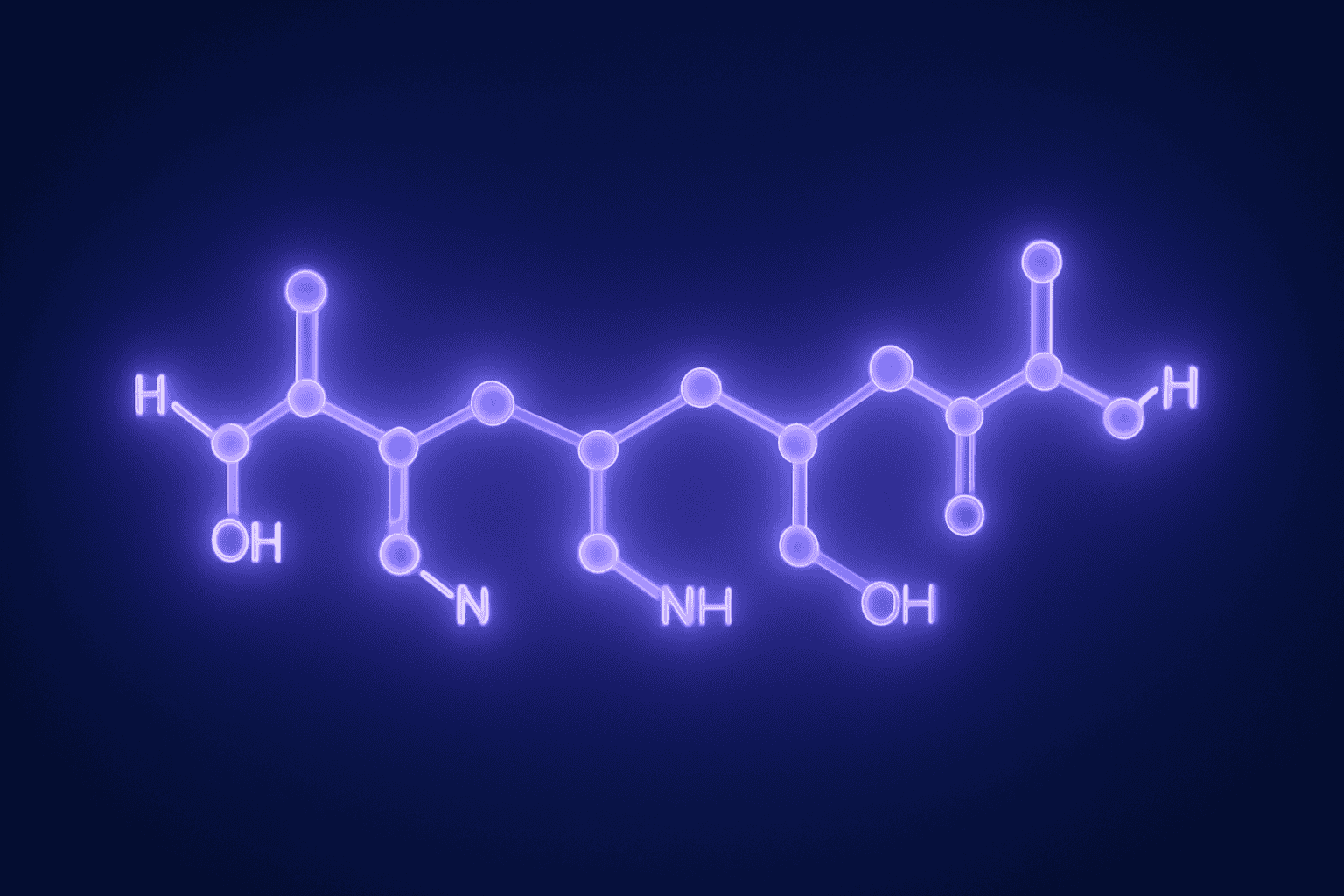
The connection between Selank and the GABA system is one of the most documented aspects of this peptide’s research profile. Seredenin et al. (1998) published one of the earliest studies examining Selank’s anxiolytic action — meaning they observed reduced anxiety-type behavior in animal models after administration of this tuftsin analog (PMID: 9583175). That anxiolytic activity pointed directly to GABA involvement, since the GABAergic system is the primary pathway studied in anxiety-related behavioral research.
What made the findings noteworthy was that the animals in the study didn’t show sedation. Many compounds that interact with the GABA system cause drowsiness as a side effect in preclinical models. In the Selank GABA research by Seredenin’s team, the anxiolytic-like behavior appeared without that sedative component. This distinction attracted attention from other research groups studying the GABAergic system.
Kozlovskaya et al. (2003) built on this work by examining Selank alongside other short peptides from the tuftsin family, investigating how these structurally related compounds interacted with neurotransmitter pathways including the GABAergic system (PMID: 14969422). Their research helped establish that the GABAergic effects were connected to Selank’s specific structure, not just a generic property of tuftsin-derived peptides.
Seredenin et al. (1998) investigated the anxiolytic action of Selank (a tuftsin analog) in preclinical behavioral models, observing reduced anxiety-type behavior without accompanying sedation. This study was among the first to connect Selank’s effects to GABAergic pathway modulation and remains a foundational reference in Selank GABA research. (PMID: 9583175)
What Is Allosteric Modulation? A Simple Explanation
When scientists talk about Selank GABA research, you’ll sometimes see the term “allosteric modulation.” That sounds complicated, but it’s actually a simple concept once you strip away the jargon.
Think of a GABA receptor as a lock on a door. GABA itself is the key. When the key goes into the lock, the door opens and the calming signal gets through. Allosteric modulation is what happens when something else touches the lock — not in the keyhole, but on a different part of the lock entirely. That touch changes the shape of the lock just enough that the key works differently. Maybe the door opens wider. Maybe the key fits more easily.
An allosteric modulator doesn’t replace GABA. It doesn’t shove GABA out of the way and take over. Instead, it works alongside GABA, changing how effectively GABA does its job. This is a fundamentally different mechanism than directly activating the receptor, and it’s part of what makes Selank’s interaction with the GABA system distinctive in the research literature.
This distinction matters for preclinical researchers because direct GABA receptor activation and allosteric modulation produce different downstream effects. Understanding which mechanism a compound uses helps researchers design better experiments and interpret their results more accurately.
Why Does the GABA System Matter for Neuroscience Research?
GABA is involved in nearly every aspect of brain function. It’s not just about feeling calm. The GABAergic system plays roles in sleep, motor control, memory processing, and how the brain balances excitation and inhibition. When neuroscientists study any of these areas, the GABA system almost always comes into the picture at some point.
That’s part of why Selank GABA research has attracted attention. Any compound that interacts with the GABAergic system in a distinctive way becomes a potentially useful tool for investigating these pathways. Researchers don’t study Selank because they want to sell a product. They study it because understanding how it interacts with GABA receptors reveals information about how those receptors work in the first place.
Kolik et al. (2019) expanded the scope of Selank research by investigating the peptide in the context of ethanol-induced memory impairment, finding connections to BDNF regulation (PMID: 31625062). While that study focused on BDNF rather than GABA directly, it illustrated how Selank’s effects on one neurotransmitter system can have downstream implications for other brain signaling pathways. For more on the BDNF connection, see our brain peptide research overview.
Kozlovskaya et al. (2003) examined Selank and short peptides of the tuftsin family, characterizing their interactions with neurotransmitter systems including GABAergic pathways. This comparative approach helped establish structure-activity relationships for tuftsin-derived peptides and their neurotransmitter interactions. (PMID: 14969422)
[INTERNAL-LINK: “brain peptide research overview” -> /blog/brain-peptide-research-2026/]
The Bigger Picture: What This Research Means

It’s important to keep perspective on where Selank GABA research stands. All the studies cited in this article are preclinical. That means they were conducted in animal models or in vitro settings — not in people. The observations about anxiolytic-like behavior, GABAergic interactions, and allosteric modulation are scientific data points, not medical recommendations.
What the research does provide is a growing body of evidence that Selank interacts with the GABAergic system in ways that are worth continued investigation. Each study builds on the last, and the published literature now spans more than two decades of peer-reviewed work. For researchers studying the GABA system, Selank represents one of several peptide-based tools available for laboratory investigation.
Where Can Researchers Source Selank?
Research-grade Selank requires verified purity documentation. Look for a supplier providing third-party HPLC purity data (minimum 98%), mass spectrometry confirmation of the correct molecular weight, and batch-specific Certificates of Analysis.
Alpha Peptides carries research-grade Selank with publicly available COAs. You can review documentation on our Certificates of Analysis page or browse the full research catalog.
[INTERNAL-LINK: “Certificates of Analysis page” -> /coas/]
[INTERNAL-LINK: “research catalog” -> /shop/]
Frequently Asked Questions
What is GABA?
GABA (gamma-aminobutyric acid) is the brain’s primary inhibitory neurotransmitter. It acts like a brake pedal for neurons, reducing neural activity and playing a role in processes like sleep, motor control, and emotional regulation. It works by binding to GABA-A and GABA-B receptors on neurons.
What has Selank GABA research shown?
Preclinical studies have found that Selank displays anxiolytic-like activity in animal models without causing sedation. Seredenin et al. (1998) documented these observations in behavioral tests with a tuftsin analog (PMID: 9583175). The effects have been connected to interactions with the GABAergic neurotransmitter system.
Does Selank directly activate GABA receptors?
The published literature suggests Selank’s interaction with the GABA system involves modulation rather than direct activation. This is a meaningful distinction in neuroscience research, as allosteric modulation and direct receptor activation produce different downstream effects in preclinical models.
Is Selank GABA research conducted in humans?
The research cited in this article is entirely preclinical, meaning it was conducted in animal models and in vitro laboratory settings. Selank is a research compound intended for laboratory investigation only. It is not approved for human use.
For research use only. Not for human consumption. All peptides referenced in this article are intended exclusively for laboratory and preclinical research purposes. Nothing on this page constitutes medical advice, dosing guidance, or a recommendation for personal use. All information is provided for educational purposes relating to peptide chemistry and laboratory research practice.