
· For research use only. Not for human consumption.
For research use only. Not for human consumption.
Selank BDNF is a topic that keeps showing up in neuroscience research journals, and understanding why requires knowing just two things. First, Selank is a seven-amino-acid synthetic peptide developed from a natural immune fragment called tuftsin. Second, BDNF is a protein that plays a central role in how brain cells grow, survive, and communicate. When researchers study how these two interact, they’re investigating one of the most fundamental processes in brain biology.
You don’t need a PhD to understand why BDNF matters. Think of it as fertilizer for brain cells. Just as fertilizer helps plants grow stronger roots and branches, BDNF supports the growth and maintenance of neurons and the connections between them. When scientists found that Selank influenced BDNF levels in preclinical models, it opened an entirely new chapter of investigation for this peptide.
This guide explains what BDNF is, why neuroscientists care about it, and what published research has found about the Selank BDNF connection. Everything is written for everyday readers with no science background. For broader context on Selank, see our Selank nootropic research overview. For how this connects to other brain peptide work, check out our post on brain peptide research in 2026.
[INTERNAL-LINK: “Selank nootropic research overview” -> /blog/selank-nootropic-research-overview/]
[INTERNAL-LINK: “brain peptide research in 2026” -> /blog/brain-peptide-research-2026/]
TL;DR: BDNF (Brain-Derived Neurotrophic Factor) is a protein that supports neuron growth and synaptic connections. Kolik et al. (2019) found that Selank influenced BDNF regulation in preclinical models examining ethanol-induced memory impairment (PMID: 31625062). This Selank BDNF connection is part of a growing body of research investigating how synthetic peptides interact with neurotrophic factor pathways. All research is preclinical. Selank is sold for research use only.
What Is BDNF? Fertilizer for Your Brain Cells
BDNF stands for Brain-Derived Neurotrophic Factor. Let’s break that name apart so it actually makes sense. “Brain-Derived” means it’s produced in the brain. “Neurotrophic” comes from two Greek roots: “neuro” (nerve) and “trophic” (nourishment). “Factor” just means it’s a substance that influences a biological process. Put it all together, and BDNF literally means “a brain-produced substance that nourishes nerves.”
Here’s what BDNF actually does. Your brain contains roughly 86 billion neurons. These neurons need to grow, form connections with each other, and maintain those connections over time. BDNF is one of the key proteins that supports all three of those processes. It’s part of a family of proteins called neurotrophins, and it’s the most abundant neurotrophin in the brain.
The fertilizer analogy works well here. A garden can survive without fertilizer, but it won’t thrive. The plants will be smaller, weaker, and less connected. BDNF does for neurons what fertilizer does for plants — it supports growth, strengthens existing structures, and helps build new connections between cells. That’s why neuroscientists pay so much attention to anything that influences BDNF levels.
What Has Selank BDNF Research Found?
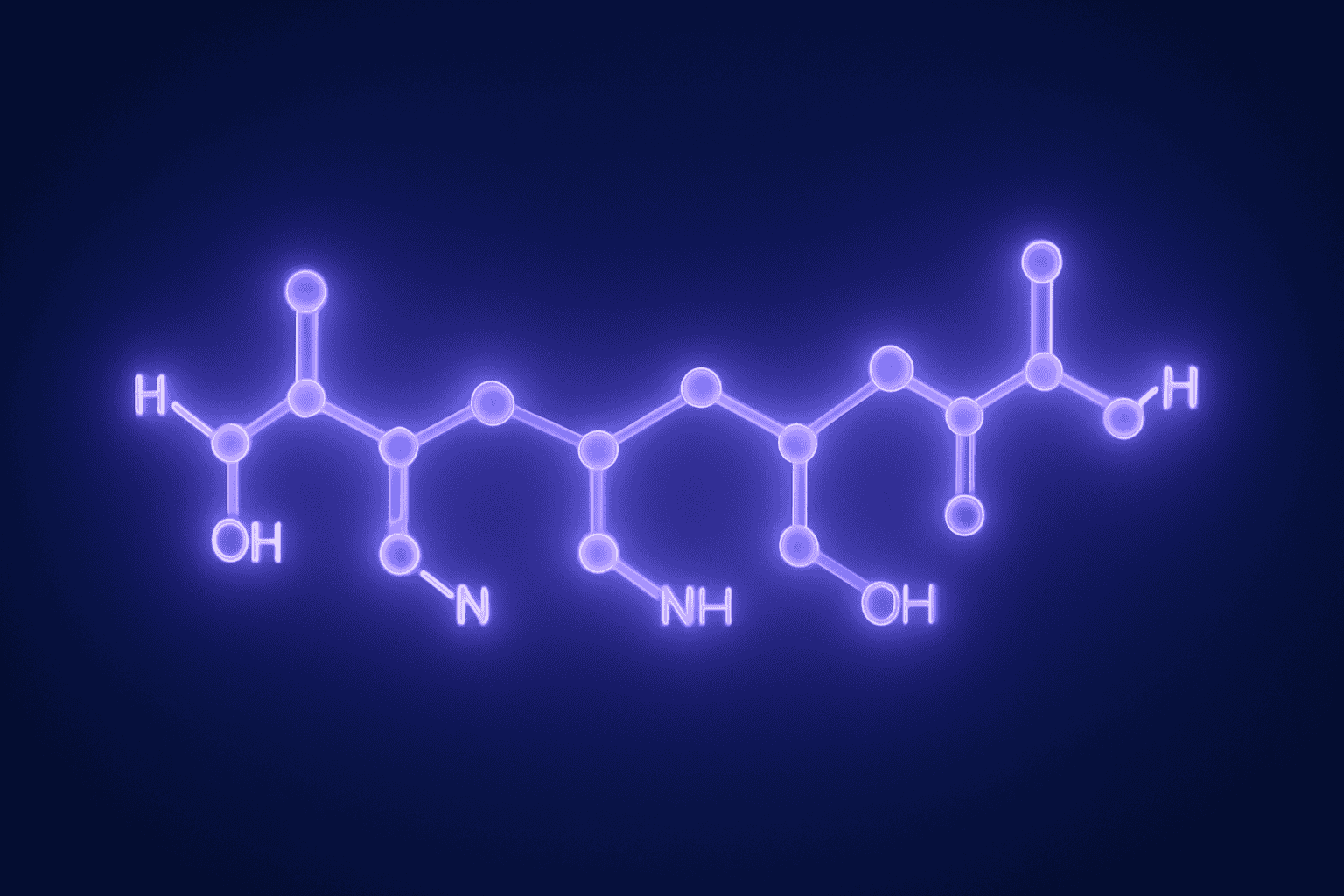
The landmark study connecting Selank and BDNF came from Kolik et al. in 2019. Their research investigated Selank in the context of ethanol-induced memory impairment in preclinical models. What they found was that Selank was connected to the regulation of BDNF expression (PMID: 31625062). In simpler terms, when researchers administered Selank in their experimental models, they observed changes in how much BDNF protein the brain cells were producing.
This was significant for several reasons. First, it connected Selank to the neurotrophic factor family of research — a completely different area from the anxiety-related GABAergic studies that had dominated earlier Selank BDNF literature. Second, it suggested that Selank’s effects on the nervous system might be more complex than originally thought, touching not just neurotransmitter signaling but also the growth and maintenance of neurons themselves.
Earlier work by Seredenin et al. (1998) had established Selank’s anxiolytic properties in animal models (PMID: 9583175). The BDNF finding by Kolik’s team added another dimension entirely. It raised the question of whether Selank’s observed effects on behavior in preclinical models might be partially explained by its influence on neurotrophic factor pathways rather than (or in addition to) direct neurotransmitter modulation.
Kolik et al. (2019) investigated Selank in preclinical models of ethanol-induced memory impairment and found that it was connected to BDNF regulation. This study provided the first direct evidence linking Selank to neurotrophic factor modulation, expanding the peptide’s research profile beyond its previously documented GABAergic interactions. Published as a peer-reviewed study. (PMID: 31625062)
Why Is Selank BDNF Research Important for Neuroscience?
To understand why the Selank BDNF connection matters to neuroscientists, you need to understand what BDNF does at a cellular level. When BDNF is released by a neuron, it attaches to receptors on neighboring neurons — specifically a receptor called TrkB (pronounced “track B”). When BDNF locks onto TrkB, it triggers a cascade of chemical signals inside the cell that promote survival, growth, and the strengthening of synaptic connections.
Synaptic connections are the junctions where one neuron talks to another. The stronger and more numerous these connections are, the more efficiently the brain can process information. Scientists call this “synaptic plasticity,” and it’s one of the most actively studied topics in all of neuroscience. Anything that influences BDNF levels, therefore, potentially influences synaptic plasticity.
That’s why the Selank BDNF finding was noteworthy. Kozlovskaya et al. (2003) had already established that Selank and related tuftsin-family peptides interacted with neurotransmitter systems (PMID: 14969422). The BDNF connection revealed by Kolik et al. (2019) added a neurotrophic dimension to the picture, suggesting that Selank’s interactions with the brain operate on multiple levels simultaneously.

How Do Scientists Measure BDNF in the Lab?
When you read about Selank BDNF research, the studies typically measure BDNF in one of two ways. The first is by looking at BDNF mRNA, which is the genetic instructions that cells use to produce the BDNF protein. If mRNA levels go up, it means the cells are receiving a stronger signal to make more BDNF. The second method measures the BDNF protein itself — the actual finished product.
Both approaches give researchers different kinds of information. mRNA measurement tells you what the cell is being told to do. Protein measurement tells you what the cell actually produced. Kolik et al. (2019) used these techniques in their preclinical models to document changes in BDNF regulation associated with Selank administration (PMID: 31625062).
These measurement techniques — often using methods like ELISA (enzyme-linked immunosorbent assay) and RT-PCR (reverse transcription polymerase chain reaction) — are standard tools in neuroscience laboratories. They allow researchers to quantify exactly how much BDNF is present and whether that amount changes under different experimental conditions.
Seredenin et al. (1998) conducted one of the foundational studies on Selank, documenting anxiolytic action of this tuftsin analog in preclinical behavioral models. While this study focused on behavioral outcomes rather than BDNF directly, it established the framework within which subsequent neurotrophic factor research, including the Kolik et al. (2019) BDNF findings, would later be interpreted. (PMID: 9583175)
Putting It All Together: What We Know and What We Don’t

Here’s the honest picture of where Selank BDNF research stands. We know from Kolik et al. (2019) that Selank is connected to BDNF regulation in preclinical models. We know from earlier studies that Selank interacts with GABAergic and serotonergic neurotransmitter systems. We know it was developed from tuftsin, a natural immune peptide, by adding a Pro-Gly-Pro tail for stability.
What we don’t know yet is the full mechanism — exactly how Selank influences BDNF levels and what the downstream consequences are in every context. The research is still preclinical, meaning it has been conducted in animal models and in vitro settings, not in human clinical trials. Every finding cited in this article represents valuable scientific data, but it’s early-stage data.
For researchers investigating neurotrophic factor pathways, Selank represents one tool in a growing toolkit of peptide-based research compounds. Its documented connection to both GABAergic signaling and BDNF regulation makes it a versatile subject for laboratory investigation. For more on related research directions, see our overview of Semax and its ACTH origins, which provides a useful comparison of how another Russian-developed peptide interacts with neurotrophic factors.
[INTERNAL-LINK: “Semax and its ACTH origins” -> /blog/semax-acth-fragment-explained/]
Where Can Researchers Source Selank?
Research-grade Selank requires verified purity documentation. Look for a supplier providing third-party HPLC purity data (minimum 98%), mass spectrometry confirmation of the correct molecular weight, and batch-specific Certificates of Analysis.
Alpha Peptides carries research-grade Selank with publicly available COAs. You can review documentation on our Certificates of Analysis page or browse the full research catalog.
[INTERNAL-LINK: “Certificates of Analysis page” -> /coas/]
[INTERNAL-LINK: “research catalog” -> /shop/]
Frequently Asked Questions
What is BDNF?
BDNF (Brain-Derived Neurotrophic Factor) is a protein produced in the brain that supports the growth, survival, and connectivity of neurons. Think of it as fertilizer for brain cells. It’s the most abundant neurotrophin in the brain and plays a central role in synaptic plasticity — the process by which connections between neurons are strengthened or weakened.
What did Selank BDNF research find?
Kolik et al. (2019) found that Selank was connected to BDNF regulation in preclinical models examining ethanol-induced memory impairment (PMID: 31625062). This was the first direct evidence linking Selank to neurotrophic factor modulation, adding a new dimension to its previously known GABAergic research profile.
Is BDNF the same as a neurotransmitter?
No. BDNF is a neurotrophic factor, not a neurotransmitter. Neurotransmitters (like GABA or serotonin) carry signals between neurons in real time. BDNF supports the long-term growth and maintenance of neurons and their connections. They work on different timescales and serve different functions in the brain.
Is this research conducted in humans?
No. All Selank BDNF research cited in this article is preclinical, meaning it was conducted in animal models or in vitro laboratory settings. Selank is a research compound intended for laboratory investigation only. It is not approved for human use.
For research use only. Not for human consumption. All peptides referenced in this article are intended exclusively for laboratory and preclinical research purposes. Nothing on this page constitutes medical advice, dosing guidance, or a recommendation for personal use. All information is provided for educational purposes relating to peptide chemistry and laboratory research practice.