
· For research use only. Not for human consumption.
For research use only. Not for human consumption.
Russian peptide research has produced some of the most well-documented synthetic peptides in the neuroscience literature, yet many Western scientists are only now discovering this body of work. Two compounds in particular — Selank and Semax — trace their origins to decades of systematic investigation at Russian scientific institutions. Their story is not about politics or ideology. It’s about a scientific tradition that took a distinctive approach to studying short-chain peptides.
The Russian approach to peptide science developed somewhat independently from Western research programs during the second half of the 20th century. While American and European labs were focused on other areas of molecular biology, Russian scientists at the Institute of Molecular Genetics in Moscow were building an extensive library of regulatory peptide research. The results are now published in peer-reviewed journals and accessible on PubMed for anyone to read.
This guide tells the story of Russian peptide research through the lens of Selank and Semax — how they were developed, why they were created, and what the published data shows. For specific information on each compound, see our guides on Selank’s nootropic research profile and Semax’s ACTH fragment origins.
[INTERNAL-LINK: “Selank’s nootropic research profile” -> /blog/selank-nootropic-research-overview/]
[INTERNAL-LINK: “Semax’s ACTH fragment origins” -> /blog/semax-acth-fragment-explained/]
TL;DR: Russian peptide research at the Institute of Molecular Genetics (Moscow) produced both Selank and Semax during the 1990s. Selank derives from tuftsin, an immune peptide; Semax derives from ACTH(4-7), a brain hormone fragment. Dolotov et al. (2006) documented Semax’s effects on BDNF expression (PMID: 16996037), while Seredenin et al. (1998) characterized Selank’s anxiolytic properties (PMID: 9583175). This body of work spans decades and is published in international peer-reviewed journals.
The Institute of Molecular Genetics: Where Russian Peptide Research Began
Most of the peptide compounds now studied by researchers worldwide trace back to one place: the Institute of Molecular Genetics of the Russian Academy of Sciences in Moscow. This institution became a center for regulatory peptide research during the Soviet era, and its scientists developed a methodical approach to understanding how short chains of amino acids interact with biological systems.
The institute’s peptide program wasn’t a single project. It was a sustained, multi-decade effort involving teams of biochemists, pharmacologists, and molecular biologists. They systematically investigated dozens of naturally occurring peptide fragments, looking for sequences that could be modified and stabilized for laboratory study. Two of the most well-known results of this program are Selank and Semax.
What made the Institute of Molecular Genetics distinctive was its focus on regulatory peptides — small molecules that modulate biological processes rather than triggering dramatic on-off responses. This nuanced approach to peptide science set Russian peptide research apart from much of the drug-discovery work happening in Western labs during the same period, which tended to focus on larger proteins and more targeted pharmaceutical compounds.
How Russian Peptide Research Led to Selank
Selank’s origin story starts with tuftsin, a four-amino-acid peptide that the body produces naturally as part of the immune system. Tuftsin was originally discovered at Tufts University in the United States in the 1970s, but it was Russian scientists who decided to use it as the foundation for a new research compound.
The team at the Institute of Molecular Genetics extended tuftsin by adding three amino acids (Pro-Gly-Pro) to create a seven-amino-acid chain that was more resistant to enzymatic breakdown. Seredenin et al. (1998) published the first major characterization of this compound, documenting anxiolytic-like activity in preclinical behavioral models (PMID: 9583175). That study put Selank on the international map.
Kozlovskaya et al. (2003) followed up by studying Selank alongside other short peptides from the tuftsin family, establishing structure-activity relationships that helped explain why the specific modification they chose produced the results it did (PMID: 14969422). This kind of systematic, family-based research approach is a hallmark of Russian peptide research — studying not just one compound but an entire family of related structures to understand the principles at work.
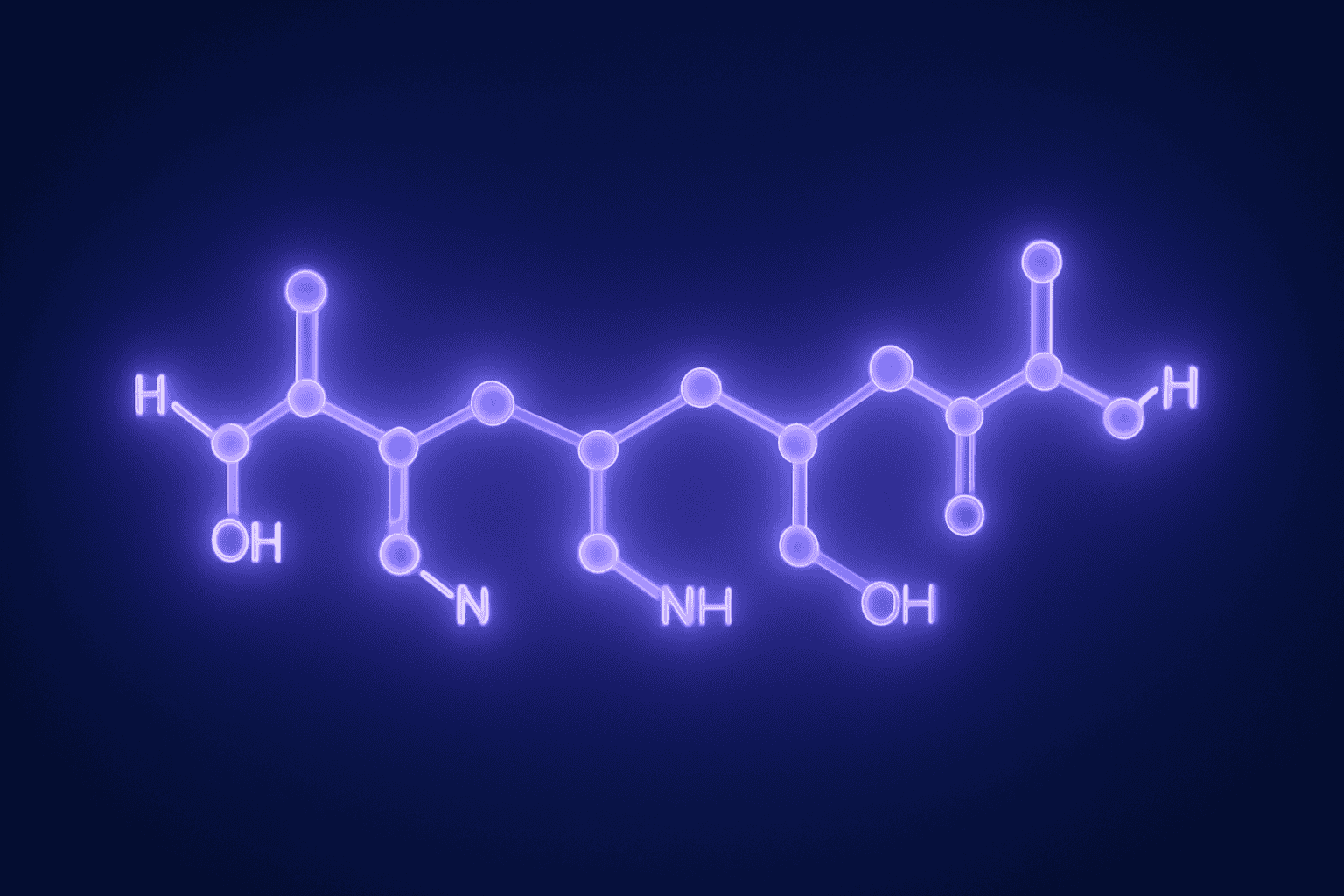
Seredenin et al. (1998) documented the anxiolytic action of Selank, a tuftsin analog, in preclinical behavioral models. This study emerged from the Russian peptide research tradition at the Institute of Molecular Genetics and established Selank as a subject of international scientific interest. (PMID: 9583175)
How Russian Peptide Research Led to Semax

While one team was building Selank from tuftsin, another group at the same institution was working on an entirely different project. They started with ACTH — adrenocorticotropic hormone — a 39-amino-acid molecule produced by the pituitary gland that plays a role in the body’s stress response system.
The researchers noticed that a small fragment of ACTH, specifically positions 4 through 7 (Met-Glu-His-Phe), appeared to have distinct effects on the nervous system that were separate from what the full ACTH hormone did. They isolated that four-amino-acid fragment and added the same Pro-Gly-Pro stabilizing tail that the Selank team used. The result was Semax: another seven-amino-acid compound, but built from completely different raw materials.
Dolotov et al. (2006) produced one of the most-cited studies from this line of Russian peptide research, documenting that Semax regulated BDNF and trkB expression in rat brain tissue (PMID: 16996037). Levitskaya et al. (2004) contributed research on Semax’s neuroprotective effects in preclinical models (PMID: 15341218). These findings attracted attention from research groups worldwide and helped bring Russian peptide research into broader international awareness.
Dolotov et al. (2006) documented that Semax regulated BDNF and trkB expression in rat hippocampal and frontal cortex tissue. This study, emerging from the Russian peptide research tradition at the Institute of Molecular Genetics, established a mechanistic connection between this ACTH-derived peptide and neurotrophic factor modulation. (PMID: 16996037)
Why These Peptides Were Less Known in the West
If Selank and Semax have decades of published research behind them, why are many Western scientists only now paying attention? The answer has nothing to do with the quality of the science. It comes down to language barriers, publication venues, and the structure of international scientific communication during the Cold War era and its aftermath.
Much of the early Russian peptide research was published in Russian-language journals. While the studies were peer-reviewed and methodologically rigorous, they weren’t always indexed in the databases that English-speaking researchers used to find new work. Some studies appeared in journals like the Bulletin of Experimental Biology and Medicine, which published in both Russian and English, but distribution was limited.
As PubMed expanded its indexing of international journals and more Russian peptide research was published in English-language outlets, accessibility improved dramatically. Studies like Dolotov et al. (2006) in Brain Research and Eremin et al. (2005), who documented Semax’s activation of dopaminergic and serotoninergic systems (PMID: 16362768), appeared in journals that Western researchers read regularly. Today, the full body of Russian peptide research on Selank and Semax is available on PubMed for anyone to access.
The Scientific Legacy of This Research Tradition
What makes Russian peptide research distinctive isn’t any single discovery. It’s the approach. The scientists at the Institute of Molecular Genetics took naturally occurring biological fragments, systematically modified them, and studied entire families of related compounds to understand how structure affects function. That methodology produced not just Selank and Semax but a broader framework for thinking about short-chain peptide design.
The Pro-Gly-Pro stabilizing tail used in both compounds is a perfect example of this systematic thinking. Russian researchers didn’t just use it on one peptide and move on. They applied it across multiple compounds, compared the results, and published the structure-activity data. This kind of comparative, family-based research is now standard practice in peptide science worldwide, but Russian peptide research helped pioneer the approach.
For researchers interested in exploring these compounds, our overview of brain peptide research in 2026 provides context on how Selank and Semax fit into the broader landscape of current neuroscience investigation.
[INTERNAL-LINK: “brain peptide research in 2026” -> /blog/brain-peptide-research-2026/]
Where Can Researchers Source Selank and Semax?
Research-grade peptides require verified purity documentation. For both Selank and Semax, look for a supplier providing third-party HPLC purity data (minimum 98%), mass spectrometry confirmation, and batch-specific Certificates of Analysis from an independent laboratory.
Alpha Peptides carries research-grade versions of both compounds with publicly available COAs. You can review documentation on our Certificates of Analysis page or browse the full research catalog.
[INTERNAL-LINK: “Certificates of Analysis page” -> /coas/]
[INTERNAL-LINK: “research catalog” -> /shop/]
Frequently Asked Questions
Where were Selank and Semax developed?
Both Selank and Semax were developed at the Institute of Molecular Genetics of the Russian Academy of Sciences in Moscow during the 1990s. They are products of a multi-decade Russian peptide research program focused on regulatory peptides derived from natural biological fragments.
Why is Russian peptide research less known in Western countries?
Much of the early Russian peptide research was published in Russian-language journals with limited international distribution. As PubMed expanded its indexing and more studies appeared in English-language publications like Brain Research, accessibility improved. Today, the full body of research on Selank and Semax is available on PubMed.
Are Selank and Semax related to each other?
They share a common origin institution and both use the Pro-Gly-Pro stabilizing tail, but they derive from completely different parent molecules. Selank comes from tuftsin (an immune peptide). Semax comes from ACTH(4-7) (a brain hormone fragment). They target different research areas and are not interchangeable in laboratory settings.
Is Russian peptide research peer-reviewed?
Yes. The studies cited in this article are published in peer-reviewed scientific journals and indexed on PubMed. Dolotov et al. (2006) appeared in Brain Research (PMID: 16996037). Seredenin et al. (1998) and other foundational studies underwent standard peer-review processes (PMID: 9583175).
For research use only. Not for human consumption. All peptides referenced in this article are intended exclusively for laboratory and preclinical research purposes. Nothing on this page constitutes medical advice, dosing guidance, or a recommendation for personal use. All information is provided for educational purposes relating to peptide chemistry and laboratory research practice.