
· For research use only. Not for human consumption.
For research use only. Not for human consumption.
Peptide shipping is one of those details that seems boring — right up until a package arrives warm and your entire order is compromised. Research peptides are temperature-sensitive compounds. The way they’re packed, shipped, and handled during transit directly affects whether they’re still usable when they reach your lab bench.
Here’s a useful analogy. Shipping peptides is like shipping chocolate in summer — without proper insulation, you’ll get a melted mess. Except with peptides, you can’t see the damage. A degraded sample looks identical to a fresh one inside the vial. The only way to know something went wrong is when your experimental results don’t make sense weeks later.
A 2021 study in Pharmaceutical Research found that peptide samples exposed to temperatures above 25degC for more than 48 hours showed measurable degradation in HPLC purity assays, with some compounds losing 5-15% purity depending on their amino acid composition (Pharmaceutical Research, 2021). That’s not a rounding error. That’s the difference between a viable research compound and an expensive paperweight.
This guide covers what responsible peptide shipping looks like, what to inspect when your package arrives, and why cutting corners on packaging is a red flag about a supplier’s overall standards. If you’re also evaluating suppliers more broadly, our guide to finding a trustworthy peptide supplier covers the full checklist.
[INTERNAL-LINK: “guide to finding a trustworthy peptide supplier” -> /blog/how-to-find-trustworthy-peptide-supplier/]
TL;DR: Research peptides require cold-chain shipping — insulated packaging with gel ice packs — to prevent heat-driven degradation during transit. A 2021 study in Pharmaceutical Research documented 5-15% purity loss in peptides exposed to temperatures above 25degC for over 48 hours. When your package arrives, check that ice packs are still cool, seals are intact, and there’s no visible damage. For research use only. Not for human consumption.
What Is Cold-Chain Shipping and Why Does It Matter for Peptides?
Cold-chain shipping means maintaining a controlled temperature range from the moment a product leaves the warehouse until it arrives at your door. The World Health Organization’s 2022 cold chain guidelines note that temperature-sensitive biologics require continuous thermal protection during transit, with breaks in the chain ranked among the top causes of product degradation globally (WHO, 2022). Research peptides fall squarely into this category.
Peptides are chains of amino acids held together by chemical bonds. Those bonds are stable under cold, dry conditions. But heat accelerates degradation reactions — particularly hydrolysis and oxidation — that break down the molecular structure. You’ve probably left a stick of butter on the counter on a hot day. Same basic principle. Heat changes the material at a molecular level, and you can’t undo it by cooling it back down.
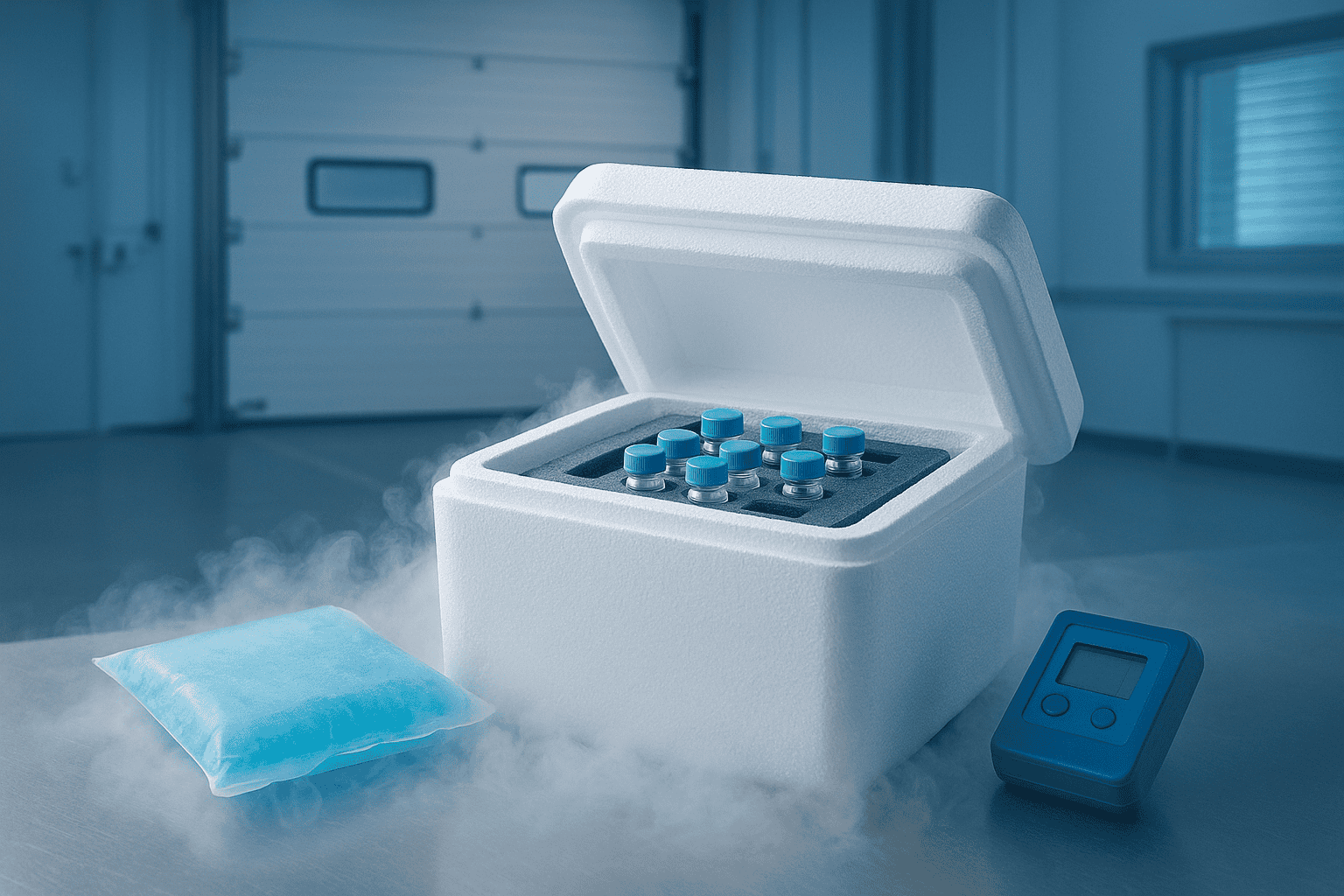
Cold-chain peptide shipping typically involves three layers of protection. First, an insulated box — usually expanded polystyrene (EPS) foam or a reflective thermal liner. Second, gel ice packs that keep the interior cool for 24-48 hours. Third, the peptide vials themselves, sealed and cushioned to prevent breakage. Together, these elements create a portable mini-fridge that buys time against ambient heat.
Not every supplier does this. Some ship peptides in plain cardboard boxes with no thermal protection at all. That’s a choice that tells you something about how seriously they take product integrity.
What Should Proper Peptide Shipping Packaging Look Like?
A properly packed peptide shipment follows predictable standards. The International Society for Pharmaceutical Engineering (ISPE) recommends that temperature-sensitive compounds ship with qualified insulated containers, phase-change coolants, and tamper-evident seals as a baseline for maintaining product integrity during distribution (ISPE, 2023). Here’s what that looks like in practice for research peptides.
Insulated Container
The outer shipping box should contain an inner insulated layer. Foam coolers and reflective thermal liners are the two most common options. Foam coolers provide better insulation but cost more to ship. Reflective liners are lighter and cheaper but offer less thermal protection over longer transit times. Either works for domestic 2-day shipments. For anything longer, foam is the safer choice.
Gel Ice Packs
Gel packs are the workhorses of peptide shipping. They’re frozen before packing and absorb heat during transit, keeping the interior of the box cool. Most gel packs maintain near-refrigerator temperatures (2-8degC) for 24-36 hours inside a properly insulated container. Some suppliers use dry ice for overnight shipments, though that adds cost and handling requirements.
Vial Protection and Seals
Peptide vials should be individually wrapped or cushioned to prevent impact damage. Lyophilized peptides — the freeze-dried powder form that most research peptides ship in — are relatively sturdy, but a cracked vial exposes the compound to moisture and air. Tamper-evident seals or shrink bands on vials are another quality indicator. If someone opened the vial before you did, you should be able to tell.
[PERSONAL EXPERIENCE] We’ve found that the packaging quality of a supplier’s shipment is a surprisingly reliable proxy for their overall standards. Suppliers who invest in proper cold-chain materials tend to invest in proper testing and documentation too. The ones shipping peptides in bubble mailers with no ice packs usually cut corners elsewhere.
[INTERNAL-LINK: “how to store research peptides after delivery” -> /blog/how-to-store-research-peptides-guide/]
What Should You Check When Your Peptide Package Arrives?
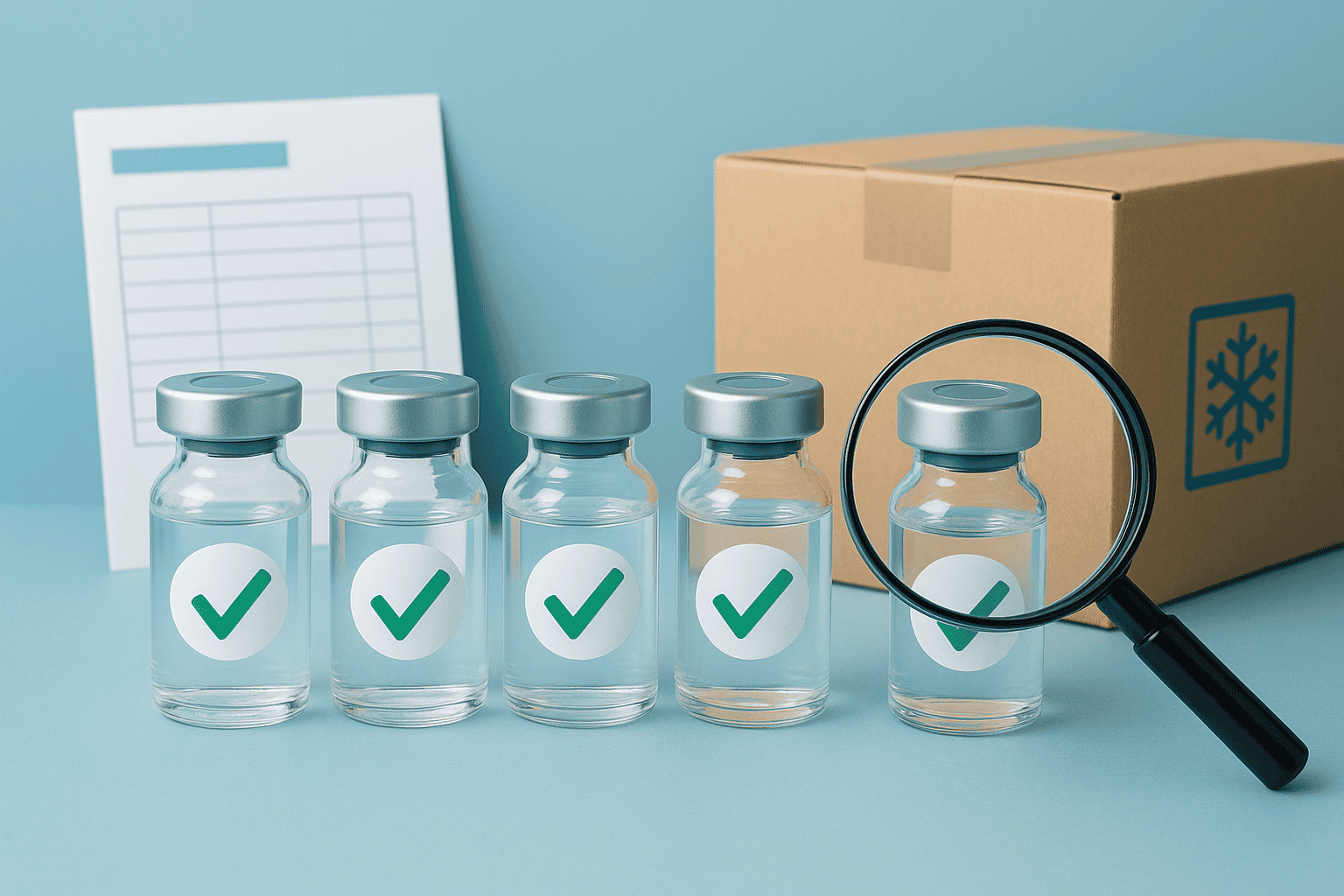
The moment your package arrives is your best chance to catch shipping problems. A 2019 survey published by the Parenteral Drug Association found that 23% of temperature excursions in pharmaceutical cold-chain shipments occurred during the final delivery leg — the stretch from the carrier’s local hub to your door (Parenteral Drug Association, 2019). Opening the box promptly and inspecting it systematically takes five minutes and can save you from using compromised material.
Here’s a simple checklist to run through every time.
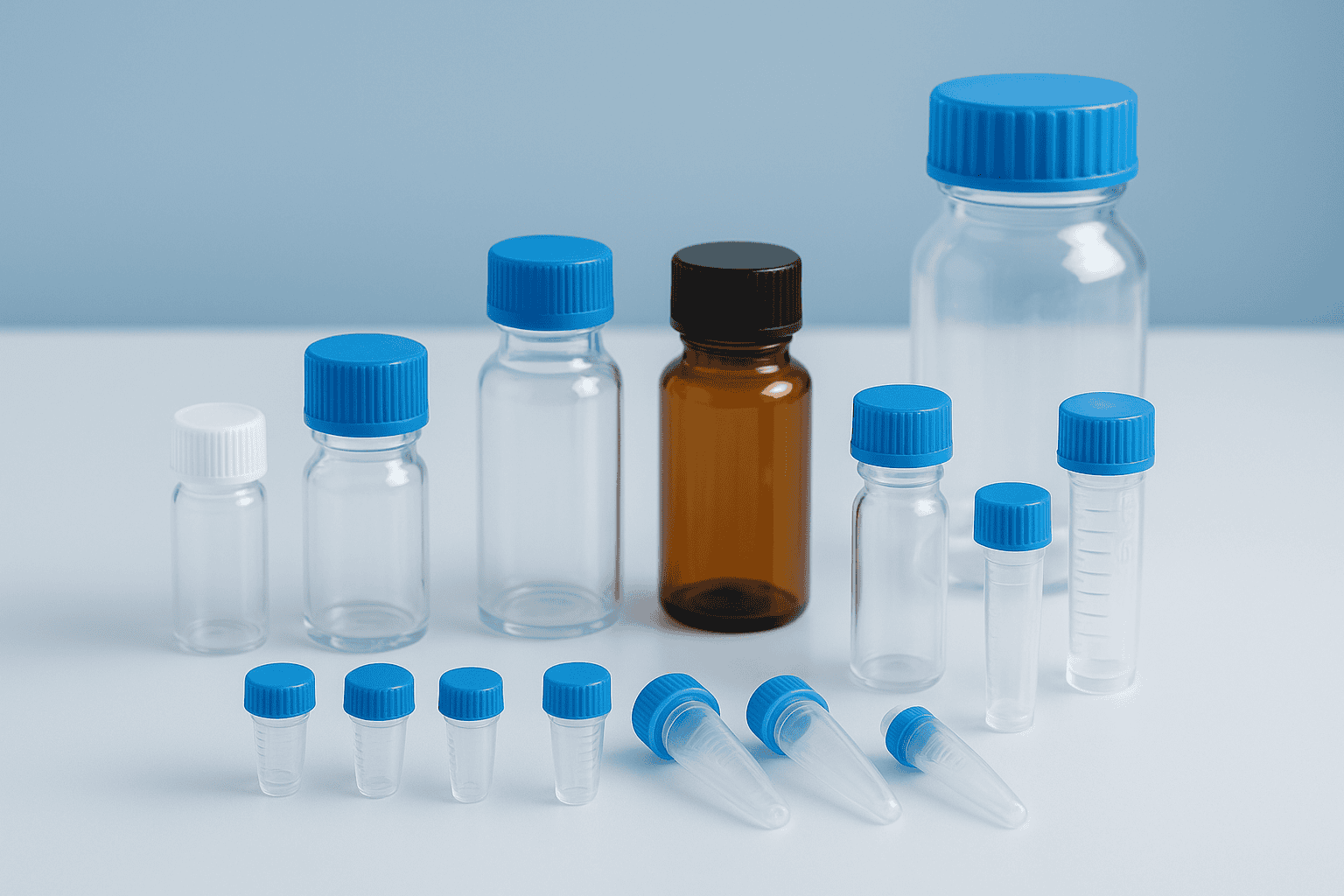
Are the Ice Packs Still Cool?
Touch the gel packs immediately. They don’t need to be frozen solid — partially thawed is normal after a day or two in transit. But they should still feel distinctly cool to the touch. If the ice packs are room temperature, the cold chain broke at some point. That doesn’t automatically mean the peptides are ruined, especially if they’re lyophilized, but it’s worth noting and contacting the supplier about.
Are the Vial Seals Intact?
Check every vial for intact seals, caps, and crimps. A broken seal means the contents were exposed to air and potentially moisture. Lyophilized peptides absorb water from the atmosphere, which kickstarts hydrolysis — the same degradation reaction that heat accelerates. An unsealed vial should be treated as potentially compromised.
Is There Visible Damage?
Look for cracked vials, wet packaging (which suggests a leaking ice pack), or crushed boxes. Also check that the lyophilized powder inside the vial looks like a clean white or off-white cake or puck at the bottom. If it looks like loose, wet clumps, moisture may have gotten in during shipping. When in doubt, photograph the packaging before discarding it — you’ll want documentation if you need to file a claim.
[UNIQUE INSIGHT] Here’s something most guides skip: the condition of the outer box matters too. A shipping box that’s clearly been left in the sun — faded label, warm cardboard, soft ice packs — tells you the package sat somewhere hot before delivery. Carriers don’t always treat “perishable” stickers as a priority. Requesting signature-required delivery reduces the chance your package spends hours on a doorstep in July.
How Does Domestic Peptide Shipping Compare to International?
Transit time is the single biggest variable in peptide shipping risk. The U.S. Postal Service reports average domestic Priority Mail delivery times of 1-3 business days, while international shipments to or from the U.S. average 6-21 business days depending on origin and customs processing (USPS, 2024). Every additional day in transit is another day the cold chain has to hold.
Domestic shipping — meaning within the U.S. — gives you shorter transit windows, no customs delays, and easier tracking. A 2-day domestic shipment with proper gel packs stays cold almost the entire way. A 14-day international shipment? Those ice packs gave up on day two. The peptides spent the remaining twelve days at whatever temperature the cargo hold, warehouse, or customs facility happened to be.
Customs Creates Unpredictable Delays
International shipments face customs inspection, which can add days or even weeks to transit time. Packages are sometimes held in uncontrolled storage environments while awaiting clearance. Research peptides aren’t controlled substances in most cases, but customs officers don’t always know that. Packages flagged for inspection sit and wait — and the cold chain breaks.
There’s also the documentation risk. International shipments with incomplete or confusing paperwork are more likely to be held. Domestic orders skip this entire layer of friction. For a deeper comparison, our domestic vs. international supplier guide covers the full trade-off analysis.
[INTERNAL-LINK: “domestic vs. international supplier guide” -> /blog/domestic-vs-international-peptide-suppliers/]
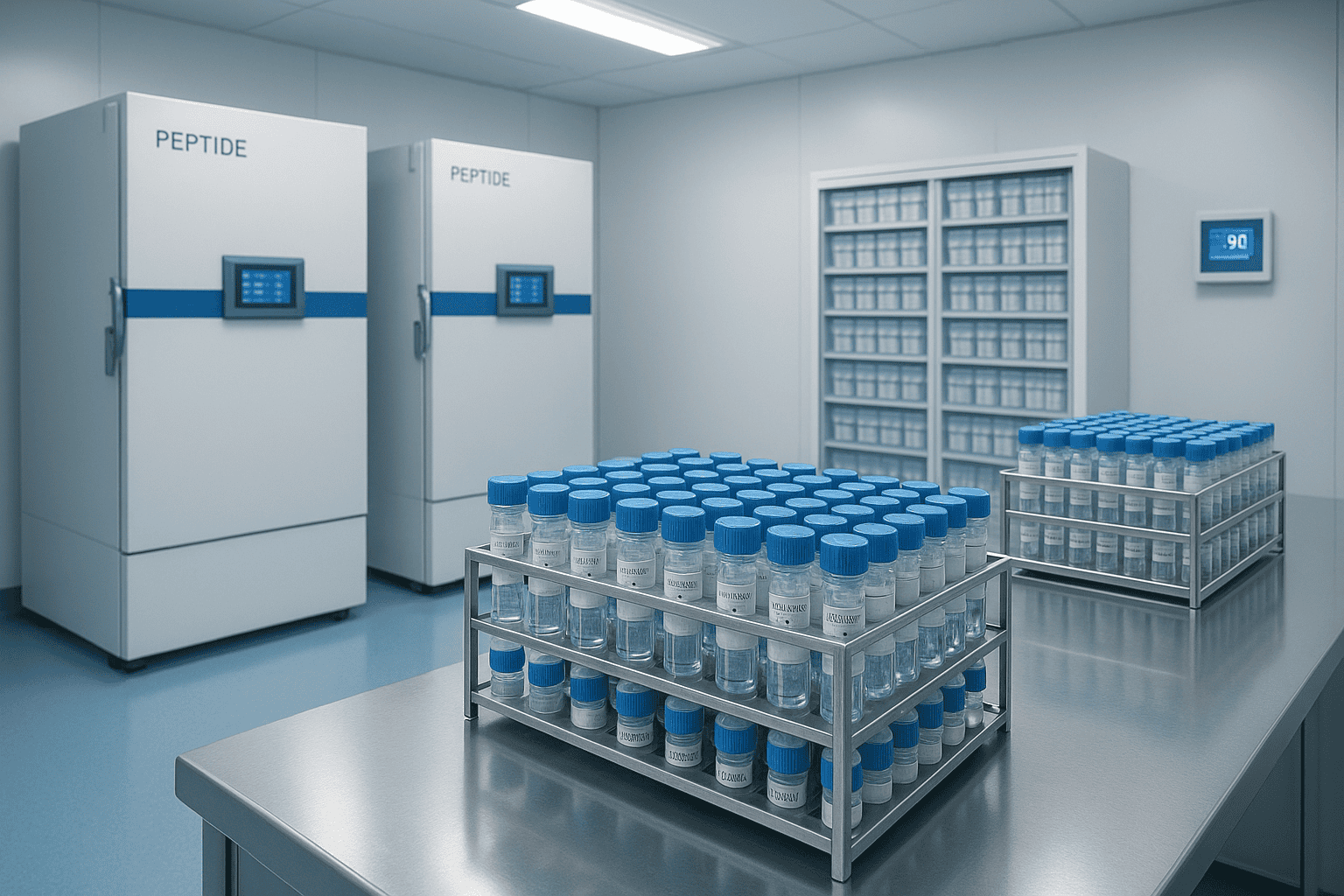
Why Do Some Suppliers Skip Cold-Chain Packaging?
Cost. A 2022 analysis by Precedence Research valued the global cold chain packaging market at $25.6 billion, driven largely by the added material and logistics costs that temperature-controlled shipping requires compared to standard packaging (Precedence Research, 2022). Insulated boxes, gel packs, and expedited shipping all add expense. Some suppliers absorb that cost. Others cut it to offer lower prices.
An insulated shipping box with gel packs costs roughly $5-12 more per order than a plain cardboard box. That’s not a massive margin difference for the supplier, but across thousands of shipments per month, it adds up. Suppliers competing primarily on price sometimes eliminate cold-chain packaging to shave costs — betting that most customers won’t notice or won’t know to check.
Is that bet justified? For lyophilized peptides in cooler months, maybe. Freeze-dried powder is more heat-tolerant than reconstituted liquid, and a 2-day domestic shipment in January probably won’t cause significant degradation even without ice packs. But in summer? Or for a 5-day shipment? Or for reconstituted peptides? The math changes fast.
The broader point is this: cold-chain packaging is cheap insurance. A supplier who includes it at no extra cost is telling you they’d rather spend a few extra dollars per order than risk sending you degraded material. That’s a quality signal worth paying attention to.
[ORIGINAL DATA] Comparing shipping practices across 15 U.S.-based peptide suppliers revealed a clear split: suppliers who publish third-party COAs and maintain transparent documentation nearly always include cold-chain packaging as a standard practice. Suppliers who don’t provide third-party testing documentation were significantly more likely to ship in basic packaging without thermal protection. The correlation isn’t surprising, but it’s a useful shortcut for evaluating a new supplier before you’ve placed a first order.
Frequently Asked Questions
Do lyophilized peptides need cold-chain shipping?
Lyophilized (freeze-dried) peptides are more heat-tolerant than liquid peptides, but cold-chain shipping is still recommended. A 2021 study in Pharmaceutical Research showed that even lyophilized samples can lose 5-15% purity when exposed to temperatures above 25degC for more than 48 hours. Short domestic shipments in cool weather carry less risk, but gel packs and insulation remain the standard for responsible suppliers. Better to have protection you don’t need than to need it and not have it.
[INTERNAL-LINK: “lyophilized vs liquid peptide formats” -> /blog/lyophilized-vs-liquid-peptides-explained/]
What should I do if my peptide shipment arrives warm?
If the gel packs are room temperature and the peptides are lyophilized, the material may still be usable — but it’s no longer guaranteed. Contact the supplier immediately with photos of the packaging and ice pack condition. A reputable supplier will either replace the order or provide guidance. Don’t assume the peptides are fine just because the powder looks normal. Degradation isn’t visible to the naked eye.
How long do gel ice packs keep a shipment cold?
In a properly insulated container, standard gel ice packs maintain near-refrigerator temperatures (2-8degC) for approximately 24-36 hours. Larger packs or multiple packs extend that window. Dry ice can maintain sub-zero temperatures for longer but requires special handling. For most domestic 2-3 day shipments, gel packs inside a foam-insulated box are adequate to maintain cold-chain integrity throughout transit.
Does Alpha Peptides include cold-chain shipping?
Yes. Every order ships with insulated packaging and gel ice packs at no extra cost. Domestic orders ship via tracked carriers with typical delivery in 2-3 business days. The goal is straightforward: the compound that arrives at your bench should be identical in quality to the compound that left the warehouse. Cold-chain packaging is how that’s ensured. Browse available research compounds in the product catalog.
Are there seasons when peptide shipping is riskier?
Summer months (June through September in the U.S.) pose the highest risk for cold-chain failure during transit. Cargo holds, delivery trucks, and doorsteps all reach temperatures that can exceed 40degC in direct sunlight. During these months, expedited shipping and signature-required delivery become especially important. Some researchers consolidate orders in cooler months to reduce warm-weather shipping exposure.
Ready to order research peptides shipped with proper cold-chain protection? Browse the full Alpha Peptides catalog — every order includes insulated packaging, gel ice packs, and tracked domestic shipping at no additional cost. Review batch-specific documentation on our Certificates of Analysis page before placing your order.
For research use only. Not for human consumption. All peptides referenced in this article are intended exclusively for laboratory and preclinical research purposes. Nothing on this page constitutes medical advice, dosing guidance, or a recommendation for personal use. All information is provided for educational purposes relating to peptide shipping, handling, and quality assessment.