
· For research use only. Not for human consumption.
For research use only. Not for human consumption.
Among the many aspects of MOTS-c being studied in laboratories, MOTS-c insulin sensitivity research is one of the most active areas. Insulin sensitivity — how well cells respond to insulin’s signals — is a fundamental aspect of metabolic biology. And preclinical studies suggest MOTS-c may play a role in this process.
This guide explains what insulin sensitivity means, what preclinical research has found regarding MOTS-c’s involvement, and why these findings matter for metabolic research. Simple language only — no endocrinology background needed.
For a general overview of this peptide, see our MOTS-c beginner’s guide.
TL;DR: MOTS-c insulin sensitivity research explores how this mitochondrial peptide influences cellular responses to insulin. In preclinical models, MOTS-c administration was associated with improved insulin sensitivity through AMPK pathway activation. Lee et al. (2015) first described these metabolic effects (PMID: 25738459), and Kim et al. (2019) provided further characterization (PMID: 31293078). All findings are from animal models. For research use only. Not for human consumption.
What Is Insulin Sensitivity? A Simple Explanation
Insulin is a hormone your pancreas makes after you eat. Its job is straightforward: it tells cells to absorb glucose (sugar) from the blood and use it for energy. Think of insulin as a delivery driver bringing packages (glucose) to houses (cells).
Insulin sensitivity describes how well cells respond to insulin’s knock on the door:
- High insulin sensitivity = Cells open the door quickly and take the glucose efficiently. The delivery is smooth.
- Low insulin sensitivity (insulin resistance) = Cells are slow to respond. The delivery driver has to knock harder and more often. The pancreas has to produce more insulin to get the same result.
Insulin sensitivity is one of the most studied parameters in metabolic biology, and changes in sensitivity can cascade through many biological systems.
What MOTS-c Insulin Sensitivity Research Has Found
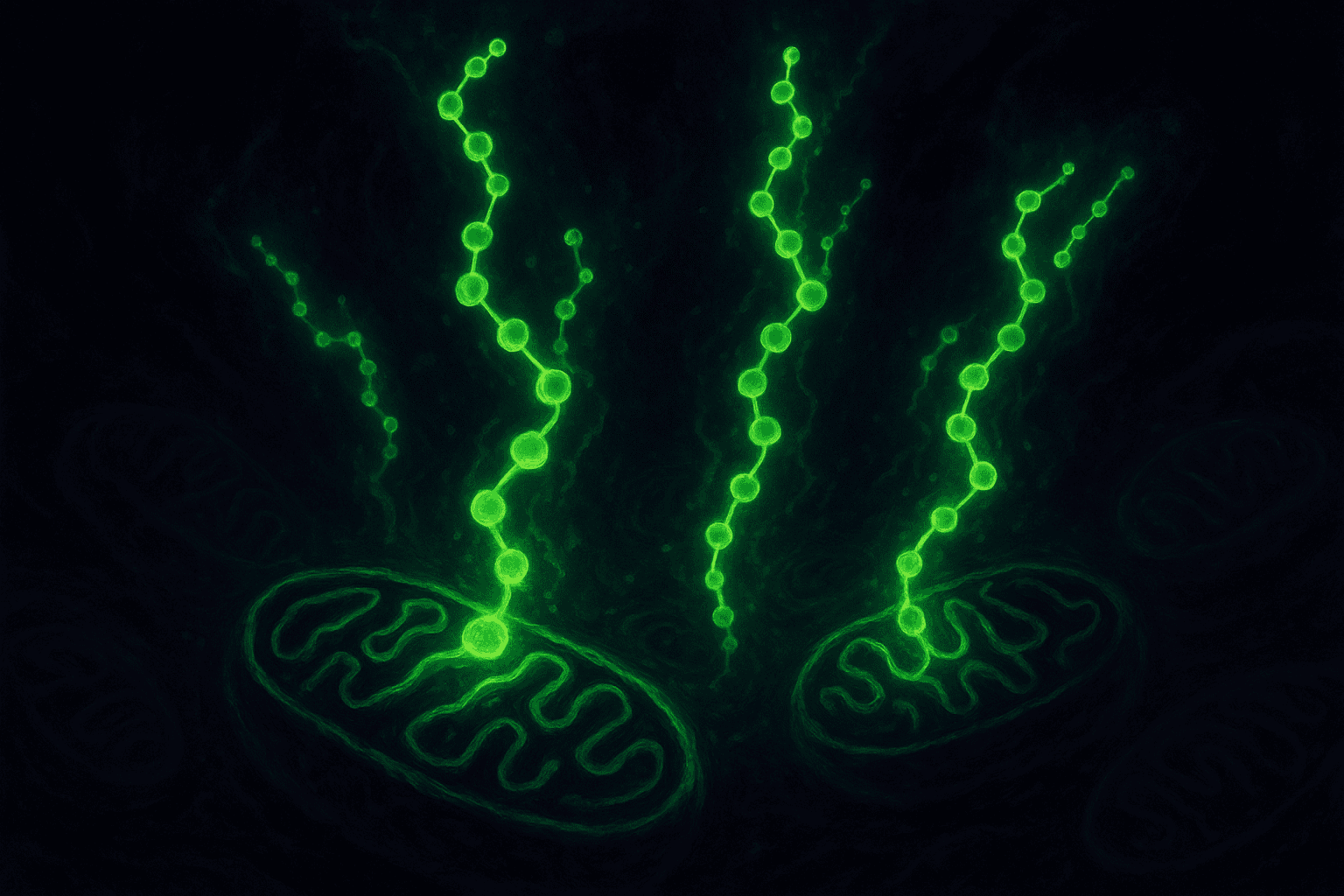
The connection between MOTS-c and insulin sensitivity was identified in the landmark 2015 study that first described MOTS-c. Lee and colleagues at the University of Southern California studied MOTS-c in mouse models and observed effects on how cells processed glucose.
Key findings from preclinical studies include:
AMPK Activation
MOTS-c activates AMPK — the cell’s energy sensor. AMPK activation is known to improve insulin sensitivity through multiple downstream mechanisms, including enhanced glucose uptake into cells and increased fatty acid oxidation (burning fat for energy).
Glucose Metabolism Effects
In mouse models, MOTS-c administration was associated with changes in glucose metabolism — specifically, improved clearance of glucose from the blood. This suggests the cells were responding to insulin more efficiently.
Lee et al. (2015) described MOTS-c as a mitochondrial-derived peptide that promotes metabolic homeostasis, reporting improved glucose tolerance and reduced insulin resistance in mouse models receiving MOTS-c treatment. (PMID: 25738459)
The Mitochondria-Insulin Connection

Why would a mitochondrial peptide affect MOTS-c insulin sensitivity? Because mitochondria and insulin signaling are deeply connected. Here’s the chain:
- Mitochondria produce ATP (energy) from glucose
- Insulin tells cells to bring in glucose for mitochondria to process
- When mitochondria malfunction, glucose processing slows down
- When glucose processing slows, insulin sensitivity can decline
MOTS-c, as a signal from the mitochondria, may be part of the feedback loop that helps maintain this relationship. If mitochondria produce less MOTS-c (as observed in aging research models), insulin sensitivity might decline as a consequence.
Kim et al. (2019) investigated MOTS-c as a regulator of plasma metabolites, reporting enhanced insulin sensitivity and characterizing the metabolomic changes associated with MOTS-c administration in preclinical models. (PMID: 31293078)
Important Caveats for Researchers
While MOTS-c insulin sensitivity findings are intriguing, several important points must be kept in perspective:
- All data is preclinical — These findings come from mouse models and cell cultures, not human clinical trials.
- Mouse metabolism differs from human metabolism — Mice have different metabolic rates, insulin dynamics, and glucose handling compared to humans.
- Mechanism is still being characterized — Exactly how MOTS-c influences insulin signaling pathways is an active area of investigation.
- MOTS-c is not a treatment — It is a research compound for studying metabolic biology, not a therapeutic intervention.
Alpha Peptides offers research-grade MOTS-c for metabolic research with batch-specific COAs. For related compounds, see our SS-31 (another mitochondrial research peptide).
Frequently Asked Questions
Does MOTS-c improve insulin sensitivity?
MOTS-c insulin sensitivity improvements have been observed in preclinical animal models. However, these findings have not been confirmed in human clinical trials. The peptide is a research tool, not a treatment.
How does MOTS-c affect insulin signaling?
MOTS-c appears to activate the AMPK pathway, which is known to enhance glucose uptake and fatty acid metabolism — both factors that influence insulin sensitivity at the cellular level.
Is MOTS-c related to diabetes research?
MOTS-c has been studied in preclinical models relevant to metabolic biology, including glucose homeostasis and insulin signaling. However, it is not approved or intended for treating any medical condition, including diabetes.
Where can I read the original MOTS-c research?
The landmark paper was published in Cell Metabolism by Lee et al. (2015). It’s available on PubMed under PMID 25738459.
For research use only. Not for human consumption. This article is intended for informational purposes and does not constitute medical advice, dosing guidance, or therapeutic recommendations.