
· For research use only. Not for human consumption.
For research use only. Not for human consumption.
One of the most intriguing aspects of MOTS-c exercise research is that this peptide — produced by your own mitochondria — appears to respond to physical activity. Published studies have found that exercise changes MOTS-c levels in the body, and conversely, that MOTS-c administration in animal models produces some effects that resemble exercise responses.
This has led some researchers to call MOTS-c an “exercise mimetic” — a molecule that mimics some of the cellular effects of physical activity. But what does the actual published data show? Let’s look at the evidence.
For background on MOTS-c, see our MOTS-c beginner’s guide.
TL;DR: MOTS-c exercise research has revealed a bidirectional relationship between this mitochondrial peptide and physical activity. Lee et al. (2015) first identified MOTS-c’s metabolic effects in preclinical models (PMID: 25738459). Subsequent research has shown that exercise increases circulating MOTS-c levels and that MOTS-c activates the AMPK pathway — the same pathway activated by exercise. All findings are preclinical. For research use only. Not for human consumption.
MOTS-c Exercise Research: The Exercise Connection
When you exercise, your muscles demand more energy. Mitochondria respond by ramping up ATP production. But they also do something researchers didn’t expect — they increase production of MOTS-c.
Published studies have measured MOTS-c levels in blood samples before and after exercise. The pattern is consistent: physical activity is associated with elevated MOTS-c levels. This suggests that MOTS-c is part of the body’s natural response to the metabolic demands of exercise.
Think of it like this: when you turn on more appliances in your house, the power plant doesn’t just produce more electricity — it also sends signals to the grid about the increased demand. MOTS-c may be one of those signals from the cellular power plant.
The AMPK Connection: A Shared Pathway
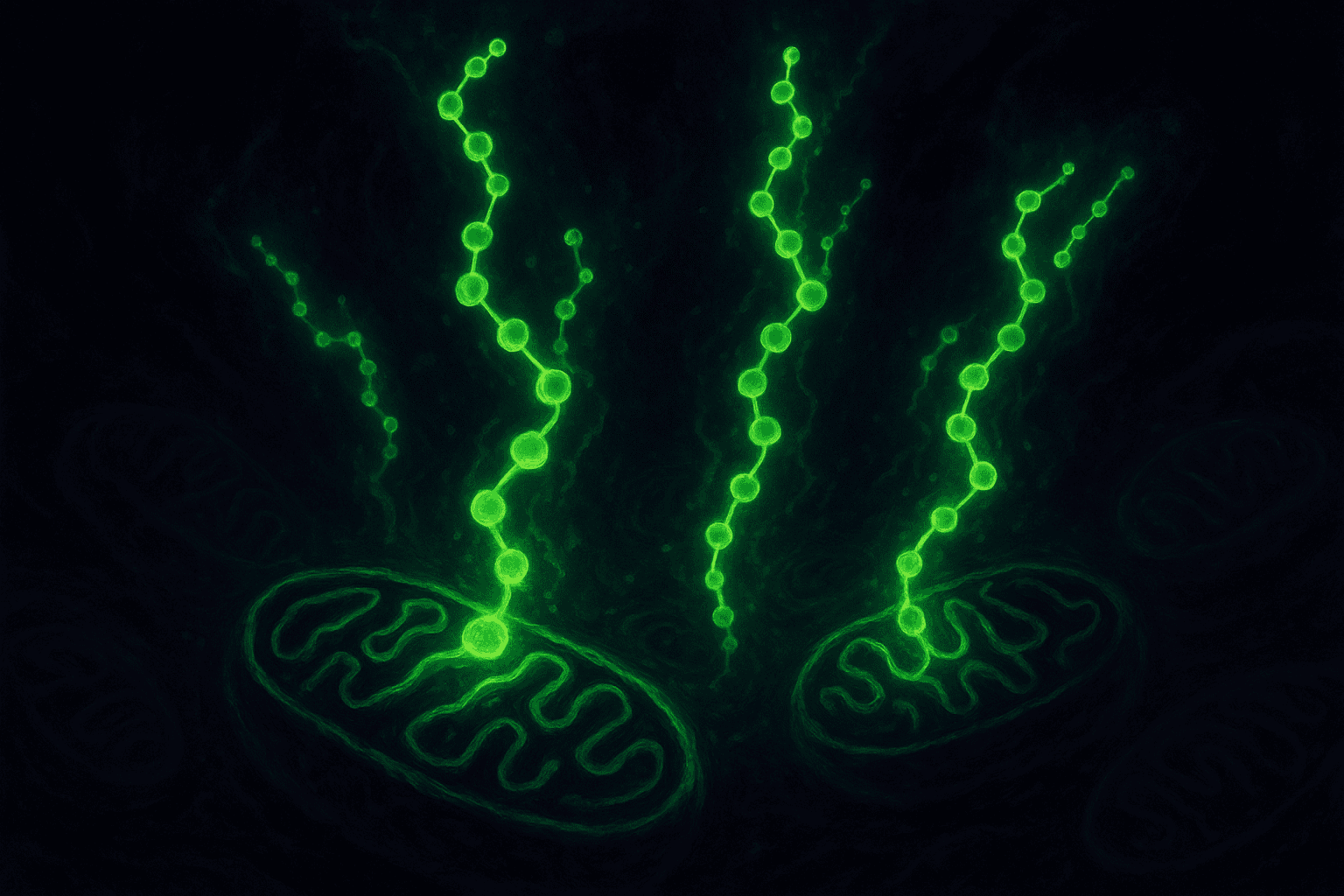
The link between MOTS-c and exercise research goes deeper than just correlation. Both MOTS-c and exercise activate the same cellular pathway: AMPK.
AMPK (AMP-activated protein kinase) is sometimes called the cell’s “energy sensor.” When cellular energy levels drop — like during exercise — AMPK switches on. It’s like a low-battery warning that triggers energy-saving measures and alternative fuel sources.
In the landmark 2015 study that discovered MOTS-c, Lee and colleagues showed that this peptide activates AMPK in preclinical models. This is the same pathway that exercise activates. The overlap is why researchers became interested in whether MOTS-c might mimic some exercise-like cellular effects.
Lee et al. (2015) demonstrated that MOTS-c promotes metabolic homeostasis through AMPK activation in mouse models, drawing parallels between the peptide’s effects and known exercise-induced cellular changes. (PMID: 25738459)
What “Exercise Mimetic” Actually Means in Research

Calling MOTS-c an “exercise mimetic” is a research shorthand, not a medical claim. It means that some of MOTS-c’s observed cellular effects in preclinical models resemble effects that exercise produces. It does NOT mean:
- MOTS-c is a replacement for exercise
- Taking MOTS-c produces the same benefits as exercising
- MOTS-c can treat any condition related to lack of exercise
What it DOES mean is that MOTS-c exercise research has identified overlapping biological pathways. This makes MOTS-c a useful research tool for studying exercise-responsive cellular mechanisms without the variability that actual exercise introduces to experiments.
Preclinical Findings in Context
Published preclinical studies on MOTS-c exercise research have reported several observations in animal models:
- MOTS-c administration was associated with improved insulin sensitivity in mice
- MOTS-c levels increased in response to physical activity
- MOTS-c activated AMPK-dependent metabolic pathways
- Older mice showed lower baseline MOTS-c levels than younger mice
Kim et al. (2019) examined MOTS-c’s effects on plasma metabolites and insulin sensitivity in preclinical models, further characterizing the exercise-related metabolic pathways this peptide engages. (PMID: 31293078)
It’s critical to note that these are all preclinical findings. Animal models provide valuable insights, but results don’t automatically translate to humans. The research is promising but early-stage.
Alpha Peptides offers research-grade MOTS-c with batch-specific Certificates of Analysis. For related mitochondrial research tools, see our SS-31 product page.
Frequently Asked Questions
Does exercise increase MOTS-c levels?
Published research has found that physical activity is associated with increased circulating MOTS-c levels. This suggests MOTS-c is part of the body’s natural metabolic response to exercise.
Is MOTS-c a substitute for exercise?
No. MOTS-c exercise research has identified overlapping cellular pathways, but the peptide is a research compound — not a therapeutic product and certainly not a replacement for physical activity.
What is AMPK and why does it matter?
AMPK is a cellular energy sensor that activates when energy levels drop. Both exercise and MOTS-c activate AMPK, which is why researchers are interested in studying their relationship. AMPK influences metabolism, energy production, and cellular adaptation.
Are there human studies on MOTS-c and exercise?
Most MOTS-c exercise research has been conducted in animal models and cell cultures. Human data is limited primarily to observational measurements of MOTS-c levels in blood samples.
For research use only. Not for human consumption. This article is intended for informational purposes and does not constitute medical advice, dosing guidance, or therapeutic recommendations.