
· For research use only. Not for human consumption.
For research use only. Not for human consumption.
If you’ve been reading about MOTS-c research, one term keeps coming up: AMPK. The MOTS-c AMPK pathway connection is central to understanding why researchers find this mitochondrial peptide so interesting. But what is AMPK, and why does its activation matter?
This guide breaks down the AMPK pathway in simple terms, explains how MOTS-c fits into the picture, and describes what this means for metabolic research. No biochemistry degree needed.
For a general overview, see our MOTS-c beginner’s guide.
TL;DR: The MOTS-c AMPK pathway connection is a primary focus of preclinical research on this mitochondrial peptide. AMPK (AMP-activated protein kinase) is a cellular energy sensor that activates when energy levels drop. MOTS-c has been shown to activate AMPK in preclinical models, triggering downstream metabolic effects. Lee et al. (2015) described this mechanism in Cell Metabolism (PMID: 25738459). For research use only. Not for human consumption.
What Is AMPK? The Cell’s Energy Alarm
AMPK stands for AMP-activated protein kinase. That’s a lot of words, so let’s simplify. AMPK is an enzyme inside every cell that monitors energy levels. Think of it as a smoke detector, but for energy instead of fire.
Here’s how it works: cells use ATP (adenosine triphosphate) as their energy currency. When a cell burns ATP for energy, the spent molecule becomes AMP (adenosine monophosphate). When AMP levels rise relative to ATP, it means the cell is running low on energy.
AMPK detects this shift. When AMP accumulates, AMPK activates and starts an emergency response: “Energy is low — start conserving and find alternative fuel sources.”
This is why AMPK is activated by exercise (muscles burn through ATP), fasting (less incoming energy), and now, as researchers have discovered, by the MOTS-c AMPK pathway.
How MOTS-c Activates AMPK
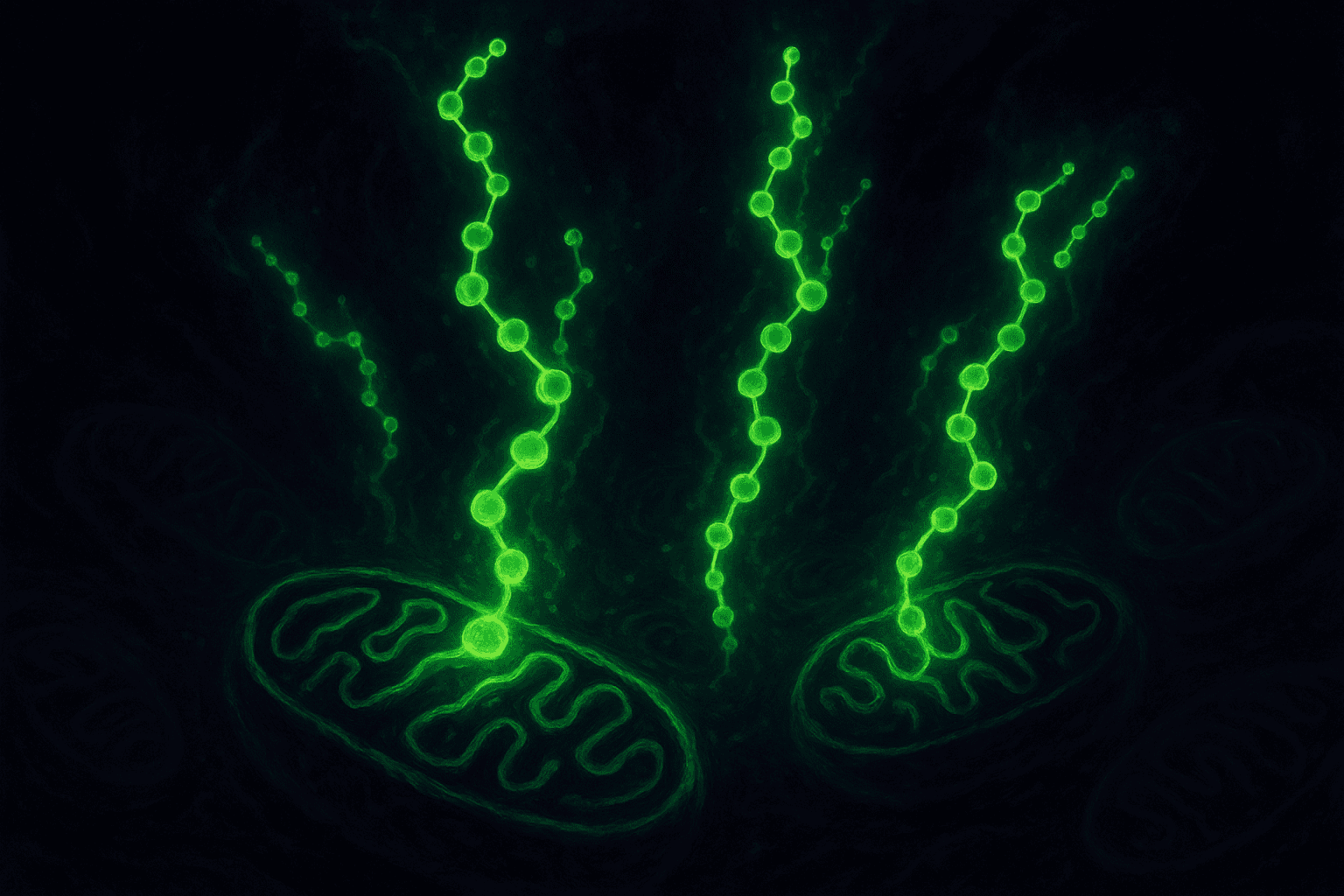
In the landmark 2015 study that identified MOTS-c, Lee and colleagues demonstrated that this mitochondrial peptide activates AMPK in preclinical models. The activation triggers a cascade of metabolic changes, much like exercise does.
Here’s the simplified chain of events researchers have observed:
- MOTS-c interacts with AMPK — The peptide engages with the AMPK signaling system
- AMPK activates — The energy sensor switches to “on”
- Glucose uptake increases — Cells pull more glucose from the blood for energy
- Fatty acid oxidation increases — Cells burn more fat for fuel
- Metabolic homeostasis improves — Overall cellular energy balance stabilizes
Lee et al. (2015) demonstrated that MOTS-c promotes metabolic homeostasis through AMPK activation, leading to enhanced glucose metabolism and reduced obesity indicators in mouse models. (PMID: 25738459)
Why the MOTS-c AMPK Pathway Matters for Research
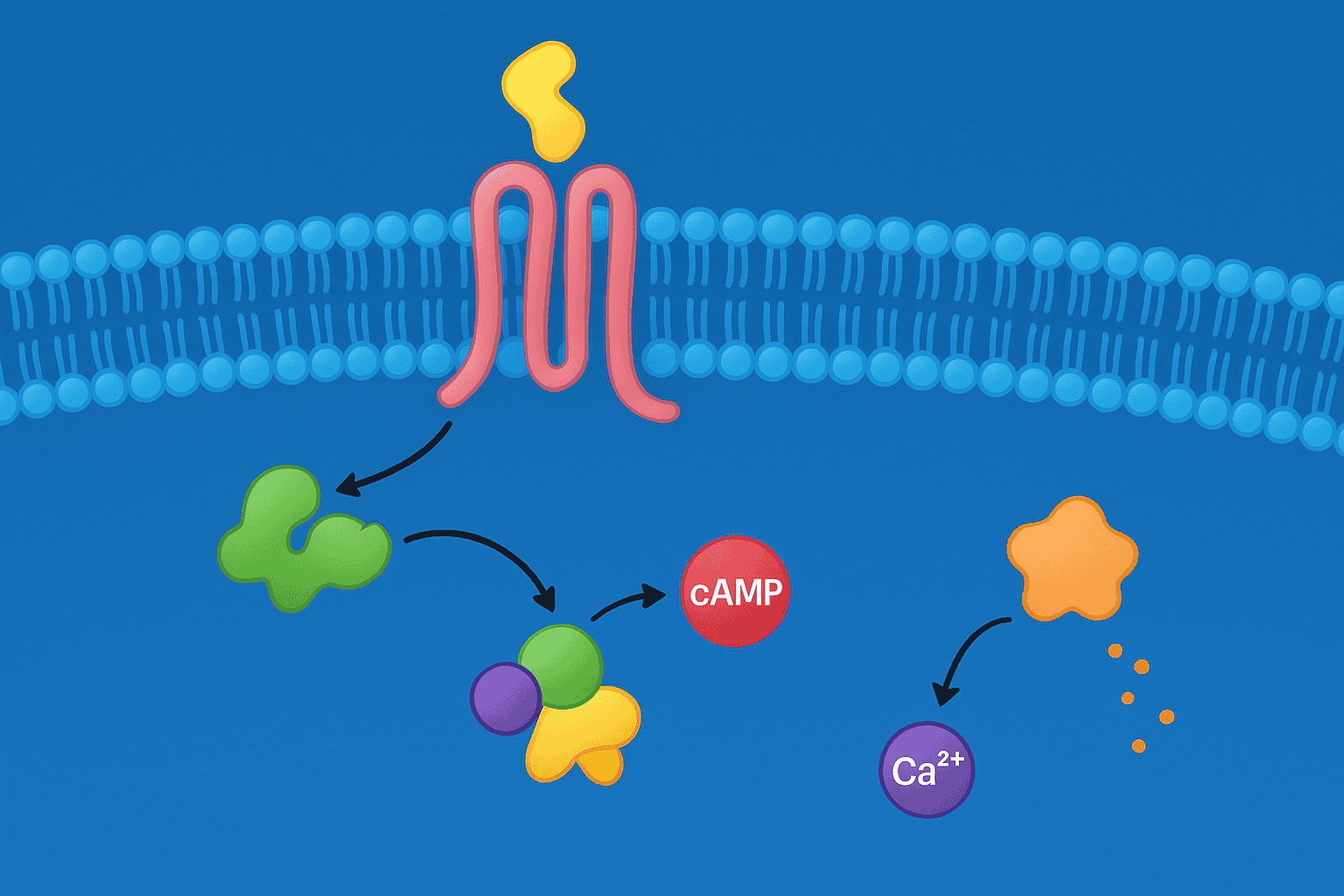
AMPK isn’t just any enzyme — it’s considered a master regulator of metabolism. It influences:
- Glucose metabolism — How cells process sugar for energy
- Lipid metabolism — How cells handle fats
- Protein synthesis — How cells build new proteins
- Autophagy — How cells clean up damaged components
- Mitochondrial biogenesis — How cells produce new mitochondria
Because AMPK touches so many metabolic processes, any compound that activates it becomes a valuable research tool. The MOTS-c AMPK pathway gives researchers a new way to study AMPK-dependent processes using a naturally-occurring mitochondrial signal rather than synthetic drugs.
MOTS-c vs Other AMPK Activators
MOTS-c isn’t the only compound that activates AMPK. Several well-known substances do the same:
- Exercise — The most potent natural AMPK activator
- Metformin — A widely prescribed pharmaceutical (not sold by Alpha Peptides)
- AICAR — A research compound commonly used to study AMPK in labs
- Resveratrol — A plant compound found in red grapes
What makes MOTS-c unique is its origin — it’s produced by the mitochondria themselves. This means it’s part of the cell’s own internal signaling system, not an external chemical. Studying the MOTS-c AMPK pathway helps researchers understand how mitochondria communicate with the rest of the cell about energy status.
Kim et al. (2019) further characterized the MOTS-c metabolic pathway, examining plasma metabolite changes associated with MOTS-c-mediated AMPK activation in preclinical models. (PMID: 31293078)
Alpha Peptides offers research-grade MOTS-c for scientists investigating AMPK pathways and mitochondrial signaling. All batches include Certificates of Analysis.
Frequently Asked Questions
What is the MOTS-c AMPK pathway?
The MOTS-c AMPK pathway describes how this mitochondrial peptide activates AMPK — the cell’s energy sensor — triggering downstream metabolic effects including enhanced glucose uptake and fatty acid oxidation.
Is AMPK activation always beneficial?
In research contexts, AMPK activation generally improves metabolic parameters. However, like any biological pathway, context matters. AMPK’s effects depend on cell type, duration of activation, and many other factors.
Can I activate AMPK without MOTS-c?
Yes. Exercise is the most potent natural AMPK activator. Several pharmaceutical and research compounds also activate AMPK through different mechanisms.
Is MOTS-c approved for treating metabolic conditions?
No. MOTS-c is a research compound sold exclusively for laboratory investigation. It is not approved for treating any medical condition.
For research use only. Not for human consumption. This article is intended for informational purposes and does not constitute medical advice, dosing guidance, or therapeutic recommendations.