
· For research use only. Not for human consumption.
For research use only. Not for human consumption.
Most people know DNA is in the nucleus of every cell. But did you know your cells have a second, completely separate set of DNA? Mitochondrial DNA sits inside your mitochondria — the energy-producing organelles — and it has its own genes, its own rules, and its own peptides. Understanding this distinction is key to understanding modern peptide research.
This guide explains the difference between mitochondrial DNA and nuclear DNA, why mitochondria have their own genetic material, and how this relates to peptides like MOTS-c. No genetics background required.
For specific peptides from mitochondrial DNA, see our MOTS-c guide.
TL;DR: Mitochondrial DNA (mtDNA) is a separate genome inside your mitochondria, distinct from the nuclear DNA in your cell’s nucleus. mtDNA contains only 37 genes (compared to ~20,000 in nuclear DNA) and is inherited exclusively from your mother. Recently, researchers discovered that mtDNA encodes small peptides like MOTS-c (Lee et al., 2015), opening a new field of mitochondrial-derived peptide research. For research use only. Not for human consumption.
Two Genomes in Every Cell
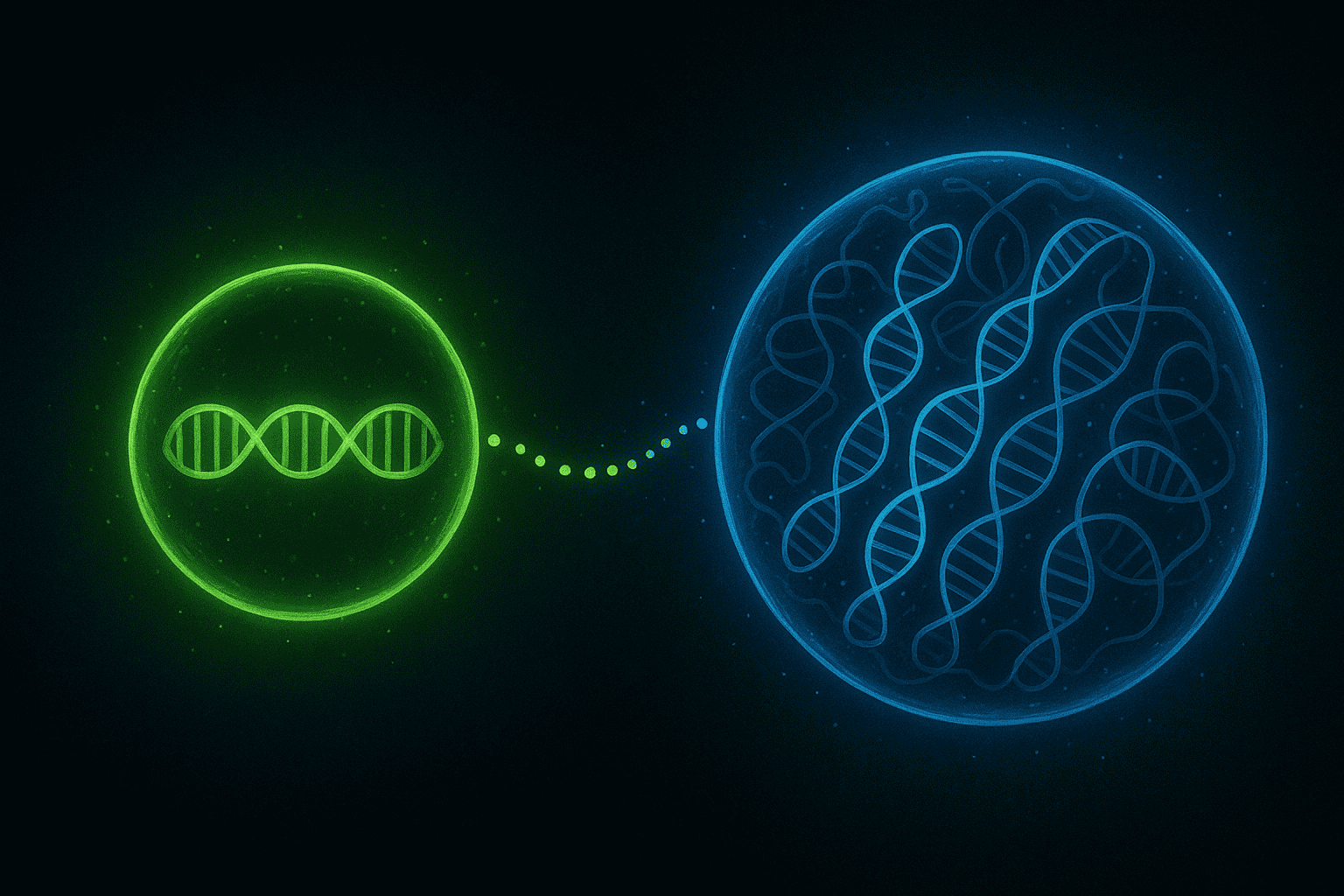
Here’s a fact that surprises most people: every cell in your body has two separate sets of DNA operating simultaneously.
Nuclear DNA is the one you’re familiar with. It sits in the cell’s nucleus (the central command center), contains about 20,000 genes, is organized into 23 pairs of chromosomes, and carries the genetic blueprint for most of what your body builds.
Mitochondrial DNA is completely separate. It sits inside the mitochondria (hundreds to thousands per cell), contains only 37 genes, is organized as a tiny circular molecule, and has its own genetic code that differs slightly from nuclear DNA.
Think of it like a company where the main office (nucleus) runs most operations, but each factory floor (mitochondrion) has its own small management team with its own instructions.
Why Do Mitochondria Have Their Own DNA?
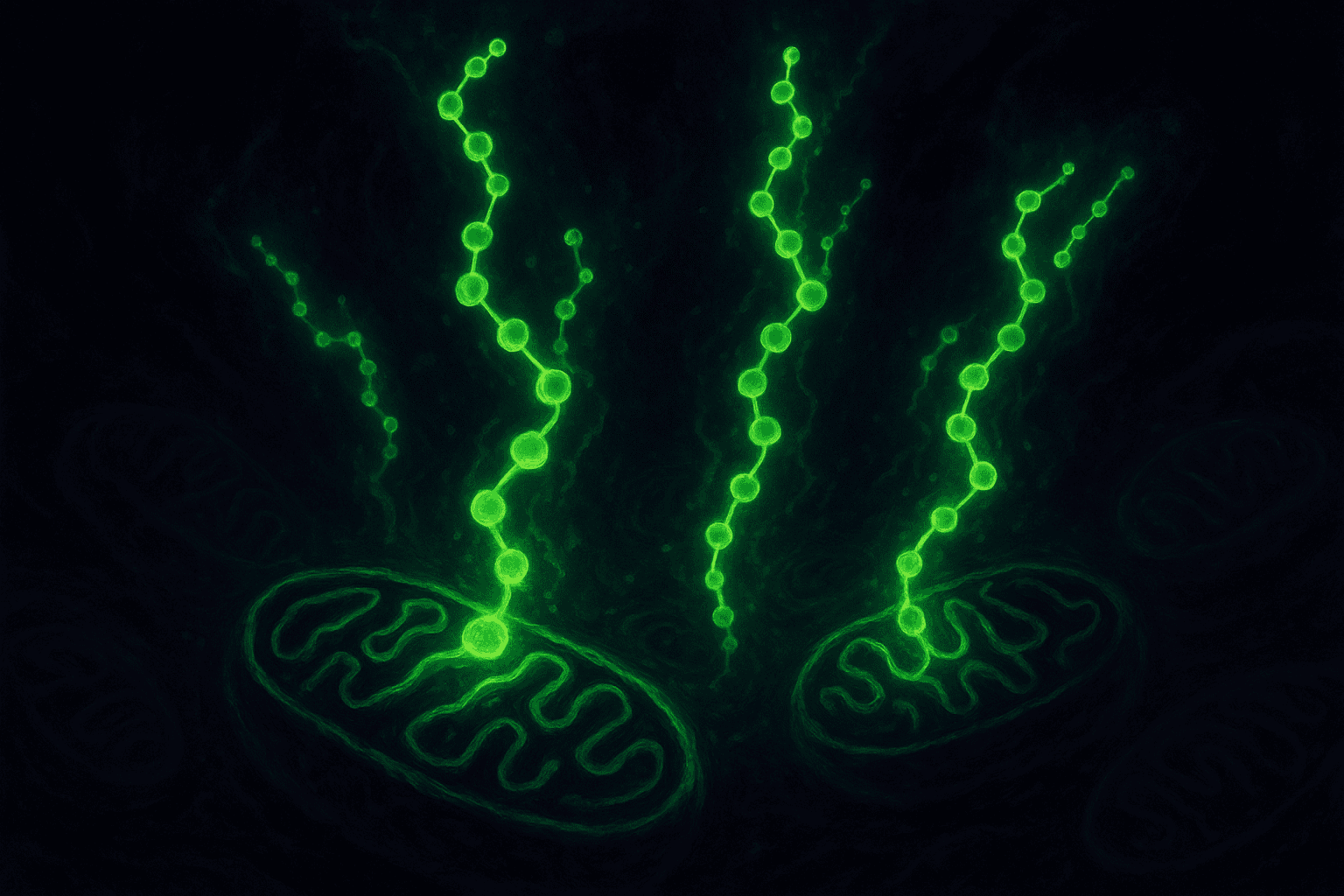
This is one of the most fascinating questions in biology. The leading explanation is called the endosymbiotic theory. About 1.5-2 billion years ago, an ancient cell engulfed a smaller bacterium that was good at producing energy. Instead of digesting it, the two organisms formed a partnership.
Over billions of years, the bacterium became what we now call mitochondria. It kept some of its original DNA — just enough to maintain critical energy-production machinery. Most of its genes gradually transferred to the host cell’s nuclear DNA.
This is why mitochondrial DNA is circular (like bacterial DNA) rather than linear (like nuclear DNA). It’s a fossil record of that ancient partnership, still visible in every cell of your body.
Key Differences Between the Two Genomes
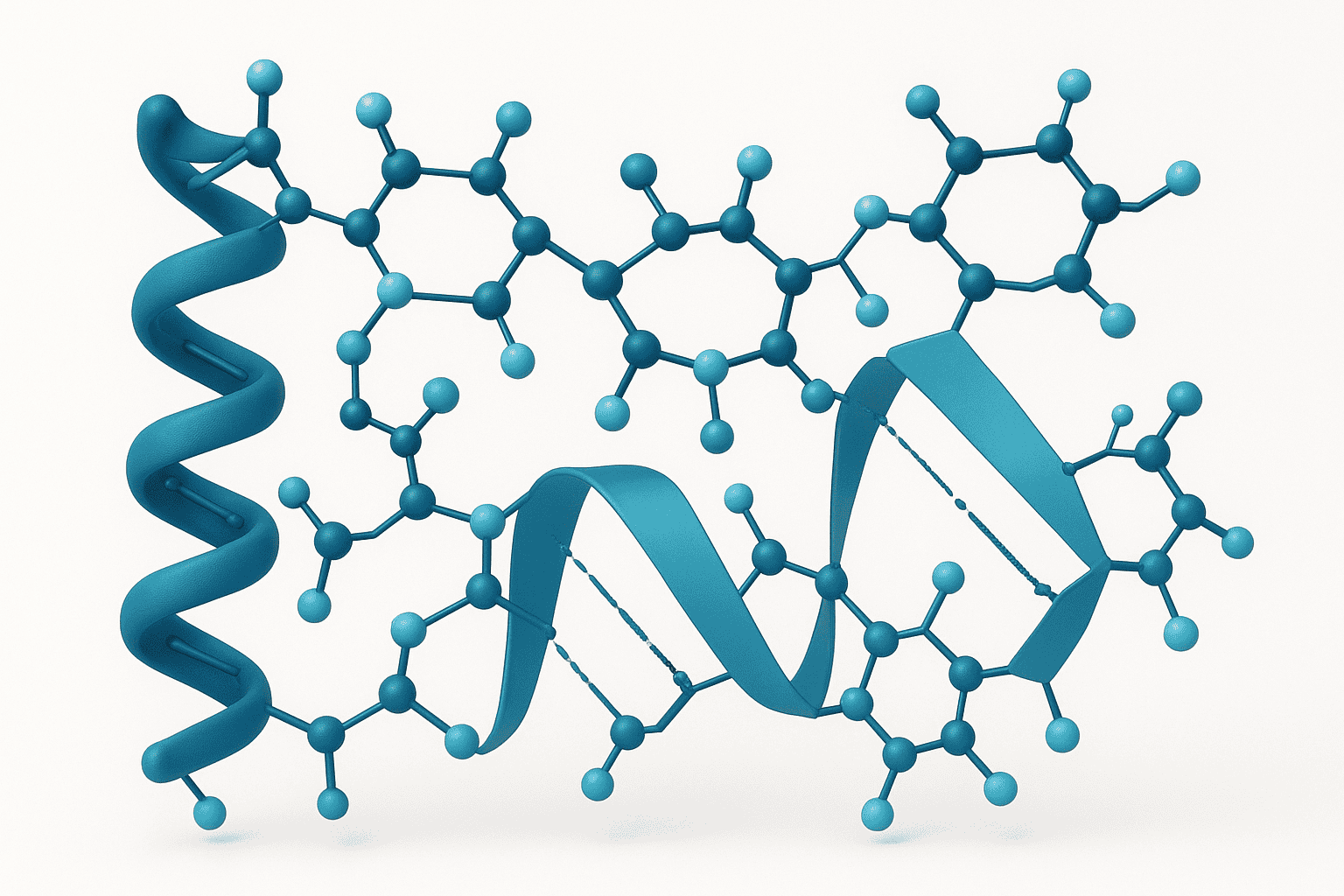
Understanding mitochondrial DNA compared to nuclear DNA reveals some striking contrasts:
- Size — Nuclear DNA: 3.2 billion base pairs. Mitochondrial DNA: only 16,569 base pairs. That’s 200,000 times smaller.
- Genes — Nuclear: ~20,000 genes. Mitochondrial: 37 genes (13 proteins, 22 tRNAs, 2 rRNAs).
- Shape — Nuclear: linear chromosomes. Mitochondrial: circular, like a bacterial genome.
- Inheritance — Nuclear: from both parents. Mitochondrial: exclusively from your mother.
- Copies — Nuclear: 2 copies per cell (one from each parent). Mitochondrial: hundreds to thousands per cell (multiple copies per mitochondrion).
- Repair — Nuclear DNA has robust repair mechanisms. Mitochondrial DNA has limited repair capability, making it more vulnerable to mutations.
How Mitochondrial DNA Connects to Peptide Research
Until 2001, scientists assumed mitochondrial DNA only encoded proteins needed for the energy-production machinery itself. Then something unexpected was discovered: mitochondrial DNA also encodes small peptides that act as signaling molecules.
The first one found was Humanin, discovered in 2001. Then in 2015, Lee and colleagues at USC identified MOTS-c — a 16-amino-acid peptide encoded by the 12S rRNA gene of mitochondrial DNA.
Lee et al. (2015) demonstrated that mitochondrial DNA encodes MOTS-c, a previously unknown peptide that acts as a signaling molecule influencing metabolic homeostasis, expanding the known functional output of the mitochondrial genome. (PMID: 25738459)
These discoveries mean mitochondrial DNA does more than just build energy machinery — it produces signaling peptides that communicate with the rest of the cell. It’s like discovering that the factory floor has been sending memos to the executive suite all along.
Alpha Peptides offers research-grade MOTS-c for researchers studying mitochondrial biology. For another mitochondrial research tool, see our SS-31. All products include batch-specific COAs.
Frequently Asked Questions
What is mitochondrial DNA?
Mitochondrial DNA is a small, circular genome found inside mitochondria — separate from the nuclear DNA in your cell’s nucleus. It contains 37 genes and is inherited exclusively from your mother.
Why is mitochondrial DNA different from nuclear DNA?
Because mitochondria were originally separate organisms (bacteria) that merged with ancient cells billions of years ago. They retained some of their original bacterial DNA, which is why it’s circular and has different properties than nuclear DNA.
What peptides come from mitochondrial DNA?
Known mitochondria-derived peptides include MOTS-c, Humanin, and SHLPs (small humanin-like peptides). These were discovered relatively recently, and researchers believe more may exist.
Does mitochondrial DNA mutate?
Yes, and at a higher rate than nuclear DNA. Mitochondrial DNA has limited repair mechanisms and is exposed to reactive oxygen species produced during energy generation. These mutations accumulate over time and are an active area of research.
For research use only. Not for human consumption. This article is intended for informational purposes and does not constitute medical advice, dosing guidance, or therapeutic recommendations.