
· For research use only. Not for human consumption.
For research use only. Not for human consumption.
Ipamorelin and CJC-1295: Why They’re Studied Together
If you’ve spent any time reading about research peptides, you’ve probably noticed that Ipamorelin CJC-1295 show up together constantly. They’re mentioned side by side in forums, vendor catalogs, and published studies. But why? They’re two completely different compounds. What makes researchers so interested in combining them in the same experiment?
The short answer is that they work through different pathways toward a similar goal. One acts like a trigger. The other acts like an amplifier. Together, they give researchers a way to study growth hormone signaling from two angles at once. That’s what makes this pairing so popular in preclinical and in vitro research settings.
[INTERNAL-LINK: “what Ipamorelin actually is” -> /blog/what-is-ipamorelin-growth-peptide/]
[INTERNAL-LINK: “how CJC-1295 works” -> /blog/cjc-1295-peptide-explained/]
TL;DR: Ipamorelin and CJC-1295 are studied together because they affect growth hormone release through separate mechanisms. Ipamorelin mimics ghrelin to trigger GH pulses, while CJC-1295 extends the half-life of GHRH signaling. In preclinical models, Ipamorelin produced selective GH release without affecting cortisol or prolactin (Raun et al., 1998). Researchers find the combination useful for studying how two distinct pathways interact.
What Does Ipamorelin Actually Do?
Ipamorelin is a growth hormone secretagogue, which is a fancy way of saying it nudges the pituitary gland to release growth hormone. In a 1998 study, researchers found that Ipamorelin triggered GH release in animal models without raising cortisol or prolactin levels (Raun et al., 1998). That selectivity is what caught researchers’ attention in the first place.
Think of your pituitary gland like a doorbell. Ipamorelin walks up and presses the button. It mimics a natural hormone called ghrelin, which is one of the body’s own signals for GH release. The key detail is that Ipamorelin only rings that one bell. It doesn’t bang on every door in the neighborhood, which is why preclinical data showed it didn’t trigger a cascade of other hormones.
That precision is rare among growth hormone secretagogues. Earlier compounds in this class tended to activate multiple hormone pathways at once. Ipamorelin’s selectivity made it a cleaner tool for researchers who wanted to isolate GH signaling without the noise of other hormonal changes.
[INTERNAL-LINK: “Ipamorelin research overview” -> /blog/what-is-ipamorelin-growth-peptide/]

How Is CJC-1295 Different?
CJC-1295 is a GHRH analog, meaning it mimics growth hormone-releasing hormone rather than ghrelin. In a clinical pharmacology study, CJC-1295 increased mean GH concentrations two- to tenfold for up to six days after a single administration (Teichman et al., 2006). That prolonged activity window is what distinguishes it from Ipamorelin’s shorter pulse-style mechanism.
Going back to the doorbell analogy: if Ipamorelin is the person pressing the button, CJC-1295 is someone inside the house turning up the volume on the speaker. It doesn’t press the bell itself. It makes the entire signaling system louder and longer-lasting. The natural GHRH signal that your body already produces gets amplified.
CJC-1295 also comes in two forms that researchers distinguish between. One version includes a Drug Affinity Complex (DAC) that extends its half-life by binding to albumin in the bloodstream. The other version, without DAC, has a shorter duration. Both are studied, but they behave differently in experimental models.
[INTERNAL-LINK: “CJC-1295 with DAC” -> /product/cjc-1295-dac/]
[INTERNAL-LINK: “CJC-1295 without DAC” -> /product/cjc-1295-no-dac/]
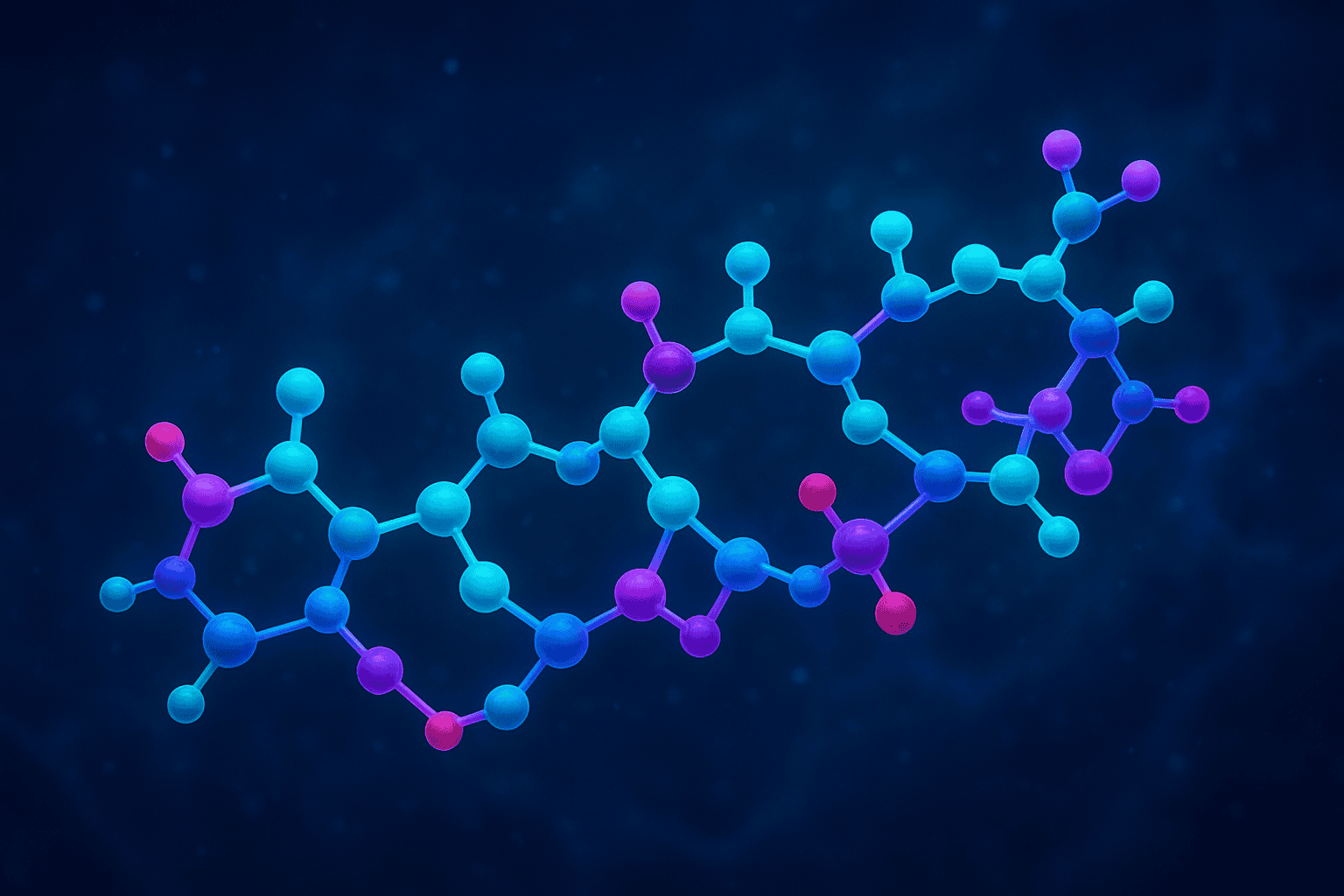
Why Do Researchers Study Ipamorelin CJC-1295 Together?
Researchers pair these peptides because they activate two separate arms of the GH signaling system. According to a review in Endocrine Reviews (Kojima & Kangawa, 2005), ghrelin and GHRH operate through distinct receptor pathways that can produce additive effects when both are activated. Studying both pathways simultaneously lets researchers observe interactions that neither compound reveals alone.
Here’s a simple way to picture it. Imagine you’re trying to study how a car engine responds to fuel. Ipamorelin is like pressing the gas pedal, sending a direct signal. CJC-1295 is like upgrading the fuel pump so more fuel flows with each press. Neither one replaces the other. They do fundamentally different jobs that happen to point in the same direction.
This complementary relationship is what makes the pairing attractive in laboratory settings. Researchers can adjust each variable independently and observe how the two pathways influence each other. It’s a cleaner experimental setup than using a single compound that tries to do everything at once.
[PERSONAL EXPERIENCE] Many peptide researchers begin by studying each compound individually before designing combination protocols, finding that baseline data on each peptide makes the combined results far easier to interpret.
What’s the Difference Between “Releasing” and “Amplifying” GH Signals?
Growth hormone secretagogues like Ipamorelin trigger new GH pulses by activating the ghrelin receptor (GHS-R1a). GHRH analogs like CJC-1295 work through the GHRH receptor to strengthen and extend existing signals. A 2007 analysis in Growth Hormone & IGF Research confirmed that these two receptor systems modulate GH release through independent cellular mechanisms.
Think of it like music. A “releaser” is the musician who starts playing a note. An “amplifier” is the speaker system that makes that note louder and sustains it longer. You need someone to play the note first, but without amplification, the sound fades quickly. That’s roughly how researchers describe the relationship between these two signaling pathways.
This distinction matters because it shapes how researchers design their experiments. Do they want to study the initial pulse? They focus on the secretagogue. Do they want to study sustained elevation? They look at the GHRH analog. Want both? That’s where the combination enters the picture.
[UNIQUE INSIGHT] The “releaser vs. amplifier” framing isn’t just an analogy. It reflects a genuine mechanistic divide that determines how each compound is used in experimental design. Researchers who confuse the two often misinterpret their data, since a stronger pulse and a longer-lasting signal produce very different downstream effects.

Are There Other Peptide Combinations Researchers Study?
Yes, and the logic is usually the same: combine compounds that work through different mechanisms. According to a 2009 review in Molecular and Cellular Endocrinology, the interaction between ghrelin-pathway and GHRH-pathway compounds has been a consistent area of interest in endocrine research for over two decades. Ipamorelin CJC-1295 happens to be one of the most frequently referenced pairings.
Other combinations involve different peptide classes entirely. Some researchers study peptides involved in metabolic signaling alongside those involved in tissue repair. The common thread is always the same question: what happens when you activate two related but independent pathways at the same time?
But not every combination is studied equally. The Ipamorelin and CJC-1295 pairing has attracted more published attention partly because both compounds have relatively well-characterized safety profiles in preclinical models. That gives researchers a more predictable baseline to work from.
[INTERNAL-LINK: “browse research peptides” -> /shop/]

Frequently Asked Questions
What is Ipamorelin classified as?
Ipamorelin is classified as a growth hormone secretagogue (GHS). It binds to the ghrelin receptor and stimulates the pituitary to release growth hormone. In the original characterization study, Raun et al. (1998) demonstrated that Ipamorelin produced GH release comparable to GHRP-6 but without significant changes in cortisol, ACTH, or prolactin (PubMed).
[INTERNAL-LINK: “detailed Ipamorelin overview” -> /blog/what-is-ipamorelin-growth-peptide/]
What is the difference between CJC-1295 with DAC and without DAC?
The DAC (Drug Affinity Complex) version binds to albumin in the bloodstream, extending its half-life to roughly eight days. The version without DAC has a much shorter duration, closer to 30 minutes. Researchers choose between them based on whether their experimental model calls for sustained or pulsatile GH elevation (Teichman et al., 2006).
[INTERNAL-LINK: “CJC-1295 explained” -> /blog/cjc-1295-peptide-explained/]
Can these peptides be purchased for research?
Yes. Both Ipamorelin and CJC-1295 are available from research peptide suppliers for use in laboratory and preclinical studies. Reputable suppliers provide certificates of analysis (COAs) verifying purity. These compounds are sold strictly for research purposes and are not intended for human consumption.
[INTERNAL-LINK: “view certificates of analysis” -> /coas/]
Why does selectivity matter in GH research?
Selectivity matters because non-selective compounds trigger multiple hormones simultaneously, making it difficult to isolate the effects of GH alone. Ipamorelin’s ability to stimulate GH without raising cortisol or prolactin gives researchers a cleaner variable to work with. This was a key finding in Raun et al.’s original 1998 paper and remains one of Ipamorelin’s most cited characteristics.
Conclusion
The reason Ipamorelin and CJC-1295 keep appearing together in research literature comes down to basic experimental logic. They activate separate receptor systems that both influence growth hormone release. One triggers the pulse. The other amplifies and extends it. For researchers designing studies on GH signaling, that complementary relationship offers a way to examine interactions that single-compound experiments can’t reveal.
If you’re sourcing peptides for laboratory research, quality and purity documentation matter. Third-party certificates of analysis are the baseline standard for any credible experiment.
For research use only. Not for human consumption. All products are sold exclusively for laboratory and scientific research. This content is educational and does not constitute medical advice.