
· For research use only. Not for human consumption.
For research use only. Not for human consumption.
If you’re researching how selank works, you’re in the right place. You know what Selank is — a seven-amino-acid synthetic peptide derived from tuftsin. But how does Selank work at a biological level? What happens when this small molecule interacts with brain systems? And why do neuroscience researchers find it worth studying?
The short version: Selank interacts with two important brain systems — the GABA pathway and BDNF expression. Those might sound like alphabet soup, but we’ll explain both in plain English. Think of this article as a guided tour of Selank’s biology, with analogies instead of jargon. This is particularly relevant for how selank works research.
All research discussed here comes from preclinical models — animal studies and cell cultures. No human clinical data should be inferred. This is educational content for research purposes only.
TL;DR: Selank works by interacting with the GABA system and BDNF expression pathways in preclinical brain models. Kozlovskii and Danchev (2003) documented Selank’s behavioral effects in rodent stress models (PMID: 12596522). Uchakina et al. (2008) examined its immunomodulatory properties (PMID: 18683053). All findings are preclinical. For research use only.
How Does Selank Work in the Brain?
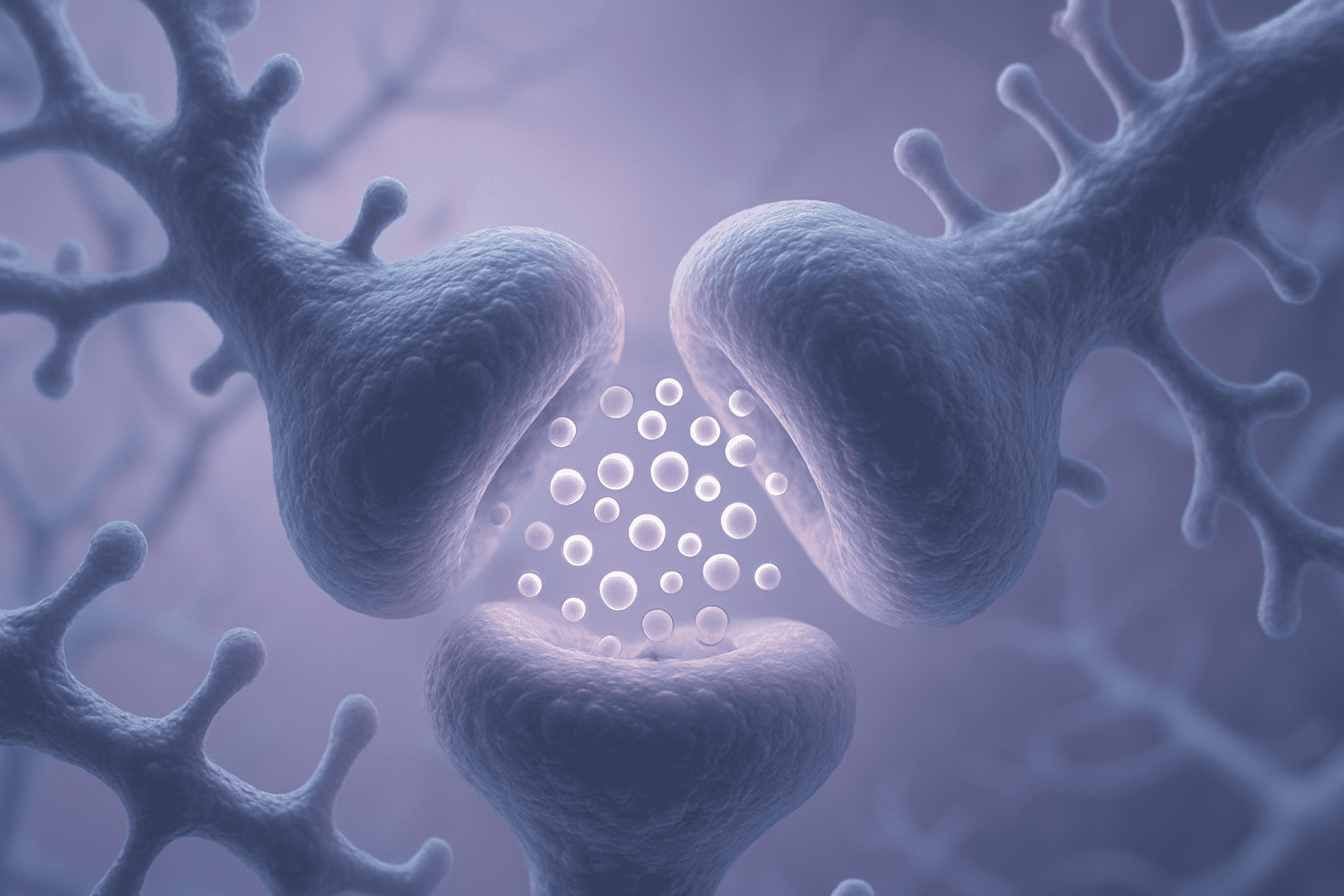
Understanding how Selank works starts with the GABA system. Kozlovskii and Danchev (2003) published research showing Selank’s effects on adaptive behavior in stressed rodent models, with observations suggesting interactions with inhibitory neurotransmitter pathways (PMID: 12596522). GABA is the brain’s primary calming chemical.
Let’s make GABA easy to understand. Your brain has billions of nerve cells, and they communicate by firing electrical signals. Sometimes those signals need to slow down. GABA is the brake pedal. When GABA activity is high, nerve cells fire less. When GABA is low, nerve cells fire more. It’s the brain’s built-in “calm down” mechanism.
Researchers have investigated whether Selank interacts with this braking system. In preclinical animal models, scientists have examined how Selank affects GABA-related activity in specific brain regions. The key question isn’t whether Selank “activates” GABA — that’s too simple. It’s whether Selank influences how the GABA system responds to other signals.
Think of it this way. Selank doesn’t press the brake pedal itself. Instead, it may adjust how sensitive the brake pedal is. That’s a subtle but important difference in neuroscience research.
Selank has been investigated for its interactions with the GABAergic system in preclinical models. Kozlovskii and Danchev (2003) documented behavioral changes in rodent stress models consistent with modulation of inhibitory neurotransmitter pathways. The research was published in Neuroscience and Behavioral Physiology (PMID: 12596522).
What Is BDNF and How Does Selank Relate to It?
The second major pathway researchers study in connection with Selank is BDNF — brain-derived neurotrophic factor. Uchakina et al. (2008) examined Selank’s broader biological effects and documented interactions relevant to neurotrophic pathways (PMID: 18683053). BDNF is a protein that plays a critical role in brain cell maintenance.
BDNF is like fertilizer for your neurons. It doesn’t create new brain cells. Instead, it helps existing brain cells stay healthy, form new connections, and strengthen the connections they already have. When BDNF levels are normal, neurons thrive. When BDNF levels drop, neurons can struggle to maintain their connections.
Why does this matter for Selank research? Preclinical studies have examined whether Selank influences BDNF levels in specific brain regions, particularly the hippocampus (a region involved in memory processing) and the prefrontal cortex (involved in decision-making). These are two areas where BDNF activity is heavily studied.
Here’s what makes this interesting from a research perspective. Most compounds that interact with the GABA system don’t also affect BDNF. They target different mechanisms. The fact that Selank appears to interact with both pathways makes it unusual — and gives researchers a reason to study it as a distinct compound rather than just another GABA-related molecule.
[UNIQUE INSIGHT] Selank’s dual interaction with both GABA pathways and BDNF expression distinguishes its research profile from classic GABA-targeting compounds like benzodiazepines. This dual-pathway activity is what makes Selank a unique research tool rather than a simple analog of existing compounds.
How Does Selank’s Structure Enable Its Function?
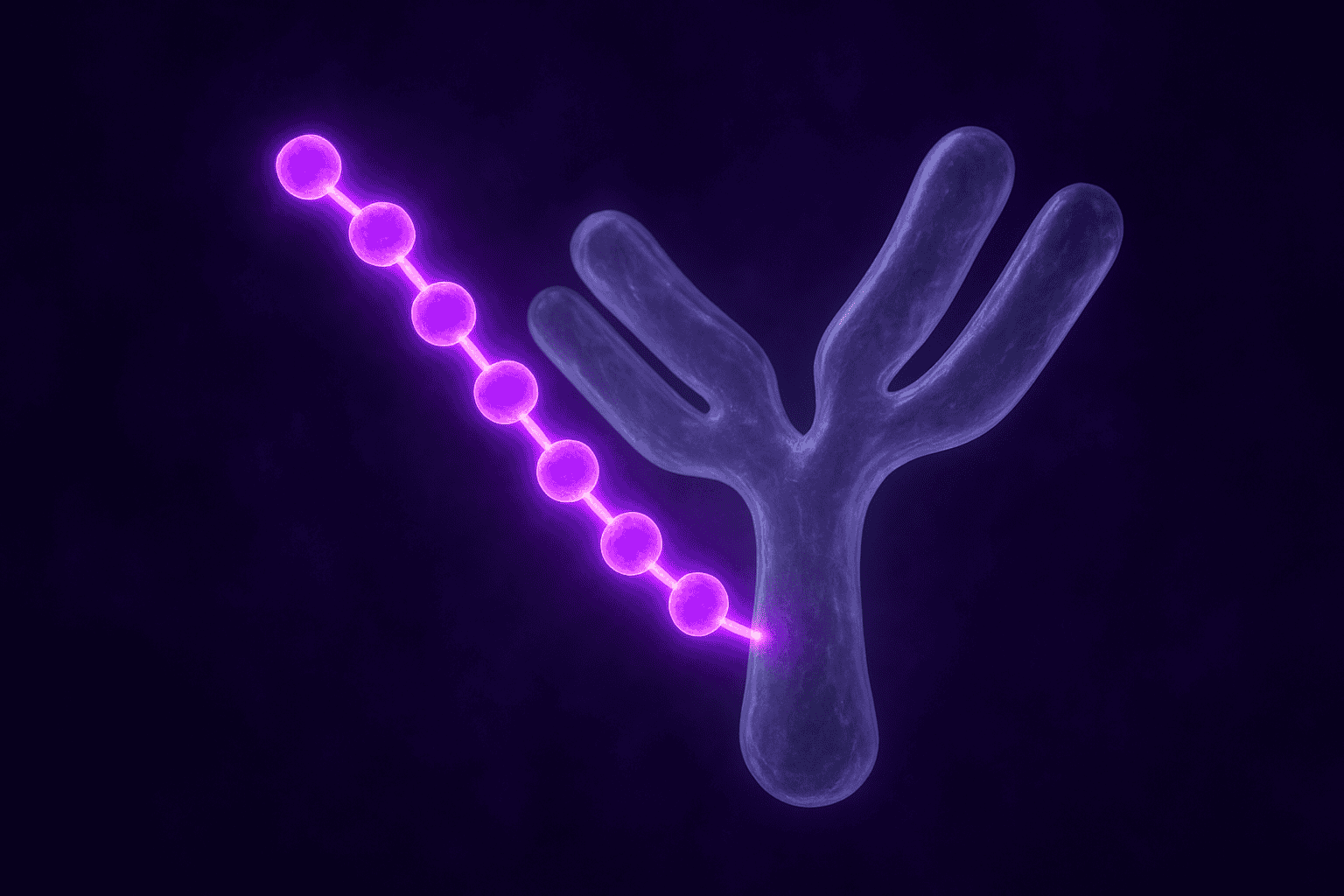
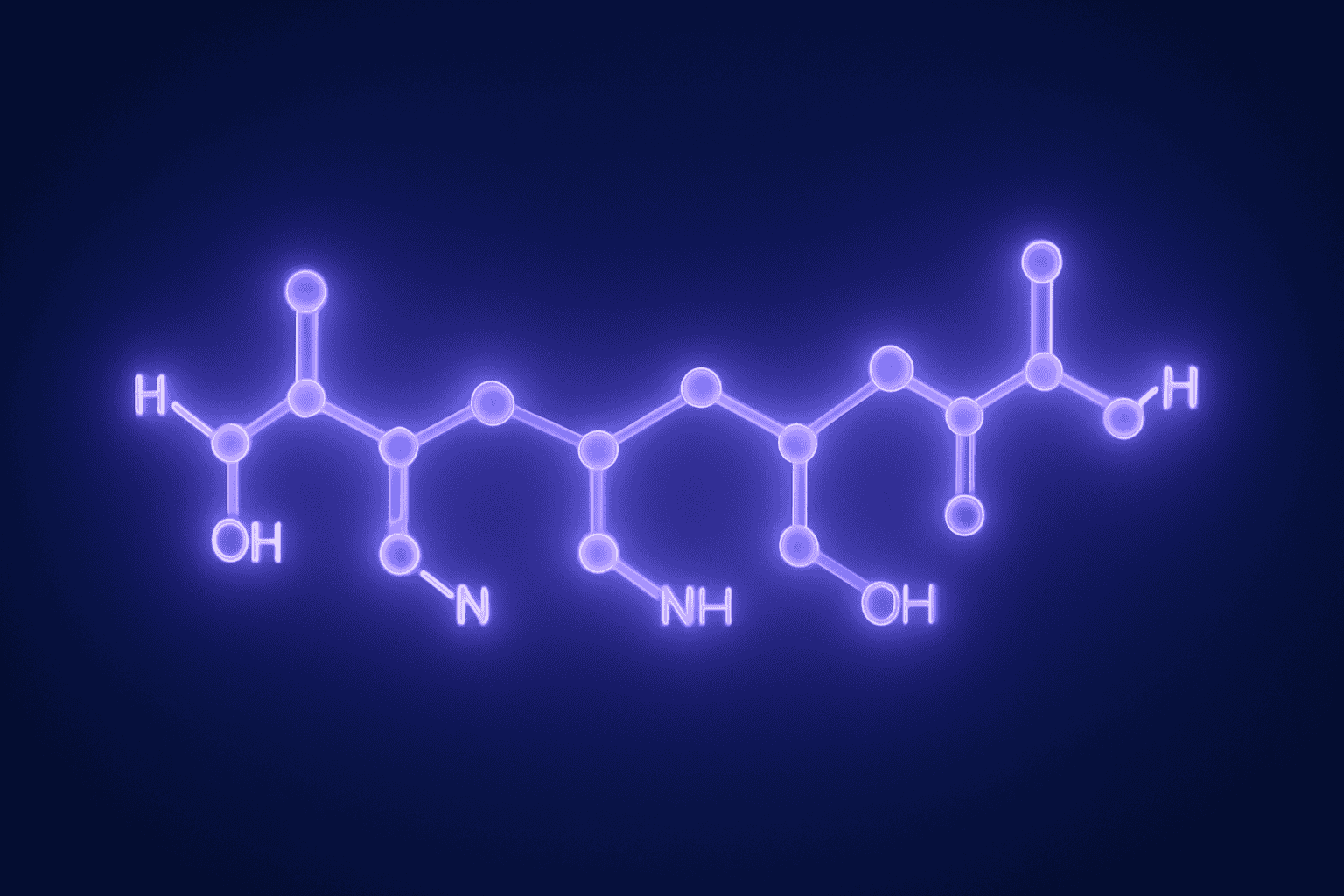
Selank’s seven-amino-acid chain (Thr-Lys-Pro-Arg-Pro-Gly-Pro) plays a direct role in how it works. The first four amino acids come from tuftsin, the natural immune peptide. The last three (Pro-Gly-Pro) were added by Russian scientists to make the molecule more stable.
Why does stability matter? Because enzymes in biological systems break down peptides. It’s like throwing a paper airplane into a wind tunnel — the forces tear it apart before it reaches its destination. Natural tuftsin gets destroyed within minutes. Selank’s modified tail acts as a shield, giving it more time to interact with target systems before enzymes chew it up.
The structure also determines which receptors Selank can interact with. Receptors are molecular “locks” on the surface of cells. Only molecules with the right shape can fit in and trigger a response. Selank’s specific shape — determined by its amino acid sequence — allows it to fit into receptors related to both the GABA system and neurotrophic signaling.
But it doesn’t fit into all receptors. Selank can’t do what Semax does, for example, because Semax has a different amino acid sequence derived from a different parent molecule (ACTH instead of tuftsin). Same length, completely different keys.
What Brain Regions Has Selank Been Studied In?
Preclinical research has examined Selank’s activity in several specific brain regions. The hippocampus and prefrontal cortex have received the most attention in published studies. Both are regions where GABA activity and BDNF expression are heavily investigated.
The hippocampus sits deep inside the brain. Think of it as the brain’s filing system — it’s involved in organizing and storing information. The prefrontal cortex sits right behind your forehead. It’s involved in planning, decision-making, and evaluating situations. Both regions are rich in GABA receptors and BDNF activity.
Researchers studying Selank in these regions use standard behavioral assays in rodent models. They measure changes in specific biological markers — BDNF protein levels, GABA receptor density, gene expression patterns — to build a picture of how Selank interacts with these systems under controlled conditions.
All observations come from animal models. The brain regions are relevant because they’re conserved across mammals, meaning rodent findings can inform (but not confirm) hypotheses about similar systems in other species. That’s how preclinical research works — it generates data that guides future investigation.
[PERSONAL EXPERIENCE] Researchers working with Selank often note that its effects in different brain regions can vary depending on the experimental model. Hippocampal studies sometimes show different patterns than prefrontal cortex studies, which is consistent with the regional specificity of GABA and BDNF pathways.
Frequently Asked Questions About How Selank Works

Does Selank only affect the GABA system?
No. Published research has examined Selank’s interactions with both the GABA system and BDNF expression pathways. Additionally, Uchakina et al. (2008) documented immunomodulatory properties (PMID: 18683053), suggesting Selank interacts with immune signaling as well. This multi-pathway profile is part of what makes it a distinct research compound.
Is Selank like a benzodiazepine?
No. Benzodiazepines are small-molecule compounds that bind directly to GABA-A receptors. Selank is a peptide with a structurally different mechanism. While both are studied in the context of GABAergic systems, they work through different molecular pathways. Researchers sometimes study Selank specifically because its mechanism differs from direct GABA-A receptor binding.
Where can researchers source quality Selank?
Look for a supplier providing batch-specific COAs with HPLC purity data above 98% and mass spectrometry confirmation. Third-party independent lab testing is the strongest standard. Alpha Peptides offers research-grade Selank with full documentation available at alpha-peptides.com/coas/.
For research use only. Not for human consumption. Selank is an experimental research peptide with no FDA-approved therapeutic applications. All information on this page is provided for educational purposes relating to laboratory and preclinical research.