
· For research use only. Not for human consumption. Alpha Peptides COA verification research provides key insights for laboratories.
For research use only. Not for human consumption.
Key Takeaways:
- Every product sold by Alpha Peptides ships with a batch-specific Certificate of Analysis (COA).
- COAs include HPLC purity data with exact percentage readings for each lot.
- All COAs are publicly accessible at alpha-peptides.com/coas/.
- HPLC testing identifies the presence of synthetic byproducts, truncated sequences, and contaminants.
- Batch-specific documentation is the industry benchmark that separates verified suppliers from unverified ones.
Alpha Peptides COA verification is a foundational element of every order processed at alpha-peptides.com. When research facilities source peptides for laboratory use, the Certificate of Analysis is not optional documentation — it is the primary instrument for confirming that a compound matches its stated specification. Alpha Peptides, operated by ALPHAPEP LLC and headquartered in Derry, NH, provides batch-specific COAs for every product in its catalog, indexed publicly so researchers can retrieve documentation before or after any purchase.
This article explains what a COA contains, why HPLC data is the preferred purity measurement method, and how researchers can interpret the figures on a standard Alpha Peptides COA to make informed sourcing decisions.
What a Certificate of Analysis Contains and Why It Matters

A Certificate of Analysis is a document issued for a specific manufactured lot that records the results of analytical testing performed on that batch. For research-grade peptides, a COA typically includes the compound name, lot number, manufacturing date, and purity percentage as determined by high-performance liquid chromatography (HPLC). It may also include mass spectrometry (MS) confirmation of molecular identity, water content analysis, and residual solvent data depending on the supplier’s testing protocol.
The purity percentage on a COA reflects the proportion of the target peptide relative to all other substances detected in the sample. A reading of 98.5% purity means that 98.5% of the measured sample consists of the intended compound, with the remaining 1.5% comprising unreacted precursors, truncated sequences, or process byproducts. For laboratory applications where experimental results depend on known concentrations of specific compounds, this figure directly affects data reliability.
Suppliers that do not provide batch-specific COAs — or that share a single COA across multiple lots — cannot demonstrate that each production run met the stated specification. A COA for Batch 001 does not verify the purity of Batch 012. Alpha Peptides issues a distinct COA for each manufactured lot, linking documentation to the specific inventory a researcher receives.
How HPLC Testing Underpins Alpha Peptides COA Verification
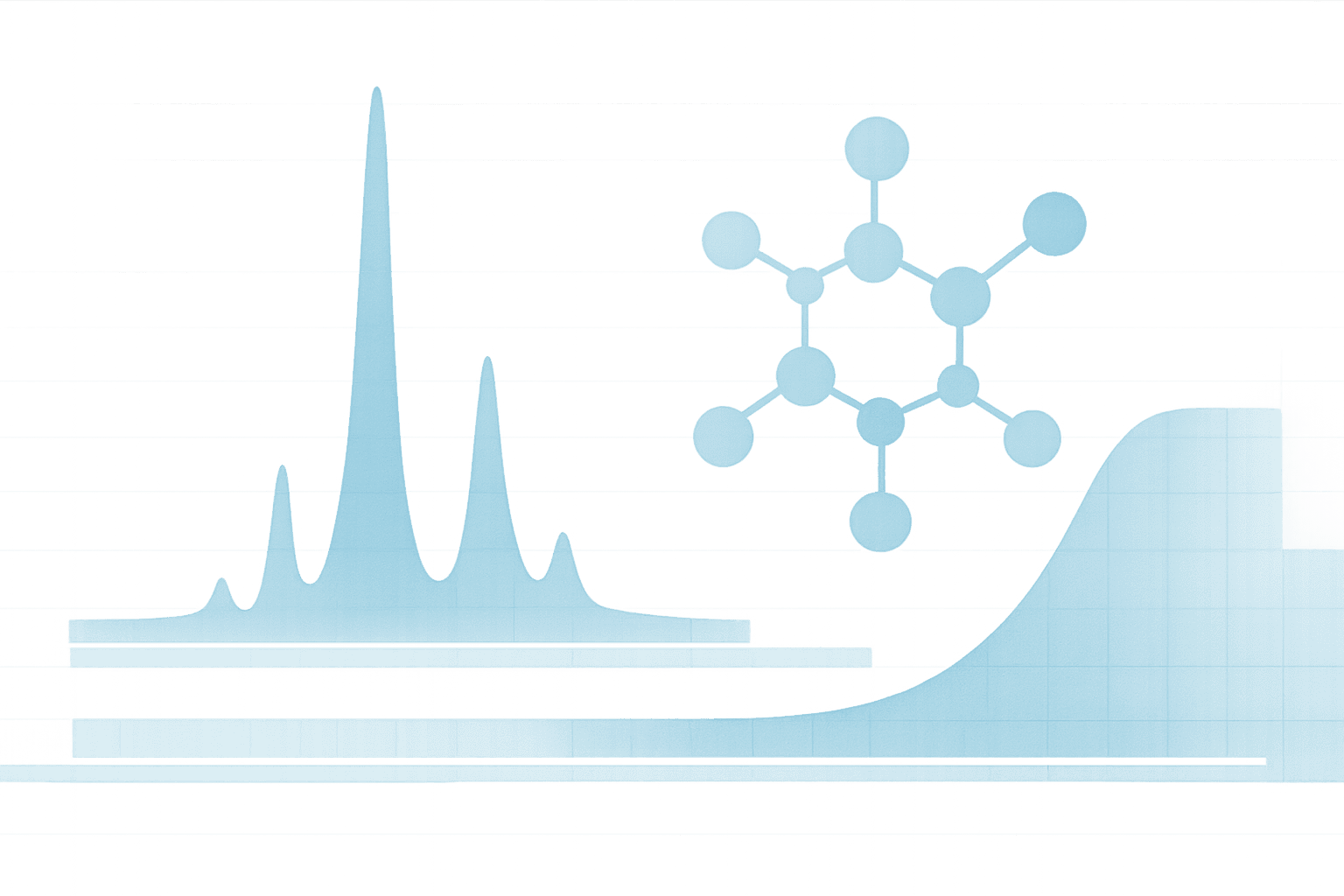
High-performance liquid chromatography is the analytical standard for peptide purity determination. The method works by passing a dissolved peptide sample through a stationary phase column under high pressure, separating components by their relative affinity for the stationary phase. A detector — most commonly UV absorption at 214 nm — measures each separated fraction as it exits the column, generating a chromatogram with peaks corresponding to individual components.
The area under each peak, expressed as a percentage of total peak area, gives the purity figure. A compound with a single dominant peak and minimal secondary peaks indicates high purity. A sample with multiple comparable peaks or a broad baseline indicates the presence of impurities that would need to be accounted for in any experimental design.
HPLC is preferred over simpler methods because it provides quantitative separation data, not just a pass/fail result. Researchers reviewing Alpha Peptides COA verification documentation can examine the actual chromatogram trace, not just the summary number, to assess the shape of the purity profile for a given lot.
Analytical guidance from the United States Pharmacopeia (USP) identifies reversed-phase HPLC as the reference method for peptide identity and purity testing, citing its reproducibility and sensitivity to structural variants including truncated and desamidated sequences. (USP General Chapter <621>)
Alpha Peptides Ships Every Order with a Batch-Specific COA
The Alpha Peptides COA verification system is structured around lot traceability. Every product listed in the Alpha Peptides shop is associated with a specific manufacturing batch. When a new lot enters inventory, its COA is uploaded to the public COA library at alpha-peptides.com/coas/ prior to fulfillment. This means researchers can access the COA for any current or recent batch at any time, independent of their order status.
The COA library at alpha-peptides.com is organized by compound name, making it straightforward to locate documentation for a specific peptide. Each entry lists the lot number, HPLC purity percentage, testing date, and where available, the mass spectrometry confirmation result. Researchers who order multiple compounds can verify each compound’s lot independently.
This level of documentation is a concrete differentiator in a market segment where COA availability varies significantly across suppliers. Some vendors provide COA copies only upon request; others post a generic document without lot-specific identification. Alpha Peptides maintains an openly browsable COA library as standard practice, not as an exception.
How to Read a Peptide COA: A Field Reference
Reading a COA accurately requires understanding which fields carry the most information. The critical fields on any peptide COA are:
- Lot / Batch Number: Confirms the document applies to the specific production run, not a generic or representative sample.
- Purity (%) by HPLC: The primary quality indicator. For research-grade peptides, readings of 98% and above are standard for well-characterized compounds.
- Molecular Weight Confirmation (MS): Verifies that the detected compound has the correct mass, confirming sequence integrity. A purity reading without MS confirmation cannot rule out a structurally similar impurity dominating the HPLC trace.
- Testing Date: Indicates when the analysis was performed. COA data older than 18–24 months may not reflect the current storage condition of the lot.
- Testing Laboratory: Third-party testing — where the analysis is conducted independently of the manufacturer — provides an additional layer of objectivity.
Researchers using Alpha Peptides COA verification documentation can cross-reference the lot number on their shipment with the COA library entry to confirm they have the correct document for their batch. This process takes under two minutes and is a routine step for quality-conscious research procurement.
The Supplier Transparency Standard: What COA Availability Signals
In the research peptide market, COA availability is a reliable proxy for overall supplier quality practices. A supplier that maintains batch-specific COAs for every product is demonstrating a commitment to documented quality control that extends beyond marketing claims. Conversely, suppliers that cannot produce a current, lot-specific COA on demand have not completed the analytical workflow necessary to verify the compound in their inventory.
Alpha Peptides, operating from Derry, NH under ALPHAPEP LLC, treats COA availability as a non-negotiable baseline rather than a premium feature. The COA library at alpha-peptides.com/coas/ represents this commitment in a form researchers can independently verify.
| What to Look For in a Supplier | What Alpha Peptides Delivers |
|---|---|
| Batch-specific COA for each lot | Every product ships with a distinct, lot-identified COA |
| HPLC purity data with exact percentages | HPLC chromatography results included in all COAs |
| Publicly accessible COA library | Open COA archive at alpha-peptides.com/coas/ |
| COA available before purchase | COA library browsable by any visitor, no account required |
| MS confirmation of molecular identity | Mass spectrometry data included where available |
Frequently Asked Questions
What is a Certificate of Analysis?
A Certificate of Analysis (COA) is a formal document issued for a specific production lot that records the results of analytical testing conducted on that batch. For research peptides, a COA includes HPLC purity data, lot identification, testing date, and often mass spectrometry confirmation of molecular identity. It is the primary document researchers use to verify that a compound matches its stated specification before use in an experiment.
Does Alpha Peptides provide COAs for every order?
Yes. Alpha Peptides provides a batch-specific COA for every product it sells. COAs are linked to specific manufacturing lots, meaning the documentation corresponds to the exact inventory in a researcher’s shipment. All COAs are available in the public library at alpha-peptides.com/coas/ prior to order fulfillment.
How do I read a peptide COA?
The most important fields on a peptide COA are the lot/batch number (confirming the document matches your shipment), the HPLC purity percentage (the primary quality metric), the mass spectrometry result (confirming correct molecular identity), and the testing date. Cross-referencing the lot number on your shipment with the corresponding COA entry in the supplier’s library confirms you have the correct documentation for your specific batch.
Where can I find Alpha Peptides COAs?
All Alpha Peptides COAs are indexed at alpha-peptides.com/coas/. The library is publicly accessible — no account or purchase is required to view COA documentation. COAs are organized by compound name and include lot numbers, HPLC purity percentages, and testing dates.
For research use only. Not for human consumption. This article is intended for informational purposes and does not constitute medical advice, dosing guidance, or therapeutic recommendations.