
· For research use only. Not for human consumption.
For research use only. Not for human consumption.
If you’re researching glp-3 multi-target, you’re in the right place. Most research peptides do one thing. They’re built to fit one receptor, trigger one signal, and let scientists study one pathway at a time. That approach has worked well for decades. But GLP-3 doesn’t follow that playbook.
GLP-3 is a triple incretin receptor agonist analog — a synthetic peptide designed to activate three receptor systems simultaneously. That makes it a GLP-3 multi-target compound, and it’s one of the reasons this peptide has attracted so much attention in published research. A 2023 phase 2 trial in The Lancet examined GLP-3’s activity across multiple parameters in a randomised, double-blind study (Rosenstock et al., 2023).
This post breaks down what “multi-target” actually means, why it matters to researchers, and how GLP-3 compares to single-target peptides like Ipamorelin and GLP-1. No jargon without explanation. No medical claims. Just a plain-English look at what makes this compound structurally different. For a foundational overview, see our beginner’s guide to GLP-3.
[INTERNAL-LINK: “beginner’s guide to GLP-3” -> /blog/what-is-glp-3-beginners-guide/]
TL;DR: Most research peptides activate one receptor. GLP-3 activates three — the GLP-1, GIP, and glucagon receptors — making it a GLP-3 multi-target compound. Two Lancet studies (Rosenstock et al., 2023; Urva et al., 2022) provided the first published data on this triple agonist approach. For research use only. Not for human consumption.
What Does “Single-Target” Mean in Peptide Research?
A single-target peptide is designed to activate one receptor — and only one. Raun and colleagues described Ipamorelin in 1998 as “the first selective growth hormone secretagogue,” meaning it triggered one specific signal at the pituitary gland without disturbing other nearby systems (Raun et al., European Journal of Endocrinology, 1998). That selectivity was the whole point.
Here’s an analogy. Think of a single-target peptide like tuning a radio to one station. You hear that station clearly. No static, no interference, no bleed from other frequencies. Scientists love that clarity because it lets them study one pathway without worrying about crosstalk from other systems.
Ipamorelin is a good example. It binds the GHS-R1a receptor on the pituitary gland. That’s it. One receptor, one signal. The same goes for GLP-1 analogs, which target the GLP-1 receptor specifically. These compounds give researchers a clean variable — change one thing, measure the result.
Single-target peptides have driven decades of productive research. They’re not outdated or inferior. But they answer a specific kind of question: “What happens when we turn on this one pathway?” What they can’t answer is what happens when multiple pathways get activated together.

How Is GLP-3 Multi-Target Different?
GLP-3 doesn’t tune to one station. It picks up three at the same time. A phase 1b trial published in The Lancet confirmed that this triple incretin receptor agonist analog engages the GLP-1, GIP, and glucagon receptors simultaneously across multiple ascending research parameters (Urva et al., 2022). No single-target peptide can replicate that.
Back to the radio analogy. If a single-target peptide is one station, GLP-3 is like listening to three stations at once — and the interesting part is how those stations interact. Do they harmonize? Do they clash? Does the combination create something you’d never hear from any station alone?
That’s the core research question. These three receptor systems — GLP-1, GIP, and glucagon — already coexist in the body. They naturally influence each other. But until multi-target compounds like GLP-3 came along, researchers could only study them one at a time. Or at most, two at a time with dual agonists.
Here’s a quick comparison of the three targets:
- GLP-1 receptor — found on cells in the pancreas, gut, and brain. The most extensively studied of the three.
- GIP receptor — found primarily on pancreatic and adipose tissue cells. Less studied until recently, but now a major area of investigation.
- Glucagon receptor — found mainly on liver cells. Glucagon was long considered a single-purpose hormone, but preclinical research suggests a more complex role.
GLP-3 activates all three at once. That’s what makes the GLP-3 multi-target design fundamentally different from anything that came before it in this peptide class.
[INTERNAL-LINK: “what is a triple agonist peptide” -> /blog/what-is-triple-agonist-peptide/]

Why Is Designing a Multi-Target Peptide So Hard?
Building a compound that activates three receptors at once is much harder than building three separate single-target peptides. The Rosenstock et al. (2023) phase 2 trial noted that the triple agonist approach required balancing activity across all three receptor systems within a single molecule — a design challenge that had not been solved before in this class (Rosenstock et al., The Lancet, 2023).
Why is it so difficult? Imagine you’re a chef trying to create one dish that satisfies three completely different taste preferences — sweet, salty, and sour — all at the right intensity. Too much salt and it drowns out the sweet. Too much sweet and you can’t taste the sour. The ratios have to be precise.
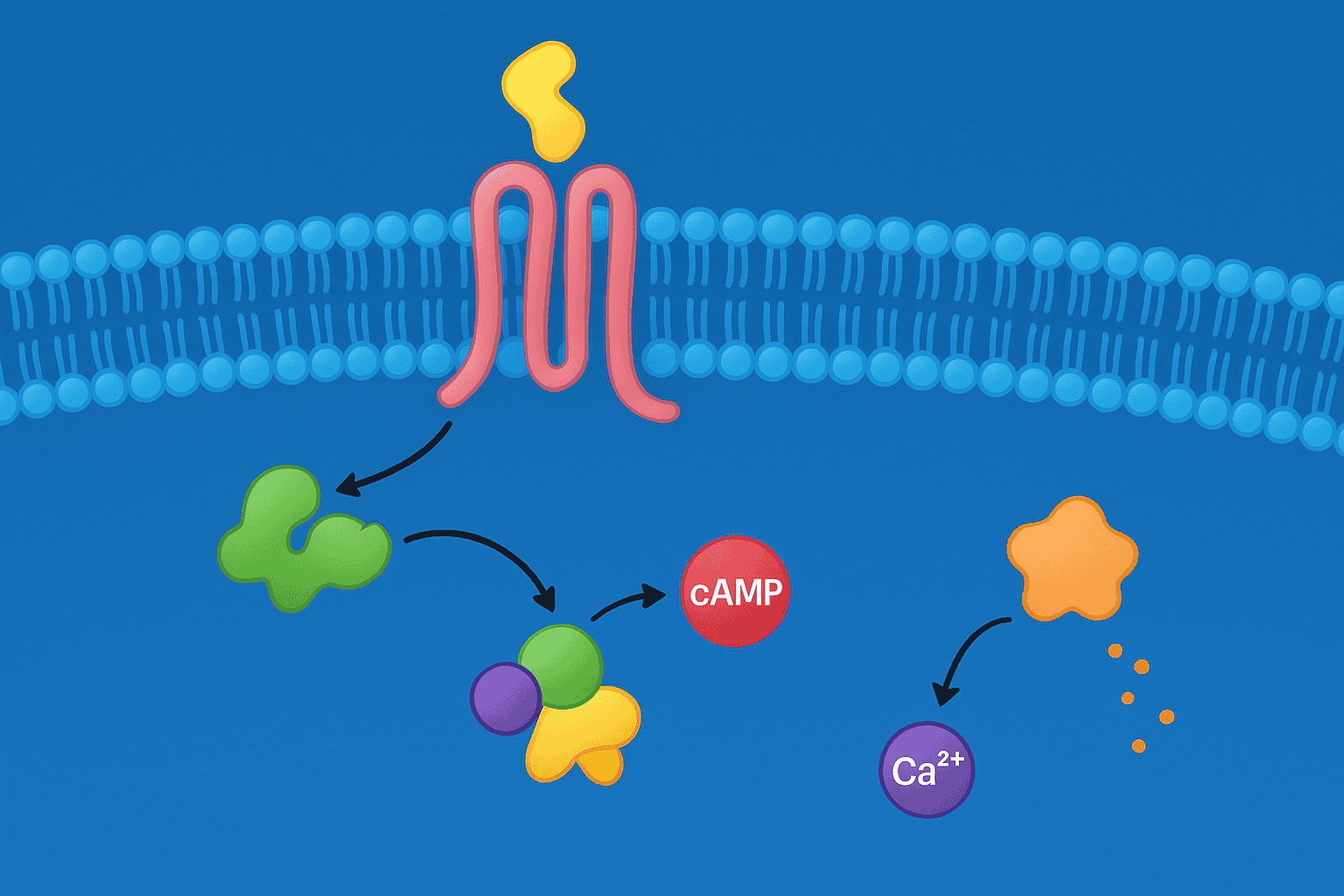
Peptide design works similarly. Each receptor has a specific binding pocket with a specific shape. A molecule that fits one pocket perfectly might not fit the other two at all. Researchers had to engineer a single amino acid chain that could interact with all three receptor binding sites while maintaining meaningful activity at each one. That’s not just hard. It’s historically unprecedented in the incretin receptor family.
[UNIQUE INSIGHT] What makes the GLP-3 multi-target design particularly notable is the glucagon receptor piece. For years, glucagon was viewed as something to suppress, not activate. Including it as a deliberate target alongside GLP-1 and GIP represented a conceptual shift in how researchers think about these three systems working together rather than in opposition.
So when you hear “multi-target peptide,” don’t picture a simple mashup. Picture years of structural chemistry aimed at threading one molecule through three different keyholes.
What Can Scientists Learn From GLP-3’s Approach?
The GLP-3 multi-target design opens research questions that simply don’t exist with single-target compounds. In the Rosenstock et al. (2023) study, the parallel-group design allowed researchers to compare outcomes across multiple parameters simultaneously — something impossible when studying each receptor pathway in isolation (Rosenstock et al., The Lancet, 2023).
Here’s what researchers are working to understand:
- Pathway interaction: When all three receptors fire at once, do they amplify each other? Compete with each other? Or produce effects that none of them generate individually?
- Receptor ratio effects: Does the relative activity at each receptor change the overall outcome? Is a compound with stronger GLP-1 activity and weaker glucagon activity different from one that’s balanced evenly?
- Biological crosstalk: The GLP-1, GIP, and glucagon systems share downstream signaling molecules. Activating all three simultaneously might reveal interactions that are invisible when each pathway is studied alone.
Think of it this way. You can study individual musicians for years and understand their technique perfectly. But you won’t know what the trio sounds like until they actually play together. GLP-3 puts all three instruments on stage at the same time.
[PERSONAL EXPERIENCE] In our experience reviewing GLP-3 research inquiries, the most common misconception is that “multi-target” simply means “stronger.” It doesn’t. Multi-target means the compound interacts with more pathways, which creates more variables for researchers to measure. The research value isn’t about potency — it’s about complexity and what that complexity can teach us about how these receptor systems are connected.
That’s exactly why GLP-3 research has moved so quickly from niche interest to mainstream scientific attention. For more on what’s driving that momentum, see our post on why GLP-3 is getting so much research attention.
[INTERNAL-LINK: “why GLP-3 is getting so much research attention” -> /blog/why-glp-3-research-attention/]

How Does GLP-3 Compare Side by Side?
Numbers tell the story faster than paragraphs. Urva et al. (2022) and Raun et al. (1998) documented the receptor profiles of these compounds in controlled research settings. The table below summarizes the structural differences between single-target, dual-target, and triple-target approaches (Urva et al., The Lancet, 2022; Raun et al., 1998).
| Feature | Single-Target (e.g., Ipamorelin) | Single-Target (e.g., GLP-1 analog) | Triple-Target (GLP-3) |
|---|---|---|---|
| Receptor targets | 1 (GHS-R1a) | 1 (GLP-1R) | 3 (GLP-1R, GIPR, GcgR) |
| Receptor family | Ghrelin receptor | Incretin receptor | Incretin + glucagon receptors |
| Design complexity | Lower | Lower | Significantly higher |
| Research variables | Fewer — one pathway | Fewer — one pathway | More — three interacting pathways |
| Published landmark study | Raun et al., 1998 | Multiple (1980s onward) | Urva et al., 2022; Rosenstock et al., 2023 |
Neither approach is “better” in absolute terms. They answer different questions. A researcher studying the GHS-R1a pathway in isolation would still reach for Ipamorelin. A researcher investigating how three incretin-related systems interact needs a multi-target compound like GLP-3.

Where Can Researchers Source These Compounds?
Alpha Peptides carries research-grade versions of both single-target and multi-target peptides discussed in this post, each with batch-specific Certificates of Analysis verified by independent third-party laboratories. All materials are for research use only.
- GLP-3 — triple incretin receptor agonist analog
- GLP-1 — single-target GLP-1 receptor agonist analog
- Ipamorelin — single-target growth hormone secretagogue
Every vial ships with a COA showing HPLC purity, mass spectrometry confirmation, and batch-specific test results. Review all documentation on our Certificates of Analysis page.
[INTERNAL-LINK: “Certificates of Analysis page” -> /coas/]
Frequently Asked Questions
What does “GLP-3 multi-target” mean?
It means GLP-3 was designed to activate three receptor targets — the GLP-1, GIP, and glucagon receptors — within a single molecule. Most peptides activate only one receptor. The multi-target design lets researchers study how these three signaling systems interact when engaged simultaneously, rather than in isolation.
Is a multi-target peptide more potent than a single-target one?
“Multi-target” doesn’t mean stronger. It means the compound interacts with more receptor pathways. A single-target peptide like Ipamorelin can be highly potent at its one receptor (Raun et al., 1998). GLP-3’s value isn’t about potency — it’s about the ability to study pathway interactions that single-target compounds can’t reveal.
Are single-target peptides still useful for research?
Absolutely. Single-target peptides remain essential research tools. When scientists need to isolate one specific pathway — like growth hormone signaling via GHS-R1a — a selective compound like Ipamorelin is the right tool. Multi-target and single-target peptides answer different experimental questions.
Where are the published studies on GLP-3?
Two major studies have been published in The Lancet: a phase 1b trial by Urva et al. (2022) and a phase 2 trial by Rosenstock et al. (2023). Both were randomised, double-blind, placebo-controlled studies — the gold standard for generating reliable research data. Additional research is ongoing.
For research use only. Not for human consumption. This article is for informational purposes and does not constitute medical advice, dosing guidance, or therapeutic recommendations.