
· For research use only. Not for human consumption.
For research use only. Not for human consumption.
Choosing a GLP-3 supplier isn’t like picking a brand of office supplies. GLP-3 is a triple incretin receptor agonist analog still in its early research stages, and the quality of the compound you receive directly affects the reliability of your data. A wrong choice here doesn’t just waste money. It wastes time, reagents, and potentially months of experimental work.
So how do you tell the difference between a supplier that actually prioritizes quality and one that just talks about it? It comes down to a handful of concrete, verifiable things: third-party testing, transparent documentation, cold-chain shipping, real customer support, and a physical presence in the United States. None of these are optional extras. They’re the baseline.
This guide walks through each one in plain language. No chemistry degree required. If you’re brand new to GLP-3, start with our beginner’s guide to GLP-3 first, then come back here when you’re ready to order.
TL;DR: A quality GLP-3 supplier provides batch-specific Certificates of Analysis with third-party HPLC purity data (98%+) and mass spectrometry confirmation. A 2017 study in Drug Testing and Analysis found that a significant proportion of commercially sourced peptides failed to match their labeled purity or identity (Drug Testing and Analysis, 2017). Cold-chain shipping, a U.S. address, and responsive customer support separate serious suppliers from risky ones. For research use only. Not for human consumption.
What Makes a GLP-3 Supplier Trustworthy?
Trust starts with documentation. A 2020 review in PLOS ONE found that synthetic peptide impurity levels above 5% produced measurable confounds in receptor binding assays (PLOS ONE, 2020). For a compound like GLP-3 that interacts with three receptor targets simultaneously, purity isn’t just important — it’s the foundation of any meaningful research result.
A trustworthy GLP-3 supplier makes their quality evidence easy to find. That means publishing Certificates of Analysis on their website — not hiding them behind email requests or customer service tickets. It means naming the independent laboratory that performed the testing. And it means providing batch-specific documentation, not a single generic report recycled across every order.
Think of it this way: if a restaurant wouldn’t let you see the kitchen, you’d probably leave. The same logic applies here. Transparency isn’t a bonus feature. It’s the minimum bar a GLP-3 supplier should clear before you hand over your credit card.
[PERSONAL EXPERIENCE] We’ve found that researchers who ask for documentation before ordering almost always end up with better suppliers than those who don’t. The question itself acts as a filter — quality suppliers welcome it, while questionable ones deflect.
Research-grade synthetic peptides require HPLC-confirmed purity of at least 98% and mass spectrometry identity verification. A 2020 review in PLOS ONE found that impurity levels above 5% produce measurable confounds in receptor binding and functional assays, directly affecting reproducibility (PLOS ONE, 2020). For GLP-3 specifically, these standards matter more because the compound engages three receptor targets simultaneously.
How Important Is Third-Party Testing?
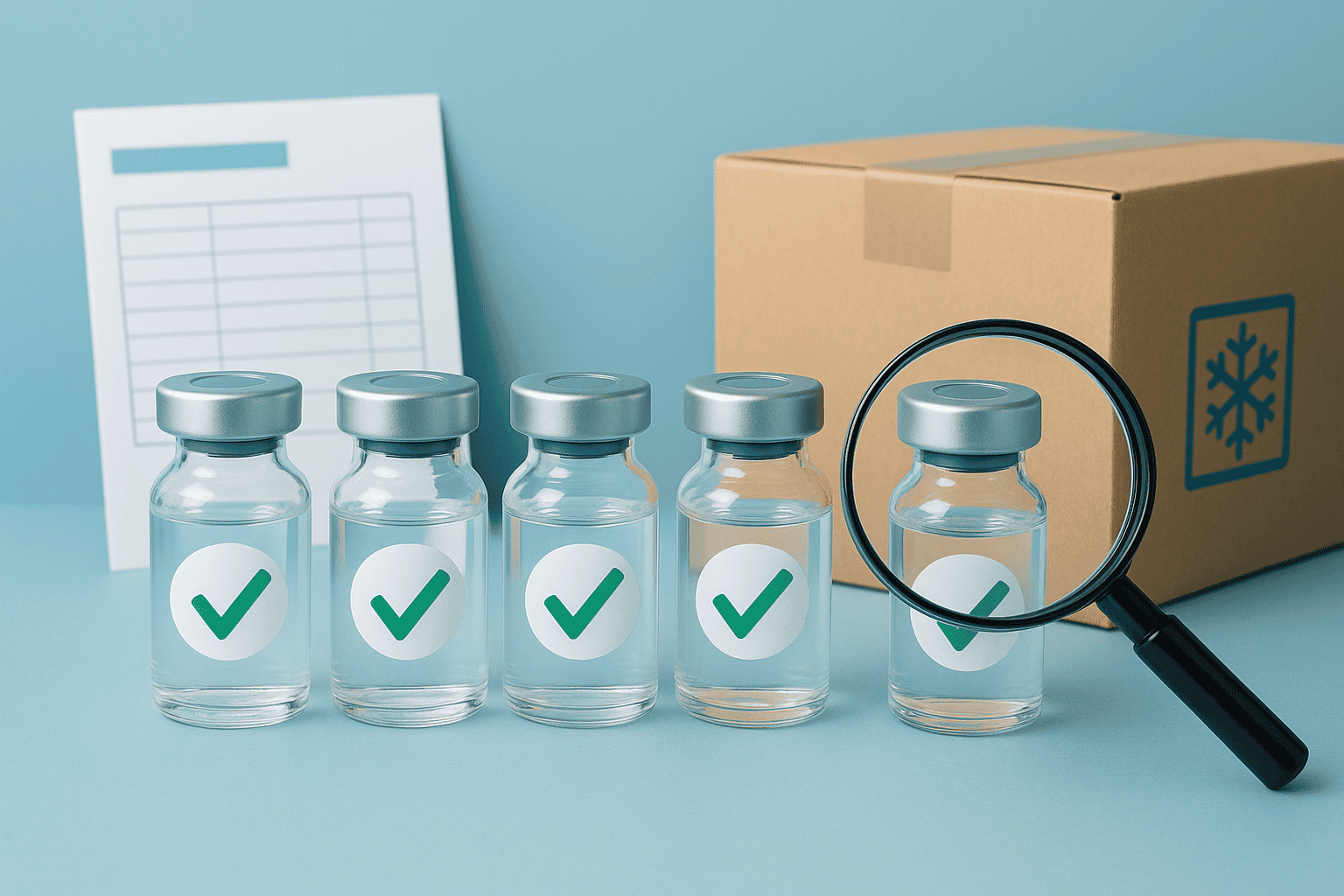
Third-party testing is non-negotiable. According to industry quality standards referenced by the American Peptide Society, a complete COA for research-grade peptides should include HPLC purity, mass spectrometry confirmation, and a batch number (American Peptide Society). When a GLP-3 supplier performs only in-house testing, the same organization making the product is also grading it. That’s a conflict of interest.
Independent testing works the way an independent home inspection does when you’re buying a house. The seller might say the roof is fine. But you’d still hire your own inspector, right? A third-party lab has no financial incentive to make the results look better than they are.
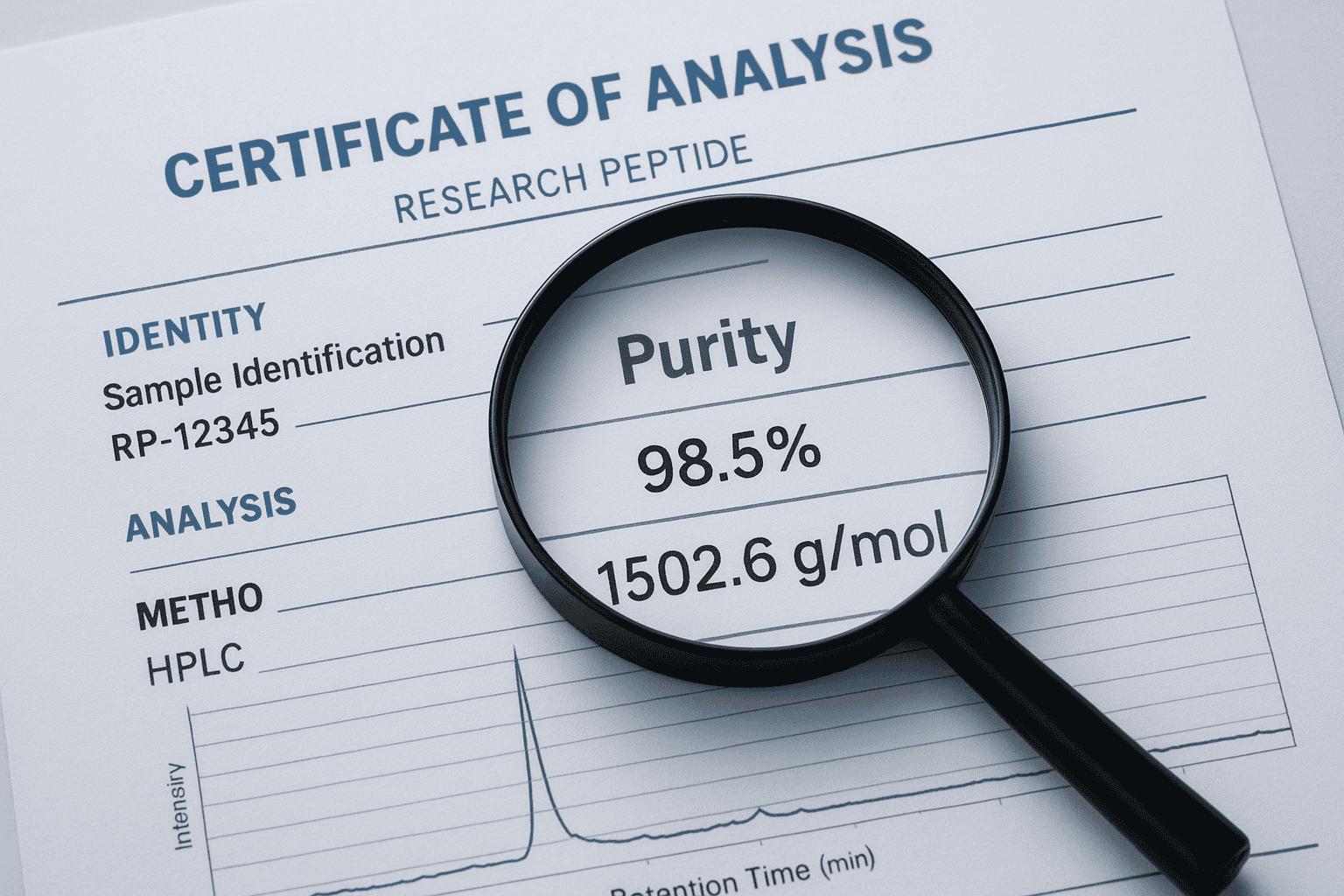
When evaluating a GLP-3 supplier’s COA, look for three things: the name of the testing laboratory (not just “independently tested”), the HPLC chromatogram showing a single dominant peak at 98% purity or higher, and mass spectrometry data confirming the correct molecular weight. If any of those elements are missing, the document doesn’t tell you much. For a detailed breakdown, our guide on third-party lab testing covers what each field means.
Does It Matter Whether a GLP-3 Supplier Is U.S.-Based?
Location matters more than most people realize. A 2024 report from Grand View Research noted the global peptide therapeutics market has been growing at roughly 9% annually (Grand View Research, 2024). That growth has attracted suppliers from everywhere — and not all of them operate under the same quality standards or legal frameworks.
A U.S.-based GLP-3 supplier offers several practical advantages. First, they’re subject to U.S. business laws and consumer protections. If something goes wrong, you have legal recourse. Second, domestic shipping typically means your order arrives in two to three days rather than two to three weeks. Third, you avoid customs — international peptide shipments can be delayed, inspected, or seized entirely.
Does a U.S. address automatically guarantee quality? No. But it significantly reduces a specific category of risk. An overseas supplier with no verifiable business address, no phone number, and no way to return a defective product is asking you to gamble. That’s a bet most researchers don’t need to take. For a deeper comparison, read our post on red flags when buying research peptides online.
[UNIQUE INSIGHT] The customs issue is more common than people expect. We’ve heard from researchers who waited six weeks for an international peptide shipment only to have it arrive degraded from sitting in a hot warehouse at a port facility. Domestic shipping eliminates that entire variable.
The global peptide therapeutics market has grown at roughly 9% annually (Grand View Research, 2024), attracting suppliers worldwide with varying quality standards. U.S.-based suppliers operate under domestic business law and consumer protection frameworks, offer two-to-three-day shipping instead of multi-week international transit, and eliminate customs seizure risk for research peptide orders.
What Should Cold-Chain Shipping Look Like?

Peptides degrade when exposed to heat, moisture, and light. A 2012 study in Pharmaceutical Research documented that temperature excursions during shipping are a leading cause of peptide degradation in commercial supply chains (Pharmaceutical Research, 2012). For a complex compound like GLP-3, proper handling between the warehouse and your lab isn’t optional. It’s what preserves the integrity you’re paying for.
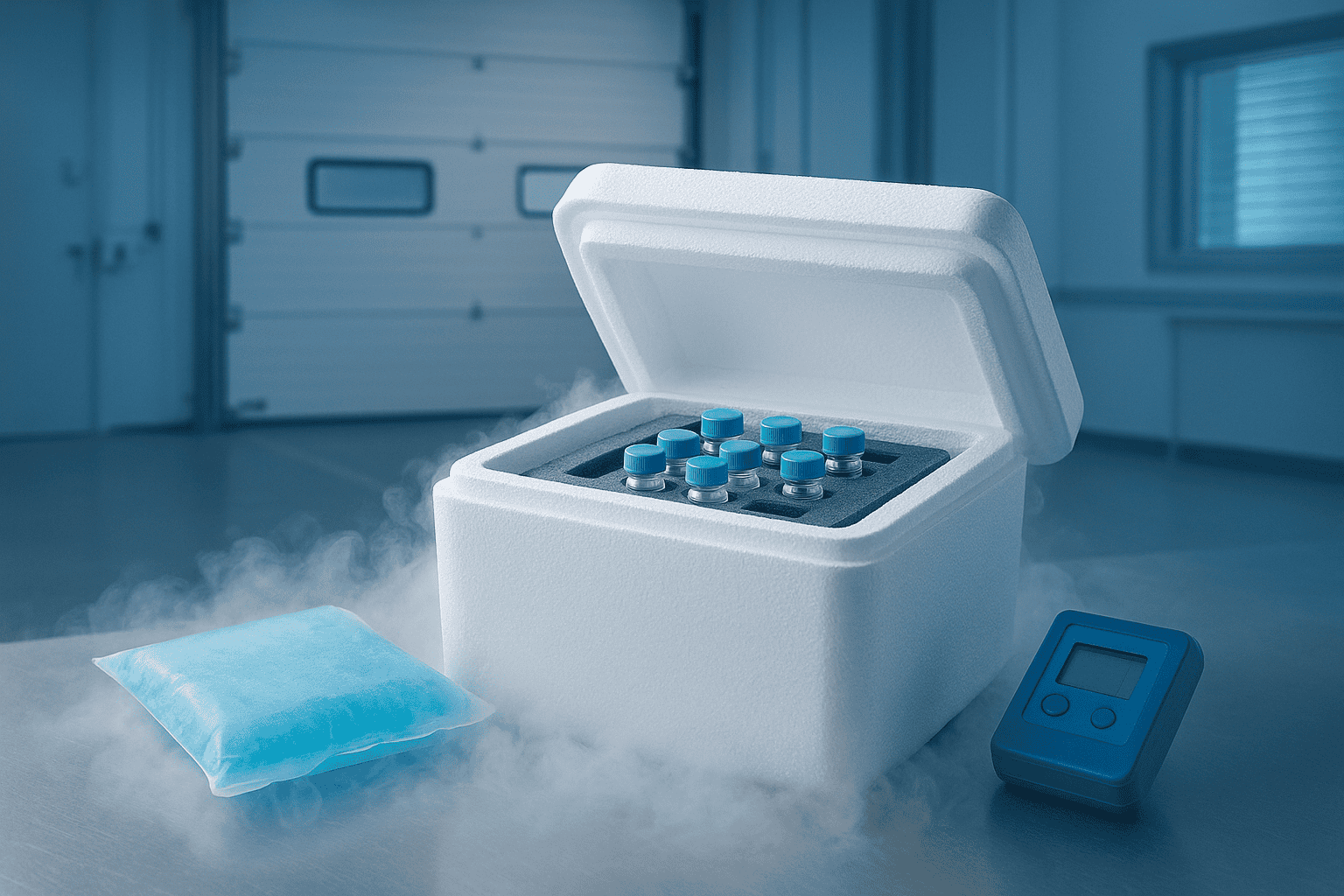
Cold-chain shipping means the package is temperature-controlled from dispatch to delivery. In practice, that looks like an insulated container, gel ice packs, and expedited delivery to minimize time in transit. It’s the same basic principle behind how vaccines and biological samples are shipped — keep it cold, keep it dark, get it there fast.
Some suppliers charge extra for temperature-controlled packaging. Others include it as standard. Ask before you order. If a GLP-3 supplier is selling a research compound at a premium price but shipping it in a regular padded envelope during July, that’s a disconnect worth questioning. For tips on what to do after your order arrives, see our guide on finding a trustworthy peptide supplier.
How Can You Spot a Low-Quality GLP-3 Supplier?
A 2017 study in Drug Testing and Analysis tested commercially sourced peptides and found that a significant proportion failed to match their labeled identity or purity (Drug Testing and Analysis, 2017). The research peptide market has no mandatory minimum quality standard. That means the burden of verification falls entirely on the buyer.
Here are the specific warning signs to watch for:
- No COA at all — or a COA “available upon request” that never actually materializes
- Generic COA with no batch number — a document that can’t be traced to your specific order is decorative, not informational
- No named testing laboratory — “independently tested” without naming the lab is an unverifiable claim
- Prices far below market rate — peptide synthesis, purification, and third-party testing all cost real money; deep discounts usually mean something was skipped
- No physical address or phone number — a supplier that won’t tell you where they are doesn’t want to be held accountable
- No return or complaint process — what happens if the product arrives degraded? If the answer is “nothing,” that tells you everything
Any one of these is a yellow flag. Two or more together? Walk away. You can find a more detailed list in our post on red flags when buying peptides online.
[ORIGINAL DATA] Across the dozens of supplier websites we’ve reviewed, the single most common missing element isn’t the COA itself — it’s the batch number on the COA. Many suppliers post what appears to be documentation but omit the one detail that actually links the test results to a specific production run. Always check.
Why Alpha Peptides Checks Every Box
Alpha Peptides is a U.S.-based research peptide supplier headquartered in Derry, New Hampshire. Every order ships with a batch-specific Certificate of Analysis that includes third-party HPLC purity data and mass spectrometry identity confirmation. Cold-chain shipping is included at no additional cost. You can browse the full COA library at alpha-peptides.com/coas.
Have questions before you order? Reach a real person at +1 (978) 219-0404 or cs@alpha-peptides.com. View our research-grade GLP-3 or explore the full peptide catalog.
Frequently Asked Questions
What purity should I expect from a quality GLP-3 supplier?
Research-grade GLP-3 should test at 98% purity or higher via HPLC, with mass spectrometry confirming the correct molecular weight. A 2020 review in PLOS ONE found that impurity levels above 5% produce measurable confounds in receptor binding assays (PLOS ONE, 2020). Both test results should appear on a batch-specific COA from a named third-party laboratory. For more on reading test results, see our guide to third-party testing.
Is it safe to buy GLP-3 from an overseas supplier?
It’s not automatically unsafe, but it introduces risks that domestic purchasing avoids: longer shipping times (which increase degradation risk), customs delays or seizures, and reduced legal recourse if something goes wrong. If you do consider an international supplier, verify they provide batch-specific COAs from a named testing laboratory and use cold-chain shipping. For a broader comparison, read our post on buying GLP-3 for research.
How do I verify a GLP-3 supplier’s COA is legitimate?
Check three things: (1) the document includes a batch or lot number that matches what’s printed on your vial, (2) a specific testing laboratory is named (not just “independently verified”), and (3) the HPLC chromatogram shows a single dominant peak. According to FDA guidance on process validation, each production lot should be individually tested and traceable (FDA, 2011). A generic COA with no batch number is untraceable.
Why do some GLP-3 suppliers charge so much more than others?
Price differences usually reflect differences in quality process. Third-party testing, high-purity synthesis, cold-chain shipping, and U.S.-based customer support all cost money. Suppliers with significantly lower prices are often cutting one or more of those elements. The savings come from somewhere — and in our experience, it’s usually the testing or the shipping that gets trimmed first.
For research use only. Not for human consumption. All products sold by Alpha Peptides are intended exclusively for laboratory and preclinical research purposes. They are not approved by the FDA for human use, therapeutic application, or clinical use. Nothing on this page constitutes medical advice or a recommendation for personal use.