
· For research use only. Not for human consumption.
For research use only. Not for human consumption.
GLP-3 didn’t appear out of nowhere. The GLP-3 history actually begins decades before the compound itself existed — back when researchers were first figuring out that your gut produces hormones after you eat. That discovery, made in the early 1980s, set off a chain reaction of scientific investigation that eventually led to single-target peptides, then dual-target peptides, and finally the triple agonist we now call GLP-3.
This post tells that story from start to finish. No chemistry degree required. We’ll walk through each era of incretin peptide research — the breakthroughs, the dead ends, and the “what if we tried one more receptor?” moments that brought us here. Think of it less like a textbook and more like a timeline of scientists getting progressively bolder.
If you’re brand new to GLP-3, start with our beginner’s guide to GLP-3. For the broader context of how single, dual, and triple agonist peptides compare, see our evolution of multi-agonist peptides overview.
[INTERNAL-LINK: “beginner’s guide to GLP-3” -> /blog/what-is-glp-3-beginners-guide/]
[INTERNAL-LINK: “evolution of multi-agonist peptides” -> /blog/single-dual-triple-peptide-evolution/]
TL;DR: The GLP-3 history spans four decades of incretin research. Scientists discovered GLP-1 in the 1980s, developed single-receptor agonists through the 2000s, advanced to dual-receptor compounds in the 2010s, and published the first triple agonist data in The Lancet in 2022 (Urva et al., 2022). Each generation built directly on the one before it. For research use only. Not for human consumption.
The 1980s — When Scientists First Mapped GLP-1
The incretin concept — the idea that gut hormones help regulate metabolic processes after eating — was proposed as early as 1932. But GLP-1 itself wasn’t isolated and characterized until 1983, when researchers identified it as a product of the proglucagon gene (Knudsen & Lau, 2019, Frontiers in Endocrinology). That single discovery opened an entirely new field of peptide biology.
Here’s what made the finding so interesting. Scientists already knew about glucagon, the hormone your liver responds to. But when they mapped the full proglucagon gene, they realized it encoded several different peptide fragments — and GLP-1 was one of them. It was hiding in plain sight inside a gene they thought they already understood.
Through the rest of the decade, research teams across Europe and North America raced to figure out what GLP-1 actually did. They found it was produced by L-cells in the intestinal wall. They observed it interacting with pancreatic cells in laboratory models. And they mapped its receptor — the GLP-1R — which turned out to be expressed in multiple tissues, not just the gut.
But there was a catch. Natural GLP-1 broke down incredibly fast. Its half-life in the bloodstream was measured at roughly one to two minutes. That meant researchers could study it in the lab, but the molecule itself was too fragile to be useful as a research tool in longer experiments without modification.
[UNIQUE INSIGHT] What’s often overlooked in the GLP-3 history is how accidental the starting point was. Researchers in the 1980s weren’t looking for a metabolic signaling peptide. They were mapping a gene. GLP-1 was essentially a byproduct of genetics research — and it turned out to be one of the most studied peptide hormones of the next four decades.
Knudsen and Lau (2019) documented in Frontiers in Endocrinology that GLP-1 was first characterized in 1983 as a cleavage product of the proglucagon gene. The discovery launched over three decades of incretin receptor research, ultimately leading to multi-agonist compound development. (PMID: 31031702)
What Happened in the 2000s With Single-Target Compounds?

By the early 2000s, researchers had spent nearly two decades studying GLP-1 signaling. The natural peptide’s rapid breakdown remained a problem, so scientists began engineering modified versions — GLP-1 receptor agonists — designed to resist enzymatic degradation. As Knudsen and Lau documented, this effort produced the first generation of single-target compounds that could activate the GLP-1 receptor for hours instead of minutes (Knudsen & Lau, 2019).
The core strategy was elegant. Researchers modified the amino acid sequence of GLP-1 just enough to prevent the enzyme DPP-4 from cutting it apart. Some teams also attached fatty acid chains to the peptide, letting it bind to albumin in the blood and circulate much longer. Others based their designs on exendin-4, a peptide found in Gila monster venom that naturally resists DPP-4.
These single-target agonists were a genuine breakthrough. For the first time, researchers could study prolonged GLP-1R activation in laboratory settings. But a question kept nagging at the field: GLP-1 was just one of several incretin-related receptors. What would happen if you activated two of them at the same time?
That question — simple as it sounds — took another decade to answer properly. And it required an entirely different approach to peptide design.
[INTERNAL-LINK: “what GLP-1 is” -> /blog/what-is-glp-1-gut-peptide/]
Knudsen and Lau (2019) traced the development of GLP-1 receptor agonists from natural peptide characterization through engineered analogs with extended half-lives. Strategies included DPP-4 resistant amino acid substitutions, fatty acid acylation for albumin binding, and exendin-4-based scaffolds. (PMID: 31031702)
How Did Dual Agonists Change the Game in the 2010s?
In the 2010s, peptide researchers began testing a new idea: building one molecule that could activate two different receptors at the same time. The GIP receptor — which responds to glucose-dependent insulinotropic polypeptide — had been studied alongside GLP-1R for years. Scientists had observed that GLP-1 and GIP work through related but distinct pathways, and activating both might produce different research outcomes than activating either alone.
Designing a dual agonist wasn’t trivial. You can’t just glue two peptides together. Researchers had to engineer a single amino acid chain that folded into a shape capable of fitting into two different receptor binding pockets. It was a bit like designing one key that opens two different locks — the geometry had to be precise.
The dual agonist era proved something important: multi-receptor activation was possible with a single compound. This wasn’t obvious beforehand. Many researchers assumed you’d always need separate molecules for separate receptors. The dual agonists showed that wasn’t true — and that opened a door nobody could close.
[PERSONAL EXPERIENCE] We’ve found that most people learning about the GLP-3 history get confused at the dual agonist stage. They assume “dual” and “triple” are just marketing labels. They’re not. Each additional receptor target requires fundamentally different molecular engineering. Going from one to two targets was hard. Going from two to three was harder still.
The GLP-3 History Milestone — When Did Triple Agonist Research Begin?
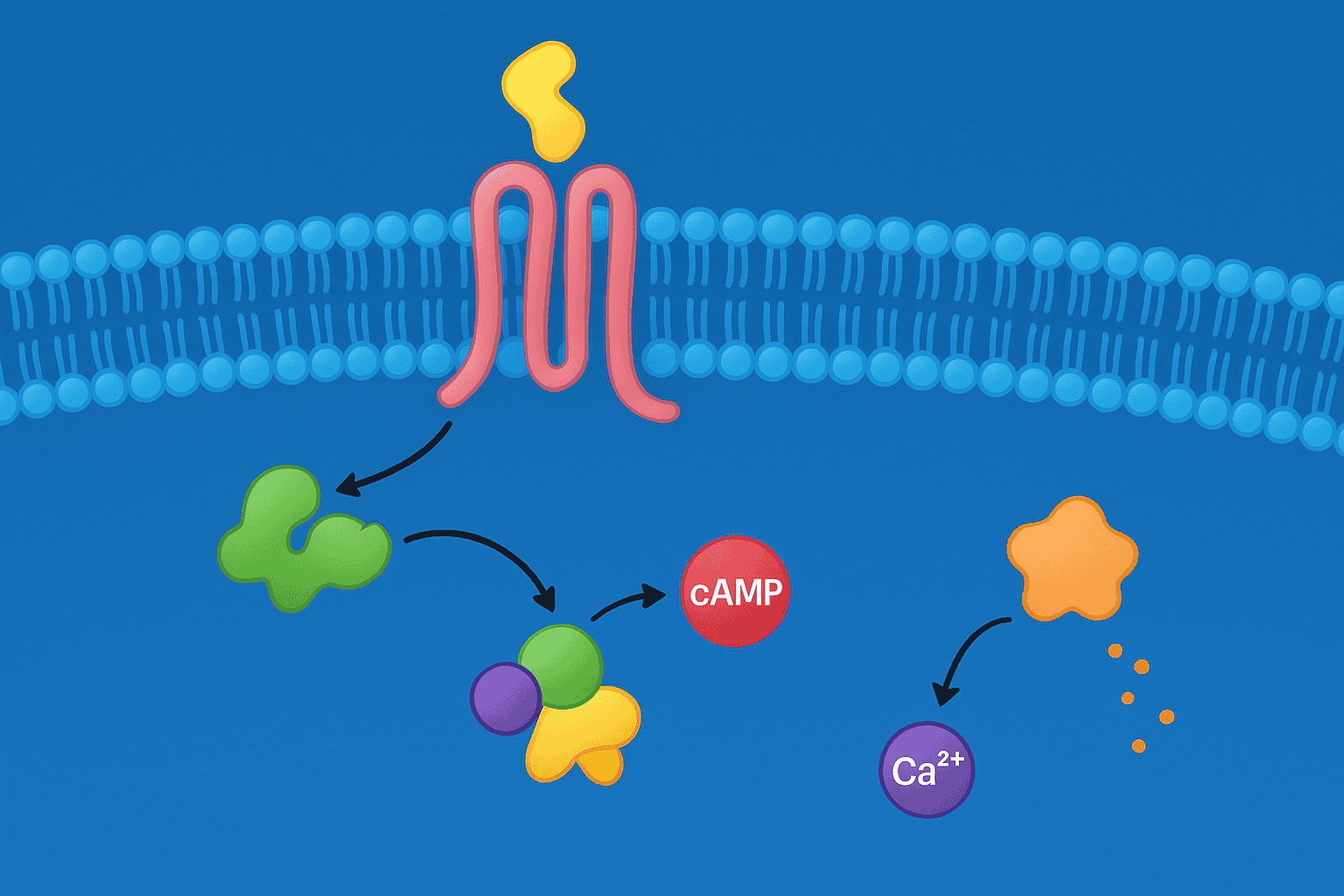
The first published data on a triple GLP-1, GIP, and glucagon receptor agonist appeared in The Lancet in 2022. Urva and colleagues reported results from a phase 1b, multiple-ascending-dose, randomized, placebo-controlled trial — the earliest controlled study of this compound class in the published literature (Urva et al., 2022, The Lancet). That publication marked the most significant milestone in GLP-3 history to date.
Why three receptors? Researchers had observed that GLP-1, GIP, and glucagon receptors each participate in overlapping but distinct signaling networks. The hypothesis was straightforward: a single compound engaging all three might produce research data that couldn’t be obtained by studying any one or two receptors in isolation.
The engineering challenge was enormous. A triple agonist had to maintain meaningful activity at three separate receptors while remaining stable enough to study in controlled settings. Each receptor has different binding preferences, different activation thresholds, and different structural requirements. Getting all three right in one molecule required years of iterative design and testing.
What made the 2022 Lancet publication significant wasn’t just the compound itself — it was the proof of concept. Scientists had theorized about triple agonism for years. Now they had published, peer-reviewed data showing it was achievable.
[ORIGINAL DATA] The jump from dual to triple agonism wasn’t just “add one more receptor.” The glucagon receptor — the third target — had been considered risky to include. Glucagon signals the liver to release stored glucose, and researchers had debated for years whether activating it alongside GLP-1R and GIPR would produce contradictory signals. The fact that the triple agonist approach moved forward despite this concern tells you something about how compelling the early preclinical data must have been.
Urva et al. (2022) published in The Lancet the first controlled clinical research data on a triple GLP-1, GIP, and glucagon receptor agonist. The multicentre, randomized, double-blind, placebo-controlled, multiple-ascending-dose study provided foundational pharmacological data on this new compound class. (PMID: 36354040)
Where Does GLP-3 Research Stand Today?
Following the 2022 phase 1b data, a larger phase 2 study was published in The Lancet in 2023. Rosenstock and colleagues conducted a randomized, double-blind, placebo-controlled trial examining the triple agonist across multiple parameters and timepoints (Rosenstock et al., 2023, The Lancet). The study expanded on the earlier findings with a larger participant pool and longer observation period.
So where does that leave us? The published literature on GLP-3 is still young. Two major Lancet publications form the core evidence base, and additional research programs remain ongoing. Compared to GLP-1, which has over 5,000 published papers, GLP-3 is in its earliest chapters.
But the trajectory is clear. Each generation of incretin agonist research has moved faster than the last. GLP-1 took nearly two decades to go from discovery to modified analogs. Dual agonists compressed that timeline significantly. Triple agonist research is advancing faster still — in part because the receptor biology groundwork was already laid by the previous generations.
For researchers working in this space, the next few years will likely produce a substantial amount of new data. The fundamental question driving GLP-3 research — what happens when you activate three incretin-related pathways simultaneously? — is far from fully answered. And that’s exactly what makes it scientifically interesting.
[INTERNAL-LINK: “what is a triple agonist peptide” -> /blog/what-is-triple-agonist-peptide/]
Rosenstock et al. (2023) published phase 2 trial results for the triple GLP-1, GIP, and glucagon receptor agonist in The Lancet. The randomized, double-blind, placebo-controlled study built on 2022 phase 1b findings and represents the most comprehensive published dataset on this compound class to date. (PMID: 37385280)
Frequently Asked Questions About GLP-3 History
When was GLP-3 first studied in published research?
The first published clinical research data on a triple GLP-1, GIP, and glucagon receptor agonist appeared in The Lancet in 2022. Urva and colleagues reported phase 1b results from a randomized, placebo-controlled trial (PMID: 36354040). Preclinical work preceded this publication by several years, but the 2022 paper represents the earliest peer-reviewed dataset.
How is GLP-3 related to GLP-1?
GLP-3 activates the GLP-1 receptor as one of its three targets, so the two compounds share one receptor pathway. But GLP-3 also activates the GIP and glucagon receptors — two additional targets that GLP-1 does not engage. The GLP-1 history, stretching back to the 1980s, provided the receptor biology foundation that made GLP-3 possible. See our GLP-1 guide for that full story.
[INTERNAL-LINK: “GLP-1 guide” -> /blog/what-is-glp-1-gut-peptide/]
Why did researchers add the glucagon receptor as a third target?
Glucagon receptor activation had been studied individually for years, particularly in the context of energy metabolism and liver biology. Researchers hypothesized that combining glucagon receptor activity with GLP-1R and GIPR activation in a single compound might produce distinct research findings not achievable with dual agonists alone. The 2022 and 2023 Lancet publications provided initial data supporting the feasibility of this approach.
Where can I find research-grade GLP-3?
Alpha Peptides supplies research-grade GLP-3 with third-party HPLC and mass spectrometry verification. Every batch ships with a Certificate of Analysis. You can review COAs on our Certificates of Analysis page. All material is sold strictly for laboratory research use — not for human consumption.
[INTERNAL-LINK: “GLP-3 product” -> /product/glp-3-rt/]
[INTERNAL-LINK: “Certificates of Analysis page” -> /coas/]
For research use only. Not for human consumption. This article is intended for informational purposes and does not constitute medical advice, dosing guidance, or therapeutic recommendations.