
· For research use only. Not for human consumption.
For research use only. Not for human consumption.
The debate of GHRP vs GHRH is one of the most fundamental topics in growth hormone research. These two acronyms represent two completely different approaches to studying growth hormone release, and understanding the distinction between them is essential for anyone following peptide science. The good news is that the core difference is easy to grasp once you know where each one comes from and what receptor it targets.
GHRH stands for Growth Hormone Releasing Hormone, a signal from the brain. GHRP stands for Growth Hormone Releasing Peptide, a family of compounds that mimic a signal from the stomach. Both cause the pituitary gland to release growth hormone, but they do so through entirely separate pathways. If you want to see examples of both categories, visit our research peptide catalog.
This post will explain both pathways clearly, compare their key differences, and show why researchers use both approaches in their work.
TL;DR: GHRH analogs (like Tesamorelin) mimic the hypothalamic signal and bind the GHRH receptor. GHRPs (like Ipamorelin) mimic ghrelin and bind the GHS receptor. They use completely different mechanisms but both trigger growth hormone release. Raun et al. (1998) characterized Ipamorelin as the first selective GHRP (PMID: 9849822). Wang & Tomlinson (2009) reviewed the GHRH analog Tesamorelin (PMID: 19243281). For research use only. Not for human consumption.
The GHRH Pathway: The Hypothalamus Signal
GHRH is the body’s natural, primary signal for triggering growth hormone release. It is produced in the hypothalamus, a region at the base of the brain that serves as the body’s hormonal command center. When conditions call for growth hormone release, the hypothalamus produces GHRH and sends it on a short trip to the pituitary gland.
At the pituitary, GHRH binds to a specific receptor (the GHRH receptor) on cells called somatotrophs. This binding activates a signaling cascade inside the cell that results in growth hormone being released into the bloodstream.
GHRH analogs are research compounds designed to mimic this natural signal. Tesamorelin is the best-known example: it contains the full 44-amino-acid sequence of natural GHRH with a trans-3-hexenoic acid cap for stability. Other GHRH analogs include Sermorelin (amino acids 1-29 of GHRH) and CJC-1295 (with Drug Affinity Complex technology).
Wang Y, Tomlinson B (2009) reviewed the GHRH analog Tesamorelin, describing how it mimics the natural hypothalamic signal to activate the GHRH receptor pathway. (PMID: 19243281)
The GHRP Pathway: The Ghrelin Receptor
The GHRP pathway was a later discovery in the history of growth hormone research. Scientists found that there is a second, independent way to trigger growth hormone release from the pituitary. This pathway involves a receptor called the Growth Hormone Secretagogue Receptor (GHS-R), also known as the ghrelin receptor.
Ghrelin is a hormone produced primarily in the stomach. While it is best known for its role in hunger signaling, researchers discovered that it also binds to receptors on pituitary somatotrophs and stimulates growth hormone release. This was surprising because it meant the pituitary could receive growth hormone-releasing signals from both the brain (via GHRH) and the gut (via ghrelin).
Growth Hormone Releasing Peptides (GHRPs) are synthetic compounds that mimic ghrelin’s effect on the GHS receptor. They are structurally very different from GHRH analogs. Most GHRPs are small molecules, typically 5 to 6 amino acids long, compared to the 29 to 44 amino acids found in GHRH analogs.
GHRP vs GHRH: Key Differences Side by Side
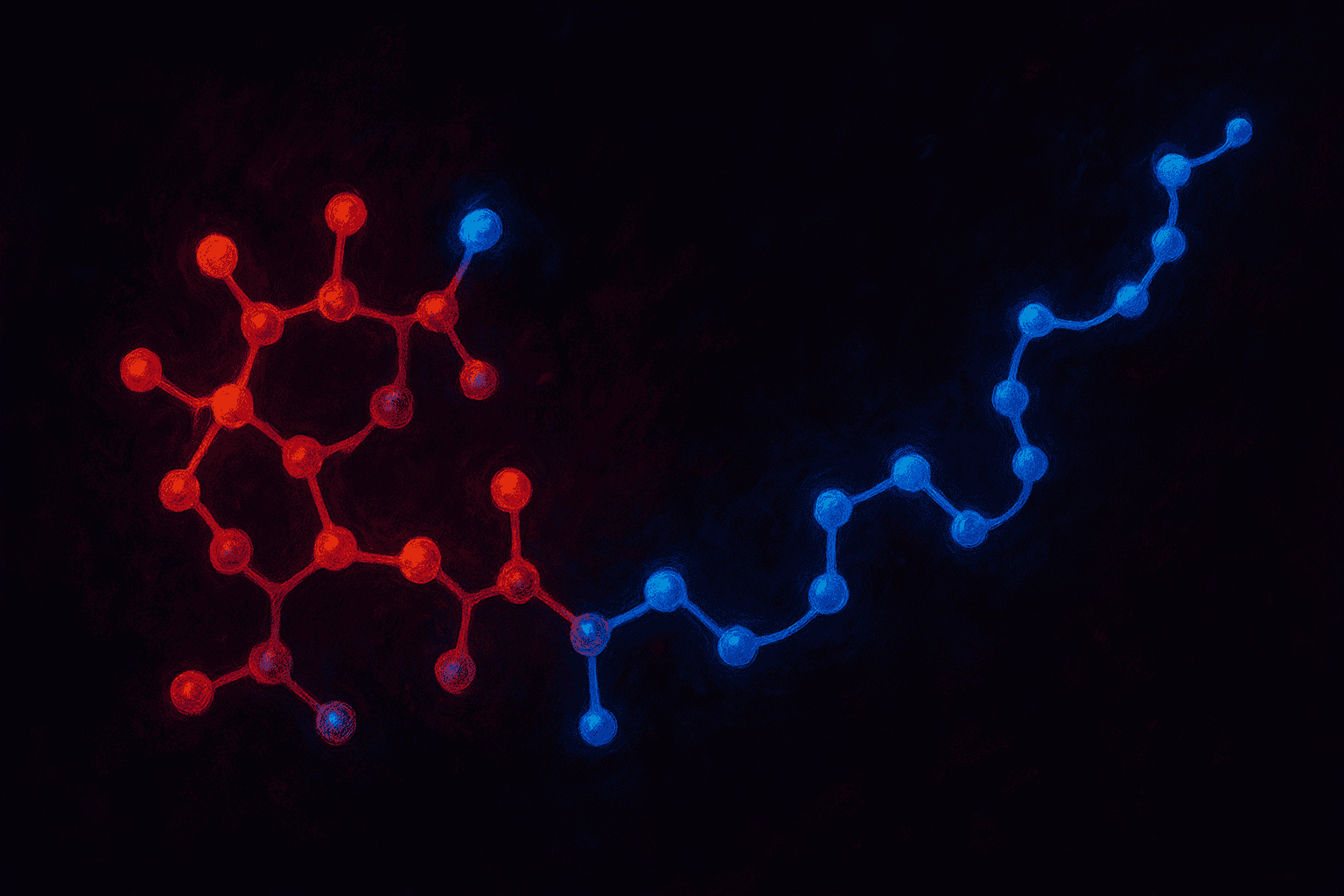
Here are the core differences between these two approaches:
Origin of the natural signal: GHRH comes from the hypothalamus (brain). Ghrelin comes from the stomach (gut). These are completely different parts of the body.
Receptor target: GHRH analogs bind the GHRH receptor. GHRPs bind the GHS/ghrelin receptor. These are different proteins on the cell surface with different structures and different signaling mechanisms inside the cell.
Compound size: GHRH analogs are large peptides (29-44 amino acids). GHRPs are small peptides (typically 5-6 amino acids). This size difference reflects their fundamentally different designs.
Examples: GHRH pathway compounds include Tesamorelin, Sermorelin, and CJC-1295. GHRP pathway compounds include Ipamorelin, GHRP-6, and GHRP-2.
Selectivity: GHRH analogs are generally specific to the GHRH receptor. GHRPs vary in selectivity. Ipamorelin is highly selective for growth hormone release, while GHRP-6 and GHRP-2 also affect cortisol and prolactin levels.
Ipamorelin: The Selective GHRP
Among GHRPs, Ipamorelin deserves special attention. Raun et al. (1998) published its initial characterization and described it as “the first selective growth hormone secretagogue.” What does selective mean here? It means Ipamorelin stimulates growth hormone release from the pituitary without significantly triggering the release of other hormones like cortisol (a stress hormone) or prolactin.
Earlier GHRPs like GHRP-6 and GHRP-2 do not share this selectivity. When they activate the GHS receptor, they also cause measurable increases in cortisol and prolactin. For researchers trying to study growth hormone in isolation, these additional effects create confounding variables, meaning they make it harder to know whether observed results are due to growth hormone or to the other hormones that were simultaneously affected.
Ipamorelin’s selectivity makes it a cleaner tool. When a researcher uses Ipamorelin, they can be more confident that any observed effects are related to growth hormone specifically, not to cortisol or prolactin changes.
Raun K et al. (1998) characterized Ipamorelin as the first selective growth hormone secretagogue, noting its ability to stimulate GH release without significantly affecting cortisol or prolactin levels. (PMID: 9849822)
Why Researchers Use Both Pathways
If both GHRH analogs and GHRPs cause growth hormone release, why do scientists bother studying both? The answer lies in the different information each pathway provides.
Studying the GHRH pathway tells researchers about the brain-to-pituitary communication system. It reveals how the hypothalamus controls growth hormone production, how feedback loops work, and how the natural pulsatile pattern of growth hormone release is generated and maintained.
Studying the GHRP pathway tells researchers about a parallel input system. It reveals how peripheral signals (from the gut, not the brain) can independently influence pituitary function. This has implications for understanding how different organ systems communicate and coordinate their activities.
Additionally, published research has shown that these two pathways can work synergistically. When both pathways are activated simultaneously, the growth hormone response can be greater than what either pathway produces alone. This synergy is itself an important research finding because it suggests the two pathways interact at the cellular level in ways that scientists are still working to fully understand.
How the Two Pathways Complement Each Other
In research settings, the GHRP vs GHRH distinction is not about which pathway is “better.” Each one provides different experimental opportunities. Some research questions are best answered with a GHRH analog, others with a GHRP, and some require studying both pathways together.
For example, a researcher studying how the hypothalamus regulates growth hormone timing would likely choose a GHRH analog like Tesamorelin. A researcher studying the role of peripheral signals in pituitary function might choose Ipamorelin. And a researcher interested in the interaction between central and peripheral signals would study both.
Andersen et al. (2001) investigated Ipamorelin’s effects on bone formation markers in preclinical models, demonstrating one of the specific applications of the GHRP pathway in targeted research.
Andersen NB et al. (2001) investigated Ipamorelin’s ability to counteract glucocorticoid-induced effects on bone formation in a preclinical model. (PMID: 11735244)
The existence of two independent pathways that both converge on growth hormone release from the same cells is one of the most fascinating aspects of pituitary biology. It suggests that growth hormone regulation is more complex and more finely tuned than a single-pathway model would predict.
Alpha Peptides provides both GHRH analogs and GHRPs for qualified researchers. Browse our complete research catalog to see available compounds, and review Certificates of Analysis (COAs) for purity and identity verification on every batch.
Frequently Asked Questions
What is the main difference between GHRP and GHRH?
GHRH is a signal from the hypothalamus that binds the GHRH receptor. GHRPs mimic ghrelin and bind the GHS/ghrelin receptor. They use completely different mechanisms and receptors but both trigger growth hormone release from the pituitary.
Is Tesamorelin a GHRP or a GHRH analog?
Tesamorelin is a GHRH analog. It mimics the natural Growth Hormone Releasing Hormone signal from the hypothalamus and binds to the GHRH receptor on pituitary somatotroph cells.
Is Ipamorelin a GHRP or a GHRH analog?
Ipamorelin is a GHRP (Growth Hormone Releasing Peptide). It mimics ghrelin and binds to the GHS/ghrelin receptor, not the GHRH receptor. It was characterized as the first selective growth hormone secretagogue.
Can GHRH and GHRP pathways work together?
Yes. Published research indicates that activating both pathways simultaneously can produce a synergistic growth hormone response that exceeds what either pathway achieves alone. This interaction is an active area of investigation.
Why is selectivity important in GHRP research?
Selectivity means a compound affects only its intended target without triggering unwanted side effects on other systems. Ipamorelin is considered selective because it stimulates growth hormone release without significantly affecting cortisol or prolactin, making experimental results easier to interpret.
For research use only. Not for human consumption. This material is sold strictly for use in scientific and laboratory research. It is not intended for diagnostic or therapeutic purposes. Alpha Peptides does not endorse or encourage any off-label use.