
· For research use only. Not for human consumption.
For research use only. Not for human consumption.
Wound biology is one of the oldest and most active areas of laboratory research. Scientists have spent decades studying how tissues respond to injury at the cellular level, and one peptide that keeps showing up in this field is GHK-Cu. Published GHK-Cu wound research spans multiple preclinical models and has produced findings that continue to drive scientific investigation.
But what exactly do scientists study when they investigate wound biology in the lab? And what has GHK-Cu wound research actually found? In this post, we will walk through the basics of wound biology research, explain how laboratory models work, and look at the key observations from published studies — all in plain language that anyone can follow.
Everything discussed here comes from preclinical research — laboratory experiments conducted in controlled settings using cell cultures and research models. These are not medical claims or treatment recommendations.
TL;DR: GHK-Cu has been studied in wound biology models for decades. Research in fibroblast cultures and preclinical models has observed effects on cell migration, collagen deposition, and tissue repair processes (Pickart L, Margolina A, 2012, PMID: 22782788). All findings are from laboratory research. For research use only. Not for human consumption.
How Wound Biology Is Studied in Labs: GHK-Cu wound research Insights
When most people think of wounds, they think of cuts and scrapes. But wound biology in the laboratory is much more controlled and precise. Researchers use specific models that allow them to study individual steps of the wound response in isolation.
The most common approach is cell culture — growing cells in dishes in the lab. Scientists can create a “scratch” in a layer of cells (literally dragging a tool across the dish to remove cells from a strip) and then watch how the remaining cells respond. This “scratch assay” lets them measure how quickly cells migrate to fill the gap.
Researchers also use more complex models that involve multiple cell types or three-dimensional tissue constructs. In all cases, the goal is the same: to understand the step-by-step biological processes that occur during tissue repair at the cellular level.
GHK-Cu has been tested in many of these laboratory models over the past several decades, making it one of the more thoroughly studied peptides in this field.
The Stages of Wound Repair Under the Microscope
To understand what GHK-Cu wound research has observed, it helps to know the basic stages that scientists study. In laboratory models, wound repair generally follows a predictable sequence of events:
Stage 1: Inflammation. When tissue is disrupted, the first response involves inflammatory signaling. In laboratory models, researchers measure the chemical signals (called cytokines) that cells release in response to injury.
Stage 2: Cell Migration. Cells near the disrupted area begin moving toward the gap. This migration is a critical step — without it, the gap would never close. Fibroblasts, which are the cells responsible for building connective tissue, are key players in this stage.
Stage 3: Proliferation. Once cells arrive at the site, they begin dividing to increase their numbers. More cells means more building material for repair.
Stage 4: Remodeling. The newly formed tissue is reorganized and strengthened. Collagen fibers are deposited and cross-linked to restore structural integrity.
Published GHK-Cu research has examined the peptide’s effects across several of these stages in controlled laboratory experiments.
Fibroblast Migration: What Researchers Observed
Fibroblasts are the workhorses of connective tissue — they produce collagen, elastin, and other structural proteins. In wound biology research, fibroblast behavior is one of the most closely watched variables.
In published laboratory studies, researchers have observed that fibroblasts exposed to GHK-Cu in cell culture showed increased migration compared to control groups. Using scratch assays and similar models, scientists documented that cells moved to fill gaps more actively when GHK-Cu was present in the culture medium.
It is important to understand what “increased migration” means in a research context. Scientists are measuring the speed and completeness with which cells move across a gap in a controlled laboratory dish. These are precise, quantifiable observations made under standardized conditions — not casual observations about healing.
Pickart L, Margolina A (2012) provided a comprehensive review of GHK-Cu research across wound models and fibroblast cultures, documenting observations of enhanced cell migration and collagen-related processes. (PMID: 22782788)
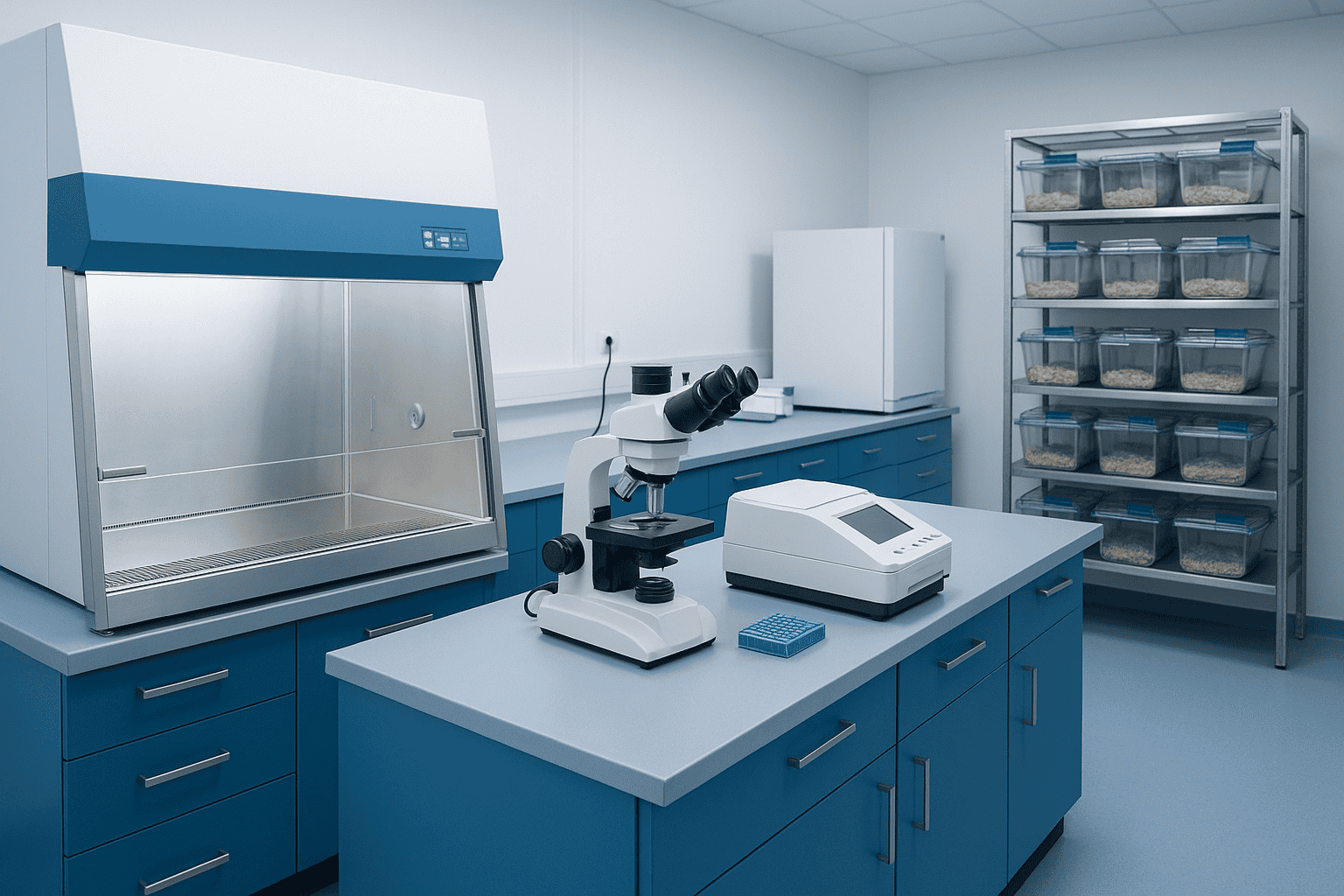
Collagen Deposition in Laboratory Models
Collagen deposition — the process by which fibroblasts lay down collagen fibers to build structural tissue — is another key measurement in wound biology research. In laboratory models, researchers can measure both the amount and organization of collagen that cells produce.
Published studies have observed that fibroblasts treated with GHK-Cu in cell culture showed differences in collagen-related activity compared to untreated controls. These observations include changes in collagen gene expression patterns and measurable differences in the extracellular matrix (the structural framework outside cells) produced by the treated cells.
The copper component of GHK-Cu is particularly relevant here. Copper serves as a cofactor for lysyl oxidase, an enzyme involved in cross-linking collagen fibers. Cross-linking is what transforms loose collagen molecules into a strong, organized structural network — like weaving individual threads into fabric.
Gene expression analysis has shown that GHK-Cu influences over 4,000 human genes, including many involved in extracellular matrix processes (Pickart et al., 2014, PLOS ONE). This broad influence on collagen-related gene pathways helps explain why wound biology researchers continue to find GHK-Cu relevant to their work.
Why Preclinical Research Matters
All of the GHK-Cu wound research discussed in this article comes from preclinical models — cell cultures, scratch assays, and controlled laboratory experiments. This is an important distinction. Preclinical research is the foundation of scientific understanding, but it represents early-stage investigation.
These laboratory experiments allow scientists to isolate specific variables and measure precise outcomes. They can control the exact concentration of GHK-Cu, the type of cells used, the duration of exposure, and dozens of other factors. This level of control produces reliable, reproducible data that other researchers can verify.
The value of preclinical wound biology research is in building foundational knowledge. Each experiment adds a data point to our understanding of how cells respond to different conditions in the laboratory. Over time, these data points form a picture of biological processes that guides future research directions.
Pickart L, Vasquez-Soltero JM, Margolina A (2015) documented the natural occurrence of GHK-Cu in blood plasma and its age-related decline, providing biological context for wound biology research. (PMID: 26050778)
The Ongoing Study of GHK-Cu in Wound Biology
Decades after the first wound biology experiments with GHK-Cu, this peptide remains a subject of active investigation. Modern laboratory techniques allow researchers to study its effects with greater precision than ever before — from high-resolution microscopy to genome-wide expression analysis.
The combination of GHK-Cu’s natural occurrence in human blood plasma, its copper-binding chemistry, and its broad effects across multiple wound biology pathways keeps it relevant across several branches of laboratory research. Each new study builds on the published foundation, adding nuance and detail to the existing body of preclinical evidence.

Alpha Peptides offers GLOW, a research-grade blend featuring GHK-Cu as its primary component. All batches undergo third-party testing for purity and identity — view results on our Certificates of Analysis page. GLOW is designed exclusively for laboratory and research applications.
Frequently Asked Questions
What is a scratch assay?
A scratch assay is a common laboratory technique where researchers create a gap in a layer of cells growing in a dish. They then observe how cells migrate to fill the gap, measuring speed and completeness. It is one of the standard tools used in wound biology research.
Has GHK-Cu been tested in wound healing studies?
GHK-Cu has been studied in wound biology models in preclinical research settings, including cell cultures, scratch assays, and laboratory tissue models. Published reviews document these findings (Pickart and Margolina, 2012, PMID: 22782788). All findings are from laboratory research, not clinical studies.
What role does copper play in wound biology?
Copper is a cofactor for lysyl oxidase, an enzyme involved in cross-linking collagen fibers. This cross-linking is an important step in building organized structural tissue in laboratory models. GHK-Cu delivers copper in a biologically relevant form.
Are these findings from human studies?
No. The wound biology research discussed in this article comes from preclinical models — cell cultures and controlled laboratory experiments. These represent early-stage scientific investigation, not conclusions about effects in people.
For research use only. Not for human consumption. This article is intended for educational and informational purposes. It does not constitute medical advice. Always consult qualified professionals for health-related questions.