
· For research use only. Not for human consumption.
For research use only. Not for human consumption.
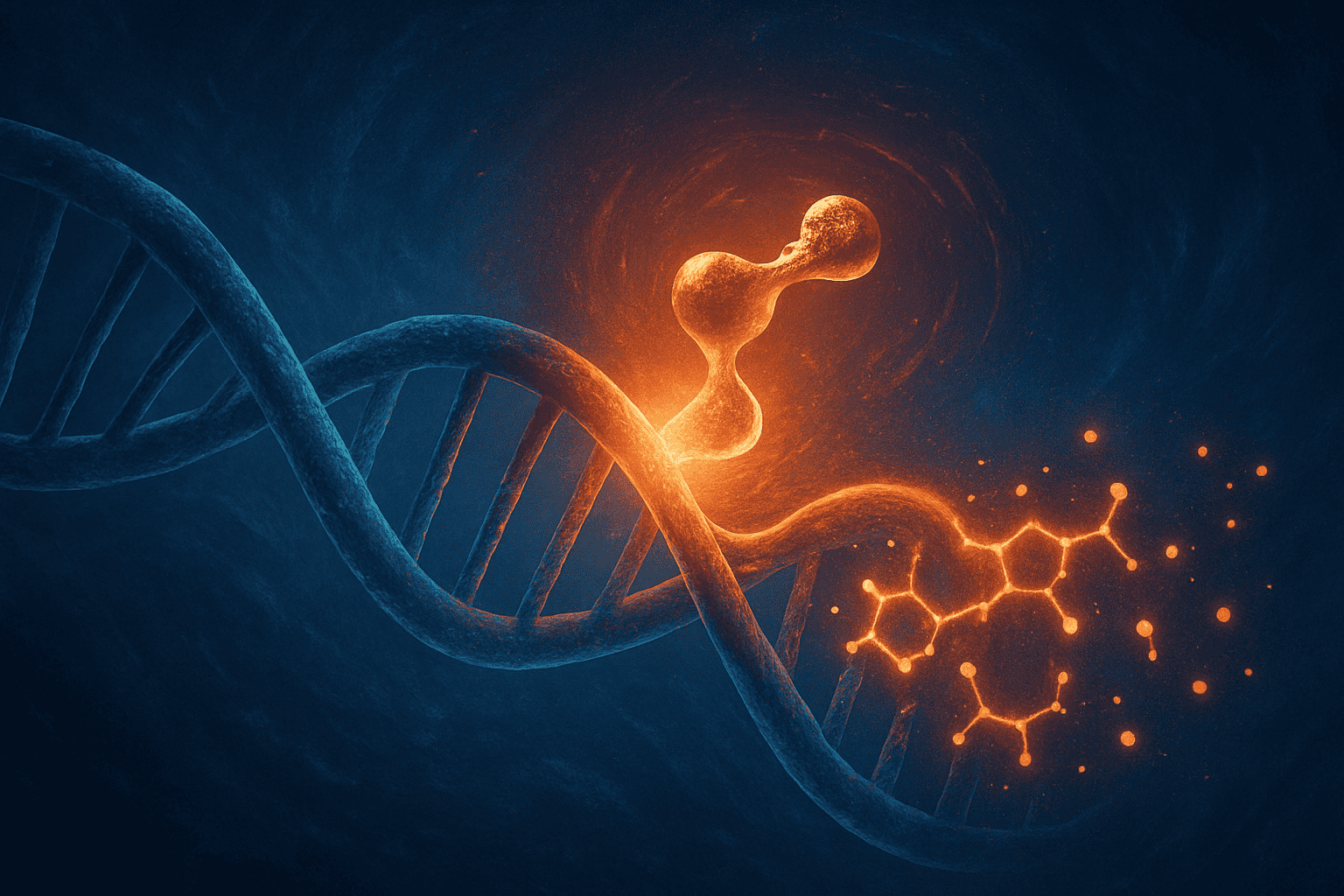
Imagine a tiny molecule — just three amino acids long — that appears to influence the activity of more than 4,000 genes. That is exactly what researchers found when they studied GHK-Cu gene expression in published laboratory analyses. For a peptide so small you need specialized equipment just to see it, that kind of broad influence is extraordinary.
But what does “gene expression” actually mean? And why is it such a big deal that a small copper-binding peptide can affect so many genes at once? In this post, we will break down the basics of gene expression in simple terms, explain the landmark study that put GHK-Cu on the map in this field, and discuss why these findings matter for ongoing research.
No biology degree needed — we will walk through GHK-Cu gene expression research step by step, so anyone can understand why scientists find these results so compelling.
TL;DR: Published analysis found GHK-Cu influenced the expression of over 4,000 human genes, affecting pathways related to multiple biological processes (Pickart et al., 2014, PLOS ONE). GHK-Cu naturally occurs in blood plasma with age-related decline (Pickart et al., 2015, PMID: 26050778). For research use only. Not for human consumption.
What Is Gene Expression? A Simple Explanation
Your body contains about 20,000 genes. Think of each gene as a set of instructions for making a specific protein. But here is the key point: not all genes are active at the same time. At any given moment, some genes are “turned on” (being used to make proteins) and others are “turned off” (sitting quietly, not being used).
Gene expression is the process of turning genes on or off. When a gene is “expressed,” it means the cell is reading those instructions and making the protein that gene codes for. When a gene is “silenced,” the cell is ignoring those instructions.
Think of it like a massive switchboard with 20,000 switches. Different combinations of on/off switches produce different results. A skin cell and a brain cell contain the exact same genes, but they have different switches flipped, which is why they look and behave completely differently.
When researchers say a compound “affects gene expression,” they mean it changes which switches are on and which are off. Some compounds affect one or two switches. GHK-Cu, remarkably, appears to affect thousands.
The Landmark GHK-Cu Gene Expression Study
The study that brought GHK-Cu gene expression research to wide attention used a tool called the Connectivity Map (also known as CMap). The Connectivity Map is a database created by researchers at the Broad Institute that catalogs how different compounds affect gene expression across the entire human genome.
When scientists analyzed GHK-Cu using this database, the results were striking. The peptide appeared to influence the expression of over 4,000 human genes — roughly 20 percent of the entire human genome. For a molecule made of just three amino acids, this breadth of effect was highly unusual and immediately drew attention from the research community.
The analysis was published by Pickart and colleagues in 2014 in the journal PLOS ONE. It showed that GHK-Cu’s gene expression effects were not random — they followed specific patterns related to particular biological pathways and processes.
Pickart et al. (2014) published a comprehensive analysis of GHK peptide effects on over 4,000 human genes using the Connectivity Map database. (Pickart et al., 2014, PLOS ONE)
Why 4,000+ Genes Is Unusual
To appreciate why the GHK-Cu findings are so noteworthy, it helps to understand what is typical. Most small molecules and peptides studied in gene expression research affect a relatively focused set of genes — maybe a few dozen to a few hundred. They tend to interact with one pathway or one type of receptor, which produces a targeted downstream effect.
GHK-Cu, despite being one of the smallest peptides in active research (just three amino acids), influenced over 4,000 genes. That means its effects are not limited to one pathway — they span multiple biological systems and processes as observed in laboratory analyses.
Several categories of genes were affected, including those involved in:
Extracellular matrix processes — the structural framework outside cells, including collagen and other connective tissue components.
Cellular signaling pathways — the communication networks cells use to coordinate their activities.
Gene regulation — genes that control the expression of other genes, creating cascading effects.
This broad influence is one reason researchers describe GHK-Cu as a “pleiotropic” molecule — a scientific term meaning it has multiple effects across different systems.
How the Connectivity Map Works
The Connectivity Map is worth understanding because it is the tool that made this discovery possible. Here is how it works in simple terms:
Researchers expose cells to a compound (in this case, GHK-Cu) and then measure the expression of every gene in those cells. They compare this to cells that were not exposed to the compound. The differences — which genes went up, which went down — create a “signature” for that compound.
This signature is then compared to thousands of other compound signatures already in the database. This allows researchers to see if a new compound’s gene expression pattern resembles that of known compounds, which can suggest shared mechanisms or related biological effects.
For GHK-Cu, the Connectivity Map analysis revealed a signature that was both broad (affecting many genes) and distinct (not closely matching most other small molecules in the database). This uniqueness added to the research interest in understanding how such a tiny peptide produces such wide-ranging effects in laboratory systems.
The Copper Connection to Gene Expression
Researchers have speculated about why GHK-Cu has such broad gene expression effects, and the copper atom appears to be part of the answer. Copper is an essential cofactor for several enzymes and transcription factors — proteins that directly control gene expression by binding to DNA.
By delivering copper to cells in a biologically relevant form, GHK-Cu may influence multiple copper-dependent pathways simultaneously. This could help explain why its effects are so much broader than what you would expect from a simple three-amino-acid peptide.
Previous research has established that GHK-Cu naturally occurs in human blood plasma, with concentrations declining with age (Pickart et al., 2015, PMID: 26050778). The combination of natural occurrence, copper binding, and broad gene expression effects has made GHK-Cu a valuable research tool for scientists studying complex biological systems in the laboratory.
Pickart L, Margolina A (2012) reviewed GHK-Cu’s biological effects across preclinical models, providing foundational context for understanding its gene expression influence. (PMID: 22782788)

What This Means for Ongoing Research
The discovery that GHK-Cu affects over 4,000 genes has opened up multiple research directions. Scientists in fields ranging from tissue biology to gene regulation have found reasons to investigate this peptide further. Each new study builds on the Connectivity Map findings by examining specific pathways in greater detail using controlled laboratory experiments.
It is important to note that gene expression studies show what happens at the molecular level in cells — they reveal which genetic programs are activated or suppressed. Translating these laboratory observations into broader biological understanding requires additional research across multiple experimental models.
Alpha Peptides offers GLOW, a proprietary research blend with GHK-Cu as its primary component. Every batch is third-party tested for purity and identity — review results on our Certificates of Analysis page. GLOW is designed exclusively for laboratory and research applications.
Frequently Asked Questions
What does gene expression mean?
Gene expression is the process of turning genes on or off inside cells. When a gene is “expressed,” the cell reads its instructions and makes the corresponding protein. Different patterns of gene expression determine how cells behave and function.
How many genes does GHK-Cu affect?
Published analysis using the Connectivity Map found that GHK-Cu influenced the expression of over 4,000 human genes — approximately 20 percent of the genome (Pickart et al., 2014, PLOS ONE). This breadth of effect is unusual for such a small peptide.
What is the Connectivity Map?
The Connectivity Map (CMap) is a database that catalogs how different compounds affect gene expression. Researchers use it to compare gene expression signatures of different molecules, helping identify patterns and potential mechanisms of action in laboratory research.
Does gene expression research prove anything about how GHK-Cu works in people?
No. Gene expression studies are conducted in cell cultures in controlled laboratory settings. They show what happens at the molecular level in cells and help guide further research, but they do not represent conclusions about effects in living organisms or humans.
For research use only. Not for human consumption. This article is intended for educational and informational purposes. It does not constitute medical advice. Always consult qualified professionals for health-related questions.