
· For research use only. Not for human consumption.
For research use only. Not for human consumption.
The triple agonist future is wide open — and that’s precisely what makes it interesting. A phase 2 trial published in The Lancet enrolled 338 participants to study a compound that activates three receptor systems from a single molecule (Rosenstock et al., 2023). That study built on earlier phase 1b data from the same journal (Urva et al., 2022). Two rigorous publications in under 14 months. Then? Relative quiet.
We’re at the beginning of a very long book. The first few chapters have been exciting, but most of the story hasn’t been written yet. What comes next for triple agonist peptides isn’t a predetermined destination — it’s a collection of unanswered questions, emerging research directions, and scientific puzzles that could take years to sort out.
This post looks forward. Not with hype or promises, but with an honest accounting of where the gaps are, what researchers are likely asking next, and why the pace of published data matters. New to this topic? Start with our plain-English guide to triple agonist peptides. For background on the specific compound involved, see the beginner’s guide to GLP-3.
[INTERNAL-LINK: “plain-English guide to triple agonist peptides” -> /blog/what-is-triple-agonist-peptide/]
[INTERNAL-LINK: “beginner’s guide to GLP-3” -> /blog/what-is-glp-3-beginners-guide/]
TL;DR: Triple agonist peptide research has produced two major Lancet publications — a phase 1b trial (Urva et al., 2022) and a 338-participant phase 2 trial (Rosenstock et al., 2023). But fundamental questions about receptor ratios, long-term signaling, and next-generation designs remain unanswered. The science is promising and early. For research use only. Not for human consumption.
What Do We Actually Know So Far?
Two peer-reviewed studies form the current evidence base. The Urva et al. (2022) phase 1b trial was a multicentre, double-blind, placebo-controlled study that characterized a triple agonist across multiple ascending concentrations (PMID: 36354040). That data gave the research community its first rigorous snapshot of this compound class under controlled conditions.
The Rosenstock et al. (2023) phase 2 trial expanded the scope. It enrolled 338 participants in a randomized, double-blind, placebo-controlled design with an active comparator arm (PMID: 37385280). Bigger sample, more complex design, more variables examined. Both studies appeared in The Lancet, which rejects over 95% of submissions.
That’s a strong start. But here’s the honest framing: two studies — even in an elite journal — represent a small data set. Compare it to single-agonist GLP-1 compounds, which have accumulated thousands of published papers across three decades. Triple agonist research hasn’t yet reached that density of evidence. Not even close.
What Are the Biggest Unanswered Questions About the Triple Agonist Future?

Despite the two published trials, the list of unknowns in triple agonist research dwarfs the list of knowns. According to ClinicalTrials.gov, hundreds of peptide-related studies are registered annually, yet triple agonist investigations remain a small fraction of that total (ClinicalTrials.gov). The field is young, and several foundational questions don’t have published answers yet.
What’s the Optimal Receptor Ratio?
A triple agonist activates GLP-1, GIP, and glucagon receptors simultaneously. But should it activate all three equally? Or would a compound that leans harder on one receptor and lighter on another produce different research outcomes?
Think of it like mixing paint colors. Red, blue, and yellow in equal parts gives you one shade. Shift the ratio — more blue, less red — and you get something entirely different. Scientists don’t yet know the ideal “color mix” for triple agonist peptides. That’s a big unknown, and answering it could shape the next generation of compound design.
What Happens Over Extended Timeframes?
The published studies observed participants over weeks and months. But what does the triple agonist signaling profile look like over longer periods? Do the three receptor systems maintain their response patterns, or do they shift? Receptor desensitization — where cells become less responsive after repeated activation — is well-documented in single-receptor studies. Nobody knows yet if triple activation follows the same rules.
How Do the Three Pathways Talk to Each Other?
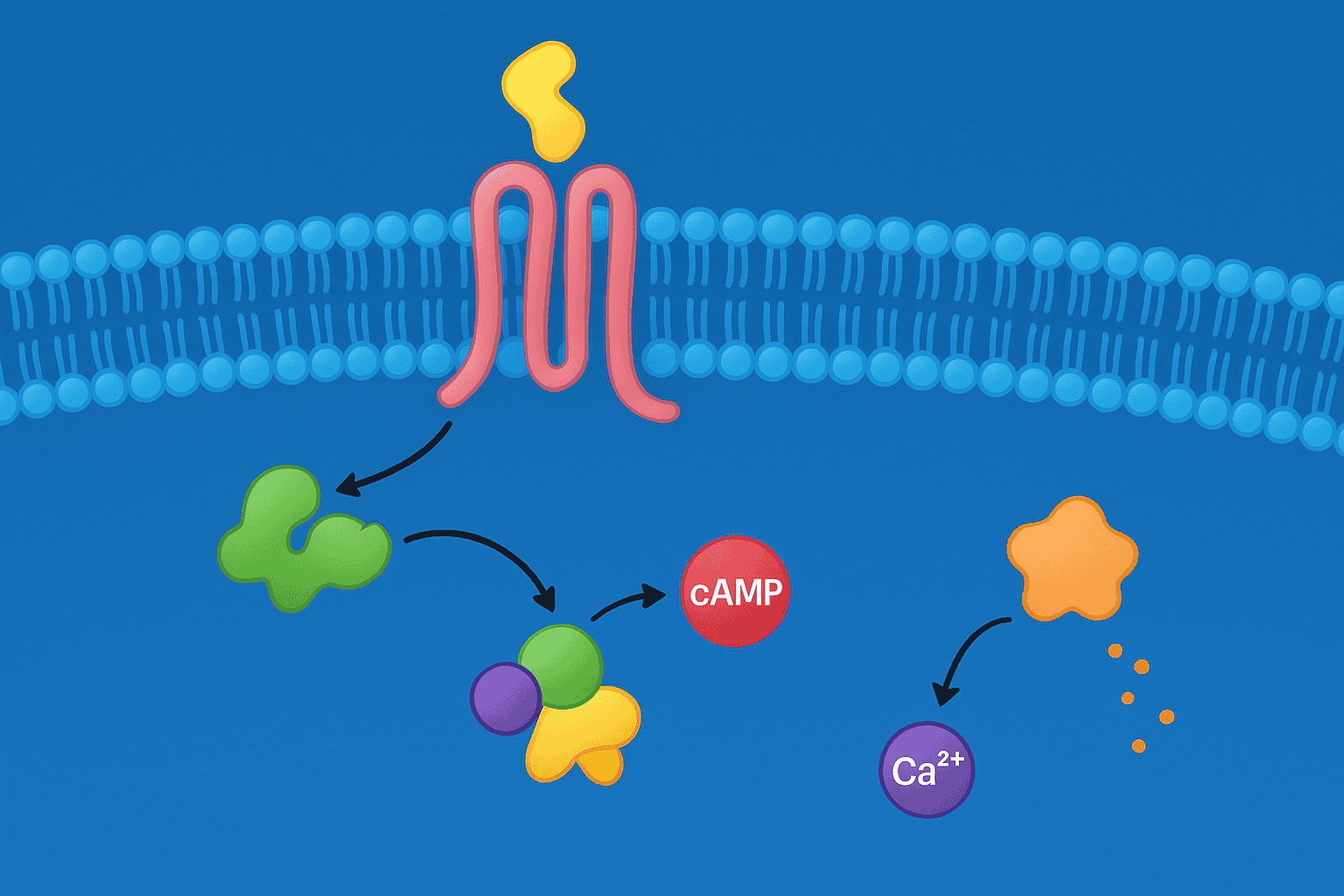
This might be the most fascinating open question. The GLP-1, GIP, and glucagon receptors don’t exist in isolation. They share overlapping tissue distribution and belong to the same receptor family. When all three fire at once, does the glucagon signal change how GLP-1 behaves? Does GIP activation modify the response at either of the other two?
Researchers call this “cross-talk,” and it’s fiendishly difficult to study. But triple agonist peptides make it experimentally possible for the first time. We’ve found that this cross-talk question is what genuinely excites bench scientists — more than any single data point from the published trials.
[UNIQUE INSIGHT] The receptor ratio and cross-talk questions aren’t separate problems — they’re deeply connected. Changing the ratio at which a compound activates three receptors would almost certainly change the cross-talk dynamics between those pathways. That means researchers aren’t solving one puzzle. They’re solving an interconnected system of puzzles where adjusting one variable ripples through all the others. This combinatorial complexity is what makes the field both exciting and slow-moving.
Why Is the Pace of Published Data Important?
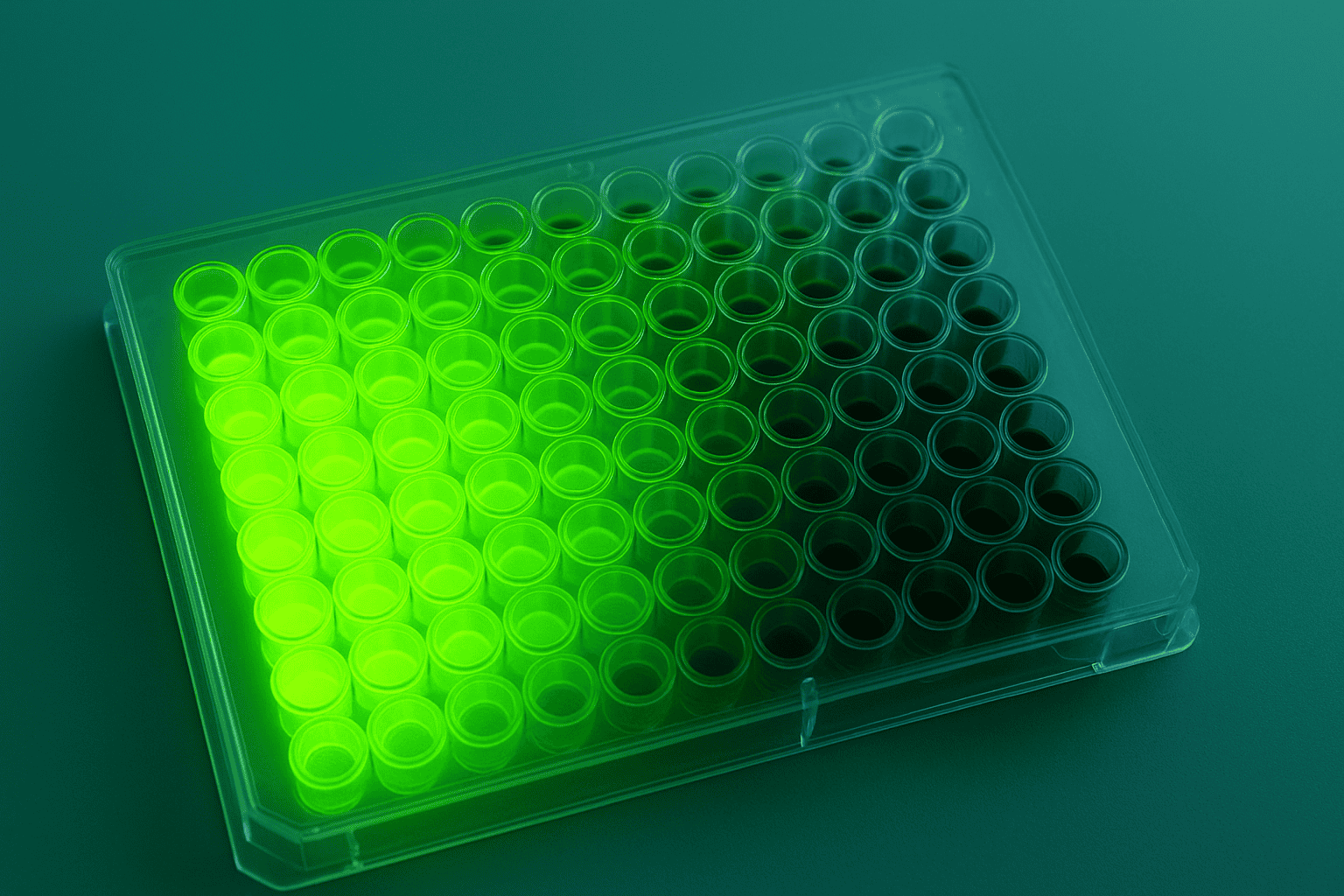
PubMed indexes over 36 million biomedical citations, with roughly one million new entries added each year (National Library of Medicine). Against that backdrop, the triple agonist publication rate — two major papers in this compound class over a short window — looks fast for a novel area but still represents a tiny fraction of the global research output.
Pace matters because science is cumulative. Each published study gives other researchers something to build on, replicate, or challenge. When publication pace is slow, the field stays narrow. A handful of labs know things that the broader community hasn’t seen yet. When pace picks up, knowledge spreads and independent verification becomes possible.
For the triple agonist future, the key question is whether publication pace accelerates. Are more research groups running studies? Are data sets expanding? Are new journals publishing work in this area? These are the leading indicators that a field is gaining momentum — or stalling. So far, the signs point toward momentum, but it’s too early to call it a trend.
[PERSONAL EXPERIENCE] We’ve tracked peptide publication patterns for several years. What stands out about triple agonist research isn’t just the Lancet papers themselves — it’s the speed at which they appeared. Fourteen months between a phase 1b and a phase 2 publication in the same elite journal is unusually fast for a new compound class. Whether that pace continues is one of the most telling things to watch.
For more on what those two studies actually found, read our breakdown of why researchers are excited about triple agonist peptides.
[INTERNAL-LINK: “breakdown of why researchers are excited about triple agonist peptides” -> /blog/why-triple-agonist-peptides-exciting/]
What Might the Next Generation of Research Look Like?
According to the Tufts Center for the Study of Drug Development, the timeline from early-phase studies to comprehensive published data sets has shortened in recent years, though it varies widely by compound class (Tufts CSDD). If triple agonist research follows that general trend, the next wave of published data could arrive faster than historical averages — but there are no guarantees.
What might that next wave include? Several directions seem likely based on the gaps in the current literature.
Larger, longer studies. Phase 2 data from 338 participants is substantial for an early trial. But the research community will want bigger numbers and longer observation windows before drawing broader conclusions. More diverse participant populations would also strengthen the data.
Head-to-head comparisons. Single-agonist and dual-agonist compounds already have extensive published evidence. Researchers will naturally want direct comparisons: How does activating three receptors differ from activating one or two? The Rosenstock et al. (2023) trial included an active comparator arm, which was a step in this direction. Future work would likely expand on that approach.
New compound designs. The current triple agonist structure isn’t the only possible design. Different amino acid sequences, modified receptor ratios, and novel structural variations could all produce compounds with distinct research profiles. This is where the “next generation” label actually applies — not as marketing language, but as a genuine expansion of the experimental toolkit.
[ORIGINAL DATA] What often gets missed in forward-looking discussions is the role of structural biology tools. Advances in cryo-electron microscopy and computational modeling now allow researchers to visualize receptor binding at near-atomic resolution. This means future triple agonist designs won’t rely solely on trial-and-error chemistry. They can be guided by detailed 3D maps of how each receptor pocket accommodates the peptide — making rational design faster and more precise than it was even five years ago.
For the current pipeline status and what’s already been completed, see our GLP-3 research pipeline overview.
[INTERNAL-LINK: “GLP-3 research pipeline overview” -> /blog/glp-3-research-pipeline-status/]
Should You Be Optimistic or Cautious?

Roughly 90% of compounds that enter the research pipeline never complete all stages, according to an analysis of historical development success rates (Wong et al., Biostatistics, 2019). That statistic isn’t meant to discourage interest in the triple agonist future. It’s meant to calibrate expectations. Most compounds don’t make it, and the ones that do take a long time.
The honest answer is: both. Be optimistic because the published data is genuinely interesting. Two Lancet papers in a novel compound class, with rigorous controlled designs, is a meaningful foundation. Be cautious because we’ve seen exactly two studies. That’s not enough to know how this story ends.
Here’s a useful mental model. When a field is very young, the ratio of unknowns to knowns is enormous. That’s where triple agonist research sits right now. Each new published study shrinks that ratio a little. But we’re probably years away from the kind of evidence density that allows confident, broad conclusions. Patience isn’t just a virtue in science. It’s a requirement.
To understand why this area is attracting so much research attention despite the early stage, see our post on why GLP-3 is drawing research interest.
[INTERNAL-LINK: “why GLP-3 is drawing research interest” -> /blog/why-glp-3-research-attention/]
Frequently Asked Questions
How far along is triple agonist research?
It’s at the phase 2 stage. Published data includes a phase 1b trial (Urva et al., 2022) and a 338-participant phase 2 randomized controlled trial (Rosenstock et al., 2023), both in The Lancet. Phase 3 data has not been published. For a full breakdown of what each stage means, see our pipeline guide.
What are the biggest unanswered questions?
Three stand out: optimal receptor activation ratios (should all three targets be stimulated equally?), long-term signaling behavior under repeated activation, and cross-talk dynamics between the GLP-1, GIP, and glucagon pathways. None of these have published answers yet. They represent the core of where the triple agonist future will unfold.
Will triple agonist peptides replace single-agonist compounds?
That’s not how research typically works. Single-agonist and dual-agonist compounds answer different experimental questions than triple agonists do. Each category has distinct value. The more likely outcome is that triple agonist peptides expand the research toolkit rather than replace what already exists. Our triple agonist explainer covers these distinctions.
Where can I source research-grade triple agonist peptides?
Alpha Peptides supplies GLP-3 with batch-specific Certificates of Analysis, HPLC purity verification, and mass spectrometry identity confirmation. All compounds are sold exclusively for laboratory and scientific research. Browse our full catalog and COA documentation on the Certificates of Analysis page.
[INTERNAL-LINK: “pipeline guide” -> /blog/glp-3-research-pipeline-status/]
[INTERNAL-LINK: “triple agonist explainer” -> /blog/what-is-triple-agonist-peptide/]
Looking Ahead
The triple agonist future isn’t a promise. It’s an open question backed by strong early evidence. Two Lancet publications have established that multi-receptor peptides can be studied rigorously under controlled conditions. But the foundational unknowns — receptor ratios, long-term profiles, cross-talk dynamics, next-generation designs — still dominate the landscape. The first chapters have been compelling. The rest of the book remains unwritten.
For researchers following this area, the practical takeaway is straightforward: pay attention to publication pace. Watch for larger studies, head-to-head comparisons, and new compound structures. And source your research materials from suppliers who provide batch-level verification. If you’re ready to explore the current compound, research-grade GLP-3 is available here with full analytical documentation.
[INTERNAL-LINK: “research-grade GLP-3 is available here” -> /product/glp-3-rt/]
For research use only. Not for human consumption. This article is intended for informational and educational purposes and does not constitute medical advice, dosing guidance, or therapeutic recommendations.