
· For research use only. Not for human consumption.
For research use only. Not for human consumption.
When it comes to building peptides in a lab, there are two main strategies that researchers need to know about: Fmoc vs Boc synthesis. These are not competing brands or rival companies. They are two different chemical approaches to the same fundamental challenge, and the one a manufacturer chooses can directly affect the quality and purity of the final product.
If you have ever looked at a peptide supplier’s website and seen references to “Fmoc chemistry” or “Boc chemistry,” this article will explain exactly what those terms mean. We will break it down in everyday language so you can make smarter decisions when selecting research-grade peptides for your laboratory work.
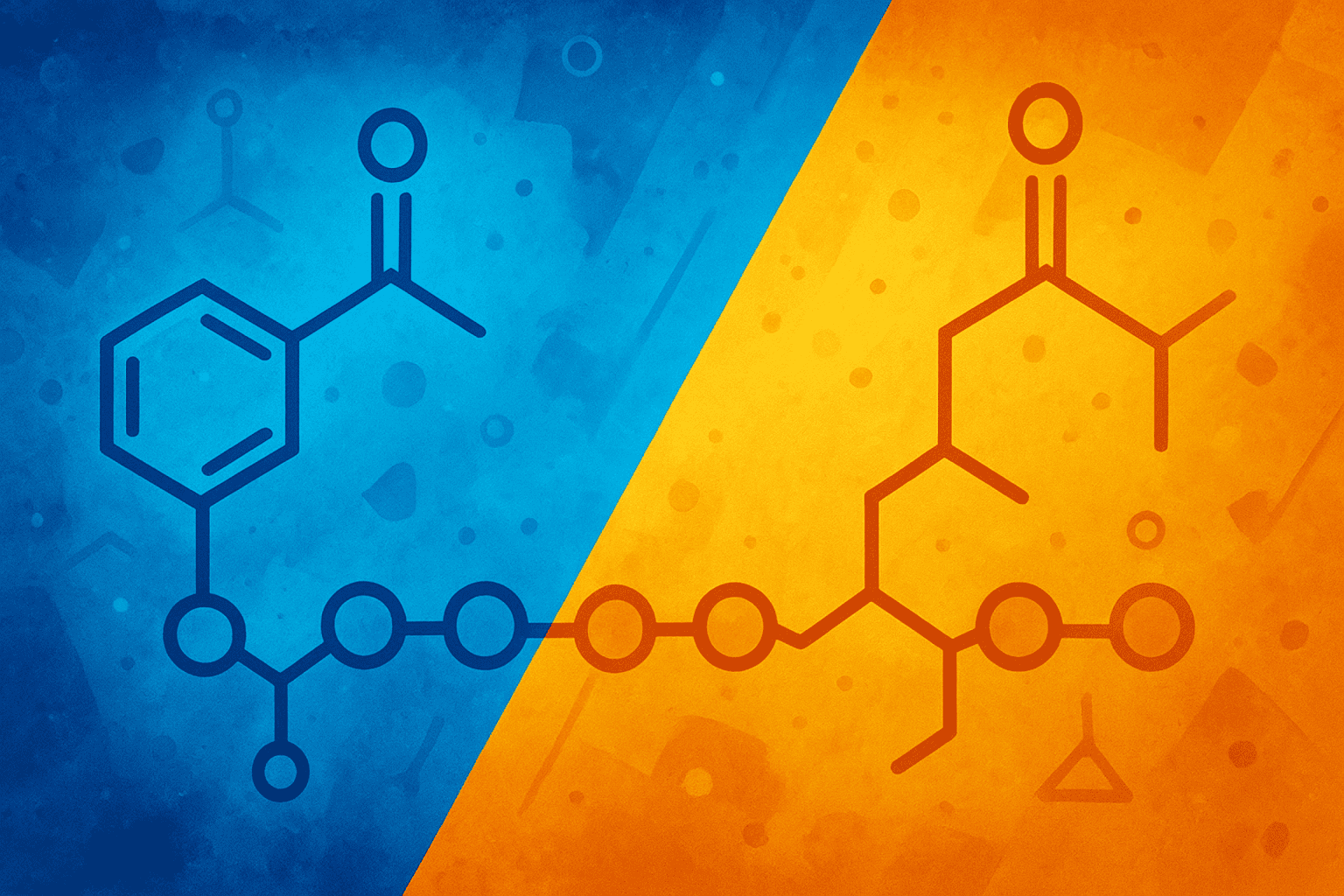
Both methods use solid-phase peptide synthesis (SPPS) as their foundation. The key difference lies in the protecting groups, which are temporary chemical caps placed on amino acids to control how and when they react. Think of them as safety locks that get removed at just the right moment during assembly.
TL;DR: Boc (tert-butyloxycarbonyl) and Fmoc (fluorenylmethyloxycarbonyl) are two protecting group strategies used in solid-phase peptide synthesis. Boc came first but requires harsh acid (HF) for cleavage. Fmoc is newer, uses milder base conditions, and is the preferred method in most modern labs. The choice affects peptide quality, cost, and which sequences can be made reliably.
For research use only. Not for human consumption.
Fmoc vs Boc synthesis: What Are Protecting Groups and Why Do They Matter?
Before we compare Fmoc vs Boc synthesis, let us explain what a protecting group actually does. Amino acids, the building blocks of peptides, have reactive spots on them. If you just threw a bunch of amino acids together without any controls, they would link up randomly and create a tangled mess instead of the precise sequence you want.
A protecting group is a temporary chemical cap that blocks one of those reactive spots. It keeps the amino acid from reacting until you are ready. When the time comes, you remove the protecting group to expose that spot, allowing the next amino acid to attach in the correct position.
The two main protecting group strategies in peptide synthesis are Boc and Fmoc. They differ in how they are removed, what chemicals are needed, and what conditions they can tolerate.

Boc Synthesis: The Original Approach
Boc stands for tert-butyloxycarbonyl. It was the first protecting group strategy widely used in solid-phase peptide synthesis, dating back to Merrifield’s original work in the 1960s.
Here is how Boc chemistry works in simple terms. Each amino acid wears a Boc cap on its main reactive spot. After the amino acid is coupled to the growing chain, the Boc cap is removed using trifluoroacetic acid (TFA), a moderately strong acid. This exposes the end of the chain so the next amino acid can be added.
The tricky part comes at the very end. Once the full peptide chain is assembled, it needs to be cut free from the resin bead. In Boc chemistry, this final cleavage step requires hydrogen fluoride (HF), which is an extremely harsh and dangerous acid. Working with HF demands specialized equipment, rigorous safety protocols, and experienced technicians.
Merrifield, R.B. (1963) established the foundation for solid-phase synthesis using Boc protecting group chemistry on polystyrene resin supports. (PMID: 14044583)
Despite its challenges, Boc chemistry does have a few advantages. It can be more effective for certain difficult peptide sequences, and the chemistry has been refined over decades. Some specialty peptides are still made this way.
Fmoc Synthesis: The Modern Standard
Fmoc stands for fluorenylmethyloxycarbonyl. This approach was developed later, primarily through the work of Louis Carpino in the 1970s, and it has become the dominant method used in peptide manufacturing today.
The key advantage of Fmoc chemistry is the conditions used to remove the protecting group. Instead of acid, you use a mild base, typically piperidine. This is far gentler on the growing peptide chain and the resin support. The final cleavage step uses TFA rather than the dangerous HF required by Boc chemistry.
In practical terms, this means Fmoc synthesis is safer, easier to automate, and compatible with a wider range of sensitive amino acid modifications. Most modern automated peptide synthesizers are designed around Fmoc chemistry.
Carpino, L.A. & Han, G.Y. (1972) introduced the Fmoc group as an alternative amino-protecting group for peptide synthesis. (PMID: 5065525)

Advantages and Trade-Offs at a Glance
Fmoc advantages:
- Milder cleavage conditions (no HF needed)
- Easier to automate on modern synthesizers
- Compatible with acid-sensitive modifications
- Safer for lab personnel
- Real-time monitoring possible during synthesis
Boc advantages:
- Better for some aggregation-prone sequences
- Well-established for certain specialized applications
- Can produce cleaner results for specific difficult peptides
Boc drawbacks:
- Requires hazardous HF for final cleavage
- Needs specialized equipment and safety measures
- Harder to automate
- Higher operational costs
For the vast majority of research peptide applications, Fmoc chemistry delivers excellent results. That is why most reputable peptide suppliers, including Alpha Peptides, rely on Fmoc-based synthesis as their standard manufacturing approach.
How the Synthesis Method Affects Peptide Quality
The choice between Fmoc and Boc is not just an academic detail. It has real implications for the peptide you receive. Milder synthesis conditions generally mean fewer side reactions, which translates to higher purity in the crude product. That means less material is lost during purification, and the final product is cleaner.
However, the synthesis method is only one piece of the puzzle. Post-synthesis purification using HPLC and verification through mass spectrometry are equally critical. A well-purified peptide made by either method can meet stringent quality standards.
At Alpha Peptides, every product undergoes HPLC purification and mass spectrometry analysis, regardless of the synthesis route. The results are documented in batch-specific Certificates of Analysis (COAs) that you can review before purchasing.

What This Means for Your Research
When evaluating a peptide supplier, ask about their synthesis methodology. A company that uses modern Fmoc chemistry, conducts thorough purification, and provides transparent testing documentation is more likely to deliver a consistent, high-quality product.
Alpha Peptides is based in Derry, New Hampshire, and provides U.S.-sourced research peptides with full third-party testing via HPLC and mass spectrometry. Explore our catalog at alpha-peptides.com/shop and view our testing documentation at alpha-peptides.com/coas.
Frequently Asked Questions
What does Fmoc stand for?
Fmoc stands for fluorenylmethyloxycarbonyl. It is a protecting group used in solid-phase peptide synthesis that is removed under mild basic conditions.
What does Boc stand for?
Boc stands for tert-butyloxycarbonyl. It is an older protecting group strategy that requires stronger acid conditions, including hydrogen fluoride for final cleavage.
Which method is better for research peptides?
For most applications, Fmoc chemistry is preferred because it is safer, easier to automate, and uses milder conditions. However, some specialized sequences may still benefit from Boc chemistry.
Does Alpha Peptides disclose its synthesis method?
Alpha Peptides provides full transparency through batch-specific Certificates of Analysis, including HPLC and mass spectrometry data. Contact cs@alpha-peptides.com for specific synthesis inquiries.
Does the synthesis method affect purity?
The synthesis method can influence crude purity, but the final product quality depends heavily on post-synthesis purification (HPLC) and quality control testing. Both Fmoc and Boc methods can produce high-purity peptides when followed by proper purification.
For research use only. Not for human consumption. This article is provided for educational and informational purposes. Alpha Peptides products are intended solely for in vitro research and laboratory use. Always consult applicable regulations and institutional guidelines before purchasing research materials.