
· For research use only. Not for human consumption.
For research use only. Not for human consumption.
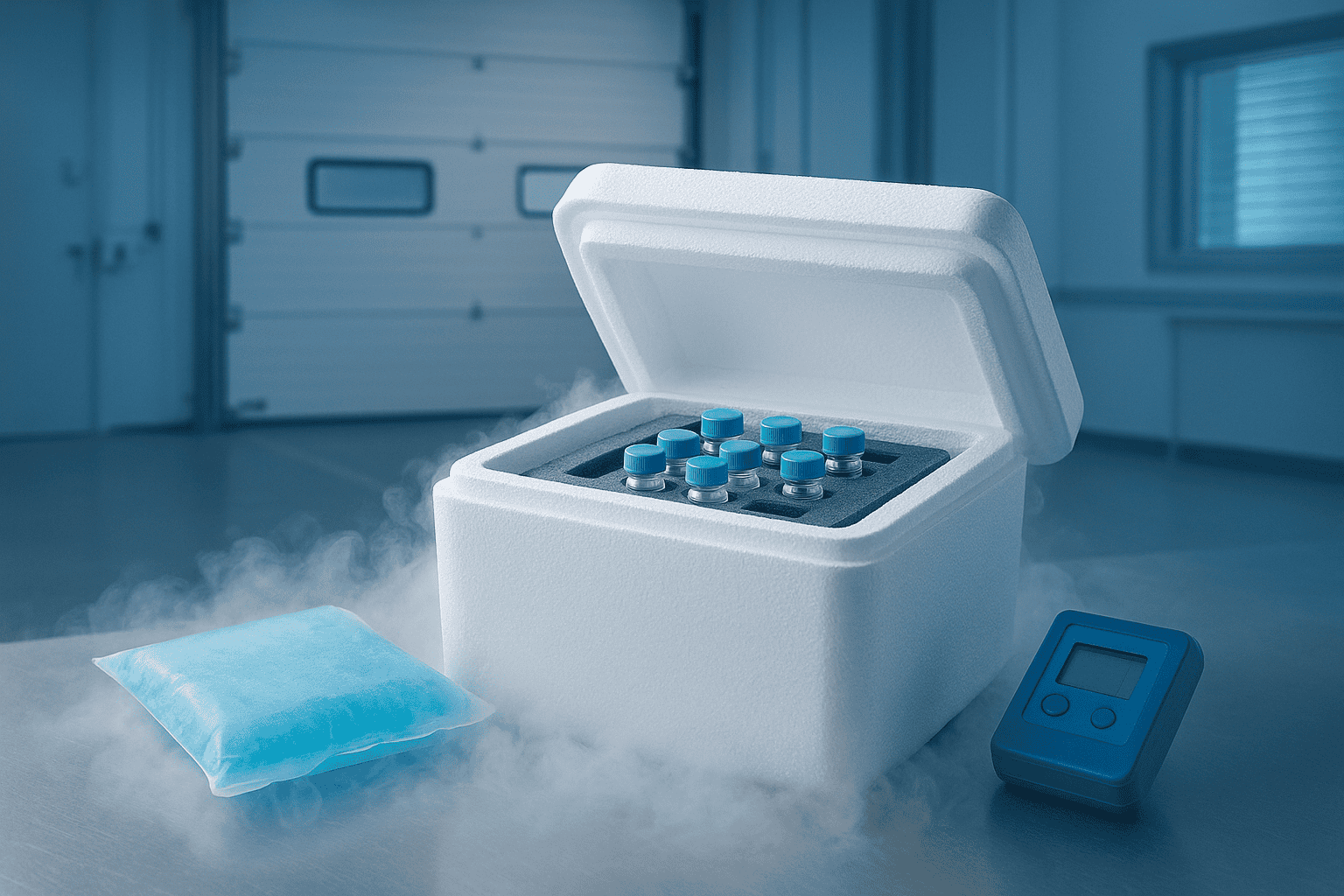
You have ordered research peptides and the package arrives packed with something extremely cold. If your supplier uses dry ice shipping peptides to maintain cold chain integrity, you need to know what to expect, how to handle the package safely, and what to do if the dry ice has already evaporated by the time your shipment arrives.
Dry ice is not regular ice. It is frozen carbon dioxide at a temperature of -78.5 degrees Celsius (-109.3 degrees Fahrenheit), which is far colder than any kitchen freezer. This extreme cold makes it an excellent tool for keeping temperature-sensitive research materials frozen during transit, but it also comes with handling considerations that regular ice does not.
This guide covers everything you need to know about receiving peptide shipments packed with dry ice, from safe handling to proper storage after unpacking. Understanding the process helps protect both you and your valuable research materials from Alpha Peptides or any other supplier.
TL;DR: Dry ice keeps peptides at -78.5°C during shipping, well below the temperature needed for stability. When your package arrives, open it in a well-ventilated area, do not touch dry ice with bare hands, and transfer peptides to your freezer immediately. If the dry ice has fully sublimated before delivery, your peptides may still be fine — check for remaining cold temperature in the insulated packaging. Lyophilized (freeze-dried) peptides are particularly resilient to brief temperature excursions.
For research use only. Not for human consumption.
Why Peptides Are Shipped on Dry Ice: Dry ice shipping peptides Insights
Temperature control is critical for maintaining peptide integrity. Many research peptides are most stable when kept frozen, and exposure to elevated temperatures during shipping can cause degradation. Dry ice shipping peptides solves this problem by maintaining ultra-cold temperatures throughout transit.
At -78.5 degrees Celsius, dry ice is colder than most laboratory freezers (-20°C for standard freezers, -80°C for ultra-cold). This extreme cold ensures that peptides remain solidly frozen even during multi-day shipping journeys, regardless of the outside air temperature.
The alternative — shipping with regular ice packs — only maintains temperatures around 0 to 4 degrees Celsius. While this is adequate for some products, it does not keep peptides frozen and may not provide sufficient protection during summer months or extended transit times. Dry ice provides a much larger safety margin.
Not all peptide shipments require dry ice. Lyophilized (freeze-dried) peptides in sealed vials are more temperature-resilient than reconstituted solutions and can sometimes be shipped with standard cold packs or even at ambient temperature for overnight deliveries. The shipping method depends on the specific product and the supplier’s quality protocols.
What to Do When Your Package Arrives
When a dry ice shipment arrives, time matters. Here is a step-by-step guide for unpacking:
- Open the package in a well-ventilated area. Dry ice sublimates (converts directly from solid to gas) into carbon dioxide. In a confined space without ventilation, the CO2 can displace oxygen and become a breathing hazard. Open a window or work near an air vent.
- Wear insulated gloves or use tongs. Never touch dry ice with bare hands. Contact with skin causes cold burns similar to frostbite, and they happen within seconds. Thick gloves, oven mitts, or laboratory cryogloves all work.
- Locate your peptide vials inside the insulation. They will usually be wrapped separately or placed in a secondary container within the insulated box.
- Transfer vials directly to your freezer. Do not leave them sitting on the counter. The sooner you get them into proper cold storage, the better. If you are storing at -20°C, place them in your standard freezer. If you have -80°C storage, that is even better for long-term stability.
- Inspect the vials briefly. Make sure caps are secure, labels are intact, and vials are not cracked or damaged from the extreme cold of dry ice transit.
How to Handle Dry Ice Safely
Dry ice deserves respect. While it is not complicated to handle, ignoring basic safety rules can lead to injuries:
- Never touch with bare skin. Dry ice at -78.5°C causes instant cold burns. Always use gloves, tongs, or a towel as a barrier.
- Ventilate the area. As dry ice sublimates, it releases CO2 gas. In normal quantities and open areas, this is harmless. In a small, sealed room, it can reduce oxygen levels. If you feel dizzy or short of breath, leave the area immediately.
- Do not put dry ice in a sealed container. The pressure from sublimating CO2 can cause a sealed container to burst. If you need to contain leftover dry ice, use a container with a loose-fitting lid or a vented cooler.
- Keep away from children and pets. Dry ice looks like regular ice but is far more dangerous to touch or ingest.
- Let leftover dry ice sublimate naturally. Place it in a well-ventilated area (ideally outdoors or near an open window) and let it evaporate on its own. Do not dispose of it in a sink, toilet, or garbage disposal.
What If the Dry Ice Has Sublimated Before Delivery
This is the scenario that worries most researchers. You open your package and find no remaining dry ice — just an insulated box that may or may not still be cold inside. Has your peptide been ruined?
The answer depends on several factors. Good insulated packaging retains cold for hours after the dry ice is gone. Even without any remaining dry ice, the inside of the box may still be well below room temperature. If the packaging feels cold to the touch and the vials are still cool, the peptides likely experienced only a brief temperature excursion above freezing.
Lyophilized peptides are particularly forgiving in this situation. Because they are in dry powder form with no water present, the degradation reactions that require moisture cannot proceed even at elevated temperatures. A few hours at room temperature is unlikely to cause significant damage to a sealed, lyophilized peptide vial.
Reconstituted peptides in solution are more vulnerable and should be checked more carefully. If the vial is warm to the touch and has been sitting for an extended period, some degradation may have occurred.
Alpha Peptides Shipping Practices
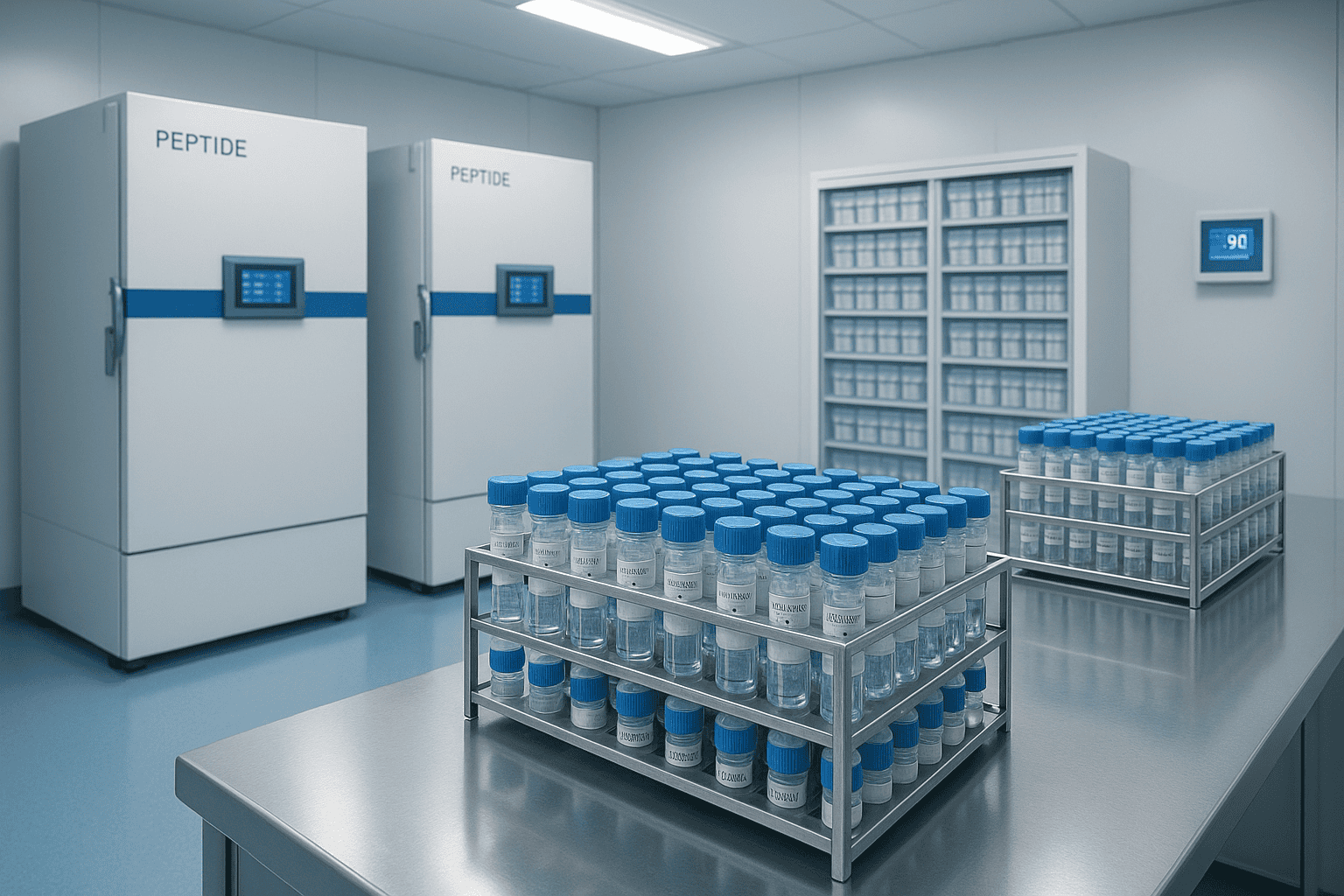
At Alpha Peptides, products are shipped from Derry, New Hampshire, with appropriate cold chain protection based on the specific product and shipping conditions. Domestic U.S. shipping typically involves shorter transit times, which means less reliance on extended cold chain capacity.
Shipping methods and packaging are selected to match the needs of each order. The goal is always to ensure your materials arrive in research-ready condition. If you ever have concerns about the condition of a received shipment, contact customer service at cs@alpha-peptides.com or call +1 (978) 219-0404.
Browse the full peptide catalog at Alpha Peptides and review our quality documentation at alpha-peptides.com/coas to see the third-party testing data for every product we carry.
Frequently Asked Questions
How long does dry ice last in a shipping package?
Typically 24 to 48 hours in a well-insulated shipping container, depending on the amount of dry ice, the quality of insulation, and ambient temperature. Hotter weather and longer transit times cause dry ice to sublimate faster.
Can dry ice damage peptide vials?
Standard pharmaceutical-grade glass vials are designed to withstand extreme cold and are not damaged by dry ice contact. However, some plastic containers may become brittle at very low temperatures. The extreme cold can also cause pressure changes if vials are not properly sealed.
Should I be worried if my package arrived a day late and the dry ice is gone?
For lyophilized (freeze-dried) peptides in sealed vials, a brief temperature excursion is unlikely to cause significant degradation. Check if the packaging still feels cool inside, transfer vials to your freezer immediately, and inspect them visually. If you have concerns, contact the supplier.
Can I add my own dry ice to store peptides at home?
A standard freezer at -20°C is adequate for most peptide storage. Dry ice (-78.5°C) is unnecessary for home or lab storage and creates ventilation and handling concerns. If you need ultra-cold storage, a -80°C laboratory freezer is safer and more practical than dry ice.
For research use only. Not for human consumption. This article is intended for informational purposes and does not constitute medical advice, dosing guidance, or therapeutic recommendations.