
· For research use only. Not for human consumption.
For research use only. Not for human consumption.
Cold chain integrity refers to the unbroken maintenance of proper temperature conditions from the moment a product is manufactured until it reaches its final destination. For research peptides, maintaining the cold chain is not optional. It is the difference between receiving a compound that performs as expected in your experiments and receiving one that has degraded into something unreliable.
Peptides are biological molecules, and like most biological molecules, they are sensitive to heat, light, and moisture. Even brief exposure to elevated temperatures can cause degradation, aggregation, or loss of activity. When you order research compounds from a supplier like Alpha Peptides, the care taken during shipping is just as important as the quality of the manufacturing process itself.
This article explains what cold chain integrity means in practical terms, why it matters for peptide research, and what you should check when receiving shipments at your laboratory.
TL;DR: Cold chain integrity means maintaining proper temperature from manufacturing to delivery. Peptides degrade when exposed to heat, so proper packaging (dry ice, insulated containers) and fast shipping are essential. Always inspect shipments upon arrival and check that temperature indicators show conditions were maintained.
For research use only. Not for human consumption.
What Cold Chain Integrity Actually Means
The term “cold chain” describes the entire sequence of temperature-controlled steps that a product goes through from production to delivery. For research peptides, this typically includes storage at the manufacturing facility, packaging for shipment, transit via carrier, and arrival at your laboratory.
The word “integrity” is key here. Cold chain integrity means that at no point during this sequence did the temperature rise above the specified threshold. Even one break in the chain, a package sitting on a hot loading dock for an hour, a delivery truck without proper climate control, or a shipment left on a doorstep in summer heat, can compromise the quality of temperature-sensitive compounds.
Think of it like a chain with physical links. The chain is only as strong as its weakest link. If every step of the process maintains proper temperature except one, that one failure point can be enough to cause degradation.
Why Peptides Need Temperature Control
Peptides are chains of amino acids held together by chemical bonds. While these bonds are relatively stable under proper conditions, elevated temperatures can cause several types of damage.
Deamidation: Certain amino acids, particularly asparagine and glutamine, can undergo a chemical change called deamidation when exposed to heat. This alters the structure of the peptide and can reduce or eliminate its biological activity.
Aggregation: Heat can cause peptide molecules to clump together, forming aggregates. Aggregated peptides behave differently from individual molecules and may produce unreliable or inconsistent results in research applications.
Oxidation: Amino acids like methionine and cysteine are prone to oxidation, especially at elevated temperatures. Oxidized peptides have altered chemical properties that affect their function.
Hydrolysis: Heat accelerates the breakdown of peptide bonds themselves, effectively cutting the peptide chain into smaller, non-functional fragments.
Lyophilized (freeze-dried) peptides are more stable than peptides in solution, but they are still susceptible to degradation at high temperatures over extended periods. Proper cold chain management protects against all of these degradation pathways.
How Peptides Are Packaged for Shipping
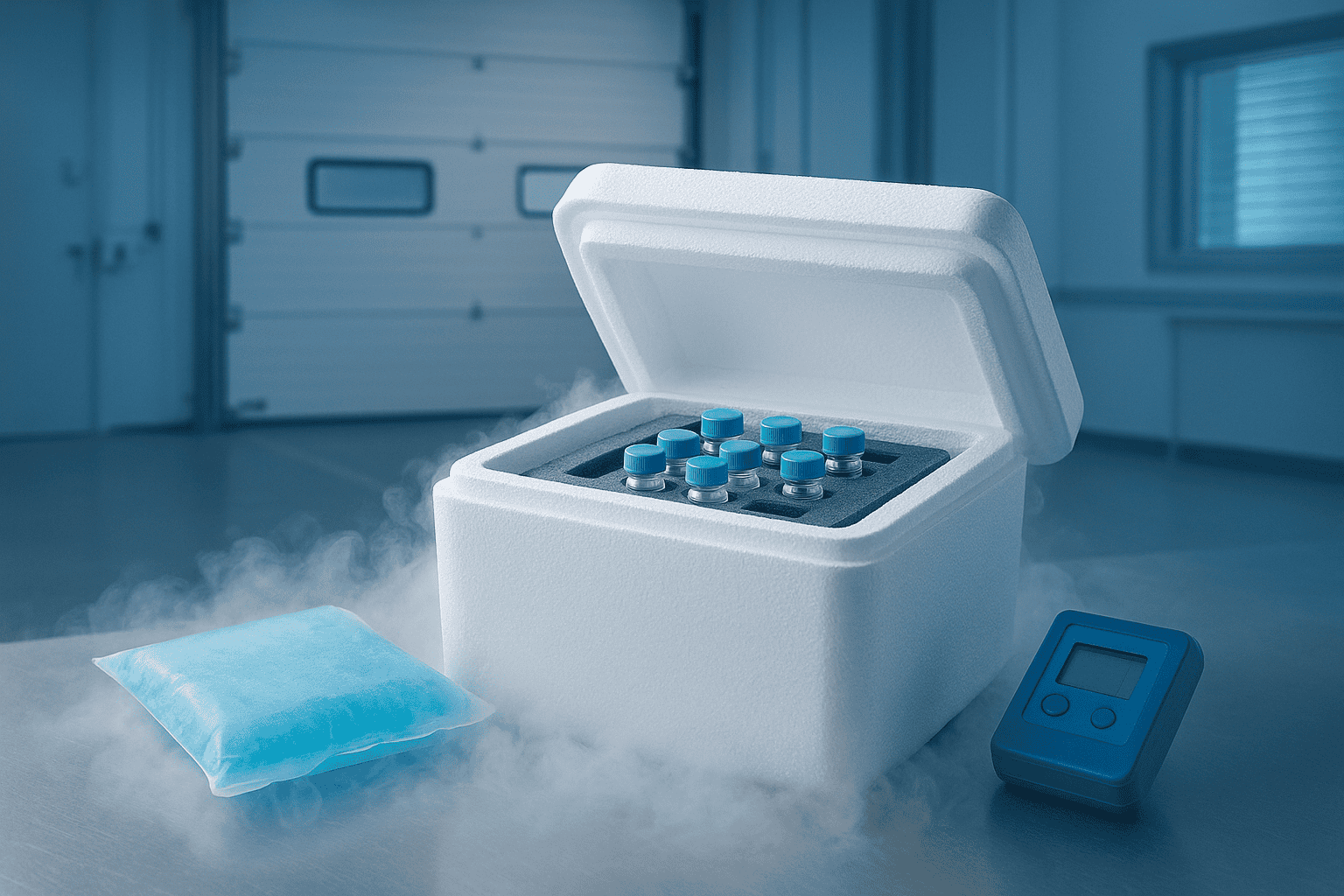
Maintaining cold chain integrity during shipping requires specialized packaging. Here is what responsible peptide suppliers use:
Insulated containers: Expanded polystyrene (EPS) foam containers or vacuum-insulated panels that prevent heat transfer from the outside environment. The thicker and more well-sealed the insulation, the longer the package maintains cold temperatures.
Dry ice: Solid carbon dioxide at -78.5 degrees Celsius. Dry ice is the most common coolant for shipping frozen peptides. The amount of dry ice used must be calculated based on the transit time, ambient temperature, and package size to ensure sufficient cooling for the entire journey.
Gel packs: Pre-frozen gel packs are used for compounds that need to be kept cold but not frozen (2-8 degrees Celsius). They are often used in combination with insulation for shorter transit times.
Temperature indicators: Many shipments include temperature monitoring devices that record whether the package stayed within the specified temperature range during transit. These can be simple color-changing indicators or more sophisticated electronic data loggers.
Secondary containment: Individual vials are typically placed in secondary containers to prevent breakage and ensure that even if one vial is compromised, it does not affect the others.
What Happens When Cold Chain Breaks
When the cold chain is compromised, the consequences depend on several factors: how high the temperature rose, how long the exposure lasted, and the specific characteristics of the peptide involved.
A brief exposure to room temperature (20-25 degrees Celsius) for a lyophilized peptide may cause minimal damage. However, exposure to higher temperatures (30 degrees Celsius and above), especially for extended periods, can cause significant degradation. Peptides in solution are much more sensitive than lyophilized peptides and can degrade noticeably even with short-term temperature excursions.
The insidious thing about cold chain breaks is that degradation is not always visible. A vial of degraded peptide may look identical to a properly stored one. The only way to confirm quality after a suspected cold chain break is analytical testing, such as HPLC analysis or mass spectrometry, which can reveal changes in purity and composition.
This is why prevention is far better than detection. Once a peptide has degraded, the damage cannot be reversed.
How Alpha Peptides Maintains Cold Chain Integrity
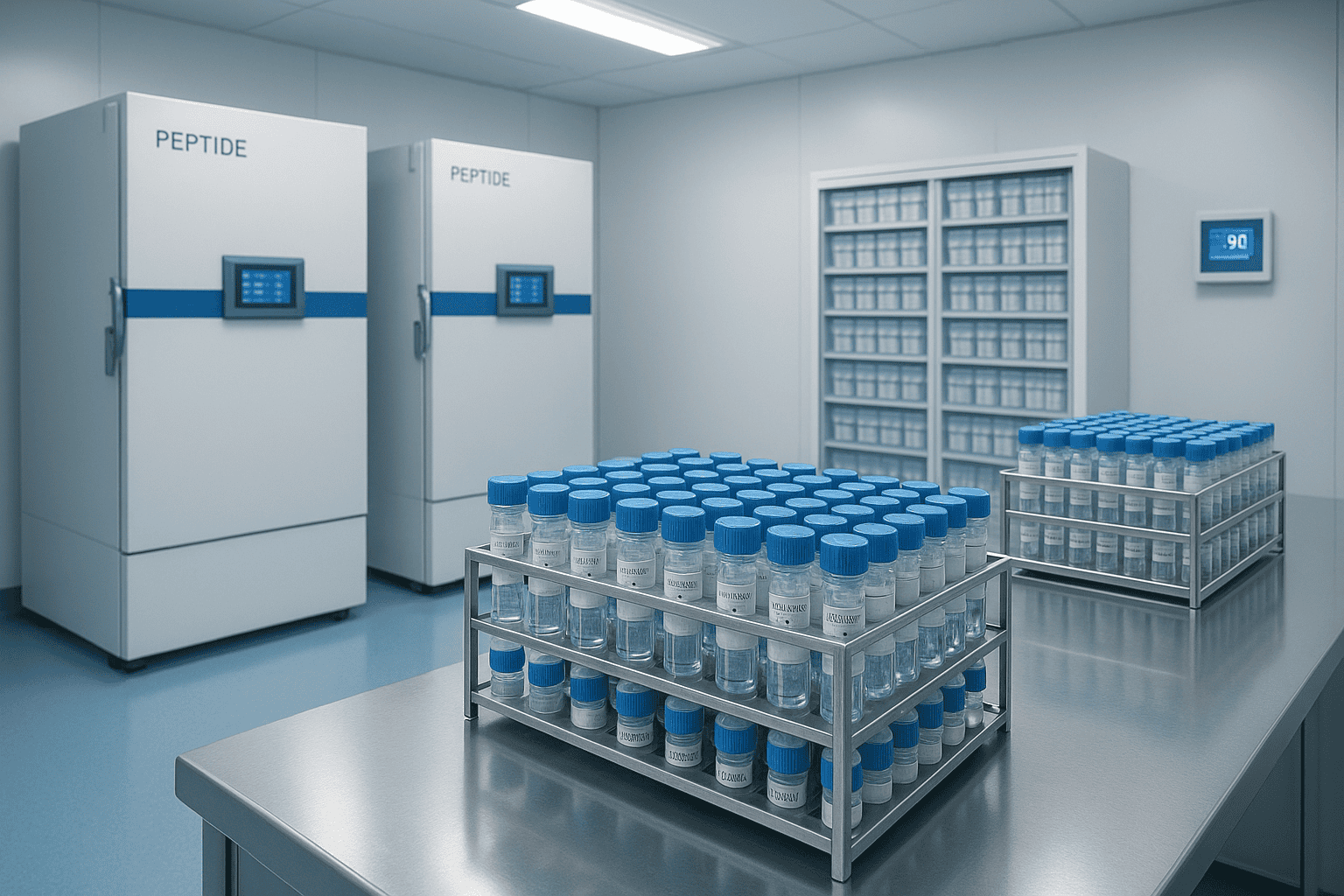
Alpha Peptides, based in Derry, New Hampshire, takes cold chain management seriously at every step. Compounds are stored under controlled conditions at the facility and packaged for shipment using insulated containers with appropriate cooling materials based on the destination and expected transit time.
Shipping methods are selected to minimize transit time, and packages are tracked to ensure timely delivery. The goal is to get the product from the warehouse to your laboratory in the shortest possible time while maintaining proper temperature throughout.
Every batch of product is verified through third-party HPLC and mass spectrometry testing before it ships, so you know the compound met quality standards at the time of packaging. Batch-specific Certificates of Analysis documenting purity and identity are available at alpha-peptides.com/coas/.
What to Check When You Receive a Shipment
When a peptide shipment arrives at your lab, a few quick checks can help verify that cold chain integrity was maintained:
Check for remaining dry ice: If the package was shipped with dry ice, there should still be some remaining upon arrival. If all the dry ice has sublimated (turned to gas), the package may have been in transit longer than expected.
Inspect temperature indicators: If the package includes a temperature indicator, check it immediately. Color-changing indicators will show whether the package stayed within the specified range.
Examine the packaging: Look for signs of damage, water intrusion, or compromised insulation. A crushed or opened insulated container may not have maintained proper temperatures.
Transfer to proper storage immediately: Do not leave peptides sitting on a bench or in a mailroom. Transfer them to your freezer or refrigerator as soon as possible after arrival.
Document the receipt: Record the date and time of arrival, condition of the packaging, status of temperature indicators, and lot numbers. This documentation is part of good laboratory practice and creates a record if questions arise later.
If you have concerns about a shipment, contact the supplier immediately. Alpha Peptides can be reached at cs@alpha-peptides.com for any questions about shipping or product quality. Browse the full catalog at alpha-peptides.com/shop/.
Frequently Asked Questions
What temperature should peptides be shipped at?
Lyophilized peptides are typically shipped on dry ice (-78.5 degrees Celsius) or with cold gel packs (2-8 degrees Celsius), depending on the specific compound and expected transit time. The goal is to keep the product well below any temperature that could cause degradation.
Can a peptide still be good if the dry ice has melted?
If all the dry ice has sublimated, the product may still be acceptable if the insulated packaging maintained cold conditions. However, it is a warning sign that transit took longer than expected. Check temperature indicators and contact the supplier if you have concerns.
How can I tell if a peptide has degraded?
Visual inspection alone is usually not sufficient to detect degradation. Some signs like cloudiness, discoloration, or unusual odor may indicate severe degradation, but subtle degradation is only detectable through analytical methods like HPLC or mass spectrometry testing.
What should I do immediately when a peptide shipment arrives?
Transfer the product to proper storage right away, whether that is a -20 degrees Celsius freezer or a 2-8 degrees Celsius refrigerator. Check temperature indicators, inspect packaging for damage, record the receipt in your lab notebook, and contact the supplier if anything seems off.
For research use only. Not for human consumption. This article is intended for informational purposes and does not constitute medical advice, dosing guidance, or therapeutic recommendations.