
· For research use only. Not for human consumption.
For research use only. Not for human consumption.
Starting a new research project can feel overwhelming, especially when you’re working with compounds you haven’t used before. If you’re exploring BPC-157 for beginners, you’re in the right place. This guide covers the fundamentals — what this peptide is, why it matters, and how to evaluate quality — without assuming you already know the jargon.
BPC-157 is one of the most widely published research peptides in the preclinical literature. Since the first major study in 1997 (Seiwerth et al., Journal of Physiology Paris, 1997), researchers have produced over 100 papers examining its properties in laboratory and animal models. That’s a substantial evidence base for anyone starting out. But before you can use it effectively, you need to understand the basics.
We’ve put together this complete BPC-157 for beginners guide to answer every common question. If you already know the basics and want to compare it with other peptides, jump to our BPC-157 vs TB-500 comparison.
[INTERNAL-LINK: “BPC-157 vs TB-500 comparison” → comparison post]
[INTERNAL-LINK: “reconstitution protocols” → /blog/peptide-reconstitution-complete-guide/]
TL;DR: BPC-157 for beginners starts with three facts: it’s a 15-amino-acid peptide from gastric juice, it has over 100 preclinical publications since 1997 (Seiwerth et al., 1997), and quality verification through COA documents is essential before any laboratory use.
What Are Peptides, and Where Does BPC-157 Fit In?
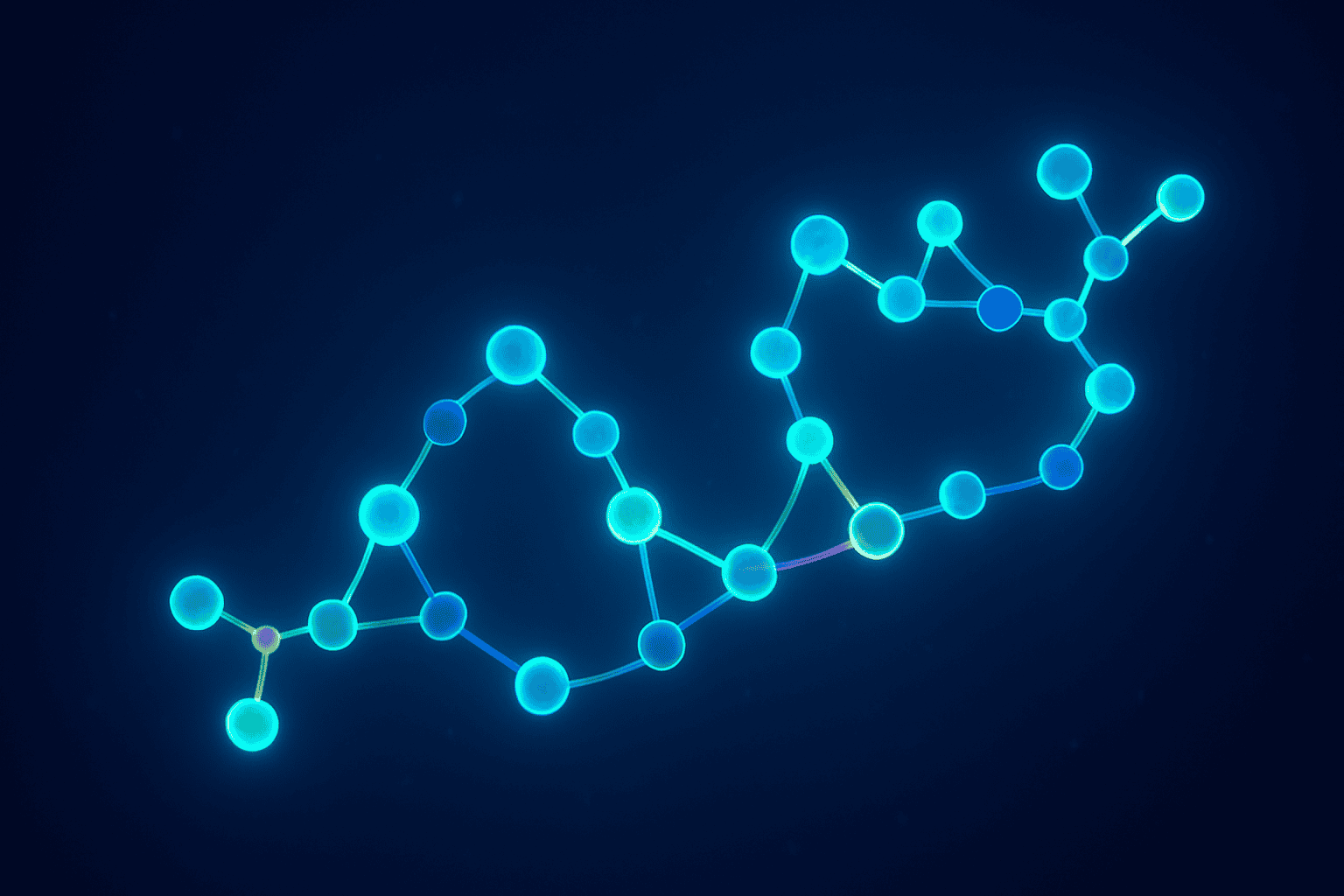
Before diving into BPC-157 for beginners, let’s cover the basics. Peptides are short chains of amino acids — the same building blocks that make up proteins. The difference between a peptide and a protein is mostly about size. Peptides are typically fewer than 50 amino acids long. Proteins can be hundreds or thousands.
Think of amino acids like beads on a necklace. A short necklace with 15 beads? That’s roughly what BPC-157 looks like at the molecular level. A long necklace with 500 beads? That’s closer to a full protein. The order of the beads matters — change the sequence, and you get a completely different molecule.
BPC-157 sits in the “short peptide” category with just 15 amino acids. Its full name is Body Protection Compound-157, and it was first isolated from a larger protein found in gastric juice. What makes it notable among research peptides is its unusual stability and the volume of preclinical literature behind it.
[IMAGE: Simple infographic showing amino acids as building blocks connecting into a peptide chain — search terms: amino acid building blocks peptide chain simple diagram]
What Should BPC-157 Beginners Know About Its History?
The story of BPC-157 starts in Croatia. Researchers at the University of Zagreb isolated this peptide fragment from human gastric juice in the early 1990s. The first major publication came from Seiwerth and colleagues in 1997 (Seiwerth et al., 1997), documenting its properties in animal models.
Since then, the same research group — along with others around the world — has published extensively on BPC-157. A 2019 review paper by Gwyer et al. summarized the state of research, noting investigations across gastrointestinal, musculoskeletal, and neurological systems in preclinical models.
Here’s what’s important for beginners to understand: all of this research has been conducted in animal models and cell cultures. There are no FDA-approved applications for BPC-157 in humans. When you read about this peptide, you’re reading about laboratory and preclinical findings — not proven human applications.
Why Is BPC-157 So Popular in Research?
Three reasons. First, stability. Most short peptides are fragile — they get destroyed by enzymes, acid, or heat in minutes. BPC-157 is remarkably resistant to breakdown, which makes it practical for laboratory experiments. You don’t need ultra-specialized storage conditions just to keep it intact.
Second, breadth. Most research peptides interact with one or two biological pathways. BPC-157 has been examined across multiple systems, which gives researchers many angles to explore.
Third, accessibility. With over two decades of published literature, there’s a substantial foundation for designing new experiments. Beginners aren’t starting from scratch — they can build on existing preclinical data.
BPC-157, a 15-amino-acid fragment of human gastric juice protein, has been examined in over 100 preclinical publications since 1997 (Gwyer et al., Journal of Complementary and Integrative Medicine, 2019). Its resistance to enzymatic degradation makes it one of the most practical short-chain peptides for laboratory research.
How Do You Evaluate BPC-157 Quality?
Quality evaluation is arguably the most important skill for BPC-157 beginners to develop. A peptide that looks fine on the outside could be impure, degraded, or even the wrong molecule entirely. Here’s how to protect yourself — and your research.
What Is a Certificate of Analysis (COA)?
A COA is a document that proves a specific batch of peptide has been tested and meets quality standards. Think of it like a report card for the product. It should include at least two key pieces of information.
HPLC purity: High-Performance Liquid Chromatography separates the target peptide from impurities. Look for purity above 98%. If the number is lower, it means a significant portion of your sample isn’t actually BPC-157 — it’s synthesis fragments, side products, or degradation byproducts.
Mass spectrometry: This confirms the molecular weight of the peptide matches what BPC-157 should weigh (approximately 1,419 daltons). HPLC alone can’t tell you if you have the right molecule — mass spec provides that identity verification. You can review COA documents for all Alpha Peptides products on our COA page.
[INTERNAL-LINK: “COA page” → /coas/]
What Does “Research Grade” Mean?
You’ll see this term everywhere in the peptide world. “Research grade” means the peptide is manufactured and tested to a standard suitable for laboratory research, but it’s not produced under pharmaceutical GMP (Good Manufacturing Practice) conditions. The key differences are documentation, facility standards, and regulatory oversight.
Research-grade peptides typically have purity above 98% as measured by HPLC. That’s plenty for most laboratory applications. What they may not have are the extensive batch records, validated manufacturing processes, and FDA-compliant facilities that pharmaceutical-grade requires.
What Should You Look for in a BPC-157 Supplier?
Not all suppliers are equal. Here’s a quick checklist for BPC-157 beginners evaluating potential sources.
Third-party testing: Does the supplier use an independent laboratory for testing, or do they only provide in-house results? Third-party testing is more reliable because the testing lab has no financial interest in the outcome.
Batch-specific COAs: Generic COAs that never change are a red flag. Every manufacturing batch should have its own unique test results. The batch number on the COA should match the batch number on your product vial.
Transparent sourcing: Where is the peptide actually synthesized? Reputable suppliers are transparent about their manufacturing and testing processes.
Proper storage and shipping: Peptides should be shipped with appropriate cold chain handling. If a supplier ships lyophilized BPC-157 in a padded envelope at room temperature, that’s generally acceptable — lyophilized powders are stable at ambient temperature for short periods. But reconstituted peptides need cold shipping.
Browse BPC-157 at Alpha Peptides — every batch comes with third-party tested COA documentation and ships from our facility in Derry, NH. Visit our full catalog to explore related research compounds.
[INTERNAL-LINK: “full catalog” → /shop/]
Frequently Asked Questions About BPC-157 for Beginners

How many amino acids does BPC-157 have?
BPC-157 contains exactly 15 amino acids in a specific sequence. Its molecular weight is approximately 1,419 daltons. Despite its short length, this peptide has been the subject of extensive preclinical research spanning multiple biological systems since the first publication by Seiwerth et al. in 1997.
Is BPC-157 natural or synthetic?
Both, in a sense. The sequence comes from a naturally occurring protein in human gastric juice. However, the BPC-157 used in research laboratories is produced synthetically through solid-phase peptide synthesis. This allows for precise quality control and purity verification that wouldn’t be possible with natural extraction.
What should a BPC-157 COA include?
At minimum, a proper COA should include HPLC purity data (showing 98%+ purity), mass spectrometry confirming the correct molecular weight (~1,419 Da), the batch number, and the testing date. Third-party COAs from independent labs carry more credibility than in-house testing results.
For research use only. Not for human consumption. BPC-157 is an experimental compound with no FDA-approved therapeutic applications. All information on this page is provided for educational purposes relating to laboratory and preclinical research.