
· For research use only. Not for human consumption.
For research use only. Not for human consumption.
GLP-3 research has exploded in the last few years. If you follow peptide science — or even just skim the headlines — you’ve probably noticed this compound appearing more and more often. But why? What makes this particular peptide so interesting to the scientific community?
The answer comes down to a simple idea with complex implications: GLP-3 was designed to activate three biological signaling systems at the same time. That had never been done successfully before in this class of compounds. And when the first published data landed in The Lancet — one of the most respected medical journals in the world — the research community took notice.
This post explains why GLP-3 research has generated so much attention, what makes the compound unique, and what scientists are hoping to learn from studying it. No medical claims, no hype — just the science behind the excitement.
TL;DR: GLP-3 research attracts attention because the compound is the first widely studied triple incretin receptor agonist analog — engaging GLP-1, GIP, and glucagon receptors simultaneously. Two landmark studies in The Lancet (Rosenstock et al., 2023; Urva et al., 2022) put it on the scientific map. It is sold for research use only. Not for human consumption.
What Makes GLP-3 Research Different?
To understand why GLP-3 research stands out, it helps to know a little history. For decades, scientists studied individual signaling pathways — one at a time. If you wanted to understand how the GLP-1 receptor worked, you’d design a compound that hit only that receptor. Clean, simple, controlled.
Then came dual agonists — compounds that could hit two receptors at once. That was a significant step. Researchers could now study how two signaling systems interact when activated together, rather than separately.
GLP-3 took it one step further. It was designed to engage three receptors simultaneously: the GLP-1 receptor, the GIP receptor, and the glucagon receptor. Think of it like going from playing one instrument, to playing two, to conducting a trio. The complexity — and the potential for new discoveries — increases dramatically.
The Two Studies That Put GLP-3 Research on the Map

Two published studies form the foundation of what the scientific community currently knows about GLP-3:
Urva et al. (2022) — The First Look
Published in The Lancet, this was a phase 1b, multicentre, double-blind, placebo-controlled trial. In non-scientist terms: it was one of the first carefully controlled studies to examine this triple agonist compound in a research setting, using multiple escalating amounts to characterize how it behaves.
Urva and colleagues (2022) conducted a randomised, multiple-ascending dose trial examining the novel triple GIP, GLP-1, and glucagon receptor agonist. The study provided early pharmacological data across several parameters. (PMID: 36354040)
Rosenstock et al. (2023) — The Bigger Picture
Also published in The Lancet, this phase 2 trial was larger in scope. It was randomised, double-blind, and included both placebo and active comparator groups — the gold standard for generating reliable research data.
Rosenstock and colleagues (2023) investigated this GIP, GLP-1, and glucagon receptor agonist in a phase 2 trial conducted in the USA. The parallel-group design allowed comparison across multiple research parameters. (PMID: 37385280)
Together, these two studies gave the research community its first real data on what happens when all three incretin-related receptor systems are engaged at once. That’s why GLP-3 research went from niche to mainstream almost overnight.
Why Three Targets Instead of One?
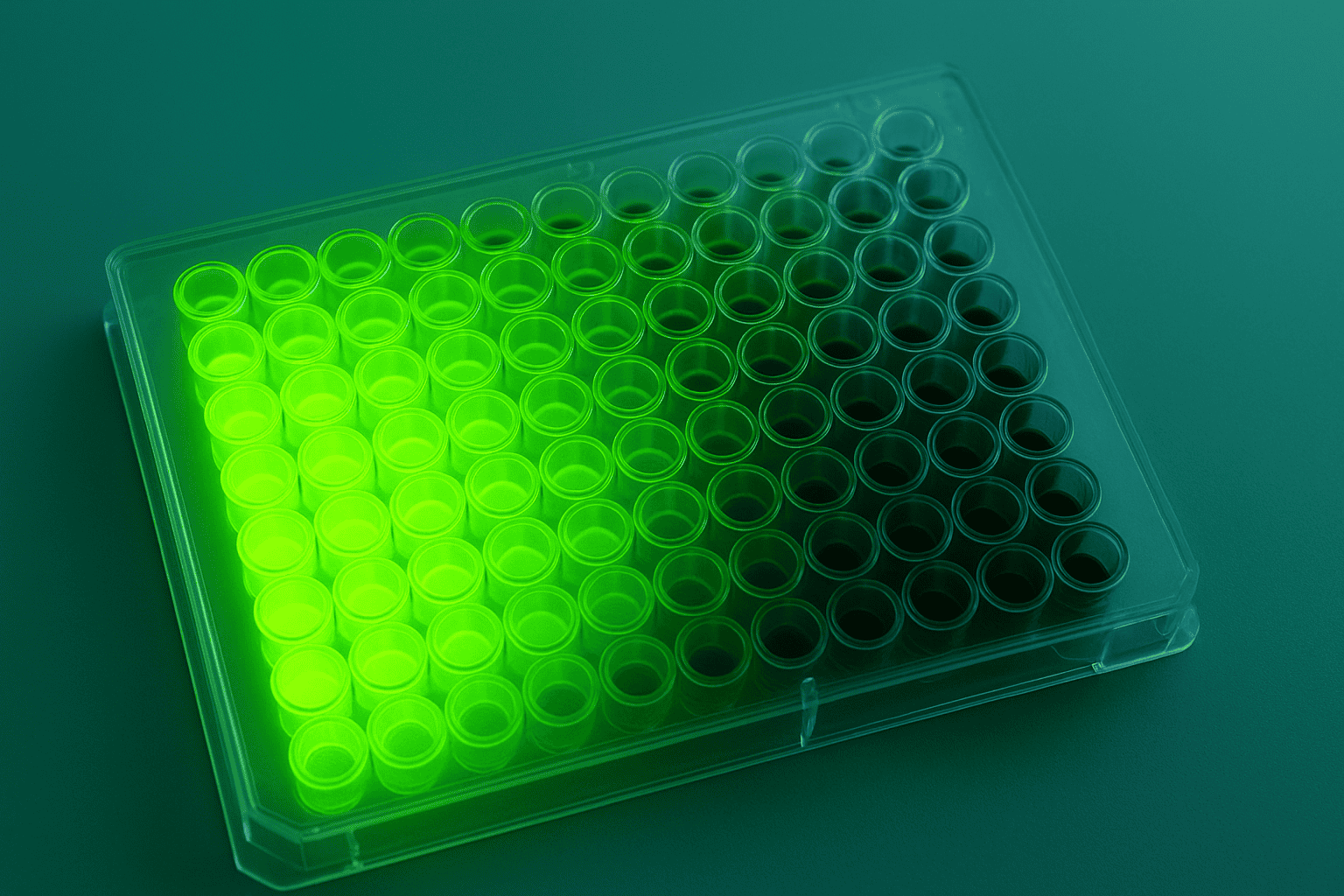
This is the question at the heart of GLP-3 research. Scientists already had compounds that could activate the GLP-1 receptor alone. They had dual agonists that could hit GLP-1 and GIP together. Why add glucagon?
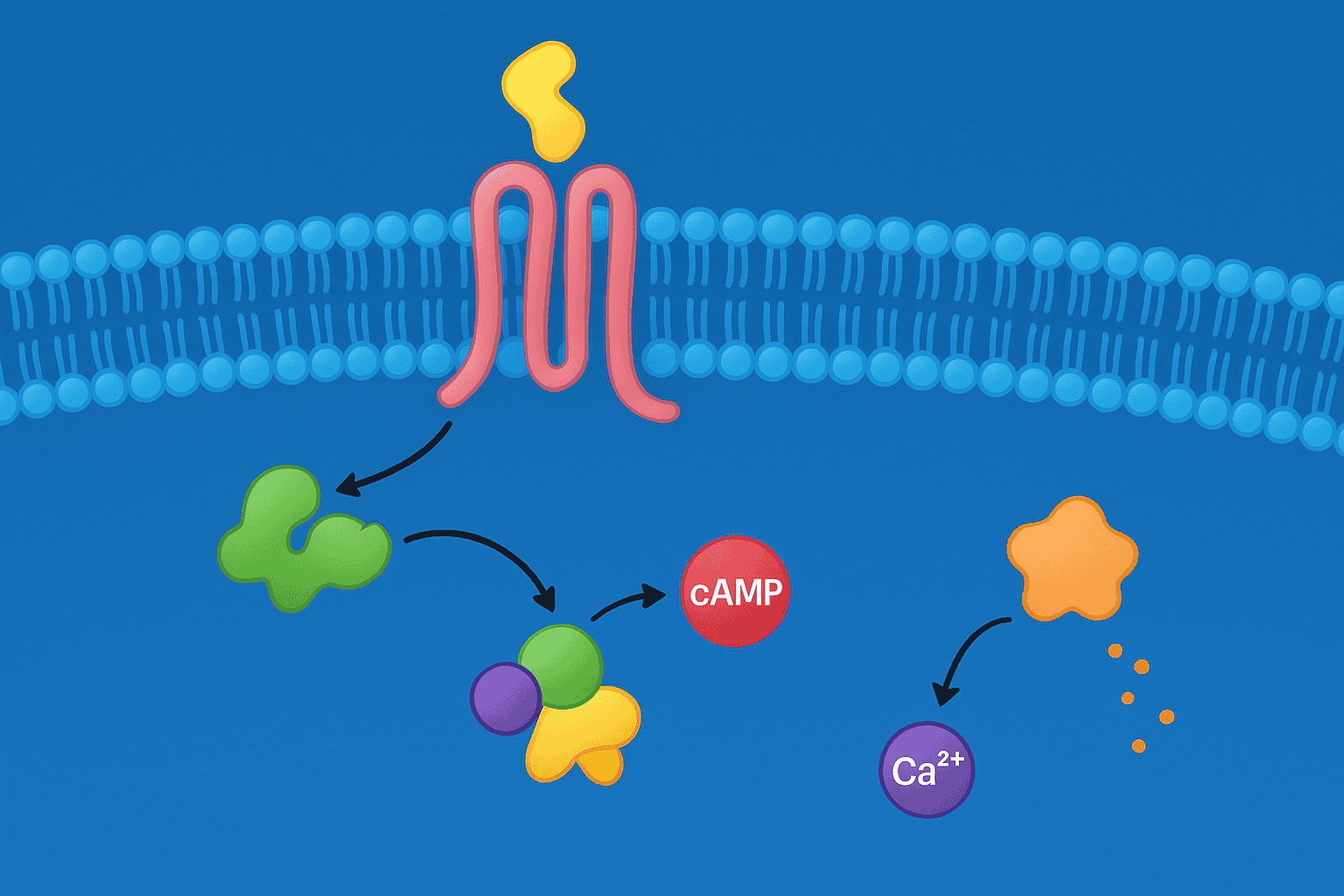
The reasoning is based on decades of research into how these three systems interact. Each receptor controls a different piece of the metabolic puzzle:
- GLP-1 receptor: Signals to the pancreas, stomach, and brain. The most studied of the three.
- GIP receptor: Works alongside GLP-1 in the pancreas and has additional effects on fat tissue. Less studied until recently.
- Glucagon receptor: Primarily signals to the liver. Glucagon has historically been viewed as the “opposite” of insulin, but researchers are now discovering it plays a more nuanced role.
The hypothesis driving GLP-3 research is straightforward: if these three systems naturally work together in the body, then studying a compound that engages all three at once might reveal biological interactions that can’t be observed when studying each system in isolation.
What GLP-3 Research Could Tell Us Next

It’s important to be clear: GLP-3 is a research compound. It is not approved for human use. The published studies represent early-stage investigation, and much more research is needed before scientists fully understand how this triple agonist approach works.
That said, the research community is actively investigating several questions:
- How do the three receptor pathways interact when activated simultaneously?
- Does triple activation produce effects that can’t be achieved with single or dual compounds?
- What is the optimal ratio of activity across the three receptors?
- How does the compound’s pharmacological profile change at different concentrations?
These are the kinds of fundamental science questions that GLP-3 research is uniquely positioned to answer. And that’s exactly why scientists are paying attention.
If you want to understand GLP-3 from the ground up, start with our beginner’s guide to GLP-3. For comparisons with its molecular relatives, see GLP-3 vs GLP-1 or GLP-3 vs GLP-2.
Alpha Peptides carries research-grade GLP-3 with batch-specific Certificates of Analysis, third-party HPLC verification, and cold-chain shipping. View all COAs on our Certificates of Analysis page.
Frequently Asked Questions About GLP-3 Research
How many published studies exist on GLP-3?
As of early 2026, two major studies have been published in The Lancet: Urva et al. (2022) and Rosenstock et al. (2023). Additional research is ongoing but not yet published in peer-reviewed form.
Is GLP-3 research the same as GLP-1 research?
No. GLP-1 research focuses on a single receptor target. GLP-3 research examines triple receptor activation — a fundamentally different approach that studies how three signaling systems interact simultaneously.
Can I participate in GLP-3 research?
GLP-3 sold by Alpha Peptides is intended for laboratory research only. It is not for human use. If you are a researcher sourcing compounds for laboratory investigation, you can purchase research-grade GLP-3 from our shop.
Why is GLP-3 research published in The Lancet?
The Lancet is one of the world’s most respected peer-reviewed medical journals. The fact that GLP-3 research appeared there reflects the scientific community’s assessment that this triple agonist approach represents a significant area of investigation.
For research use only. Not for human consumption. This article is for informational purposes and does not constitute medical advice, dosing guidance, or therapeutic recommendations.