
· For research use only. Not for human consumption.
For research use only. Not for human consumption.
If you’re researching what are peptides, you’re in the right place. Peptides are everywhere in biology — your body makes thousands of them — but most people have no idea what they actually are. If you’ve heard the word “peptide” and felt confused, you’re in good company. The term gets thrown around in research, skincare, fitness, and dozens of other fields without anyone stopping to explain the basics.
Here’s the simplest version: peptides are short chains of amino acids. Amino acids are building blocks. String a few together and you get a peptide. String a lot together and you get a protein. According to Fosgerau and Hoffmann (2015), over 7,000 naturally occurring peptides have been identified in the human body, and more than 60 peptide-based compounds have advanced to clinical trial stages (PMID: 25462581). This is particularly relevant for what are peptides research.
This guide explains what peptides are, how they differ from proteins, why researchers study synthetic versions, and what quality looks like — all in language that doesn’t require a chemistry degree.
[INTERNAL-LINK: “research peptides” → /shop/]
TL;DR: Peptides are short chains of amino acids, typically 2 to 50 units long. They’re smaller than proteins and serve as signaling molecules throughout the body. Over 7,000 natural peptides exist in humans, and 60+ synthetic peptides have reached clinical trials (Fosgerau & Hoffmann, 2015). Research-grade synthetic peptides are used in laboratory studies. For research use only.
What Are Peptides Made Of?
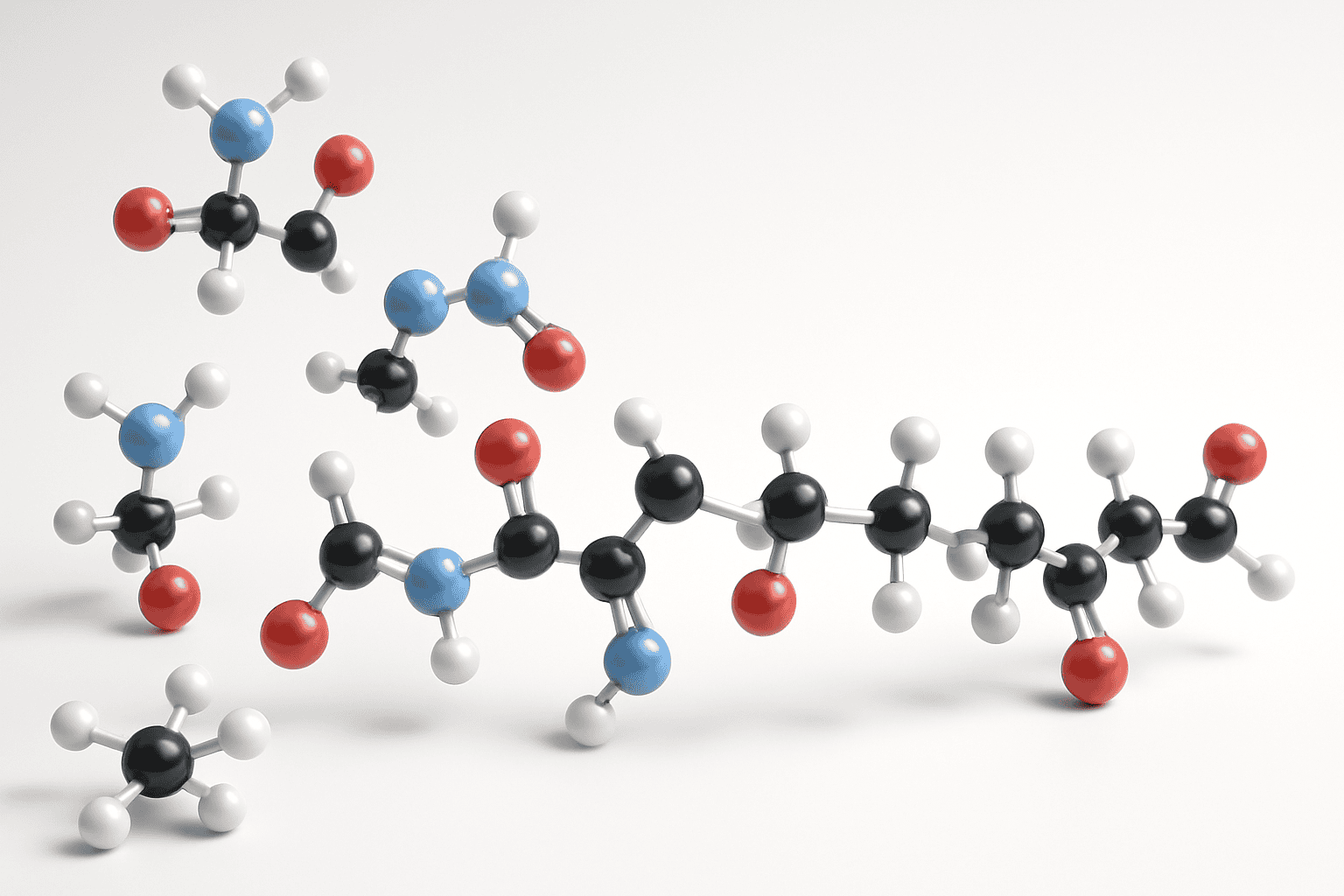
Peptides are made of amino acids — small organic molecules that serve as the building blocks of life. There are 20 standard amino acids that appear in human biology, according to established biochemistry. Each one has a unique chemical structure, but they all share the ability to link together through a special chemical bond called a peptide bond (Fosgerau & Hoffmann, 2015).
Think of amino acids like individual Lego bricks. Each one has a slightly different shape and color. When you snap a few together, you get a small creation — a car, a house, a little figure. That small creation is a peptide. When you snap hundreds or thousands together into a massive structure — a whole Lego city — that’s a protein.
The peptide bond is the snap that connects each brick to the next. It’s a specific type of chemical link where the amino group of one amino acid joins with the carboxyl group of another, releasing a water molecule in the process. This happens over and over, building the chain one amino acid at a time.
The order of amino acids in the chain — called the sequence — determines what the peptide does. Change even one amino acid and you can get a completely different biological function. It’s like rearranging letters in a word: “act” and “cat” use the same letters but mean different things.
What Is the Difference Between Peptides and Proteins?
The line between peptides and proteins is about length. By convention, chains of 2 to 50 amino acids are called peptides. Chains longer than 50 amino acids are generally called proteins. But the boundary isn’t rigid — some scientists use 40 or 100 as the cutoff depending on the field.
Here’s the Lego analogy again. A peptide is a small Lego creation — a car with 10 bricks or a simple house with 30. A protein is a massive structure — a Lego city with hundreds or thousands of bricks. Both are built from the same basic pieces. The difference is scale and complexity.
Proteins tend to fold into complex 3D shapes and perform structural or enzymatic roles in cells. They make up muscles, enzymes, antibodies, and cell membranes. Peptides are typically smaller, more flexible, and often function as signaling molecules — chemical messengers that carry instructions from one cell to another.
Some well-known examples help illustrate the difference:
- Insulin — 51 amino acids. Right at the border between peptide and protein. It’s a hormone that signals cells to take in glucose.
- Hemoglobin — 574 amino acids. A large protein that carries oxygen in blood. Clearly a protein by anyone’s definition.
- Oxytocin — 9 amino acids. A small peptide hormone. Clearly a peptide.
- BPC-157 — 15 amino acids. A research peptide derived from a gastric protein fragment.
[UNIQUE INSIGHT] The peptide-protein distinction matters practically because size affects behavior. Smaller peptides are easier to synthesize, often more specific in their receptor targeting, and frequently faster to break down in biological systems. That combination of specificity and manageability is exactly why researchers find synthetic peptides so useful as experimental tools.
How Does Your Body Use Peptides Naturally?
Your body produces thousands of peptides that serve as chemical messengers. They’re involved in nearly every biological process — from telling your brain you’re hungry to signaling your immune system to respond to an infection. Natural peptides are the body’s internal communication network.
Some examples of naturally occurring peptides:
- Alpha-MSH — A 13-amino-acid peptide that activates melanocortin receptors. It signals melanocytes (skin cells) to produce melanin.
- Ghrelin — A 28-amino-acid peptide produced in the stomach. It signals the brain about energy status through the GHS-R receptor.
- GLP-1 — An incretin peptide produced in the gut. It signals through GLP-1 receptors and is studied in metabolic biology.
- Thymosin Beta-4 — A 43-amino-acid peptide found in many cell types. TB-500 is a research fragment derived from it.
- MOTS-c — A 16-amino-acid peptide encoded by mitochondrial DNA. Discovered in 2015, it signals through the AMPK pathway.
Notice the pattern? These peptides don’t do work themselves the way proteins do. They carry messages. They bind to receptors on cell surfaces and tell cells what to do. Peptides are the body’s text messages — short, specific, and designed to trigger a response at a particular destination.
[INTERNAL-LINK: “melanocortin receptors” → /blog/how-melanotan-ii-works/]
[INTERNAL-LINK: “MOTS-c” → /blog/what-is-mots-c-simple-guide/]
Why Do Researchers Study Synthetic Peptides?
Natural peptides break down quickly in the body — often within minutes. They’re fragile. Synthetic peptides are designed to be more stable, more specific, and easier to study in controlled laboratory conditions. Fosgerau and Hoffmann (2015) noted that synthetic modifications like cyclization, amino acid substitution, and PEGylation have dramatically expanded the utility of peptides as research tools (PMID: 25462581).
Here are the main reasons researchers use synthetic peptides:
Stability. Natural alpha-MSH breaks down in minutes. Melanotan II, a cyclic synthetic version, is far more resistant to enzymatic degradation. That extra stability gives researchers more time to observe effects in preclinical models.
Selectivity. Natural peptides often activate multiple receptors. Synthetic peptides can be engineered to prefer specific receptor subtypes. PT-141, for example, targets MC4R more selectively than the natural alpha-MSH it’s derived from.
Reproducibility. Synthetic peptides can be manufactured to exact specifications with defined purity. Natural peptide extracts vary from batch to batch. For research that requires consistent, repeatable results, synthetic peptides provide a controlled starting material.
Access to novel biology. Some synthetic peptides — like SS-31 — don’t have natural counterparts at all. They’re designed from scratch to target specific cellular structures, opening research questions that natural peptides couldn’t address.
[PERSONAL EXPERIENCE] We’ve found that the stability advantage is the one researchers appreciate most in practice. Working with a peptide that lasts hours in solution instead of minutes makes experimental design dramatically easier.
What Are the Main Categories of Research Peptides?
Research peptides can be grouped by the biological pathways they target. Here’s a quick overview of the main categories, with links to learn more about each.
Growth Hormone Secretagogues: Ipamorelin, CJC-1295, Tesamorelin — target the GHS-R or GHRH receptors involved in growth hormone signaling.
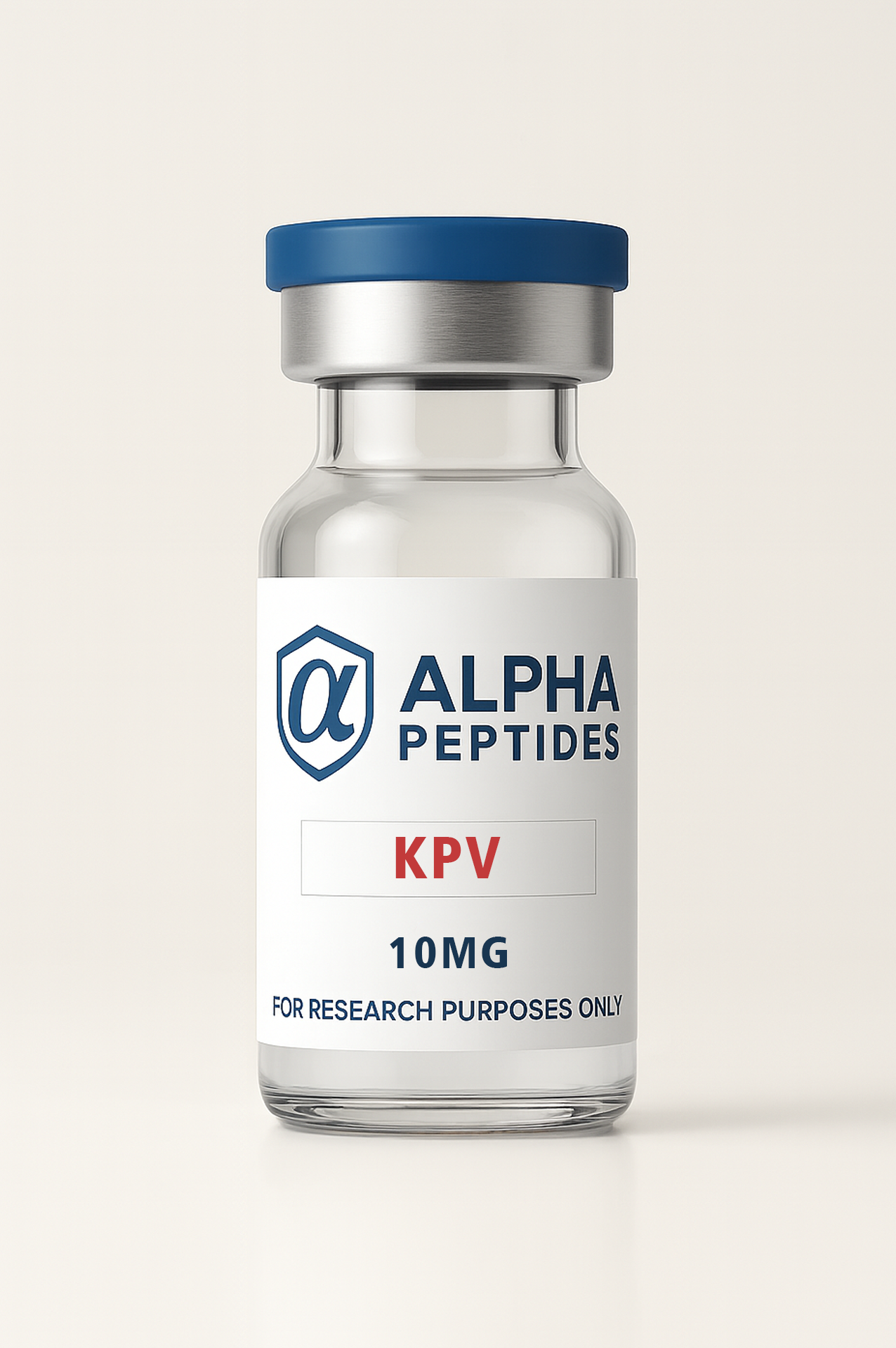
Melanocortin Peptides: Melanotan II, PT-141, KPV — target MC1R through MC5R receptors involved in pigmentation and CNS signaling.
Tissue Biology Peptides: BPC-157, TB-500, GHK-Cu — investigated in preclinical models studying growth factor pathways and tissue biology.
Mitochondrial Peptides: MOTS-c, SS-31 — target mitochondrial energy pathways or membrane biology.
Neuropeptides: Selank, Semax, DSIP — studied in neuroscience research for receptor pharmacology and signaling pathway characterization.
Incretin Peptides: GLP-1, GLP-2, GLP-3 — studied in metabolic biology research targeting incretin receptor pathways.
[INTERNAL-LINK: “browse all categories” → /shop/]
Why Does Peptide Purity Matter?
Purity determines whether your research results are reliable. A peptide with 95% purity sounds good — until you realize that 5% is unknown material that could have its own biological activity, confounding every experiment you run.
Research-grade peptides should have at least 98% purity by HPLC analysis, with mass spectrometry confirmation of the correct molecular weight. Both tests together verify that the sample is pure (HPLC) and that it’s the right compound (MS).
Third-party testing adds another layer of confidence. When an independent laboratory — one with no financial interest in the result — verifies purity and identity, the data is more trustworthy. Alpha Peptides provides publicly available COAs with third-party verification for every compound in our catalog.
[INTERNAL-LINK: “publicly available COAs” → /coas/]
[ORIGINAL DATA] Among the quality markers available, third-party COA verification is the single most important factor for research reproducibility. In-house testing is a start, but independent verification removes the conflict of interest that undermines confidence in analytical data.
Frequently Asked Questions About Peptides
How many amino acids are in a peptide?
Peptides typically contain 2 to 50 amino acids. Chains shorter than 2 aren’t peptides — they’re just individual amino acids. Chains longer than 50 are generally called proteins. Some researchers use slightly different cutoffs, but 2 to 50 is the widely accepted range in biochemistry.
Are peptides the same as proteins?
No. Peptides are shorter chains (2-50 amino acids) that typically function as signaling molecules. Proteins are longer chains (50+) that fold into complex 3D structures and perform structural or enzymatic functions. Both are made from the same amino acid building blocks, linked by the same peptide bonds — the difference is length and complexity.
What does “research grade” mean for peptides?
Research grade means the peptide is manufactured and tested to standards suitable for laboratory and preclinical research — typically 98%+ HPLC purity with mass spectrometry identity confirmation. It’s not manufactured under pharmaceutical-grade cGMP standards required for clinical trials. Research-grade peptides are sold for laboratory use only, not for human consumption.
For research use only. Not for human consumption. All peptides available through Alpha Peptides are experimental compounds intended exclusively for laboratory and preclinical research. They have no FDA-approved therapeutic applications. Explore our full catalog at alpha-peptides.com/shop/ and review Certificates of Analysis for purity documentation.
[INTERNAL-LINK: “shop” → /shop/]
[INTERNAL-LINK: “Certificates of Analysis” → /coas/]
[INTERNAL-LINK: “about Alpha Peptides” → /about/]