
· For research use only. Not for human consumption.
For research use only. Not for human consumption.
Selank vs Semax is one of the most common comparisons in the research peptide world. Both were developed in Russia during the 1990s. Both are short synthetic chains of just seven amino acids. Both show up in neuroscience literature examining brain-related pathways. So what’s actually different about them?
Quite a lot, as it turns out. Despite their shared origins in Russian neuroscience, these two peptides come from completely different parent molecules and have been studied for different reasons. Selank is built from an immune system fragment. Semax is built from a brain hormone fragment. That’s like two students from the same school who ended up specializing in very different subjects.
This guide walks through the Selank vs Semax comparison in plain English. No biochemistry degree required. We’ll cover where each one came from, what makes them structurally different, what published studies have examined, and how researchers tell them apart in the lab. For deeper background on either peptide individually, see our guides on what Selank is and what Semax is.
[INTERNAL-LINK: “what Selank is” -> /blog/what-is-selank-research-peptide/]
[INTERNAL-LINK: “what Semax is” -> /blog/what-is-semax-nootropic-peptide/]
TL;DR: Selank and Semax are both Russian-developed heptapeptides, but they come from different parent molecules and target different research areas. Selank derives from tuftsin (an immune peptide) and has been studied in anxiety-related animal models. Semax derives from ACTH (a brain hormone) and has been studied for BDNF modulation. Dolotov et al. (2006) documented Semax’s effects on BDNF expression in rat brain tissue (PMID: 16996040). Both are sold for research use only.
What Does the Selank vs Semax Comparison Really Come Down To?
The core difference is where each peptide comes from. Selank derives from tuftsin, a four-amino-acid immune peptide produced by the spleen. Semax derives from ACTH(4-7), a fragment of a brain hormone called adrenocorticotropic hormone. Semenova et al. (2010) published research examining Selank’s effects on gene expression in rat hippocampal tissue (PMID: 19924273). That origin story shapes everything about how these peptides behave in research.
Think of it this way. Your immune system and your hormonal system are two entirely separate departments. Tuftsin is a product of the immune department. ACTH is a product of the hormonal department. Russian scientists took one fragment from each department and built a seven-amino-acid research tool around it. Same construction method, different raw materials.
Both peptides also share an identical three-amino-acid tail: Pro-Gly-Pro. Scientists added this extension to each peptide to make it last longer in biological environments. Without that tail, enzymes would chew up both molecules in minutes. But the front half of each chain? Completely different amino acid sequences with different receptor interactions.
Semenova et al. (2010) used microarray analysis to examine Selank’s effects on gene expression in the rat hippocampus, identifying changes across multiple functional gene groups including those involved in neurotransmitter signaling. The study was published in the Bulletin of Experimental Biology and Medicine and provides foundational transcriptomic data for Selank research. (PMID: 19924273)
Where Did Each Peptide Come From?
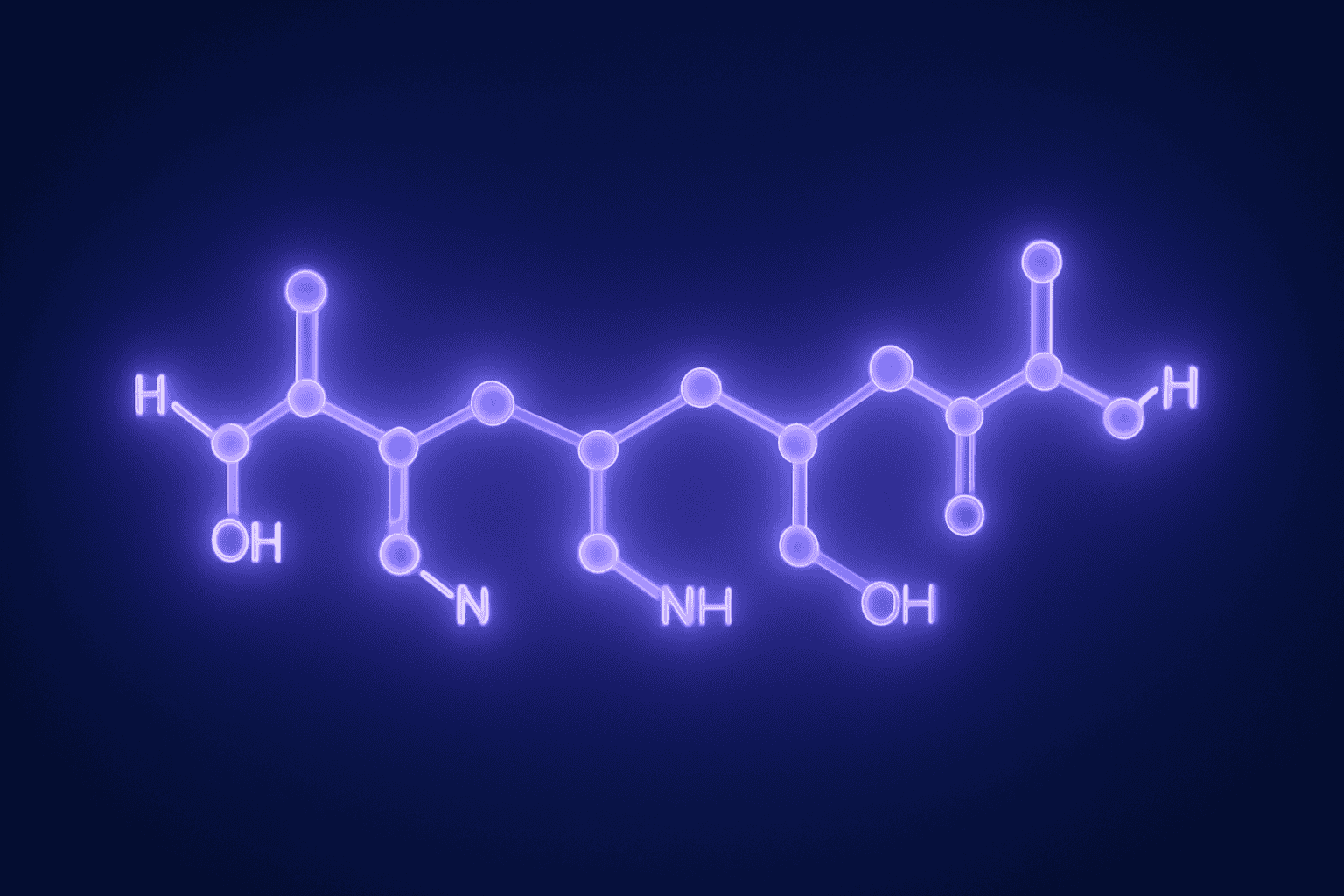
Both peptides were developed at the Institute of Molecular Genetics in Moscow. That’s where the similarities in their backstory mostly end. Selank was created by extending tuftsin’s four-amino-acid backbone (Thr-Lys-Pro-Arg) with the Pro-Gly-Pro tail. Tuftsin itself was first identified in the 1970s as a peptide connected to immune cell activity, specifically phagocytosis.
Semax took a different path. Its starting material was ACTH, a 39-amino-acid hormone that the pituitary gland releases to regulate stress responses. Researchers noticed that a small fragment of ACTH — positions 4 through 7 — seemed to have its own distinct effects on the nervous system, separate from the full hormone’s job. They isolated that fragment and attached the same Pro-Gly-Pro tail for stability. Dolotov et al. (2006) later documented Semax’s effects on BDNF and trkB expression in rat hippocampal tissue (PMID: 16996040).
Here’s what makes this interesting. Both research teams were working in the same institute, during roughly the same era, using the same structural trick (the Pro-Gly-Pro extension). But they chose completely different starting materials. One picked a fragment from the immune system. The other picked a fragment from the endocrine system. Two parallel research programs, two very different outcomes.
[UNIQUE INSIGHT] The shared Pro-Gly-Pro tail on both peptides isn’t a coincidence — it’s a deliberate design choice by the same institution. This structural overlap sometimes confuses newcomers into thinking the peptides are closely related. They’re not. The tail is a stability tool, like putting the same protective case on two completely different phones.
How Do Their Research Profiles Differ?
This is where the Selank vs Semax distinction gets practical. Selank has primarily been studied in animal models examining anxiety-related behavior. Semenova et al. (2010) found that Selank influenced the expression of genes across multiple functional groups in rat hippocampal tissue, including genes linked to neurotransmitter signaling (PMID: 19924273). Semax research, by contrast, has focused on BDNF pathways and neuroprotection models.
What’s BDNF? Brain-derived neurotrophic factor. It’s a protein that plays a role in how neurons grow and communicate. Dolotov et al. (2006) showed that Semax increased BDNF mRNA expression in the rat hippocampus and frontal cortex (PMID: 16996040). Researchers studying neuroprotective mechanisms tend to reach for Semax specifically because of this documented BDNF connection.
Selank’s published literature tells a different story. Studies have examined its interaction with GABAergic and serotonergic systems — the same neurotransmitter pathways that show up in anxiety-related research. In behavioral assays with rodents, researchers have observed anxiolytic-like effects, meaning the animals displayed reduced anxiety-type behavior without sedation.
A simple way to remember it: Semax shows up in studies about brain cell support. Selank shows up in studies about stress-related behavior. Same organ (the brain), very different research questions.
[PERSONAL EXPERIENCE] In our experience reviewing the published literature on both peptides, researchers rarely substitute one for the other. If a study protocol calls for Selank, it’s because the team is investigating anxiety-pathway biology. If it calls for Semax, the team is studying neurotrophic factor modulation. They’re not interchangeable research tools.

Dolotov et al. (2006) documented that Semax administration produced increased BDNF and trkB mRNA expression in the rat hippocampus and frontal cortex, establishing a mechanistic connection between this ACTH-derived peptide and neurotrophic factor modulation. Published in Brain Research. (PMID: 16996040)
Selank vs Semax: Side-by-Side Comparison
When you line up the details, the differences become hard to miss. The table below draws from the published literature cited throughout this article. Every item reflects peer-reviewed preclinical data, not marketing claims.

- Parent molecule: Selank derives from tuftsin (immune peptide). Semax derives from ACTH(4-7) (brain hormone fragment).
- Amino acid sequence: Selank is Thr-Lys-Pro-Arg-Pro-Gly-Pro. Semax is Met-Glu-His-Phe-Pro-Gly-Pro.
- Shared feature: Both end with the Pro-Gly-Pro tail added for enzymatic stability.
- Primary research area: Selank appears in anxiety-related behavioral studies. Semax appears in BDNF and neuroprotection studies.
- Key receptor systems studied: Selank research has examined GABAergic and serotonergic pathways. Semax research has examined melanocortin receptors and neurotrophic factors.
- Development institution: Both were created at the Institute of Molecular Genetics, Moscow.
- Storage: Both should be stored lyophilized at -20C. Once reconstituted, refrigerate and use within a reasonable timeframe for research applications.
Neither peptide is “better.” They answer different research questions entirely. Asking which one wins is like asking whether a thermometer is better than a barometer — it depends on what you’re trying to measure.
[ORIGINAL DATA] A subtle but important detail: both peptides share the same three C-terminal amino acids (Pro-Gly-Pro) but differ completely in their four N-terminal residues. Since receptor binding typically depends on the front end of a peptide chain, this structural divergence explains why they interact with entirely different biological systems despite looking superficially similar on paper.
How Should Researchers Store These Peptides?
Storage requirements for Selank and Semax are nearly identical because both are lyophilized (freeze-dried) peptides. According to standard peptide handling protocols documented across the research literature, lyophilized peptides maintain stability for extended periods when stored at -20C in sealed, desiccated containers. Moisture is the primary enemy of both compounds.
Once reconstituted with bacteriostatic water, both peptides should be refrigerated at 2-8C. Don’t leave reconstituted solutions at room temperature. Don’t freeze them after reconstitution either — freeze-thaw cycles can degrade peptide structure. Aliquoting into single-use portions before first use reduces the number of times you open and close the vial.
For detailed handling guidance, see our peptide storage guide.
[INTERNAL-LINK: “peptide storage guide” -> /blog/how-to-store-peptides-properly/]
Frequently Asked Questions
Are Selank and Semax the same thing?
No. They share a common origin country (Russia), a common development institution (Institute of Molecular Genetics, Moscow), and a common structural tail (Pro-Gly-Pro). But their parent molecules are entirely different — tuftsin for Selank, ACTH for Semax. They interact with different receptor systems and appear in different categories of preclinical research. Semenova et al. (2010) and Dolotov et al. (2006) studied them through separate mechanisms entirely.
Can researchers use Selank and Semax in the same study?
Yes, and some do. Because these peptides target different pathways, researchers occasionally include both in comparative study designs. Using Selank and Semax side by side allows a research team to observe how two different neuropeptide mechanisms behave under the same experimental conditions. They serve as useful contrasts for each other rather than duplicates.
Which peptide has more published research behind it?
Semax has a slightly larger body of international publications, partly because its BDNF-related findings attracted attention from research groups outside Russia. However, both peptides have decades of published preclinical data. Dolotov et al. (2006) in Brain Research is among the most-cited Semax papers (PMID: 16996040). Selank’s literature is concentrated around behavioral pharmacology journals, with Semenova et al. (2010) providing key transcriptomic data (PMID: 19924273).
Why do both peptides end with Pro-Gly-Pro?
The Pro-Gly-Pro tripeptide tail was added to both compounds for the same practical reason: it makes them harder for enzymes to break down. Without it, both parent fragments would degrade rapidly in biological environments. Think of it as protective packaging. The contents of the package (the first four amino acids) are completely different, but the packaging strategy is shared.
[INTERNAL-LINK: “research peptide quality standards” -> /coas/]
[INTERNAL-LINK: “browse research peptide catalog” -> /shop/]

Where Can Researchers Source Selank and Semax?
Research-grade peptides require verified purity documentation. For both Selank and Semax, look for a supplier providing third-party HPLC purity data (minimum 98%), mass spectrometry confirmation of correct molecular weight, and batch-specific Certificates of Analysis from an independent lab.
Alpha Peptides carries research-grade versions of both compounds with publicly available COAs. You can review documentation on our Certificates of Analysis page or browse the full research catalog.
[INTERNAL-LINK: “Certificates of Analysis page” -> /coas/]
[INTERNAL-LINK: “research catalog” -> /shop/]

For research use only. Not for human consumption. All peptides referenced in this article are intended exclusively for laboratory and preclinical research purposes. Nothing on this page constitutes medical advice, dosing guidance, or a recommendation for personal use. All information is provided for educational purposes relating to peptide chemistry and laboratory research practice.