
· For research use only. Not for human consumption.
For research use only. Not for human consumption.
If you have ever wondered how peptides are made, you are not alone. These short chains of amino acids show up constantly in research papers, lab catalogs, and science news, yet most people have no idea how they are actually built. The process is far more fascinating than you might expect, and understanding it can help you evaluate the quality of the peptides you purchase for your research.
Today, nearly every research-grade peptide is manufactured using a technique called solid-phase peptide synthesis, or SPPS for short. This method was invented in 1963 and completely changed the game for peptide science. Before we explore the details, keep in mind that all peptides discussed here are for research purposes only.
In this article, we will walk through the entire process step by step, in plain language that anyone can follow. No chemistry degree required. By the end, you will understand exactly how a peptide goes from raw amino acids to a finished product sitting in a vial on a lab bench.
TL;DR: Research peptides are built one amino acid at a time using solid-phase peptide synthesis (SPPS), a method invented by Bruce Merrifield in 1963. Amino acids are attached to a solid resin bead, linked together in sequence, then cut free and purified. This process gives scientists precise control over the final product.
For research use only. Not for human consumption.
The Problem Before Solid-Phase Synthesis
Before 1963, making peptides was a painful process. Scientists had to build them in liquid solutions, which meant every single step required its own round of purification. Imagine trying to bake a cake, but after adding each ingredient, you had to wash the entire bowl, dry it, test it, and then add the next ingredient. That is essentially what early peptide chemistry looked like.
The process was incredibly slow. Making even a short peptide with ten amino acids could take months of work. Yields were low, mistakes were common, and the whole endeavor was expensive. Researchers needed a better way.
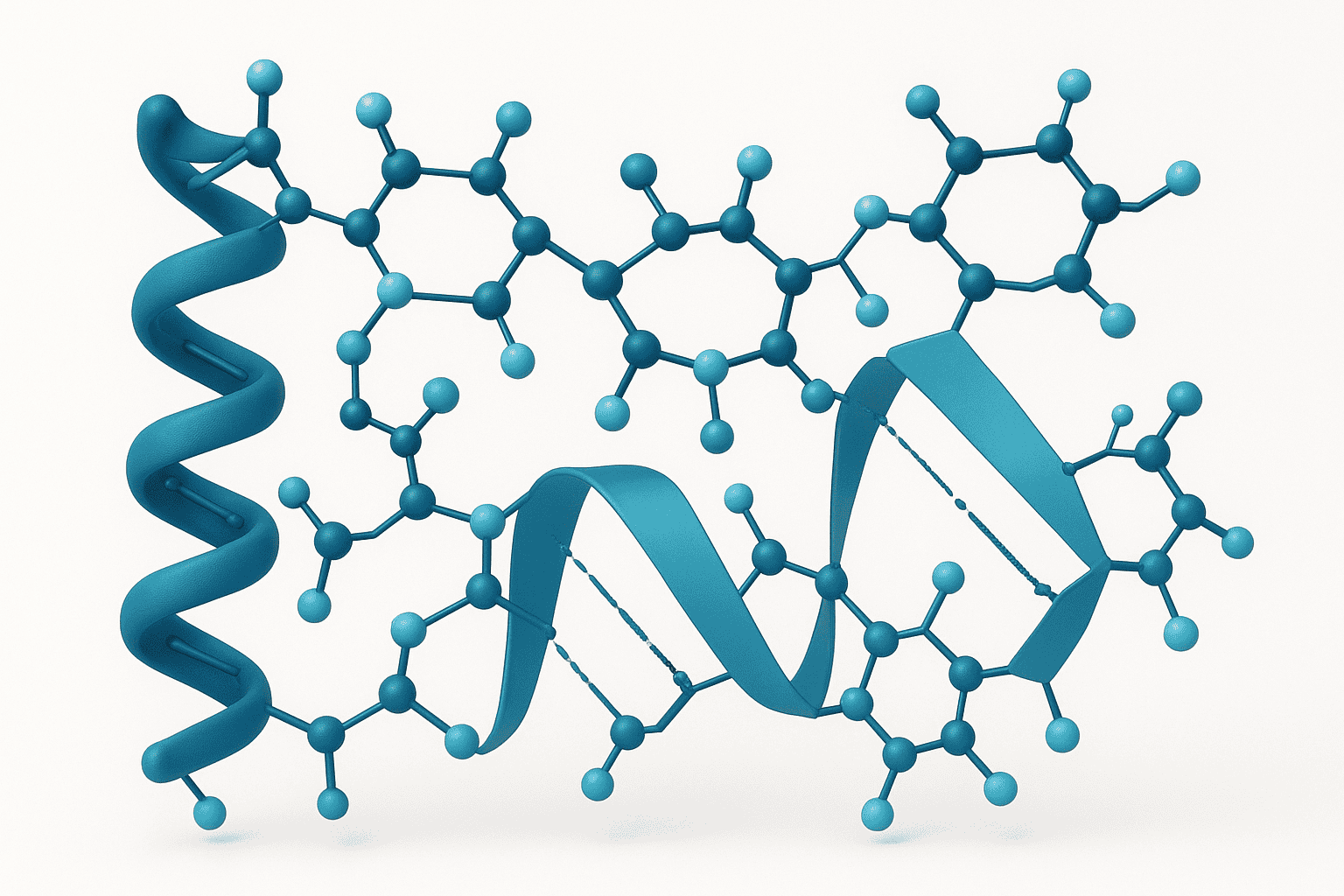
Bruce Merrifield’s Big Idea: How Peptides Are Made Today
In 1963, an American chemist named Bruce Merrifield had a simple but brilliant idea. What if you could anchor one end of the growing peptide chain to a solid surface? That way, you could wash away all the unwanted chemicals without losing your peptide. It would stay stuck to the solid support like a flag on a flagpole.
That solid surface is a tiny resin bead, usually made of a special polymer. Think of it as a microscopic plastic ball. The first amino acid gets attached to this bead, and then additional amino acids are added one at a time. The beauty of this approach is that between each step, you simply rinse the beads. All the leftover chemicals wash away, but your growing peptide stays put.
Merrifield’s invention was so significant that he received the Nobel Prize in Chemistry in 1984. His method is still the foundation of how peptides are made in labs around the world today.
Merrifield, R.B. (1963) described solid-phase peptide synthesis as a method for anchoring the growing chain to an insoluble resin support. (PMID: 14044583)
The Step-by-Step Process
Here is the basic workflow, broken into steps anyone can follow:
Step 1: Attach the first amino acid. The first amino acid in the sequence is chemically bonded to the resin bead. This creates your starting anchor point.
Step 2: Remove the protecting group. Each amino acid arrives with a chemical “cap” on it that prevents it from reacting too early. This cap, called a protecting group, must be removed before the next amino acid can be added.
Step 3: Add the next amino acid. A new amino acid (also wearing its own protecting cap) is introduced. It links up with the exposed end of the first amino acid, forming a peptide bond.
Step 4: Wash. Everything that did not react gets rinsed away. Your two-amino-acid chain remains safely attached to the bead.
Step 5: Repeat. Steps 2 through 4 are repeated for every amino acid in the sequence. If your target peptide is 20 amino acids long, you go through roughly 20 cycles of deprotection, coupling, and washing.
Step 6: Cleavage. Once the full chain is assembled, a chemical solution is used to cut the finished peptide free from the resin bead. This step also removes any remaining side-chain protecting groups.
Step 7: Purification. The crude peptide is purified, typically using high-performance liquid chromatography (HPLC), to separate the target peptide from any incomplete chains or byproducts.
The Bead-and-Necklace Analogy
The easiest way to picture solid-phase synthesis is to imagine making a necklace. The resin bead is like a hook on the wall. You pin one end of the necklace to that hook, then add one bead at a time. After each bead, you wipe down your workspace. When the necklace is finished, you unclip it from the hook and polish it up.
This analogy captures the core advantage of SPPS. Because the peptide is anchored in place, you never lose your work-in-progress during the cleanup steps. That is why yields are higher and the process is faster compared to the old liquid-phase approach.
Why Purification Matters
Even with SPPS, no synthesis run is perfect. Some chains will be incomplete (missing an amino acid), and some will contain small errors. That is why the purification step is so important. HPLC separates the correctly assembled peptides from everything else based on their chemical properties.
The result is a purity percentage. A peptide labeled as 98% pure means that 98% of the material in the vial is the intended peptide, while 2% consists of closely related impurities. For most research applications, higher purity leads to more reliable and reproducible results.
At Alpha Peptides, every product goes through rigorous HPLC purification and is verified by third-party testing. You can review the batch-specific Certificates of Analysis (COAs) for every product we offer.

Why This Should Matter to You as a Researcher
Understanding how peptides are made gives you a better framework for evaluating suppliers. A company that can explain its synthesis and purification process is more likely to deliver a reliable product. Ask about their methods, look at their COAs, and pay attention to purity data.
When the synthesis is done right and the purification is thorough, you get peptides that perform consistently in your experiments. When corners are cut, impurities creep in and your results suffer.
Alpha Peptides uses solid-phase synthesis followed by HPLC purification and mass spectrometry confirmation. Every batch is tested independently, and the results are published on our COA page. Browse our full catalog of research peptides at alpha-peptides.com/shop.
Frequently Asked Questions
What does “solid-phase” mean in peptide synthesis?
It means the peptide chain is built while attached to a solid resin bead. This allows easy washing between steps without losing the growing peptide. The peptide is cut free from the resin only after the full sequence is assembled.
Who invented solid-phase peptide synthesis?
American chemist Bruce Merrifield invented SPPS in 1963. He was awarded the Nobel Prize in Chemistry in 1984 for this contribution.
How long does it take to synthesize a peptide?
Modern automated synthesizers can assemble a peptide in hours to a few days, depending on the length and complexity of the sequence. Purification and quality testing add additional time.
Why are some peptides more expensive than others?
Longer peptides require more synthesis cycles, and certain amino acid sequences are more difficult to couple. Higher purity targets also require more extensive purification, which increases cost.
Does Alpha Peptides provide synthesis and testing documentation?
Yes. Every product includes a batch-specific Certificate of Analysis with HPLC and mass spectrometry data. These are available on our COAs page.
For research use only. Not for human consumption. This article is provided for educational and informational purposes. Alpha Peptides products are intended solely for in vitro research and laboratory use. Always consult applicable regulations and institutional guidelines before purchasing research materials.