
· For research use only. Not for human consumption.
GLP-3 pharmacokinetics is a topic that comes up frequently among researchers studying this triple agonist compound. Pharmacokinetics — often shortened to “PK” — is the science of how a compound moves through a biological system over time. How quickly is it absorbed? How long does it stay active? How is it eventually eliminated? These are the questions PK answers, and they’re critical for understanding any research compound.
This article explains GLP-3 pharmacokinetics in plain language. No chemistry background required. We’ll define the key PK concepts, summarize what published research has reported about GLP-3’s pharmacokinetic profile, and explain why PK data matters so much for research planning.
For a beginner-friendly overview of the compound itself, see our GLP-3 beginner’s guide. For dose-response data, our GLP-3 dose-response post covers what published studies have reported.
[INTERNAL-LINK: “GLP-3 beginner’s guide” -> /blog/what-is-glp-3-beginners-guide/]
[INTERNAL-LINK: “GLP-3 dose-response post” -> /blog/glp-3-dose-response-research-data/]
TL;DR: GLP-3 pharmacokinetics describes how the compound is absorbed, distributed, metabolized, and eliminated in research settings. Published studies by Urva et al. (2022; PMID: 36354040) and Rosenstock et al. (2023; PMID: 37385280) reported PK parameters from controlled clinical research. The compound’s PK profile is characteristic of engineered peptides designed for extended activity. For research use only. Not for human consumption.
What Is Pharmacokinetics? The Basics
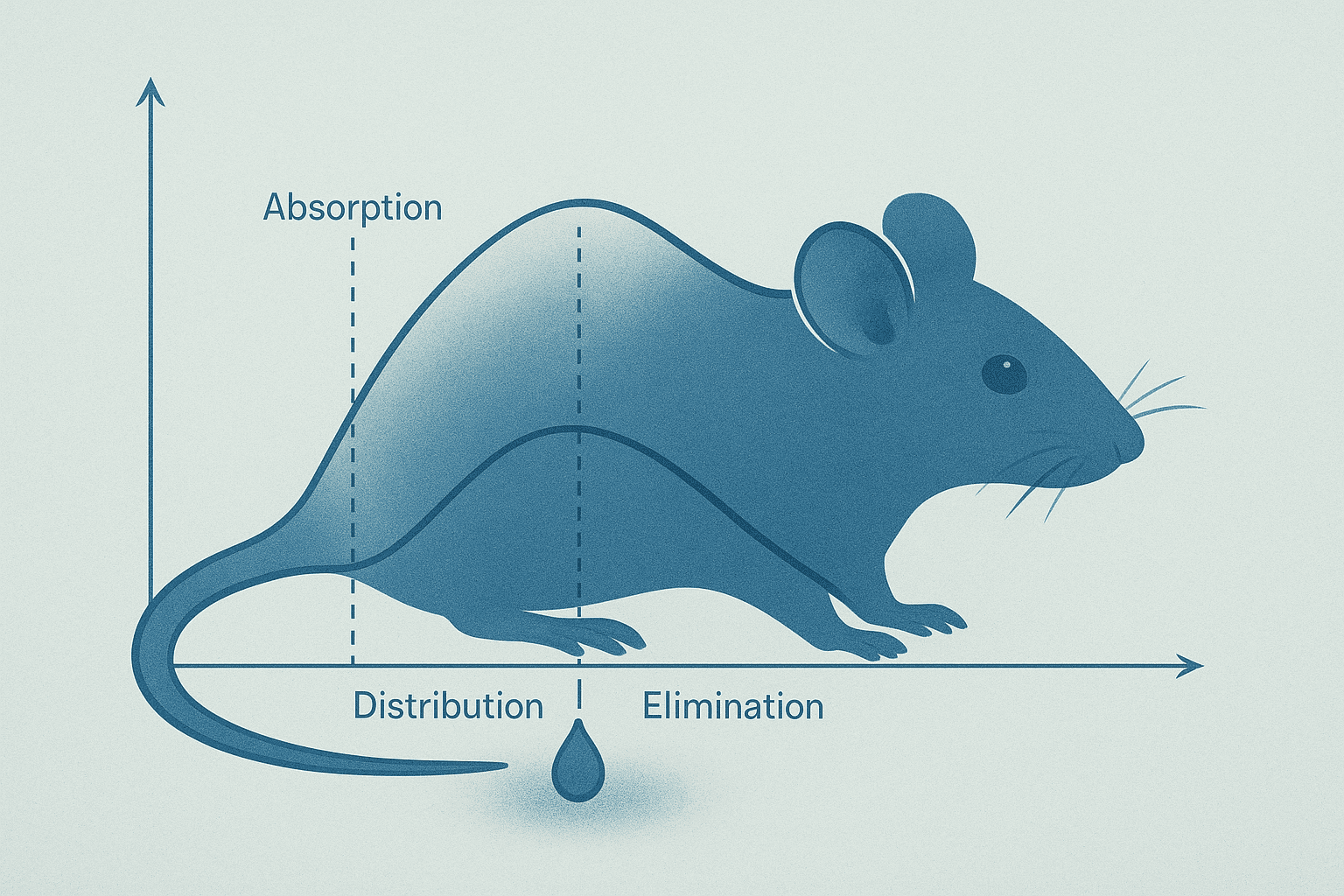
Pharmacokinetics sounds intimidating, but it breaks down into four straightforward concepts. Scientists often remember them with the acronym ADME:
Absorption: How does the compound get into the system? For a peptide, this is typically measured by how quickly and completely it enters the bloodstream after administration in a research setting. Think of it like dropping a sugar cube into water — absorption is how fast the sugar dissolves and spreads.
Distribution: Where does the compound go once it’s in the bloodstream? Does it concentrate in certain tissues? Does it spread evenly? Distribution tells researchers which parts of the biological system are being exposed to the compound.
Metabolism: How does the body process the compound? Enzymes in the liver and other tissues break down foreign molecules. Metabolism describes how this breakdown happens and what byproducts (called metabolites) are produced.
Elimination: How does the compound leave the system? Eventually, every compound is cleared — either through the kidneys (urine), the liver (bile), or other routes. Elimination describes how fast this happens.
Together, these four processes determine GLP-3 pharmacokinetics: how the compound enters, travels through, is processed by, and exits the biological system.
Half-Life: The Clock That Matters Most
Of all the PK parameters, half-life is probably the most important — and the easiest to understand. Half-life is the time it takes for half of the compound to be eliminated from the system.
Here’s a simple example. If you start with 100 units of a compound and its half-life is 6 hours, then after 6 hours you’d have about 50 units remaining. After another 6 hours (12 hours total), you’d have about 25 units. After another 6 hours (18 hours total), about 12.5 units. Each half-life period cuts the remaining amount in half.
Half-life matters for research because it tells scientists how long the compound remains active in the system at meaningful levels. A short half-life means the compound is gone quickly. A long half-life means it persists, which has implications for how researchers design their experimental protocols and timing.
For engineered peptides like GLP-3, half-life is a key design feature. Scientists deliberately build peptides to have specific half-life characteristics based on how they need the compound to behave in research settings. This is one reason why synthetic analogs often last longer than their natural counterparts — they’ve been engineered for stability.
What Published Research Reports About GLP-3 Pharmacokinetics
Two key studies have reported pharmacokinetic data for GLP-3. The phase 1b trial by Urva et al. (2022) provided the first systematic PK characterization, and the phase 2 trial by Rosenstock et al. (2023) expanded on this data with a larger research cohort.
The Urva et al. study used a multiple-ascending approach, which is specifically designed to generate PK data. By administering different amounts to different groups and measuring compound levels at regular intervals, researchers were able to map out GLP-3’s absorption, peak levels, and elimination rate. This type of study is the gold standard for establishing a compound’s pharmacokinetic profile.
The Rosenstock et al. phase 2 study provided additional PK data over a longer observation period. With more subjects and more data points, this study refined the PK picture established in phase 1b and provided researchers with a more comprehensive understanding of how GLP-3 behaves over time.
The published data indicates that GLP-3’s pharmacokinetic profile is consistent with an engineered peptide designed for extended activity — meaning it was built to remain in the system longer than a natural, unmodified peptide would.
Urva S et al. (2022) conducted a phase 1b multiple-ascending trial characterizing GLP-3’s pharmacokinetic profile, including absorption, peak levels, and elimination kinetics across multiple cohorts in a controlled, double-blind, placebo-controlled research setting. (PMID: 36354040)
Why GLP-3 Pharmacokinetics Matters for Research Design
Pharmacokinetic data isn’t just interesting trivia — it’s essential for designing good research. Without PK data, researchers are essentially working blind. They don’t know how long the compound will be active, when peak levels occur, or how quickly the compound is cleared.
For a multi-receptor compound like GLP-3, PK is especially important. Because GLP-3 targets three different receptors (GLP-1, GIP, and glucagon), researchers need to know whether the compound reaches all three receptor populations at sufficient levels and for sufficient duration to produce meaningful engagement. PK data answers these questions.
Research design decisions that depend on PK include: timing of measurements (you need to measure when the compound is active, not after it’s been eliminated), frequency of administration in multi-observation studies, and washout periods (the time needed for the compound to be fully cleared before a new phase of research begins).
The published PK data from Urva et al. and Rosenstock et al. provides the foundation that other researchers use when designing their own GLP-3 studies. It’s the pharmacokinetic roadmap for the field.
Engineered Peptides vs. Natural Peptides: A PK Perspective

One of the reasons GLP-3’s pharmacokinetics are noteworthy is that it’s an engineered compound. Natural peptides in the body typically have very short half-lives — minutes, in many cases. The body produces them for quick signaling bursts and then clears them rapidly.
Engineered peptides like GLP-3 are designed differently. Through modifications to the amino acid sequence, additions of stabilizing elements, or other structural changes, scientists can create peptides that resist the enzymes that would normally break them down. This extends the compound’s half-life and changes its entire pharmacokinetic profile.
This engineering is what makes modern research peptides practical as laboratory tools. If GLP-3 were eliminated as quickly as natural gut hormones, it would be extremely difficult to study in any systematic way. The engineered PK profile gives researchers a workable window for their investigations.
All published GLP-3 pharmacokinetic data comes from controlled clinical research settings. The parameters described in this article are from the published scientific literature and represent the current evidence base for this research compound.
Rosenstock J et al. (2023) reported pharmacokinetic and pharmacodynamic data from a phase 2 trial examining GLP-3 as a triple GIP, GLP-1, and glucagon receptor agonist. The study provided extended PK observations across multiple cohorts in a randomized, double-blind, placebo-controlled design. (PMID: 37385280)
Alpha Peptides offers research-grade GLP-3 RT with independent third-party testing and a Certificate of Analysis documenting purity and identity. For researchers studying multi-receptor pharmacology, peptide pharmacokinetics, or triple agonist compound behavior, GLP-3 RT provides a well-characterized research tool. Visit our research peptides shop for the full catalog, or review testing data on our Certificates of Analysis page.
Frequently Asked Questions
What does pharmacokinetics mean?
Pharmacokinetics (PK) is the study of how a compound is absorbed, distributed, metabolized, and eliminated in a biological system over time. It tells researchers how long a compound stays active and how it moves through the system.
What is half-life?
Half-life is the time it takes for half of a compound to be eliminated from the system. If a compound has a 6-hour half-life, half of it is gone after 6 hours, three-quarters after 12 hours, and so on.
Why is PK important for GLP-3 research?
Because GLP-3 targets three different receptors, researchers need to know how long the compound remains active and at what levels to ensure all three receptor systems are meaningfully engaged during experiments. PK data informs experimental design decisions.
Where does the published GLP-3 PK data come from?
The primary PK data comes from the phase 1b study by Urva et al. (2022) and the phase 2 study by Rosenstock et al. (2023), both published in peer-reviewed journals. These studies used controlled, double-blind, placebo-controlled designs.
Is GLP-3 available for research?
Alpha Peptides carries research-grade GLP-3 RT for laboratory investigation purposes only. It is not sold for human consumption. Every order includes a Certificate of Analysis.
For research use only. Not for human consumption. This article is intended for informational and educational purposes. It does not constitute medical advice, and no therapeutic claims are made. Always consult published peer-reviewed literature for detailed research data.