
· For research use only. Not for human consumption.
GLP-2 intestinal research has quietly become one of the most important areas in gut biology over the past three decades. GLP-2 stands for glucagon-like peptide-2, and it’s a naturally occurring hormone that your body produces in the intestines. Scientists first identified it in the 1990s, and since then it has become a key tool for understanding how the gut grows, maintains itself, and adapts to different conditions.
If you’re not a scientist, don’t worry. This article explains GLP-2 intestinal research in plain language — no background in biology required. We’ll cover where GLP-2 comes from, what it does in the gut, and why researchers consider it such a valuable compound for laboratory investigation. If you want to understand how GLP-2 compares to its more famous sibling GLP-1, see our guide on GLP-2 vs GLP-1.
For a broader look at the GLP family, our post on the GLP-1, GLP-2, and GLP-3 family provides a helpful starting point.
[INTERNAL-LINK: “GLP-2 vs GLP-1” -> /blog/glp-2-vs-glp-1-different-signals/]
[INTERNAL-LINK: “the GLP-1, GLP-2, and GLP-3 family” -> /blog/glp-1-glp-2-glp-3-family-guide/]
TL;DR: GLP-2 is a naturally occurring gut hormone that has been investigated in laboratory and preclinical research for its role in intestinal biology, including intestinal growth and nutrient absorption. Drucker DJ (2019) documented the discovery and development of GLP-2 analogs (PMID: 32219218), and Yazbeck R (2010) reviewed their investigation in gastrointestinal research models (PMID: 21154171). GLP-2 is sold for research use only, not for human consumption.
How GLP-2 Was Discovered in Intestinal Research
The story of GLP-2 begins with a larger molecule called proglucagon. Proglucagon is a precursor protein — think of it as a long chain that the body cuts into smaller, functional pieces. When scientists first studied proglucagon in the 1980s, they were mostly interested in glucagon itself (a hormone that raises blood sugar) and GLP-1 (a hormone involved in metabolism).
But there was another fragment hiding in the same chain. In the 1990s, researcher Daniel Drucker and his team at the University of Toronto began examining this overlooked piece. They discovered that when they isolated it and tested it in animal models, something remarkable happened: the lining of the intestine grew thicker and healthier. They named this fragment glucagon-like peptide-2, or GLP-2.
This was a turning point. Before this discovery, scientists didn’t have a clear understanding of what controlled intestinal growth at the hormonal level. Drucker’s work opened an entirely new field of GLP-2 intestinal research that continues to expand today.
Drucker DJ (2019) detailed the discovery of GLP-2 and the subsequent development of teduglutide, a GLP-2 analog. This review traced the journey from basic proglucagon biology to the characterization of GLP-2’s intestinal effects in preclinical models. (PMID: 32219218)
What GLP-2 Does in the Gut
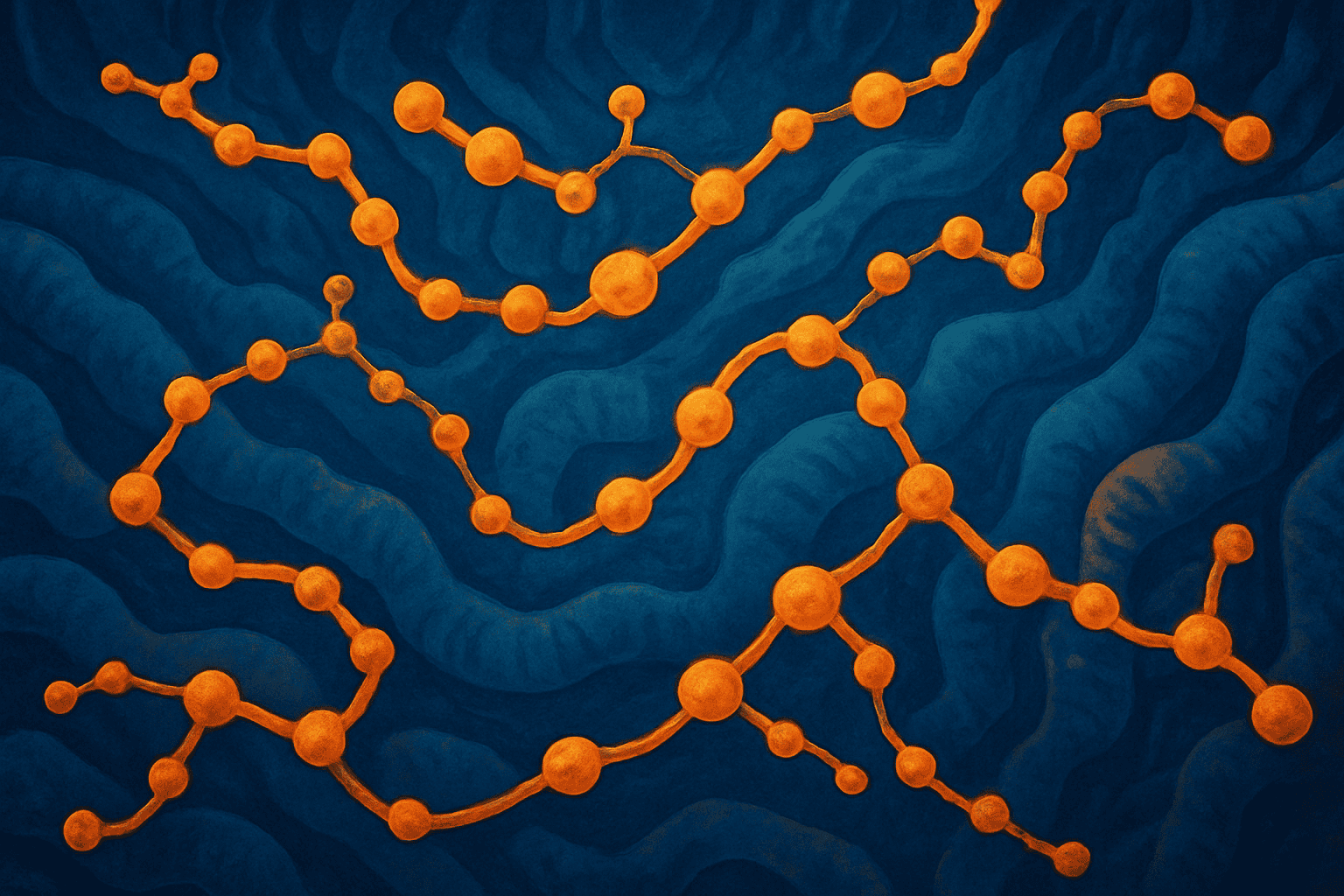
The intestine isn’t just a tube — it’s a highly active organ with a lining that constantly renews itself. The inner surface of the intestine is covered in tiny finger-like projections called villi. These villi increase the surface area available for absorbing nutrients from food. The more surface area, the more efficiently nutrients can be absorbed.
GLP-2 has been investigated in preclinical models for its role in promoting the growth and maintenance of these villi. When researchers administered GLP-2 to animal models, they observed increases in villus height, intestinal weight, and overall mucosal thickness. In simple terms, GLP-2 appeared to signal the gut lining to grow and strengthen itself.
Beyond growth, GLP-2 has also been studied for its potential role in supporting intestinal blood flow. The gut needs a robust blood supply to function properly — delivering oxygen and carrying away absorbed nutrients. Preclinical research has examined how GLP-2 may influence blood flow to the intestinal lining, adding another dimension to its biological profile.
L-Cells: Where GLP-2 Comes From
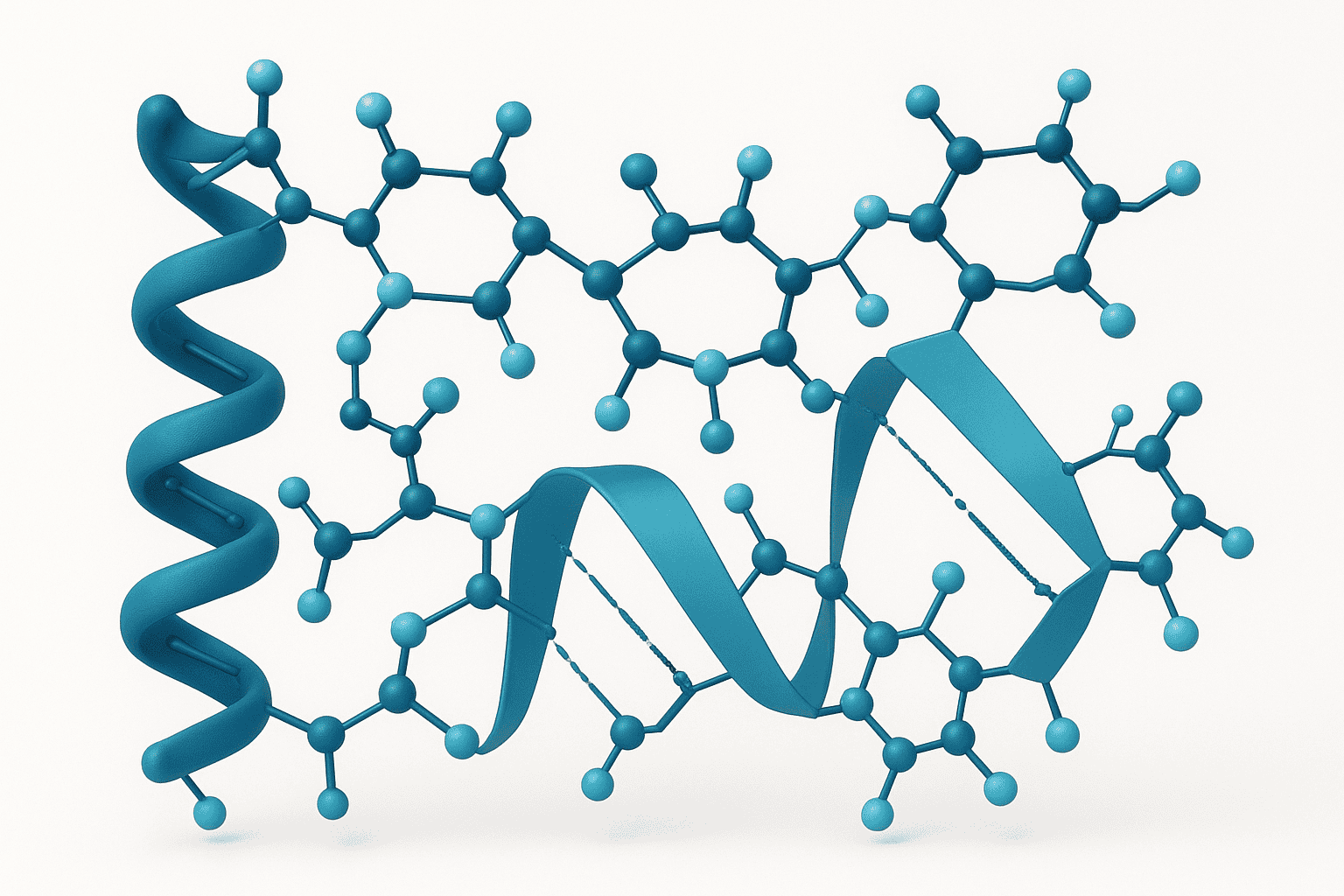
GLP-2 is produced by specialized cells in the intestinal lining called L-cells. These cells sit along the lower part of the small intestine and throughout the large intestine. When food passes through and makes contact with these cells, they respond by releasing GLP-2 (along with its sibling, GLP-1) into the surrounding tissue and bloodstream.
Think of L-cells as sensors. They detect when nutrients are present and respond by releasing signaling molecules that tell the rest of the gut what to do. GLP-1 sends signals outward — to the pancreas and brain. GLP-2 sends signals locally — to the intestinal wall itself. Same cell, same trigger, but very different messages.
This is one of the reasons GLP-2 intestinal research is so fascinating to scientists. The fact that GLP-2 acts locally on the gut, rather than traveling to distant organs, makes it a uniquely targeted signaling molecule. Most hormones travel through the bloodstream to affect organs far away. GLP-2 largely stays close to home.
Why GLP-2 Intestinal Research Matters
You might be wondering why scientists care so much about a hormone that makes the gut lining grow. The answer is that the intestinal lining is one of the most critical barriers in the body. It’s a single layer of cells separating the inside of your body from everything you eat and drink. When that barrier is compromised, problems can follow.
Researchers have investigated GLP-2 in preclinical models to understand how the gut maintains and repairs this barrier. The published literature suggests that GLP-2 may play a role in signaling the gut to strengthen itself after various types of stress or disruption. This has made GLP-2 an important research tool for scientists studying intestinal biology.
It’s worth emphasizing that this research is still in the preclinical and laboratory stage. GLP-2 research compounds are sold for scientific investigation only, and no conclusions about human applications should be drawn from preclinical data alone.
Yazbeck R (2010) reviewed the investigation of teduglutide (a GLP-2 analog) in gastrointestinal research models, documenting how the compound had been examined across multiple preclinical settings involving intestinal biology. (PMID: 21154171)
Preclinical Observations: What Researchers Have Seen
Preclinical research on GLP-2 has generated a substantial body of published data. In animal models, researchers have documented several consistent observations when GLP-2 or its analogs are administered in controlled laboratory settings.
First, intestinal growth. Multiple studies have reported increases in small intestinal weight and length following GLP-2 administration in animal models. The villi — those finger-like projections we mentioned earlier — have been observed to grow taller and thicker, increasing the absorptive surface area of the gut.
Second, crypt cell activity. The intestinal lining renews itself from stem cells located in small pockets called crypts. GLP-2 has been investigated for its effects on crypt cell proliferation — essentially, how fast the gut produces new lining cells. Published research has noted increased proliferation rates in models receiving GLP-2.
Third, reduced cell death. Some preclinical studies have examined whether GLP-2 influences the rate at which intestinal cells undergo apoptosis (programmed cell death). The combination of more new cells and fewer cells dying could contribute to the thicker, more robust gut lining observed in these models.
These observations are from controlled laboratory and animal studies. They represent the current state of preclinical GLP-2 intestinal research, not conclusions about any human application.
Alpha Peptides carries research-grade GLP-2 with a Certificate of Analysis confirming purity and identity. Every batch is independently tested. For researchers investigating intestinal biology, gut barrier integrity, or nutrient absorption pathways, GLP-2 remains one of the most well-documented tools available. Browse our full catalog on the research peptides shop page, or visit our Certificates of Analysis page to review third-party testing data.

Frequently Asked Questions
What is GLP-2?
GLP-2 stands for glucagon-like peptide-2. It is a naturally occurring hormone produced by L-cells in the intestine. It has been investigated in laboratory and preclinical research for its role in intestinal growth and maintenance.
Where does GLP-2 come from in the body?
GLP-2 is produced by specialized intestinal cells called L-cells. These cells release GLP-2 (along with GLP-1) in response to nutrients passing through the gut.
How is GLP-2 different from GLP-1?
Both GLP-1 and GLP-2 are produced by the same L-cells and come from the same precursor molecule (proglucagon). However, GLP-1 primarily signals to the pancreas and brain, while GLP-2 acts locally on the intestinal wall. For a detailed comparison, see our post on GLP-2 vs GLP-1.
Is GLP-2 approved for human use?
The GLP-2 analog sold by Alpha Peptides is a research compound intended for laboratory investigation only. It is not approved for human use and is not sold for consumption. For research use only.
What has preclinical research shown about GLP-2?
Published preclinical studies have documented observations related to intestinal growth, villus height, crypt cell proliferation, and intestinal blood flow in animal models. These findings are from controlled research settings and do not represent conclusions about human applications.
For research use only. Not for human consumption. This article is intended for informational and educational purposes. It does not constitute medical advice, and no therapeutic claims are made. Always consult published peer-reviewed literature for detailed research data.