
· For research use only. Not for human consumption.
For research use only. Not for human consumption.
The amylin pathway is one of the most actively researched signaling systems in modern peptide science. Amylin is a hormone that most people have never heard of, yet it plays a significant role in how the body processes metabolic signals. Understanding this pathway is key to understanding why compounds like cagrilintide have generated so much attention in research laboratories.
While much of the public conversation around metabolic peptide research focuses on incretin pathways like GLP-1, the amylin pathway represents a parallel and complementary area of investigation. Researchers studying compounds available through suppliers like Alpha Peptides often encounter the amylin pathway when exploring how different hormonal signaling systems interact and overlap.
This article breaks down the amylin pathway in plain language, explains what cagrilintide is and why it is studied, and puts the research into context for anyone trying to understand this area of peptide science.
TL;DR: Amylin is a hormone released alongside insulin from pancreatic beta cells. It acts on specific receptors involved in satiety signaling and gastric function. Cagrilintide is a long-acting amylin analog designed for research into amylin receptor activation. Published studies have examined its pharmacological properties in clinical settings.
For research use only. Not for human consumption.
What Is Amylin?
Amylin, also known as islet amyloid polypeptide (IAPP), is a 37-amino-acid peptide hormone. It is produced by the same cells in the pancreas that produce insulin, known as beta cells. Every time beta cells release insulin, they also release amylin. The two hormones are co-secreted, meaning they are released together in response to the same signals.
Despite being discovered decades ago, amylin has received far less public attention than insulin. However, in research circles, the amylin pathway has become a major area of interest. Scientists have identified several important roles that amylin plays in biological signaling, and these findings have driven the development of synthetic amylin analogs for research purposes.
Amylin is a relatively small peptide, and like many small peptides, it is broken down quickly by enzymes in the body. This short lifespan is one of the reasons researchers have worked to create longer-acting analogs that can be studied more easily in experimental settings.
The Amylin Receptor and Its Signaling
Amylin exerts its effects by binding to amylin receptors. These receptors are found in several areas of the body, with particularly high concentrations in certain brain regions. The amylin receptor is actually a complex structure made up of a calcitonin receptor combined with receptor activity-modifying proteins (RAMPs). Different RAMP combinations create different receptor subtypes, each with slightly different properties.
When amylin binds to its receptor, it triggers a signaling cascade inside the cell. In preclinical models, amylin receptor activation has been investigated for its role in several biological processes, including satiety signaling (the feeling of fullness after eating) and the rate at which the stomach empties its contents.
Researchers have found the amylin receptor system particularly interesting because it works alongside other metabolic signaling pathways, including the GLP-1 pathway. Understanding how these parallel systems interact is a major focus of current research.
Why Long-Acting Amylin Analogs Are Studied
Natural amylin breaks down very quickly in the body. Its half-life, the time it takes for half of the compound to be degraded, is only about 13 minutes. This rapid degradation makes it difficult to study in experimental settings because the compound disappears before researchers can observe its full effects.
To solve this problem, scientists have developed modified versions of amylin, called analogs, that resist degradation and remain active for much longer periods. These analogs are designed to activate the same receptors as natural amylin but with enhanced stability that makes them practical for laboratory research.
Creating a long-acting analog involves making strategic changes to the amino acid sequence of the peptide. Researchers might replace certain amino acids with modified versions that enzymes cannot easily break down, add chemical modifications that protect vulnerable parts of the molecule, or change the overall structure to slow degradation. The result is a compound that activates the amylin receptor but lasts long enough to be studied effectively.
Cagrilintide: A Key Amylin Analog in Research
Cagrilintide is one of the most well-known long-acting amylin analogs in current research. It was designed to activate amylin receptors with high potency while maintaining stability over extended periods. This makes it a valuable tool for investigating the amylin pathway in both preclinical and clinical research settings.
Published research on cagrilintide has provided important data about amylin receptor pharmacology. Clinical studies have examined its properties in controlled settings, generating data about how amylin analogs behave in human subjects under carefully monitored conditions.
Kruse et al. (2021) published findings from a Phase 2 trial investigating cagrilintide, providing controlled clinical data on this long-acting amylin analog. (PMID: 34288673)
Mathiesen et al. (2022) further characterized the pharmacological profile of cagrilintide, adding to the growing body of research on amylin receptor agonism. (PMID: 35066542)
How the Amylin Pathway Connects to Other Research Areas
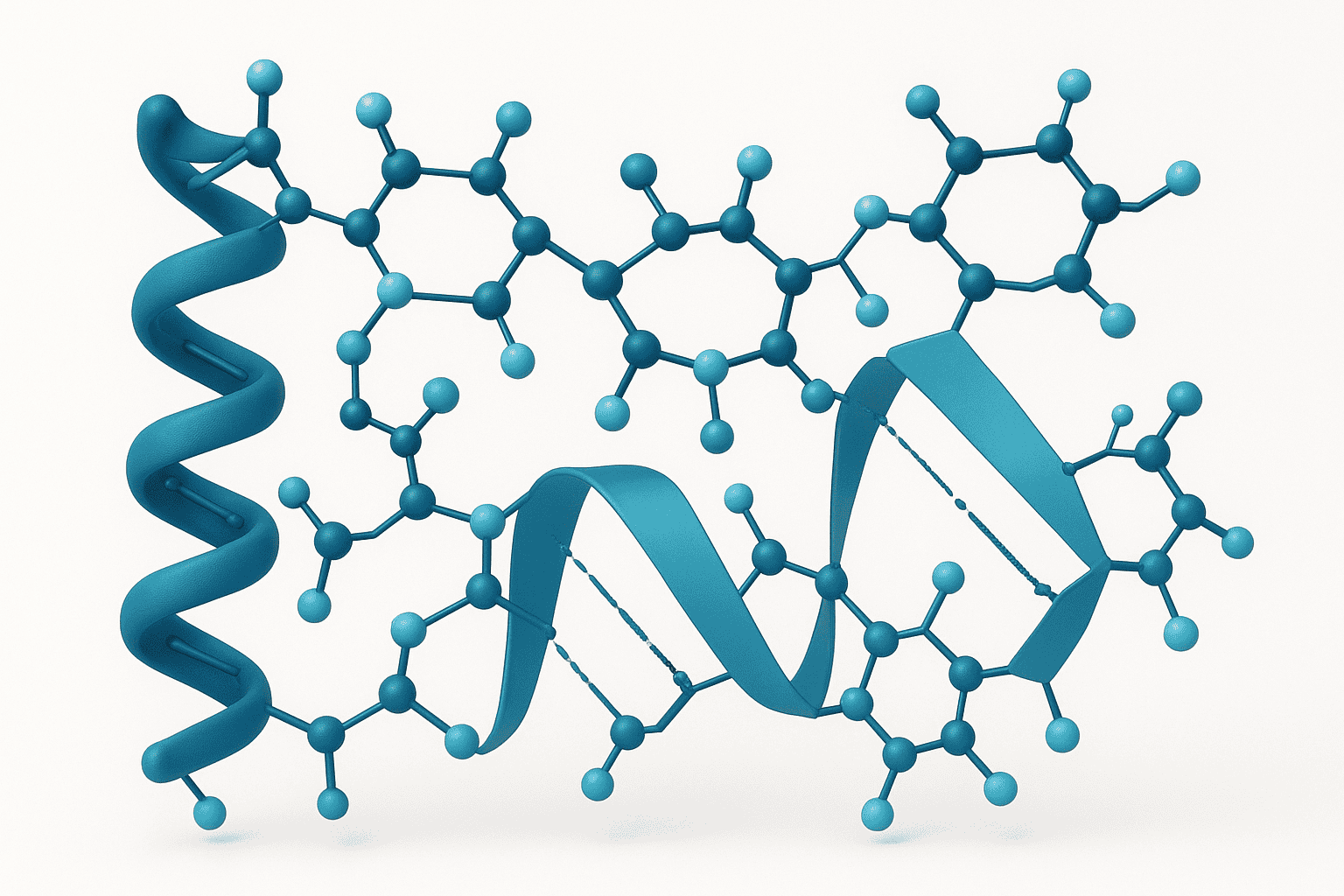
One of the most interesting aspects of the amylin pathway is how it connects to other well-studied signaling systems. Amylin receptors are found in some of the same brain regions where GLP-1 receptors are located, and preclinical research has investigated whether these two systems work together or influence each other.
This overlap has led to research exploring whether activating multiple pathways simultaneously, including the amylin pathway and incretin pathways, produces different results compared to activating either one alone. This concept of multi-pathway activation is a driving force behind some of the most advanced peptide research being conducted today.
For researchers investigating these connections, having access to well-characterized research compounds is essential. The quality and purity of the peptides used in experiments directly affect the reliability of the results.
Alpha Peptides provides research-grade compounds with full quality documentation for laboratory use. All products undergo third-party HPLC and mass spectrometry testing, and batch-specific Certificates of Analysis are available at alpha-peptides.com/coas/. Explore the complete catalog at alpha-peptides.com/shop/ or reach out at cs@alpha-peptides.com.
Frequently Asked Questions
What is amylin and where does it come from?
Amylin is a 37-amino-acid peptide hormone produced by beta cells in the pancreas. It is co-secreted with insulin, meaning both hormones are released together in response to the same biological signals. Amylin acts on specific receptors found in several tissues, including the brain.
Why do researchers use amylin analogs instead of natural amylin?
Natural amylin has a very short half-life of about 13 minutes, making it impractical for many experimental applications. Analogs like cagrilintide are modified to resist degradation and remain active much longer, giving researchers sufficient time to observe and measure effects in laboratory studies.
How does the amylin pathway relate to GLP-1 research?
The amylin and GLP-1 pathways share some anatomical overlap, with receptors for both hormones found in similar brain regions. Researchers are actively investigating how these two signaling systems interact and whether they influence each other, making amylin pathway research relevant to the broader field of incretin research.
What has published research shown about cagrilintide?
Published clinical studies, including Phase 2 trial data from Kruse et al. (2021) and pharmacological characterization by Mathiesen et al. (2022), have provided controlled data on cagrilintide’s properties as a long-acting amylin receptor agonist. All findings are within the context of carefully monitored research settings.
For research use only. Not for human consumption. This article is intended for informational purposes and does not constitute medical advice, dosing guidance, or therapeutic recommendations.