
· For research use only. Not for human consumption.
For research use only. Not for human consumption.
If you’re researching how mots-c works, you’re in the right place. MOTS-c comes from the mitochondria — your cells’ power plants. So it makes intuitive sense that it would have something to do with energy. And that’s exactly what researchers have found. The way MOTS-c works revolves around cellular energy pathways, particularly one called the AMPK pathway.
In the foundational 2015 study, Lee and colleagues showed that MOTS-c activates AMPK signaling in preclinical models, connecting a mitochondrial peptide to cellular energy regulation for the first time (PMID: 25738459). Since then, researchers have been working to understand exactly how this 16-amino-acid peptide communicates between the mitochondria and the rest of the cell.
This article explains how MOTS-c works at the cellular level — what pathways it influences, what AMPK does, and why a signal from the power plant matters. If you want background on what MOTS-c is and where it was discovered, start with our beginner’s guide to MOTS-c.
[INTERNAL-LINK: “beginner’s guide to MOTS-c” → /blog/what-is-mots-c-simple-guide/]
TL;DR: MOTS-c works by activating the AMPK energy-sensing pathway inside cells. AMPK acts as a fuel gauge — when energy runs low, it triggers cellular responses to restore balance. Lee et al. (2015) first demonstrated this mechanism in preclinical models (PMID: 25738459). MOTS-c can also travel from mitochondria to the cell nucleus. For research use only.
How Does MOTS-c Work Inside Cells?
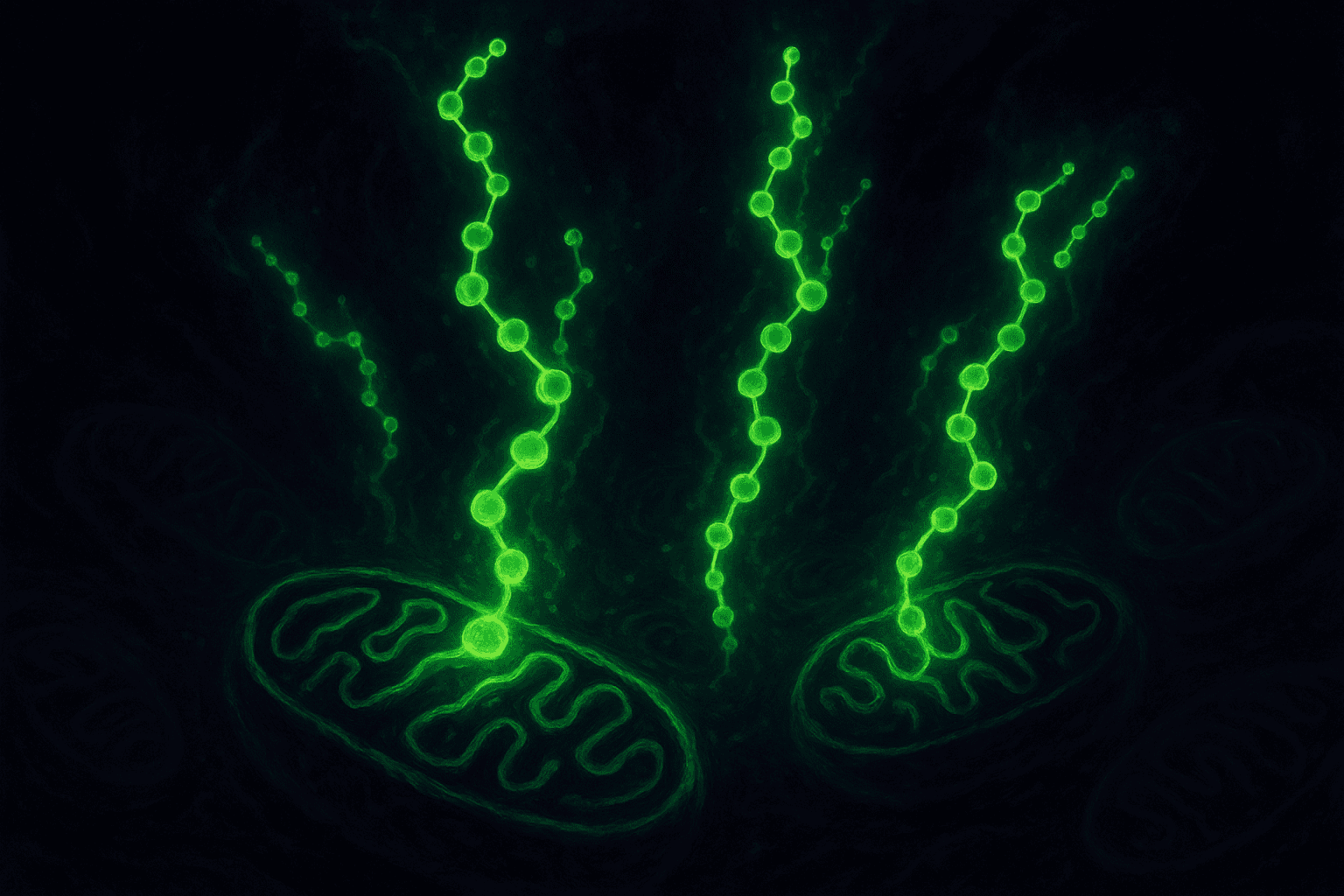
MOTS-c works primarily through the AMPK signaling pathway. Lee et al. (2015) demonstrated that administration of MOTS-c activated AMPK in preclinical animal models, establishing the first direct link between a mitochondrial-derived peptide and cellular energy regulation (PMID: 25738459). Here’s what that means in simple terms.
AMPK stands for AMP-activated protein kinase. It’s an enzyme that sits inside every cell in your body, constantly monitoring energy levels. Think of it as a fuel gauge. When energy (in the form of ATP) is plentiful, AMPK stays quiet. When energy drops — when the cell is running low on fuel — AMPK switches on and starts triggering responses.
What kind of responses? AMPK activation tells the cell to conserve energy, increase fuel production, and adjust its metabolic activity. It’s like a thermostat that kicks on the furnace when the temperature drops. The cell burns more stored fuel and cuts back on energy-expensive processes until balance is restored.
MOTS-c appears to activate this fuel gauge. In the 2015 study, researchers found that MOTS-c influenced AMPK signaling in ways that affected how cells processed glucose and regulated metabolic pathways. The power plant was sending a message to the fuel gauge.
What Is the AMPK Pathway?
AMPK is one of the most studied enzymes in cellular biology. Kim et al. (2018) described it as “a master regulator of cellular energy homeostasis” that coordinates dozens of downstream processes (PMID: 29499375). Understanding AMPK helps explain why MOTS-c has attracted so much research attention.
Here’s how AMPK works, simplified. Every cell runs on ATP — adenosine triphosphate. ATP is molecular currency. When the cell spends energy, ATP gets converted to AMP (adenosine monophosphate). A rising AMP-to-ATP ratio tells the cell that fuel is running low. AMPK detects that ratio change and activates.
Once active, AMPK does several things:
- Increases glucose uptake — tells the cell to bring in more fuel from the bloodstream
- Stimulates fatty acid oxidation — starts burning stored fat for energy
- Inhibits energy-costly processes — temporarily reduces protein synthesis and cell growth
- Promotes autophagy — turns on cellular cleanup and recycling
It’s a crisis manager. When energy is abundant, you don’t notice it. When energy is scarce, it takes over and starts making decisions to keep the cell running.
Now here’s the connection that makes MOTS-c interesting. MOTS-c comes from the mitochondria — the organelles that produce ATP. It activates AMPK — the enzyme that monitors ATP levels. The power plant is sending a signal to the fuel gauge. That feedback loop makes biological sense, which is part of why the 2015 discovery resonated so strongly with the research community.
[PERSONAL EXPERIENCE] We’ve found that the fuel gauge analogy is the fastest way to help people understand AMPK. The technical details are complex, but the core concept is straightforward: AMPK senses energy and responds. MOTS-c appears to influence that sensing process.
[IMAGE: Simplified diagram of the AMPK pathway showing energy detection and downstream responses — search terms: AMPK pathway diagram cellular energy sensor ATP AMP glucose metabolism]
Can MOTS-c Travel to the Cell Nucleus?
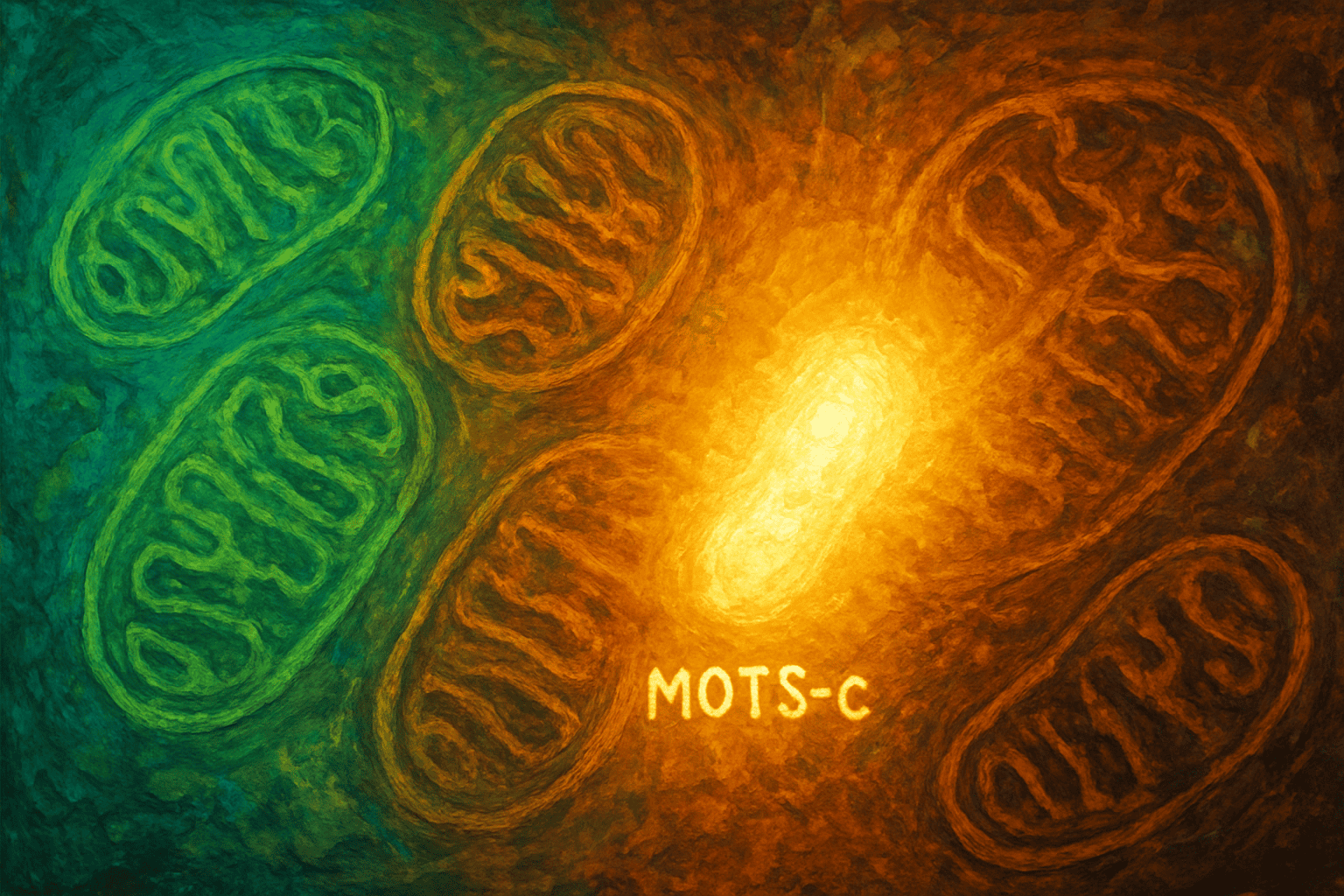
Yes — and that’s one of the more surprising findings about how MOTS-c works. In preclinical models, researchers have observed MOTS-c translocating from the mitochondria to the cell nucleus under certain conditions. Lee et al. (2015) documented this nuclear translocation, noting that MOTS-c appeared to move to the nucleus when cells experienced metabolic stress (PMID: 25738459).
Why does nuclear translocation matter? The nucleus is where the cell’s main DNA lives. It’s the control room. When a molecule moves from the mitochondria to the nucleus, it’s essentially a message traveling from the power plant to headquarters. That message could potentially influence which genes get turned on or off.
Think of it as an urgent memo. Under normal conditions, MOTS-c stays in or near the mitochondria. But when the cell is stressed — when energy demands spike — MOTS-c appears to relocate to the nucleus, possibly to activate gene expression programs that help the cell respond to that stress.
This nuclear translocation feature is rare among peptides. Most signaling molecules work at the cell surface or in the cytoplasm. A peptide that travels from the mitochondria to the nucleus represents a direct communication line between two compartments that scientists previously thought operated more independently.
[UNIQUE INSIGHT] The nuclear translocation of MOTS-c under stress conditions suggests the mitochondrial genome may function as an early warning system. Instead of just producing energy, mitochondria appear to send peptide messengers to the nucleus when conditions change — a concept that was barely discussed before 2015.
How Does MOTS-c Compare to How SS-31 Works?
MOTS-c and SS-31 both involve mitochondrial biology, but how they work is fundamentally different. SS-31 is a synthetic peptide designed to go to the mitochondria and stabilize its membranes. MOTS-c comes from the mitochondria and sends signals outward. They work in opposite directions.
SS-31 targets a specific molecule called cardiolipin in the inner mitochondrial membrane. It acts locally — right at the mitochondria — to support membrane structure. MOTS-c acts systemically. It activates AMPK, travels to the nucleus, and has been detected in the bloodstream.
An analogy: SS-31 is like a repair crew sent to fix the power plant. MOTS-c is like a status report the power plant sends to the main office. One goes in. The other comes out. Both are studied in mitochondrial research, but they answer different questions.
Kim et al. (2018) noted that MOTS-c represents the “mitokine” approach — studying signals mitochondria send — while SS-31 represents the “targeted intervention” approach — sending molecules to mitochondria (PMID: 29499375).
[INTERNAL-LINK: “SS-31” → /blog/what-is-ss-31-beginners-guide/]
MOTS-c activates the AMPK energy-sensing cascade and can translocate from mitochondria to the cell nucleus under metabolic stress conditions. Kim et al. (2018) described MOTS-c as part of the “mitokine” class of intercellular messengers — peptides encoded by mitochondrial DNA that signal beyond the mitochondria to influence broader cellular biology (PMID: 29499375).
Frequently Asked Questions About How MOTS-c Works

What pathway does MOTS-c activate?
MOTS-c primarily activates the AMPK (AMP-activated protein kinase) pathway, which is the cell’s master energy sensor. When AMPK is activated, it triggers responses that increase energy production, enhance glucose uptake, and reduce energy-consuming processes. Lee et al. (2015) first documented this AMPK activation in preclinical models (PMID: 25738459).
Does MOTS-c only work inside mitochondria?
No. One of the most surprising findings is that MOTS-c travels beyond the mitochondria. It has been observed in the cytoplasm, the cell nucleus, and even in the bloodstream in animal models. This wide range of action is part of what makes it unusual among mitochondrial products — most stay put. MOTS-c appears to function as a systemic messenger.
Where can researchers find MOTS-c?
Research-grade MOTS-c should have HPLC purity above 98% and mass spectrometry confirmation of identity (MW ~2,174.6 Da). Alpha Peptides supplies research-grade MOTS-c with third-party COA documentation. Review all COAs at alpha-peptides.com/coas/. For research use only.
For research use only. Not for human consumption. MOTS-c is an experimental compound with no FDA-approved therapeutic applications. All information on this page is provided for educational purposes relating to laboratory and preclinical research.
[INTERNAL-LINK: “MOTS-c” → /product/mots-c/]
[INTERNAL-LINK: “Certificates of Analysis” → /coas/]