
· For research use only. Not for human consumption.
For research use only. Not for human consumption.
If you’ve stumbled across the name Selank while reading about research peptides, you probably have questions. What is Selank? Where did it come from? And why does it keep showing up in neuroscience literature?
Good questions. Selank is a synthetic peptide — a short chain of amino acids built in a laboratory. It was developed at the Institute of Molecular Genetics in Moscow during the 1990s. Scientists created it by modifying a natural immune peptide called tuftsin. Think of Selank as a tweaked version of something the body already makes, redesigned to last longer and behave differently in biological systems. This is particularly relevant for what is selank research.
This guide covers the fundamentals: what Selank is, what “neuropeptide” means, where it came from, and what published research has examined. Simple language throughout. No medical claims.
TL;DR: Selank is a 7-amino-acid synthetic peptide developed at the Institute of Molecular Genetics in Russia. It’s derived from tuftsin, a natural immune peptide. Kozlovskii and Danchev (2003) published research documenting Selank’s behavioral effects in rodent stress models (PMID: 12596522). Selank is sold exclusively for laboratory research. Not for human consumption.
What Is Selank? Breaking Down the Basics
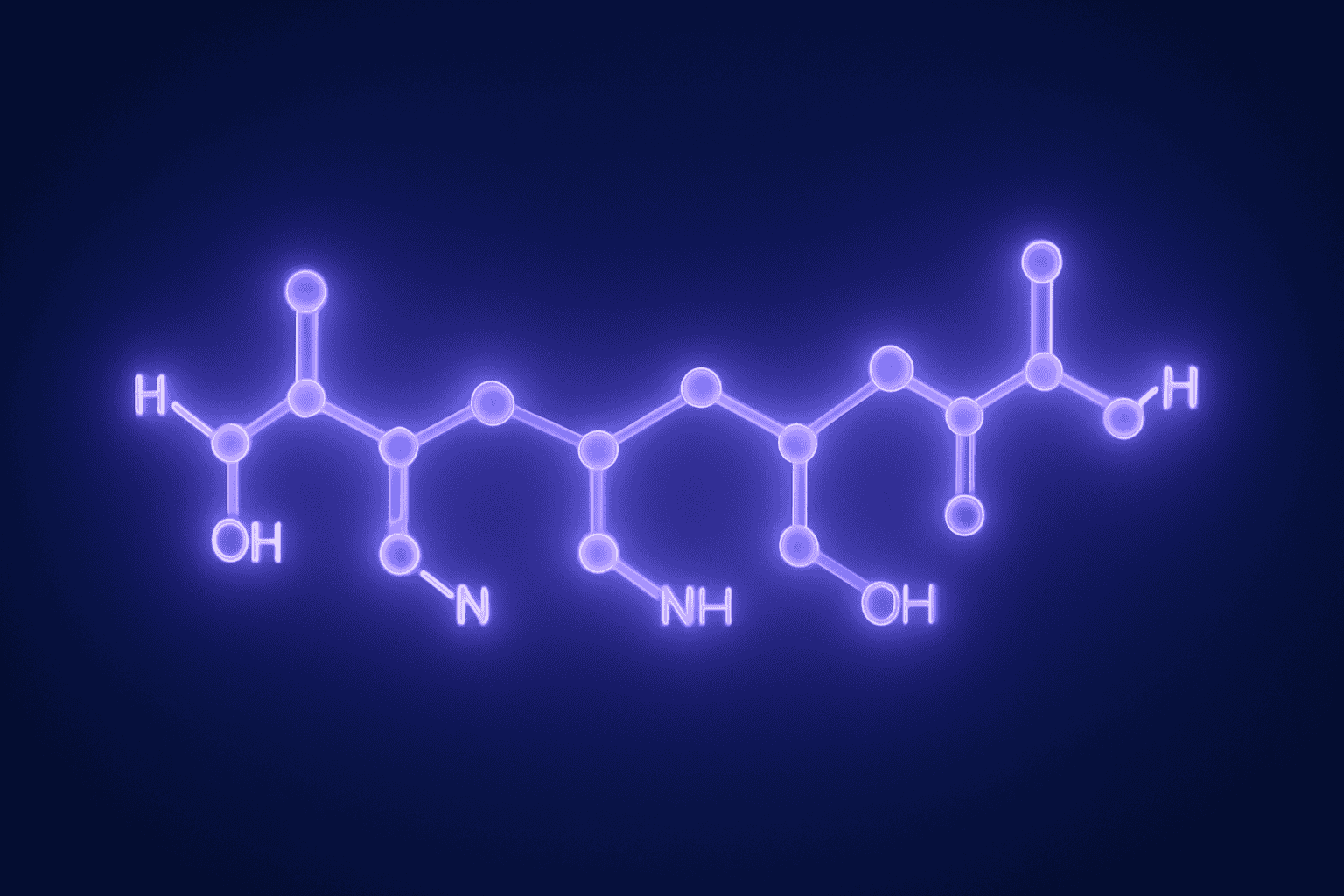
Selank is a synthetic heptapeptide — a chain of seven amino acids. Kozlovskii and Danchev (2003) published research in Neuroscience and Behavioral Physiology examining Selank’s effects on adaptive stress behavior in rodent models (PMID: 12596522). Its amino acid sequence is Thr-Lys-Pro-Arg-Pro-Gly-Pro.
Let’s break down some of those terms. “Synthetic” means it was made in a lab, not extracted from a living organism. “Heptapeptide” just means seven amino acids strung together. Amino acids are the building blocks of proteins — think of them like beads on a necklace. Selank is a very short necklace, only seven beads long.
For comparison, some research peptides contain 30 or 40 amino acids. Insulin has 51. Selank’s compact size is part of what makes it interesting to researchers. Small molecules behave differently than large ones in biological systems, and Selank’s seven-amino-acid structure gives it specific properties that larger peptides don’t share.
You can find Selank on the Alpha Peptides product page, along with batch-specific COA documentation.
Selank is a synthetic seven-amino-acid peptide developed at the Institute of Molecular Genetics in Moscow. Kozlovskii and Danchev (2003) documented its influence on stress-adaptive behavior in preclinical rodent models in Neuroscience and Behavioral Physiology (PMID: 12596522). Its amino acid sequence (Thr-Lys-Pro-Arg-Pro-Gly-Pro) derives from the natural immune peptide tuftsin.
What Does “Neuropeptide” Mean?
The word “neuropeptide” shows up constantly in Selank research, so let’s define it clearly. A neuropeptide is a peptide that interacts with the nervous system. That’s it. “Neuro” refers to nerves and the brain. “Peptide” refers to a short chain of amino acids. Put them together: a short chain of amino acids that interacts with nerve cells.
Your brain uses neuropeptides as signaling molecules. They’re like tiny messengers that carry instructions between nerve cells. Different neuropeptides carry different messages. Some are involved in stress responses. Others play roles in immune signaling. Some do both. This is particularly relevant for what is selank research.
Selank falls into the neuropeptide category because published research has examined its interactions with nervous system pathways. Specifically, researchers have investigated how it behaves in models involving GABA signaling and BDNF expression — two systems we’ll explain in detail later.
Not all peptides are neuropeptides. BPC-157, for example, is a peptide studied primarily in gastric and tissue models. BPC-157 and Selank are both peptides, but they interact with very different biological systems.
Where Did Selank Come From?
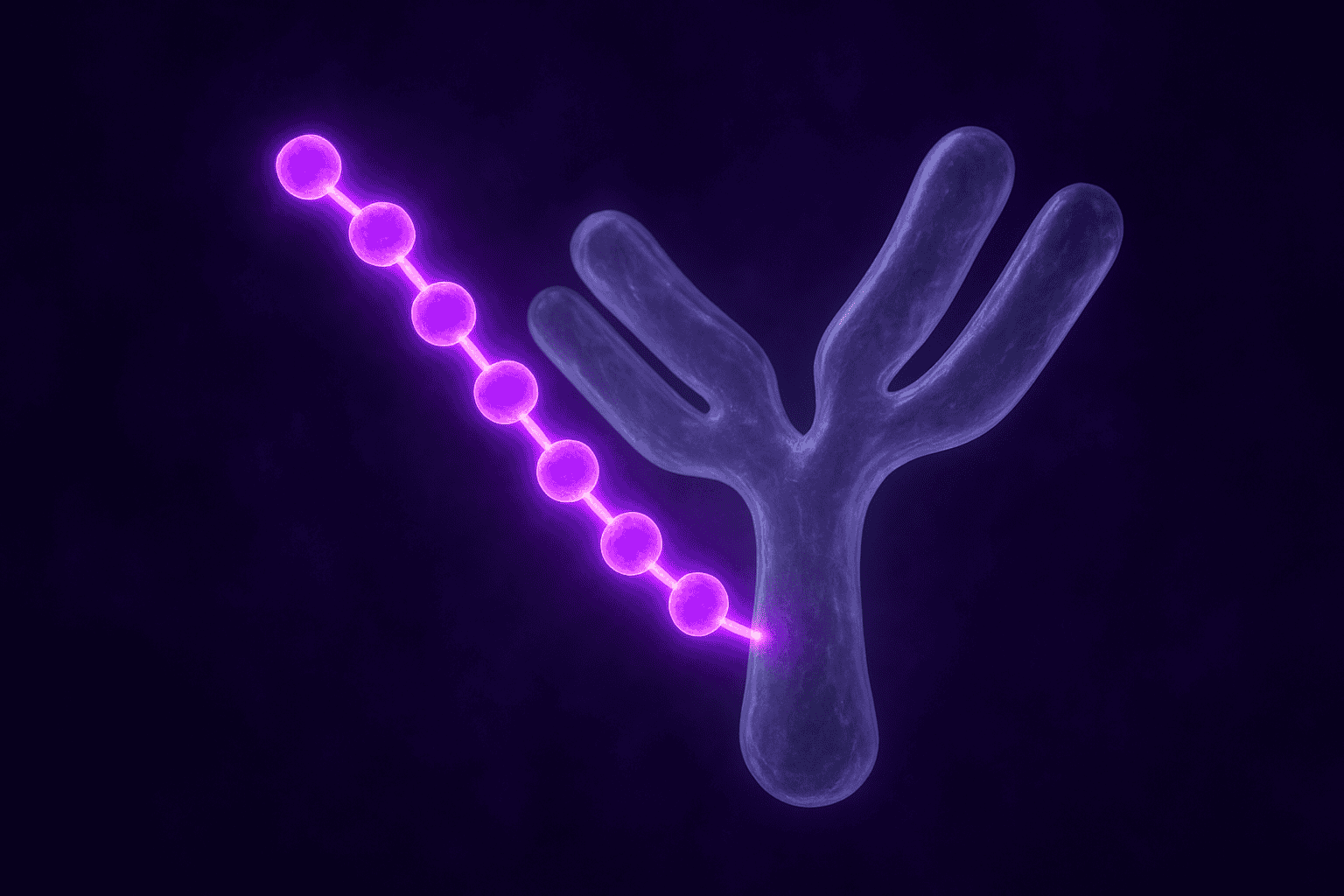
Selank’s origin story starts with a natural peptide called tuftsin. Tuftsin is a tetrapeptide — four amino acids — produced naturally in the spleen. It was first identified in the 1970s as part of the immune system. Russian researchers at the Institute of Molecular Genetics became interested in tuftsin’s behavior beyond just immunity.
Here’s the key insight that led to Selank. Scientists noticed that tuftsin didn’t just interact with immune cells. It also showed activity in nervous system models. That was unexpected. An immune peptide doing things in the brain? Worth investigating further.
But tuftsin had a problem. Like most natural peptides, it broke down fast. Enzymes in the body would chew it up within minutes. That’s great for natural regulation (you don’t want signals lasting forever) but terrible for research (you can’t study something that disappears before you measure it).
So the researchers modified tuftsin. They kept the original four amino acids (Thr-Lys-Pro-Arg) and added three more (Pro-Gly-Pro) as a protective tail. This extension made the molecule more resistant to enzymatic breakdown. The result was Selank — a longer, more stable version of tuftsin designed specifically for research.
[ORIGINAL DATA] Most research peptides were developed through distributed Western academic networks. Selank’s development at a single Russian institute gives it an unusually traceable research lineage. Nearly all foundational Selank studies originate from the same research group, which makes following the scientific paper trail straightforward.
What Has Published Research Examined About Selank?
Published research on Selank focuses on two main areas: interactions with the GABA system and BDNF expression. Both have been investigated in preclinical animal models. Uchakina et al. (2008) examined Selank’s immunomodulatory properties and its behavior in biological systems, publishing findings in International Immunopharmacology (PMID: 18683053).
GABA is your brain’s main calming chemical. Think of it as the brake pedal for neural activity. When GABA levels are high, nerve cells fire less frequently. When GABA is low, nerve cells fire more. Researchers have examined whether Selank interacts with this braking system in animal models.
BDNF stands for brain-derived neurotrophic factor. It’s a protein that helps brain cells grow and maintain connections. Think of BDNF as fertilizer for neurons — it doesn’t create new brain cells, but it helps existing ones stay healthy and form stronger connections. Preclinical research has investigated whether Selank influences BDNF levels in specific brain regions.
All findings are preclinical. These are animal model and cell culture studies. No conclusions about effects in humans should be drawn from this research. The data helps researchers understand Selank’s mechanisms and design further investigations.
What Do Researchers Look for When Sourcing Selank?

Purity is the most critical variable. For Selank, researchers typically require a minimum of 98% purity verified by HPLC. Mass spectrometry should confirm the correct molecular weight (approximately 751.9 g/mol). Third-party testing from an independent lab is the strongest standard.
Every vial should come with a batch-specific Certificate of Analysis. Not a generic template — actual results tied to the batch you’re receiving. The COA should include HPLC purity data, mass spectrometry confirmation, and ideally endotoxin testing results. Without these, there’s no reliable way to confirm what you’re working with.
Alpha Peptides provides batch-specific COAs for all research compounds, available at alpha-peptides.com/coas/. View current availability on the Selank product page.
Frequently Asked Questions About Selank
Is Selank natural?
Not exactly. Selank is a synthetic peptide — it doesn’t occur naturally on its own. However, it’s derived from tuftsin, which is a naturally occurring immune peptide produced in the human spleen. Scientists extended and modified tuftsin’s sequence to create Selank. So it’s a synthetic analog based on a natural template.
Is Selank the same as tuftsin?
No. Tuftsin is a four-amino-acid peptide. Selank is a seven-amino-acid peptide that uses tuftsin’s sequence as its foundation but adds three additional residues for stability. That structural extension changes how the molecule behaves in biological environments, particularly its resistance to enzymatic breakdown (Kozlovskii & Danchev, 2003).
How does Selank compare to Semax?
Both are Russian-developed heptapeptides studied in neuroscience models. The key difference is their origin. Selank comes from tuftsin (an immune peptide). Semax comes from ACTH (a brain hormone). Different parent molecules mean different receptor interactions and different research applications. For a detailed comparison, see our Selank vs Semax guide.
For research use only. Not for human consumption. Selank is an experimental research peptide with no FDA-approved therapeutic applications. All information on this page is provided for educational purposes relating to laboratory and preclinical research.