
· For research use only. Not for human consumption.
For research use only. Not for human consumption.
If you’re researching how glp-1 works, you’re in the right place. You’ve heard of GLP-1. Maybe you’ve even read our beginner’s guide on what GLP-1 peptide is. But how does GLP-1 actually work? What happens at the molecular level when this peptide meets its target?
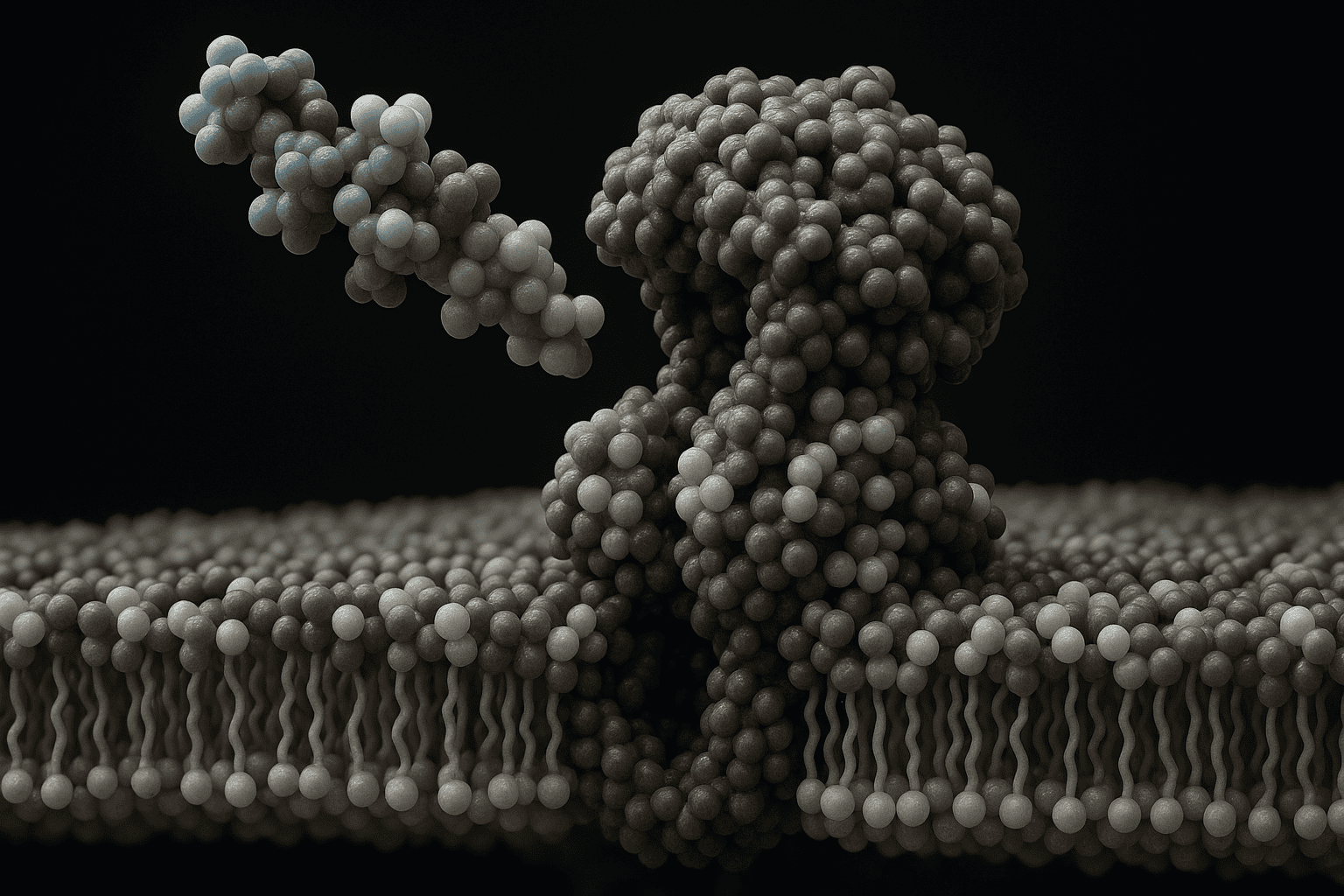
The answer is surprisingly elegant. GLP-1 works by fitting into a specific receptor on cell surfaces — like a key fitting into a lock. Once the key turns, the cell responds. The whole process happens in under two minutes before enzymes destroy the peptide. Researchers study this mechanism because understanding how GLP-1 works opens the door to understanding a fundamental signaling system in the body.
This guide explains how GLP-1 works in plain language. Locks, keys, and messengers — no biochemistry textbook required.
[INTERNAL-LINK: “what GLP-1 peptide is” -> /blog/what-is-glp-1-peptide-beginners-guide/]
TL;DR: GLP-1 works by binding to the GLP-1 receptor (GLP-1R) on cell surfaces, triggering intracellular signaling cascades. This receptor belongs to the Class B GPCR superfamily. Natural GLP-1 has a half-life of just 1-2 minutes (Holst, 2007). Synthetic analogs are engineered to resist enzymatic breakdown and activate this receptor for longer. For research use only. Not for human consumption.
How Does GLP-1 Work at the Receptor Level?
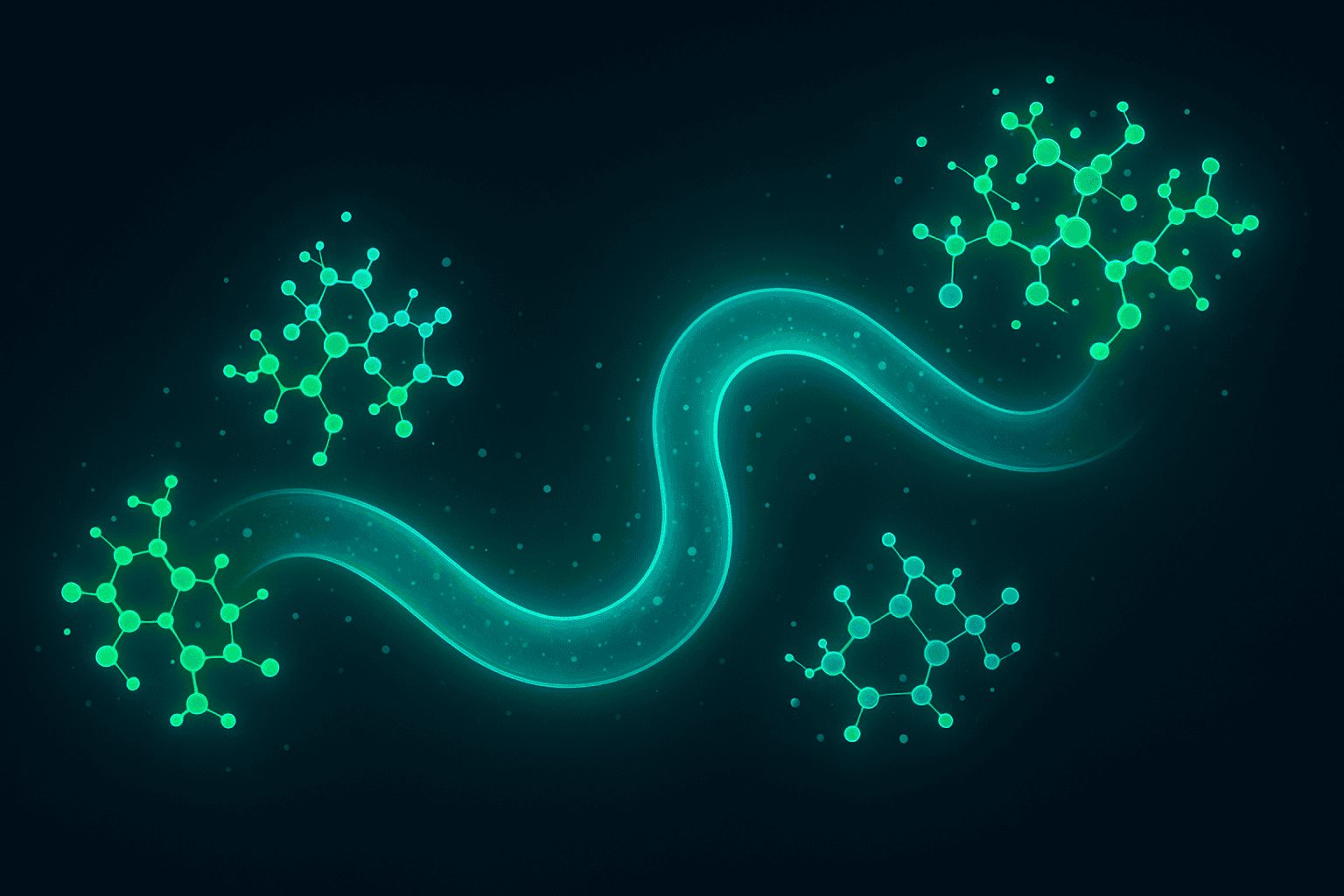
Understanding how GLP-1 works starts with one key concept: the receptor. The GLP-1 receptor (GLP-1R) is a protein sitting on the surface of certain cells, waiting for GLP-1 to show up. Holst (2007) described this receptor as part of the Class B GPCR superfamily in a comprehensive review in Physiological Reviews (PMID: 17848023).
Let’s make this concrete. Imagine each cell has a doorbell on its surface. That doorbell is the GLP-1 receptor. When GLP-1 arrives and presses the doorbell, the cell “wakes up” and starts doing specific things. Different cells respond differently because they have different instructions inside, even though the doorbell is the same.
On pancreatic beta cells, pressing the doorbell triggers insulin preparation. On stomach cells, it slows down food movement. On brain cells, it sends signals related to appetite. One doorbell, multiple responses — depending on which room you’re ringing it in.
The Two-Step Binding Dance
Here’s something most people don’t know about how GLP-1 works. The peptide doesn’t just crash into the receptor all at once. It binds in two steps. First, the tail end of GLP-1 grabs onto the receptor’s outer surface. Then, the front end folds in and activates the receptor’s signaling mechanism. Scientists call this the “two-step” binding model. It’s been confirmed through advanced imaging techniques like cryo-electron microscopy.
Why does this matter? Because researchers designing GLP-1 analogs need to understand exactly how the natural peptide interacts with its receptor. If you change the wrong amino acid, the key no longer fits the lock.
What Happens Inside the Cell After GLP-1 Binds?
Once GLP-1 activates its receptor, a cascade of events unfolds inside the cell. Drucker (2018) mapped these intracellular signaling pathways in a review published in Cell Metabolism, showing that GLP-1R activation triggers a molecule called cAMP (cyclic adenosine monophosphate) inside the cell (PMID: 29848362).
Think of cAMP as a relay runner inside the cell. When GLP-1 rings the doorbell outside, cAMP starts running inside, carrying the message to different parts of the cell. In pancreatic beta cells, that message tells the cell to prepare insulin granules for release. But only when blood sugar levels are elevated — this glucose-dependent behavior is a key feature of how GLP-1 works.
The glucose-dependent part is important. It means GLP-1 doesn’t trigger insulin release randomly. It only amplifies the signal when blood sugar is already above baseline. Researchers find this selective responsiveness fascinating because it suggests a built-in safety mechanism in the natural signaling pathway.
[PERSONAL EXPERIENCE]: We’ve found that the glucose-dependent aspect of GLP-1 signaling is one of the most commonly misunderstood features among people first learning about this peptide. It’s not an on/off switch — it’s more like a volume dial that only works when the radio is already playing.
How Does the Incretin Pathway Work?

GLP-1 is part of a larger signaling system called the incretin pathway. “Incretin” simply means a gut hormone that responds to food and communicates with the pancreas. Holst (2007) explained that the incretin pathway accounts for a significant portion of the insulin response after eating — far more than blood sugar alone would trigger (PMID: 17848023).
Here’s the pathway in simple steps:
1. You eat food. Nutrients reach your small intestine.
2. L-cells detect the nutrients and release GLP-1 into the bloodstream.
3. GLP-1 travels to the pancreas and activates GLP-1 receptors on beta cells.
4. Beta cells prepare insulin for release (glucose-dependent).
5. Simultaneously, GLP-1 signals the stomach to slow emptying and talks to the brain via the vagus nerve.
6. Within 1-2 minutes, the enzyme DPP-4 breaks down GLP-1, ending the signal.
That entire process — from food detection to signal termination — happens in under two minutes. It’s remarkably fast, remarkably coordinated, and it happens after every meal you eat.
[UNIQUE INSIGHT]: The incretin pathway reveals something profound about gut biology: the digestive system isn’t just a passive tube that absorbs nutrients. It’s an active endocrine organ that produces hormones and coordinates whole-body responses. GLP-1 is one of the clearest examples of the gut acting as a signaling hub.
How Do Synthetic GLP-1 Analogs Work Differently?
Natural GLP-1 gets destroyed in under two minutes. That’s too fast for most research applications. So scientists engineered synthetic GLP-1 analogs — modified versions that resist the DPP-4 enzyme and activate the GLP-1 receptor for much longer. Drucker (2018) detailed these engineering strategies in Cell Metabolism (PMID: 29848362).
How do these modifications work? Several strategies exist. Some analogs have their amino acid sequence altered at the exact spot where DPP-4 normally cuts. Others are attached to fatty acid chains that bind to albumin (a blood protein), essentially giving the peptide a place to hide from enzymes. Still others are fused to larger proteins that slow their breakdown.
The result is the same in each case: the analog presses the same doorbell (GLP-1R) as natural GLP-1, but it stays on the doorstep for hours or days instead of seconds. Researchers study these analogs to understand how extended receptor activation differs from the brief, pulsatile signaling of natural GLP-1.
Alpha Peptides carries research-grade GLP-1 for laboratory investigations of this receptor pathway. All products come with batch-specific Certificates of Analysis.
Frequently Asked Questions About How GLP-1 Works
How does GLP-1 work in the brain?
GLP-1 receptors are expressed in multiple brain regions, including the hypothalamus and brainstem. GLP-1 communicates with the brain through the vagus nerve and possibly by crossing the blood-brain barrier directly. Researchers are investigating its role in appetite signaling and reward circuitry in preclinical models.
What is DPP-4 and why does it destroy GLP-1?
DPP-4 (dipeptidyl peptidase-4) is an enzyme that cuts GLP-1 at its second amino acid position, rendering it inactive. This happens within 1-2 minutes of GLP-1’s release (Holst, 2007). DPP-4 acts as a natural “off switch” for the incretin signal. Synthetic analogs are designed to resist this cleavage.
Where can researchers source GLP-1 for laboratory work?
Research-grade GLP-1 should have HPLC purity above 98% and mass spectrometry confirmation of molecular weight. Alpha Peptides provides GLP-1 for research with third-party COAs available at alpha-peptides.com/coas/. For research use only.
For research use only. Not for human consumption. GLP-1 receptor agonist analogs are experimental compounds with no FDA-approved therapeutic applications in their research-grade form. All information on this page is provided for educational purposes relating to laboratory and preclinical research.