
· For research use only. Not for human consumption.
For research use only. Not for human consumption.
If you’re researching how glow blend works, you’re in the right place. So you already know what the GLOW blend is — a multi-peptide research formulation. But how does the GLOW blend work? What does each piece actually do? That’s the question researchers ask before designing any experiment with a multi-compound product.
Think of the GLOW blend like a sports team. Each player brings a different skill to the field. One is fast, another is strong, and a third reads the game better than anyone. Individually, they’re interesting. Together, they might accomplish something none of them could alone. That’s the logic behind peptide blends in research. This is particularly relevant for how glow blend works research.
This guide breaks down how the GLOW blend works by explaining each component in simple terms. No chemistry degree needed. If you want a broader overview first, check out our companion post on what the GLOW peptide blend is.
[INTERNAL-LINK: “what the GLOW peptide blend is” -> /blog/what-is-glow-peptide-blend/]
TL;DR: The GLOW blend works by combining multiple peptide components — anchored by GHK-Cu — into a single research formulation. GHK-Cu alone has been shown to interact with over 4,000 human genes in laboratory studies (Pickart et al., 2015). The blend approach lets researchers study combination effects in controlled experiments. For research use only. Not for human consumption.
How Does the GLOW Blend Work as a Multi-Peptide Formulation (How GLOW blend works)
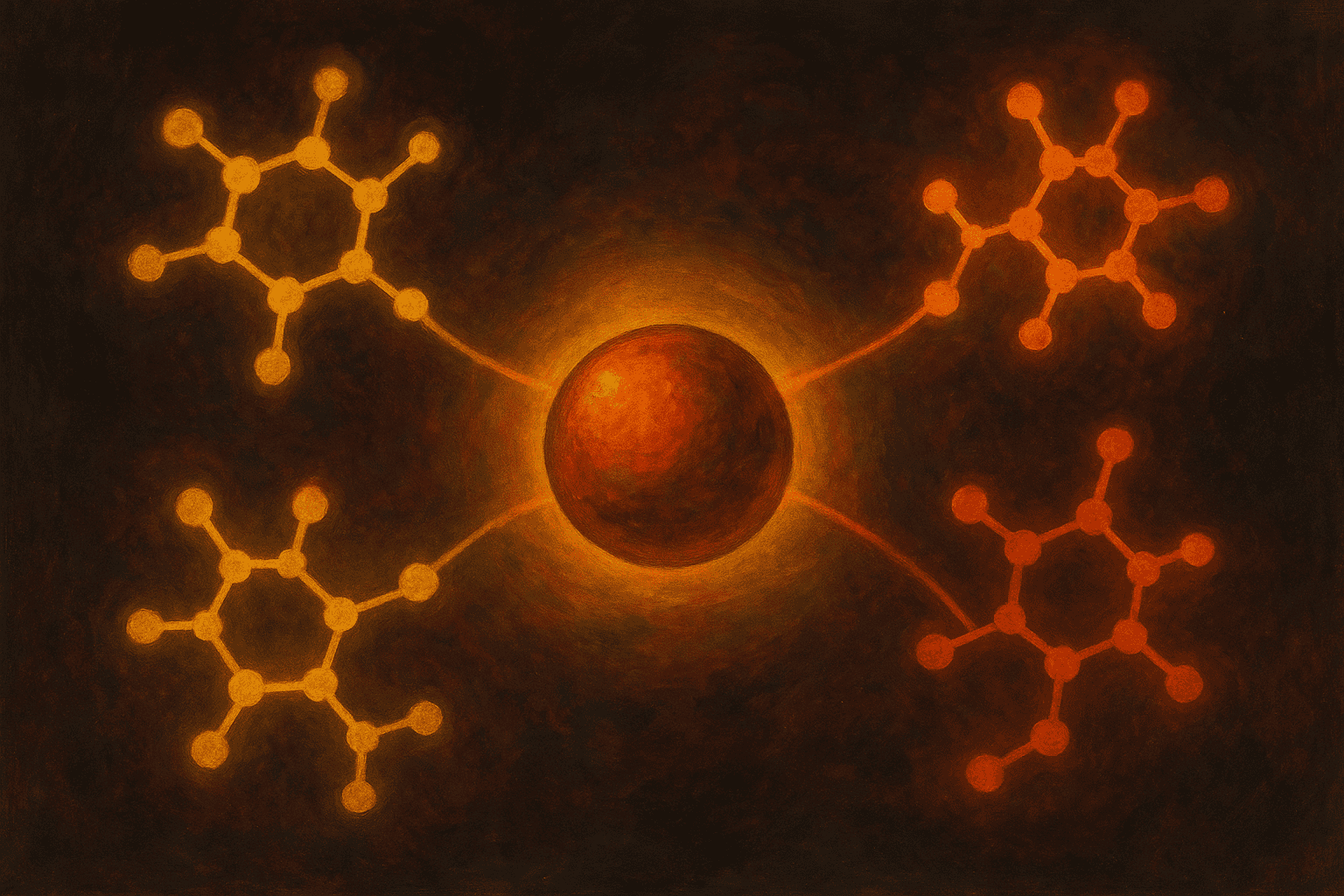
The GLOW blend works by presenting multiple peptide compounds together in a single vial. This isn’t random mixing. Each component was selected based on its individual research profile. Pickart et al. (2015) documented that GHK-Cu — the blend’s core ingredient — appears to modulate over 4,000 genes in cell-culture experiments (PMID: 26236449). The additional components complement that broad activity.
Why study peptides together instead of one at a time? Because biology doesn’t work in isolation. Your body contains thousands of peptides, hormones, and signaling molecules all operating simultaneously. Studying just one at a time is useful for understanding individual mechanisms. Studying combinations helps researchers explore how molecules interact.
It’s the difference between listening to a single instrument and hearing the whole arrangement. Both are valuable. They just answer different questions.
What Does GHK-Cu Contribute to the GLOW Blend?
GHK-Cu is the anchor of the GLOW blend. It’s a tripeptide — just three amino acids — bound to a copper ion. Your body naturally produces GHK-Cu in blood plasma, saliva, and urine. First isolated in the 1970s from human albumin, it’s one of the most-studied small peptides in the scientific literature (Pickart et al., 2015).
So what does GHK-Cu actually do in laboratory experiments? It acts like a copper delivery truck. Copper is essential for many cellular processes, but cells need it delivered in the right form and the right amount. GHK-Cu chaperones copper to specific cellular locations. This is particularly relevant for how glow blend works research.
In cell-culture studies, researchers have observed GHK-Cu interacting with fibroblasts — the cells responsible for producing structural proteins. The gene expression data is where things get really interesting. When a molecule made of just three amino acids appears to influence 6% of the human genome, that’s a level of biological reach most researchers don’t expect from such a small compound.
Why Copper Matters
Copper isn’t just a metal in pipes. It’s a trace element your cells use as a cofactor in enzymatic reactions. Think of cofactors like assistants that help enzymes do their jobs. Without copper, certain enzymes can’t function properly. GHK-Cu’s role as a copper carrier makes it relevant to any research involving copper-dependent biology.
[PERSONAL EXPERIENCE]: In our experience working with researchers who order the GLOW blend, the GHK-Cu component is consistently the primary reason they choose this formulation over alternatives. Its documented gene expression profile gives them a well-characterized starting point.
How Do the Other Components Complement GHK-Cu?
The GLOW blend is a proprietary formulation, which means the exact composition and ratios aren’t published in peer-reviewed literature the way individual peptides are. What we can say is that the additional components were selected to complement GHK-Cu’s activity profile in laboratory settings.
Think of it like assembling a research toolkit. GHK-Cu brings its copper-carrying ability and broad gene expression influence. The complementary peptides bring their own documented properties. Together, they give researchers a multi-angle approach to studying cellular biology.
Does studying them together always produce different results than studying them separately? Not necessarily. That’s actually one of the questions blend research is designed to explore. Sometimes components amplify each other’s effects. Sometimes they don’t. Sometimes they interact in completely unexpected ways. That uncertainty is exactly what makes combination research scientifically valuable.
If you prefer to study GHK-Cu in isolation, Alpha Peptides offers it as a standalone product. The GLOW blend is for researchers specifically interested in multi-compound experimental designs.
[UNIQUE INSIGHT]: The trend toward multi-peptide blends in research mirrors a broader shift in molecular biology away from reductionist single-target studies toward systems-level investigation. Blends like GLOW aren’t just convenient — they reflect how modern research increasingly studies biological networks rather than isolated molecules.
How Is the GLOW Blend Quality Verified?
Quality verification for a blend is slightly more complex than for a single peptide. Each component needs independent purity confirmation, and the overall formulation needs to match documented specifications. According to published best practices in peptide research, impurities above 5% can introduce measurable confounds in cell-based assays (PLOS ONE, 2020).
Every batch of GLOW ships with a Certificate of Analysis (COA) documenting purity and composition. HPLC (high-performance liquid chromatography) confirms how pure each component is. Mass spectrometry verifies the molecular identity. Third-party testing removes the supplier’s conflict of interest from the quality assessment.
Before running any experiment with the GLOW blend, review the COA. Reliable results start with verified materials. That’s true for single peptides, and it’s doubly true for blends where multiple compounds are present.
Frequently Asked Questions About How GLOW Works

Does the GLOW blend work differently than using its components separately?
That’s one of the research questions blends are designed to explore. When multiple peptides are present simultaneously, they may interact in ways that differ from their individual effects. Published research on GHK-Cu covers the standalone compound. The GLOW blend provides a framework for investigating combination dynamics.
Can I use the GLOW blend for personal purposes?
No. The GLOW blend is manufactured and sold exclusively for laboratory research. It is not intended for human consumption, personal use, or any clinical application. All Alpha Peptides products are strictly for qualified research settings.
How do I compare the GLOW blend to individual GHK-Cu?
Review both product pages. The GLOW blend is for multi-compound experiments. Standalone GHK-Cu is for single-peptide studies. Both come with batch-specific COAs. Your choice depends on whether your research question involves combination effects or isolated mechanisms.
For research use only. Not for human consumption. The GLOW peptide blend is an experimental formulation with no FDA-approved therapeutic applications. All information on this page is provided for educational purposes relating to laboratory and preclinical research.