
· For research use only. Not for human consumption.
For research use only. Not for human consumption.
If you’re researching what is glow peptide, you’re in the right place. If you’ve come across something called the “GLOW peptide” while browsing research peptide suppliers, you probably had one immediate question: what is it? Fair enough. The name doesn’t give much away, and peptide blends can seem confusing at first glance.
Here’s the short version. GLOW is a peptide blend — meaning it combines multiple peptides into a single vial. Think of it like a research toolkit. Instead of buying each tool separately, you get a curated set designed to work together. Researchers use blends like GLOW when they want to study how multiple peptides interact in the same experimental setup. This is particularly relevant for what is glow peptide research.
This guide explains what is in the GLOW peptide blend, what a peptide blend actually means, and why researchers might choose a blend over individual compounds. Plain English only. No jargon without an explanation.
[INTERNAL-LINK: “peptide blend” -> /blog/what-is-glow-peptide-blend/]
TL;DR: The GLOW peptide blend is a proprietary multi-compound research formulation built around GHK-Cu, a naturally occurring copper peptide. GHK-Cu has appeared in peer-reviewed literature since the 1970s, with Pickart et al. (2015, PMID: 26236449) documenting its interaction with over 4,000 human genes in cell-culture studies. GLOW is for laboratory research only. Not for human consumption.
What Is GLOW Peptide, Exactly?
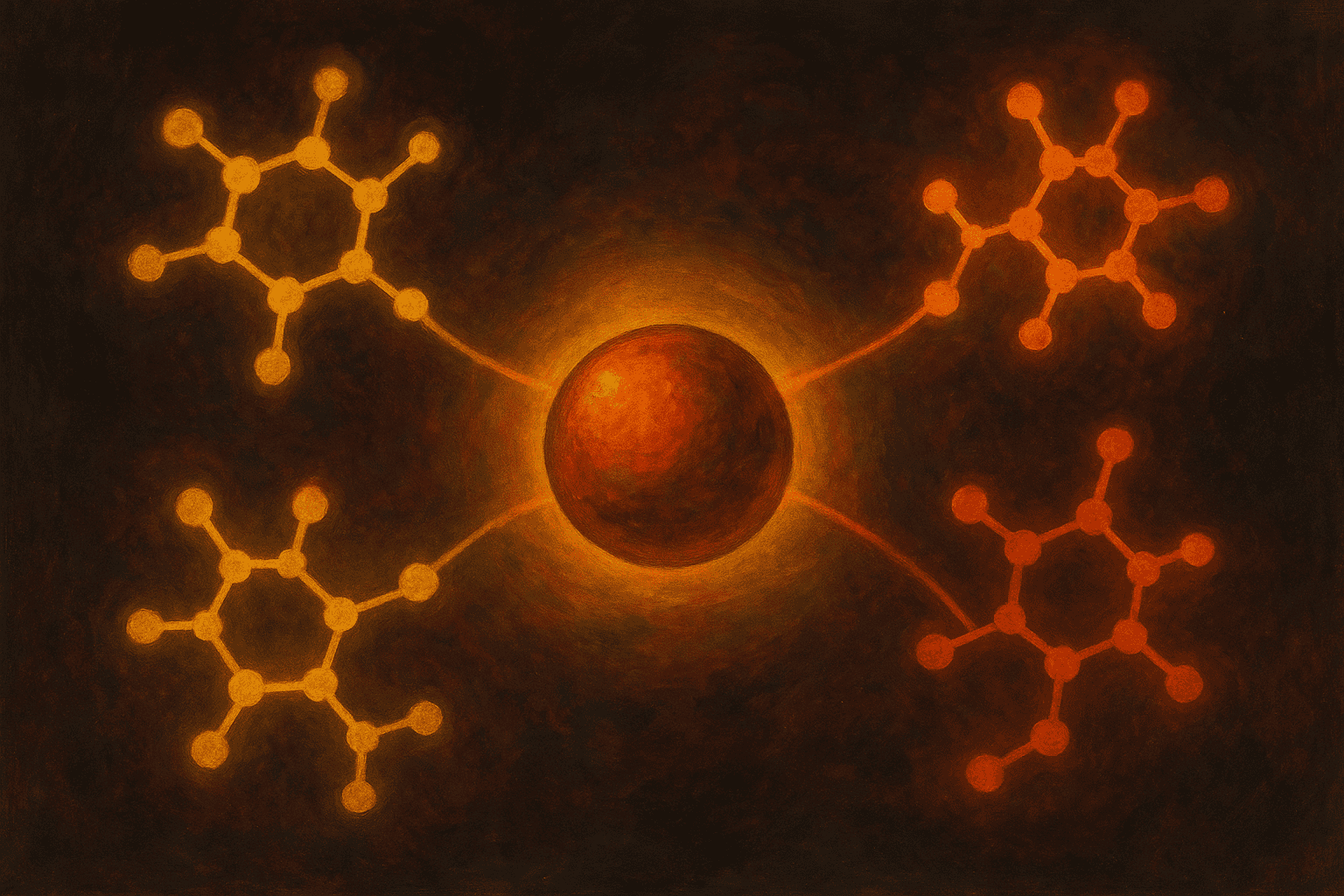
GLOW is a proprietary peptide blend sold for laboratory research. Its foundation is GHK-Cu — a tiny peptide made of just three amino acids bound to a copper ion. According to Pickart et al. (2015), GHK-Cu naturally occurs in human blood plasma at concentrations of roughly 200 ng/mL in young adults (PMID: 26236449). That means your body already makes this molecule on its own.
What makes GLOW different from buying plain GHK-Cu? It’s the blend aspect. GLOW includes additional peptide components alongside GHK-Cu, selected to give researchers a multi-compound starting point. Think of GHK-Cu as the lead singer in a band. GLOW is the whole band playing together.
Why would researchers want a blend? Sometimes the interesting question isn’t “what does this one peptide do?” but rather “what happens when multiple peptides are present at the same time?” Blends let scientists explore those combination questions without having to source, measure, and mix each component separately.
What Is a Peptide Blend and Why Do They Exist?
A peptide blend is exactly what it sounds like — two or more peptides combined in one formulation. The concept isn’t complicated, but it’s worth understanding why blends exist in the research world. A 2019 review in Expert Opinion on Drug Discovery noted that multi-target approaches are increasingly common in preclinical peptide research, reflecting the complexity of biological systems (Fosgerau and Hoffmann, 2015). This is particularly relevant for what is glow peptide research.
Here’s a simple analogy. Imagine you’re a chef testing a new recipe. You could taste each ingredient separately to understand what it brings. Or you could combine them and taste the finished dish. Both approaches give useful information, but they answer different questions.
Single-compound vials answer: “What does this one peptide do in isolation?” Blends like GLOW answer: “How do these peptides behave when they’re together?” Both questions are scientifically valid. The right choice depends on what the researcher is investigating.
Blends also save practical time in the lab. Sourcing, reconstituting, and combining multiple peptides introduces variables — measurement precision, solvent compatibility, contamination risk. A pre-formulated blend with documented ratios and verified purity removes several layers of complexity.
[PERSONAL EXPERIENCE]: We’ve found that researchers working on multi-peptide protocols particularly appreciate blend formulations because they reduce setup time and eliminate the compounding step, which can introduce errors in smaller labs.
What Makes GHK-Cu the Foundation of the GLOW Peptide?

GHK-Cu has been studied in laboratories for over fifty years. First isolated from human plasma albumin in the 1970s, it caught researchers’ attention because copper plays a role in many cellular processes. Pickart et al. (2015) reported that GHK-Cu appears to influence the activity of over 4,000 human genes in cell-based studies — roughly 6% of the entire human genome (PMID: 26236449).
What does that mean in plain English? Genes are like instruction manuals inside your cells. GHK-Cu seems to turn some of those manuals up and others down in laboratory experiments. When a single tiny molecule affects thousands of gene instructions, scientists pay attention.
Most of the published research on GHK-Cu involves cell culture experiments — petri dishes and controlled lab environments, not people. But the volume of published work spanning five decades explains why it remains a staple in peptide research catalogs. If you want GHK-Cu by itself, Alpha Peptides also offers standalone GHK-Cu for researchers who prefer single-compound experiments.
[UNIQUE INSIGHT]: GHK-Cu is unusual among research peptides because it’s both naturally occurring and synthetically producible. Most popular research peptides are either fully natural (like hormones) or fully synthetic. GHK-Cu bridges that gap, giving researchers a molecule they can study in both its natural biological context and as a controlled synthetic tool.
How Do Researchers Use the GLOW Peptide Blend?
Laboratory use of the GLOW peptide blend typically involves cell-culture or in-vitro experiments. Researchers in this space commonly work with fibroblast cell lines — the cells responsible for producing structural proteins like collagen. Pickart et al. (2015) noted that fibroblasts and gene expression assays are among the most frequent experimental frameworks for GHK-Cu research (PMID: 26236449).
Common research applications include studying copper-peptide interactions at the cellular level, examining gene expression changes, and investigating whether peptide blends produce different outcomes than isolated compounds. These are exploratory experiments conducted under controlled conditions.
Every vial of GLOW ships with a Certificate of Analysis (COA) verifying purity and composition. That documentation matters because reliable experimental results depend on knowing exactly what’s in your vial. You can also browse the full Alpha Peptides catalog to compare individual components with the blend formulation.
Frequently Asked Questions About the GLOW Peptide

What is the difference between GLOW and plain GHK-Cu?
GHK-Cu is a single copper-binding tripeptide. The GLOW peptide blend is a multi-compound formulation that includes GHK-Cu as its primary component along with additional peptides. Think of GHK-Cu as one instrument and GLOW as the full orchestra. Both are available through the Alpha Peptides shop depending on your research needs.
Are there published studies on the GLOW blend itself?
No. GLOW is a proprietary formulation, so peer-reviewed literature covers its individual components rather than the blend as a whole. The most comprehensive reference for the core ingredient is Pickart et al. (2015, PMID: 26236449), which reviewed decades of GHK-Cu research across cell-culture and preclinical models.
How do I verify the quality of the GLOW peptide blend?
Every batch includes a Certificate of Analysis documenting purity, composition, and testing methodology. Access COAs directly on the Alpha Peptides COA page. Verifying purity before any experiment is standard laboratory practice — always check the COA before starting your work.
For research use only. Not for human consumption. The GLOW peptide blend is an experimental formulation with no FDA-approved therapeutic applications. All information on this page is provided for educational purposes relating to laboratory and preclinical research.