
· For research use only. Not for human consumption.
For research use only. Not for human consumption.
Getting started with a new research peptide can feel like learning a foreign language. If you’re exploring TB-500 for beginners, you probably have a dozen questions: What is it? Where does it come from? How do I know if I’m getting good quality? This guide answers all of those in straightforward language.
TB-500 is a synthetic peptide based on Thymosin Beta-4, a protein that exists in nearly every cell in your body (Goldstein et al., Annals of the New York Academy of Sciences, 2005). It’s become one of the most studied peptides in preclinical research, and for good reason — its interactions with actin, the cell’s structural scaffolding, make it a unique tool for laboratory investigations.
This TB-500 for beginners guide covers everything you need to get started. We’ll explain the science in simple terms, show you how to evaluate quality, and tell you what to look for in a supplier. Already know the basics? Compare TB-500 with another popular research peptide in our BPC-157 guide.
[INTERNAL-LINK: “BPC-157 guide” → introductory BPC-157 post]
TL;DR: TB-500 for beginners comes down to three essentials: it’s a fragment of Thymosin Beta-4 (found in virtually all mammalian cells per Goldstein et al., 2005), it interacts with actin (your cells’ internal scaffolding), and quality verification through COA documents is non-negotiable.
What Should TB-500 Beginners Know First?: TB-500 for beginners Insights
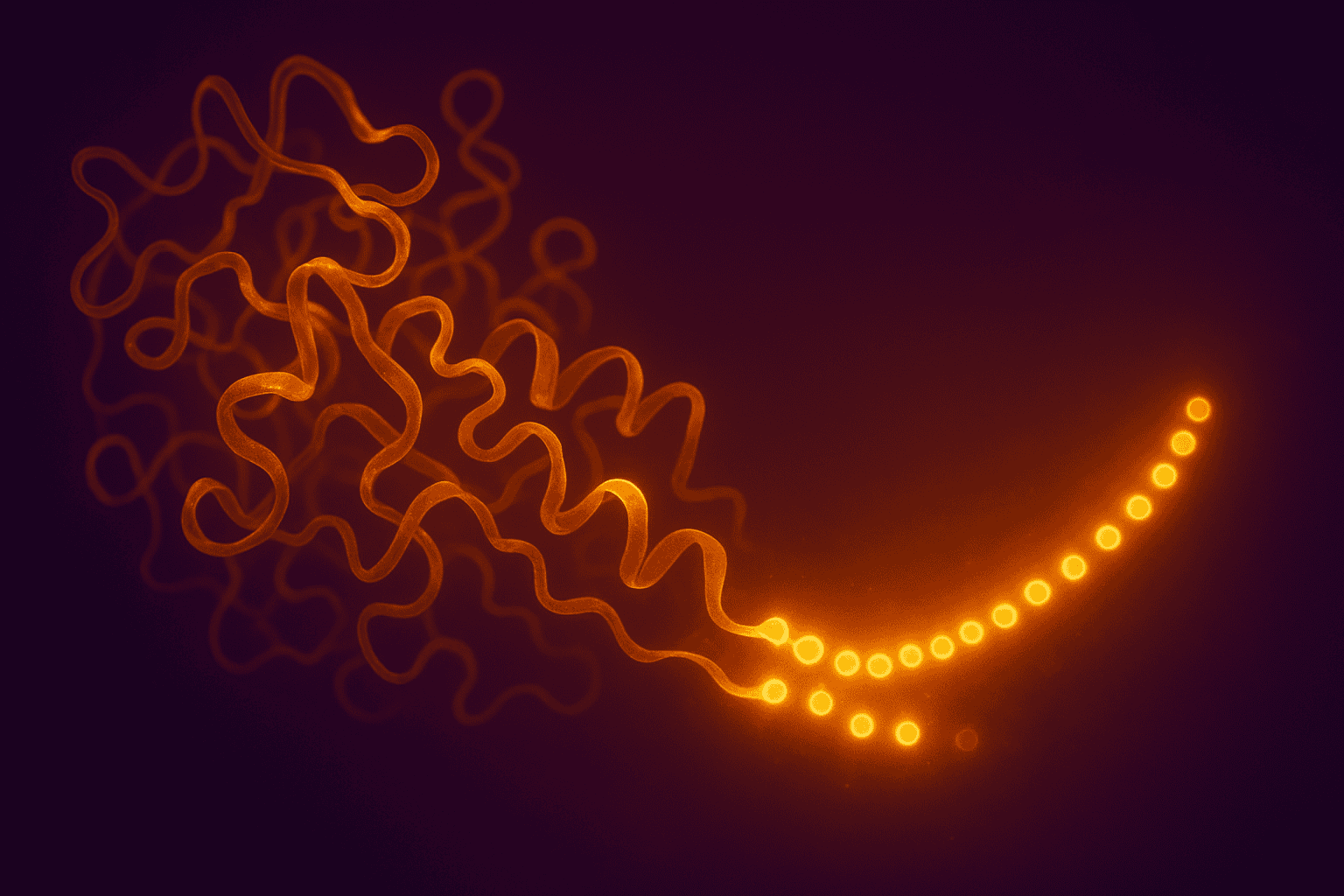
Let’s start with the absolute basics. Peptides are short chains of amino acids — the building blocks that make up proteins. If proteins are necklaces with hundreds of beads, peptides are bracelets with just a few dozen. TB-500 falls into this “bracelet” category as a relatively short peptide fragment derived from the 43-amino-acid protein Thymosin Beta-4.
Thymosin Beta-4 was first discovered in the thymus gland in the 1960s. Scientists originally thought it was specific to that gland. They were wrong. Later research showed it’s produced in almost every type of mammalian cell (Goldstein et al., 2005). That discovery changed the direction of research entirely.
TB-500 is the synthetic research version of the most interesting part of Thymosin Beta-4 — the active region that interacts with actin. Think of it as the highlight reel from a full-length movie. Researchers use it because it’s easier to work with than the full protein, while retaining the key functional properties.
What Does TB-500 Actually Do in a Lab Setting?
In laboratory experiments, TB-500 is used to study cell behavior. Its primary known interaction is with G-actin — individual actin molecules that cells assemble into structural filaments. By binding to G-actin, TB-500 influences how cells build their internal framework.
Why does that matter? Because almost everything a cell does — moving, dividing, changing shape — depends on actin dynamics. Studying a molecule that interacts with actin gives researchers a window into fundamental cell biology. It’s like having a tool that lets you study how buildings get constructed by watching the steel beams go up.
How Do You Evaluate TB-500 Quality?
For TB-500 beginners, learning to evaluate quality is just as important as understanding the science. A high-purity peptide gives reliable, reproducible results. A low-quality one wastes time and money. Here’s what to check.
Understanding the Certificate of Analysis
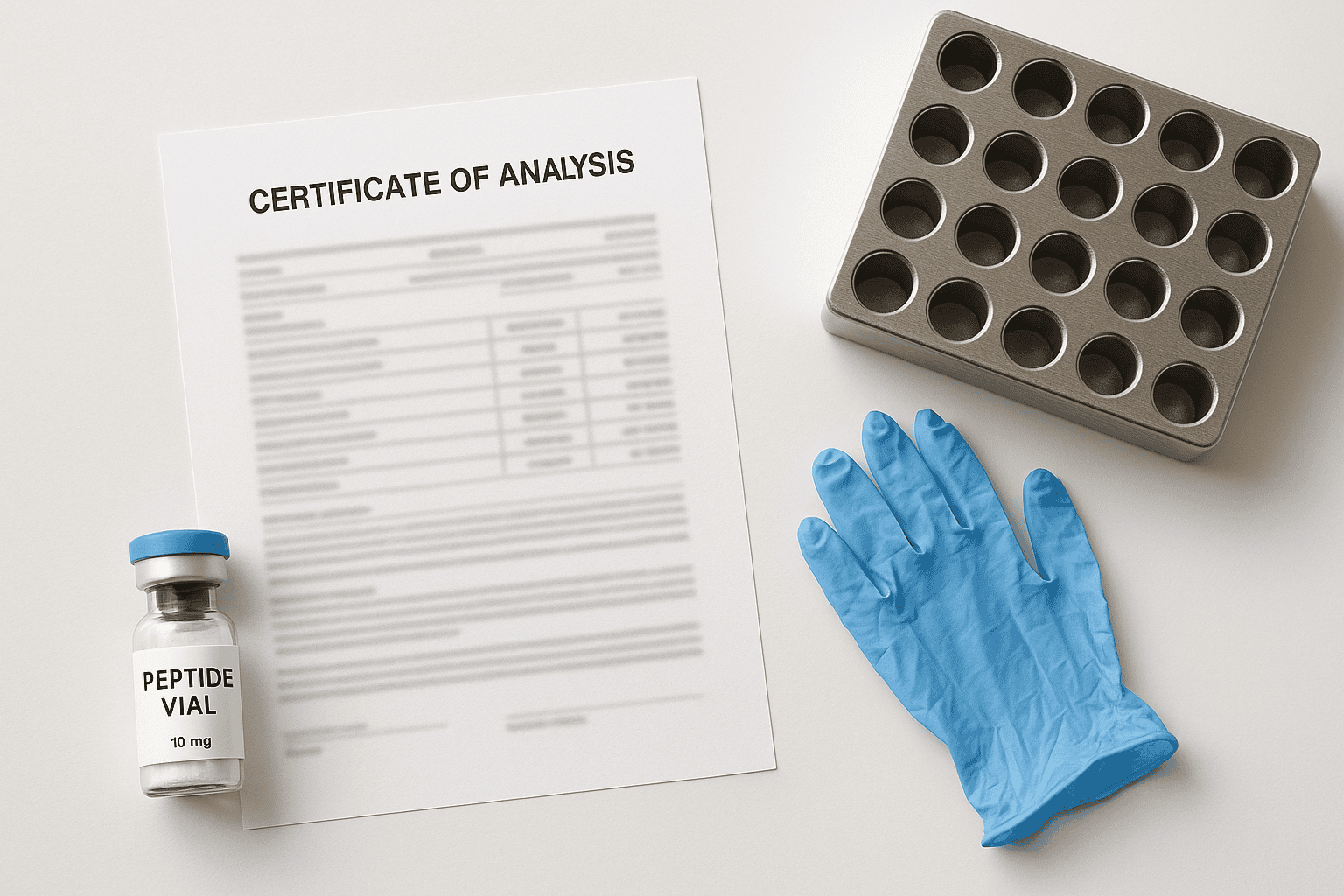
A Certificate of Analysis (COA) is the single most important document associated with any research peptide. It’s a test report that tells you exactly what’s in the vial. Every COA should include at least two things.
HPLC purity data: High-Performance Liquid Chromatography separates the target peptide from impurities. For TB-500, look for purity above 98%. This number tells you what percentage of the sample is actually TB-500 versus synthesis byproducts, incomplete chains, or contaminants.
Mass spectrometry data: This confirms the molecular identity of the peptide. HPLC tells you how pure the sample is. Mass spec tells you it’s the right molecule. Both are necessary — you could have a very pure sample of the wrong peptide if you only check HPLC. Review Alpha Peptides COA documents on our COA page.
[INTERNAL-LINK: “COA page” → /coas/]
Red Flags to Watch For
Not all suppliers maintain the same standards. Here are warning signs that should make TB-500 beginners cautious.
No COA available: If a supplier can’t or won’t provide a COA, that’s a serious problem. No documentation means no way to verify what you’re actually getting.
Generic COAs: A COA should be batch-specific. If the same document appears for every order regardless of when you purchase, the supplier may be reusing old test results rather than testing each batch.
Only in-house testing: Third-party testing is more reliable than in-house testing. When the testing lab is independent from the manufacturer, there’s no financial incentive to fudge results.
Unrealistic pricing: Peptide synthesis is expensive. If a price seems too good to be true, the supplier may be cutting corners on purity, testing, or proper storage and handling.
TB-500, a synthetic fragment of Thymosin Beta-4, requires rigorous quality verification before laboratory use. A valid Certificate of Analysis should include HPLC purity data (98%+ for research grade) and mass spectrometry identity confirmation matching the expected molecular weight of the Thymosin Beta-4 active fragment.
What Should TB-500 Beginners Know About Storage?

Proper storage directly affects peptide quality. Here’s the practical guidance every beginner needs.
Lyophilized (powder) form: Store at -20 degrees Celsius for long-term stability. Lyophilized peptides are much more stable than reconstituted ones. In this form, TB-500 can remain viable for months when stored properly. Keep the vial sealed and away from moisture.
Reconstituted form: Once you add bacteriostatic water or another solvent, the clock starts ticking. Refrigerate at 2-8 degrees Celsius and use within a reasonable timeframe. Avoid repeated freeze-thaw cycles, which can degrade the peptide. If you need multiple aliquots, divide the reconstituted solution into smaller portions right away.
[PERSONAL EXPERIENCE] One common mistake beginners make is reconstituting an entire vial when they only need a small amount. It’s better to reconstitute only what you’ll use relatively soon and keep the rest as dry powder.
Shipping considerations: Lyophilized peptides can handle short periods at ambient temperature during shipping without significant degradation. However, reconstituted peptides need cold chain shipping. Always check how your supplier ships their products.
Where Does TB-500 Research Stand Today?
The preclinical literature on Thymosin Beta-4 and TB-500 spans several decades. Research by Philp et al. (2004) established foundational findings about its actin-binding mechanism and cell migration effects. Since then, numerous laboratories have examined its properties in various preclinical models.
What hasn’t happened yet is extensive human research. All published TB-500 findings come from animal models and cell culture experiments. That’s important context for beginners to keep in mind. Preclinical results are valuable, but they don’t automatically translate to other species or contexts. Responsible researchers interpret these findings carefully.
Browse TB-500 at Alpha Peptides, or explore our full research peptide catalog to find related compounds.
[INTERNAL-LINK: “research peptide catalog” → /shop/]
Frequently Asked Questions for TB-500 Beginners

How many amino acids does TB-500 have?
TB-500 is a fragment of Thymosin Beta-4, which is a 43-amino-acid protein. The exact length of the TB-500 fragment depends on the specific sequence used, but it corresponds to the active region that interacts with actin. Its parent protein, Thymosin Beta-4, has been found in virtually every mammalian cell type.
Can beginners work with TB-500 in a standard lab?
Yes. TB-500 doesn’t require specialized equipment beyond what a standard research laboratory provides. You’ll need proper cold storage (-20 degrees Celsius for lyophilized powder), bacteriostatic water for reconstitution, and standard sterile handling procedures. Always verify purity through the COA before beginning experiments.
What makes TB-500 different from BPC-157?
They work through completely different mechanisms. TB-500 binds to actin — the cell’s structural scaffolding. BPC-157 interacts with growth factor signaling pathways. Their origins differ too: TB-500 comes from a protein found in nearly all cells, while BPC-157 comes from gastric juice. Many researchers study both — see our comparison guide.
For research use only. Not for human consumption. TB-500 is an experimental compound with no FDA-approved therapeutic applications. All information on this page is provided for educational purposes relating to laboratory and preclinical research.